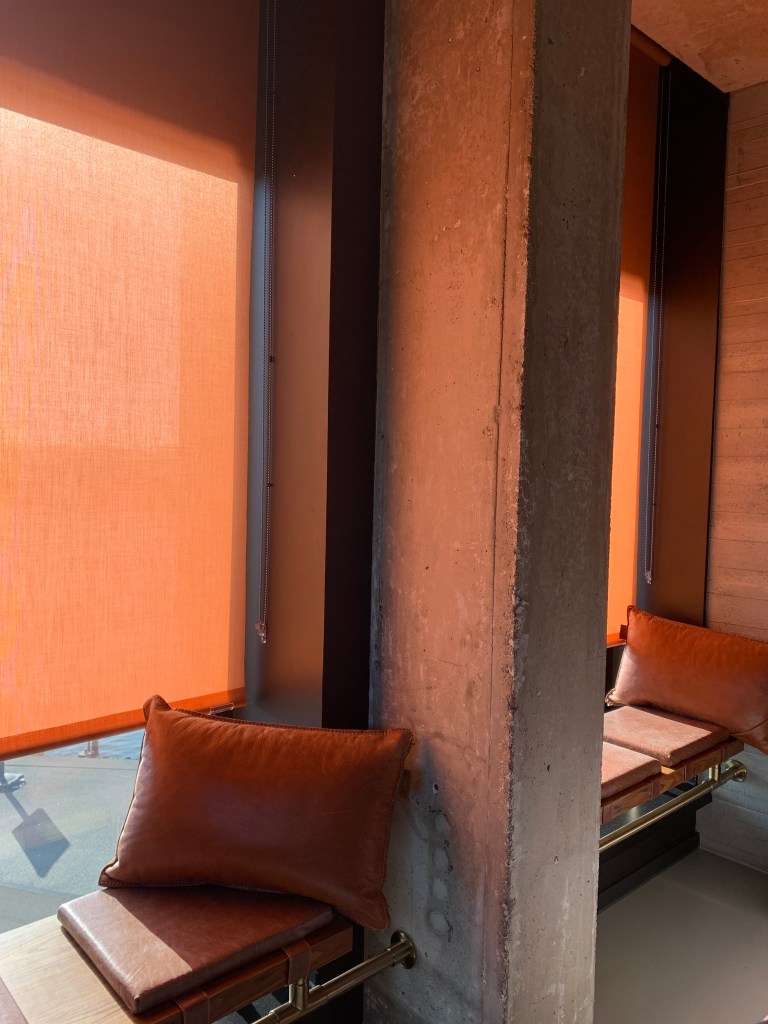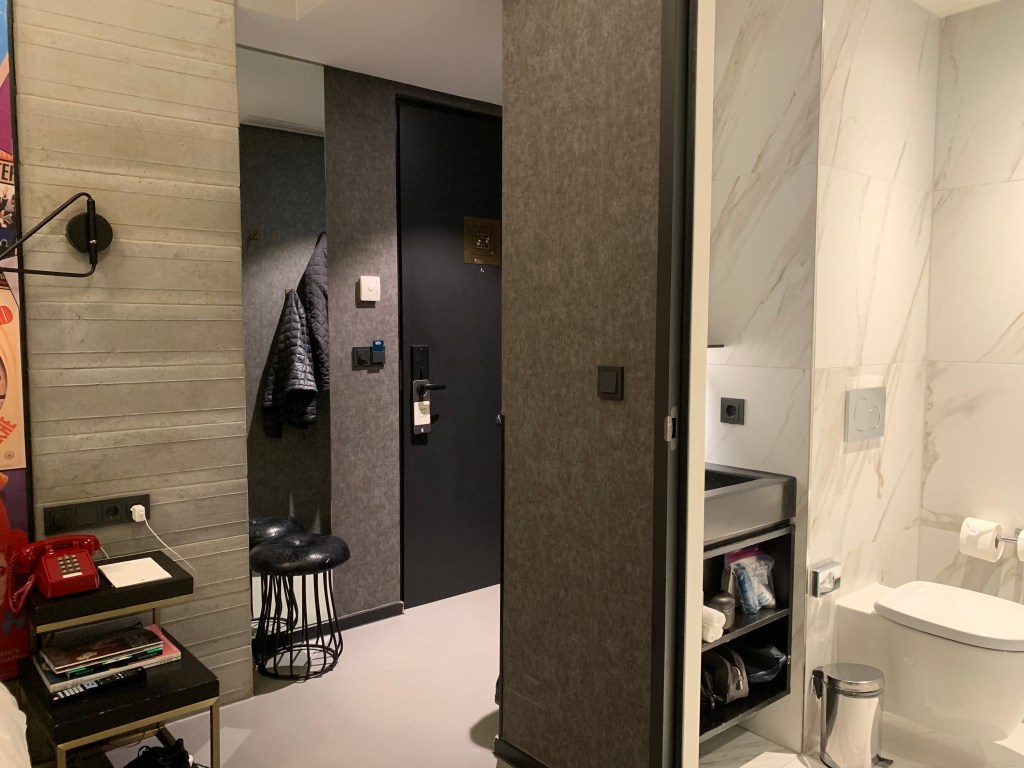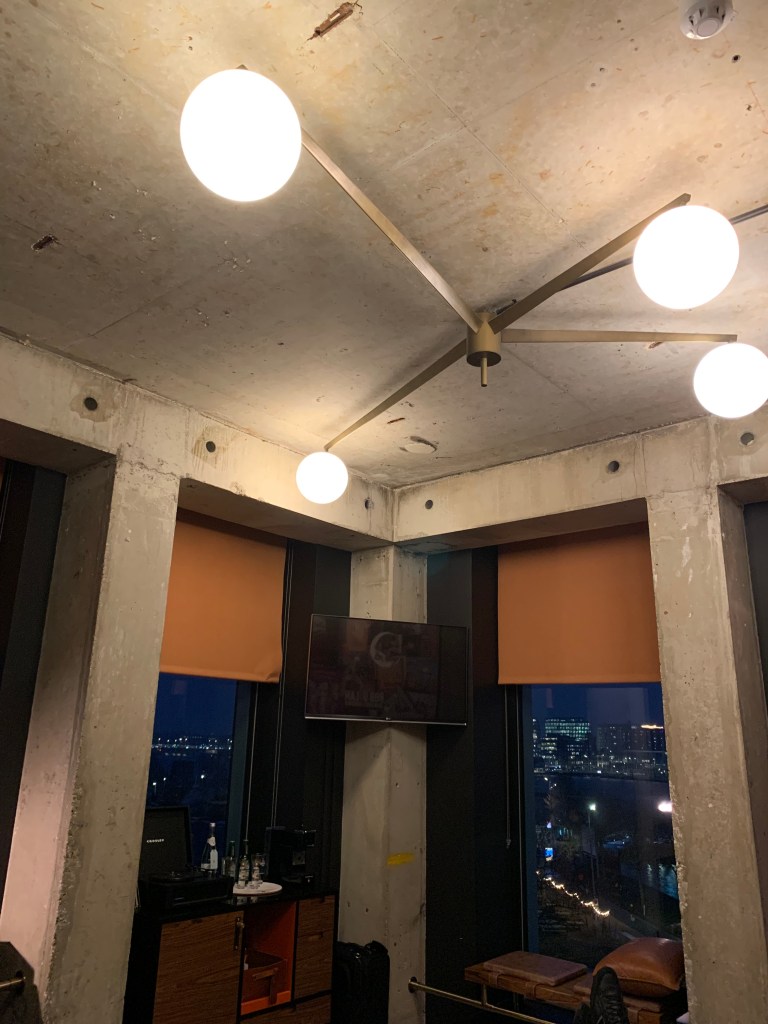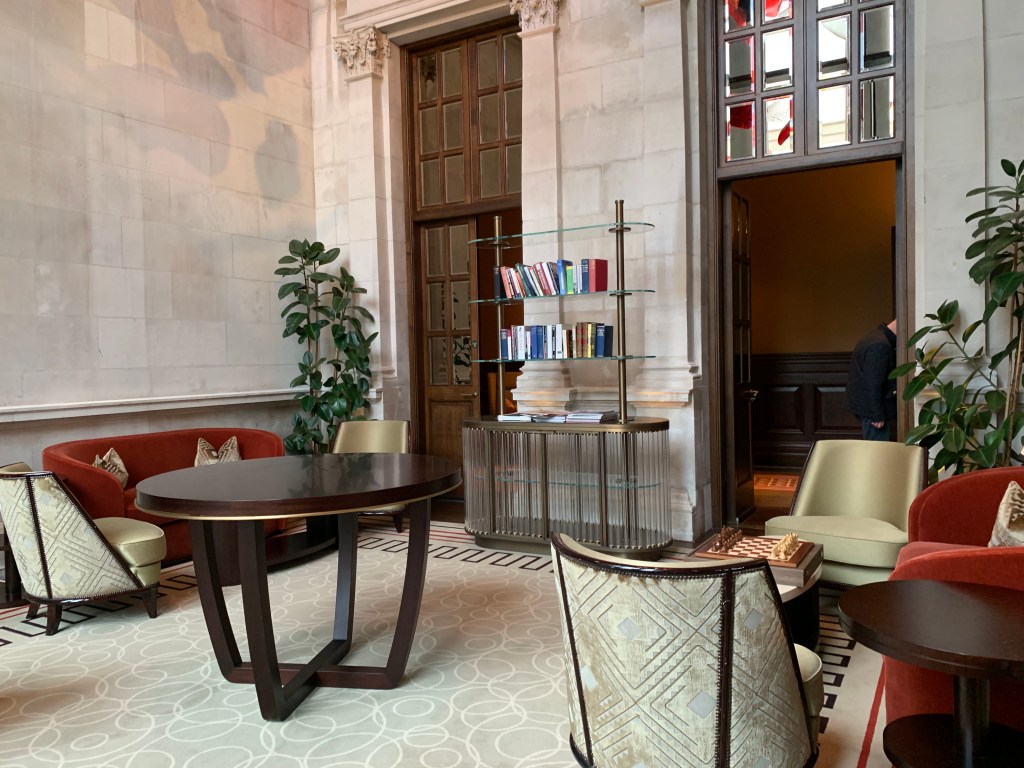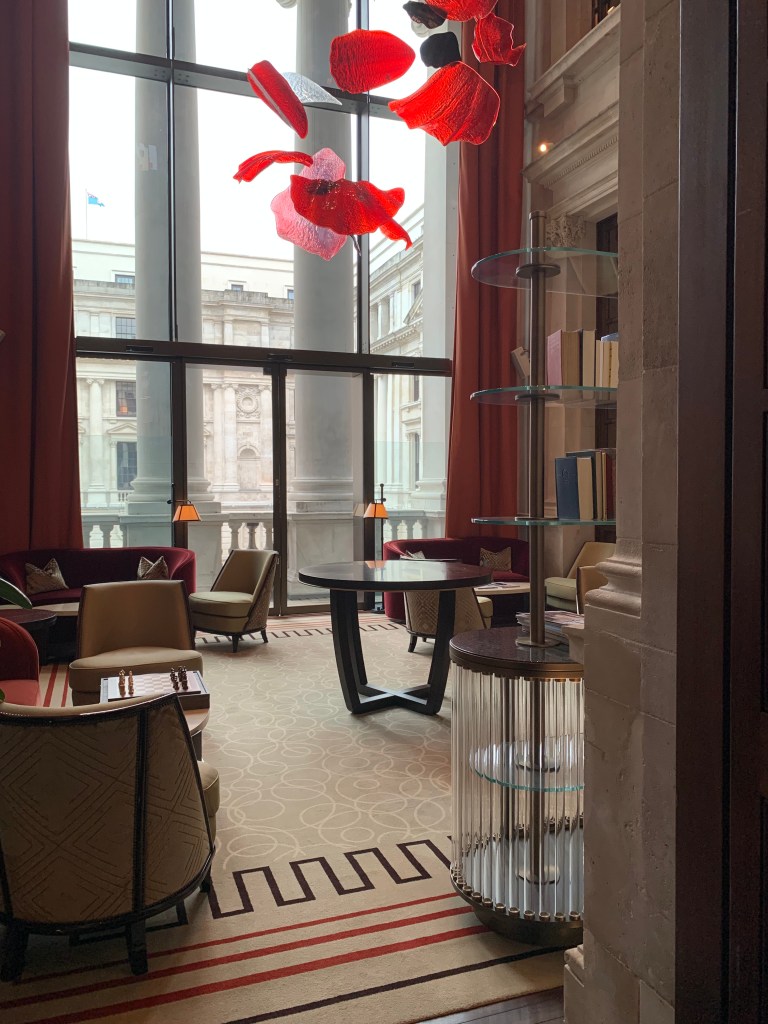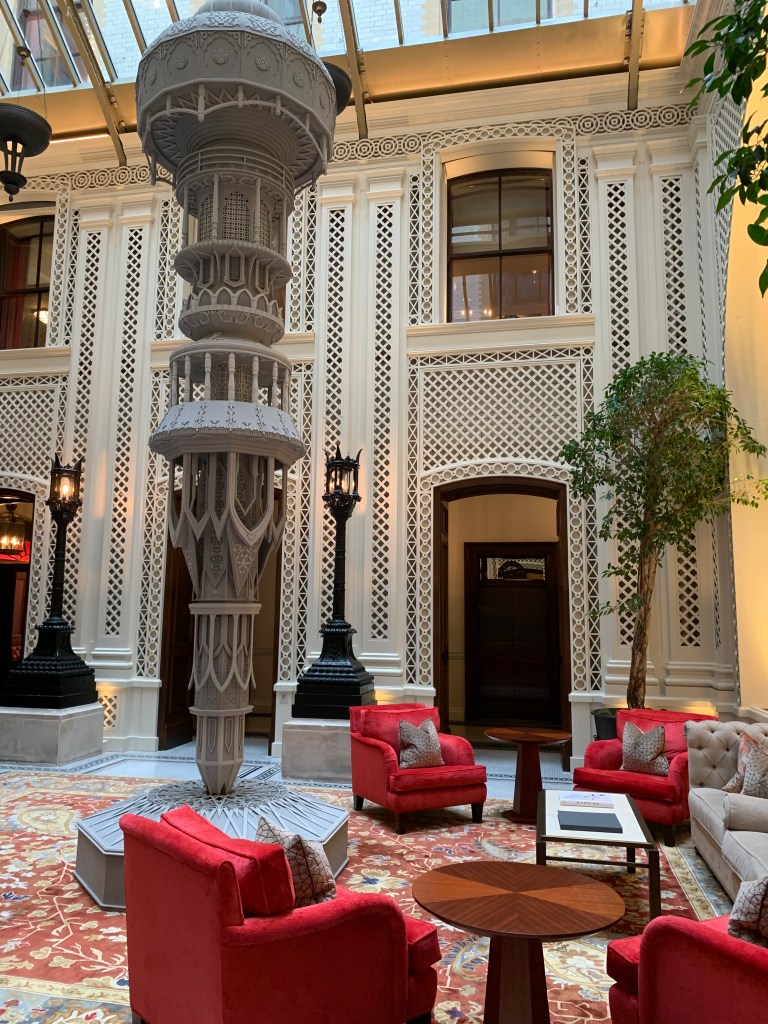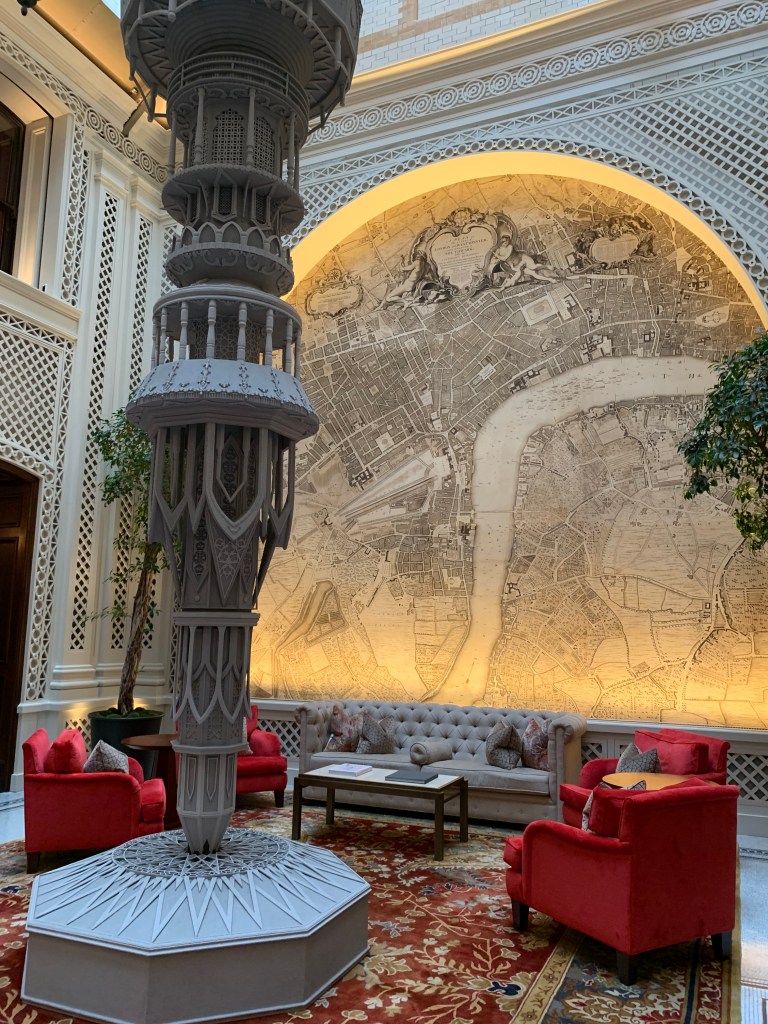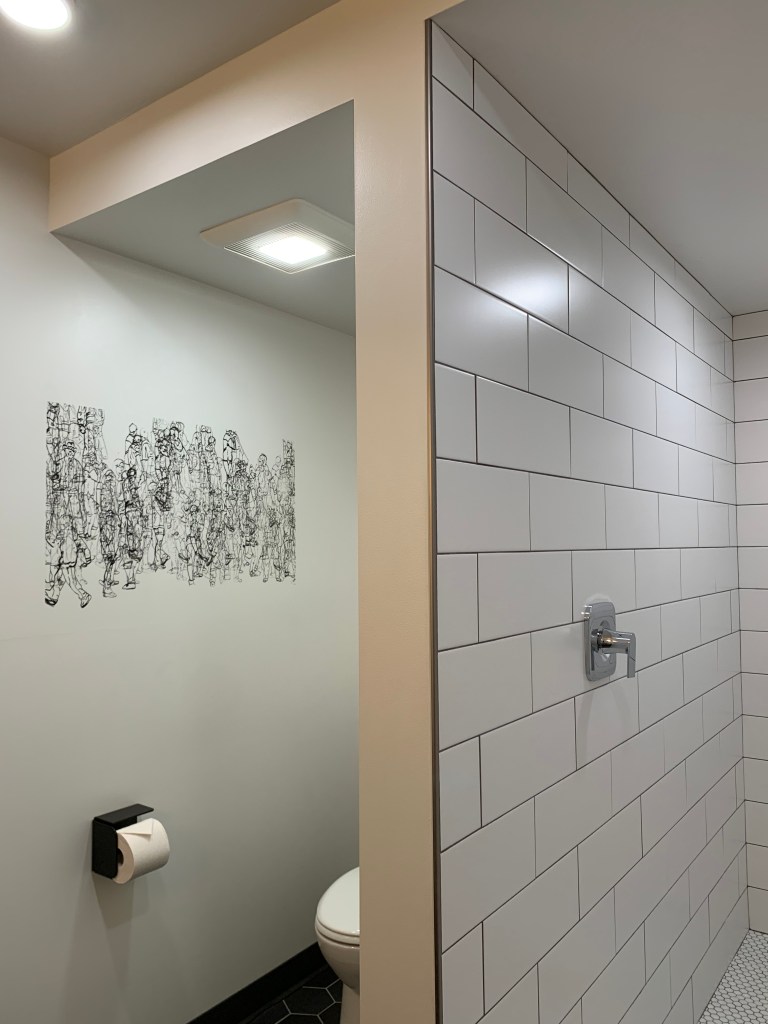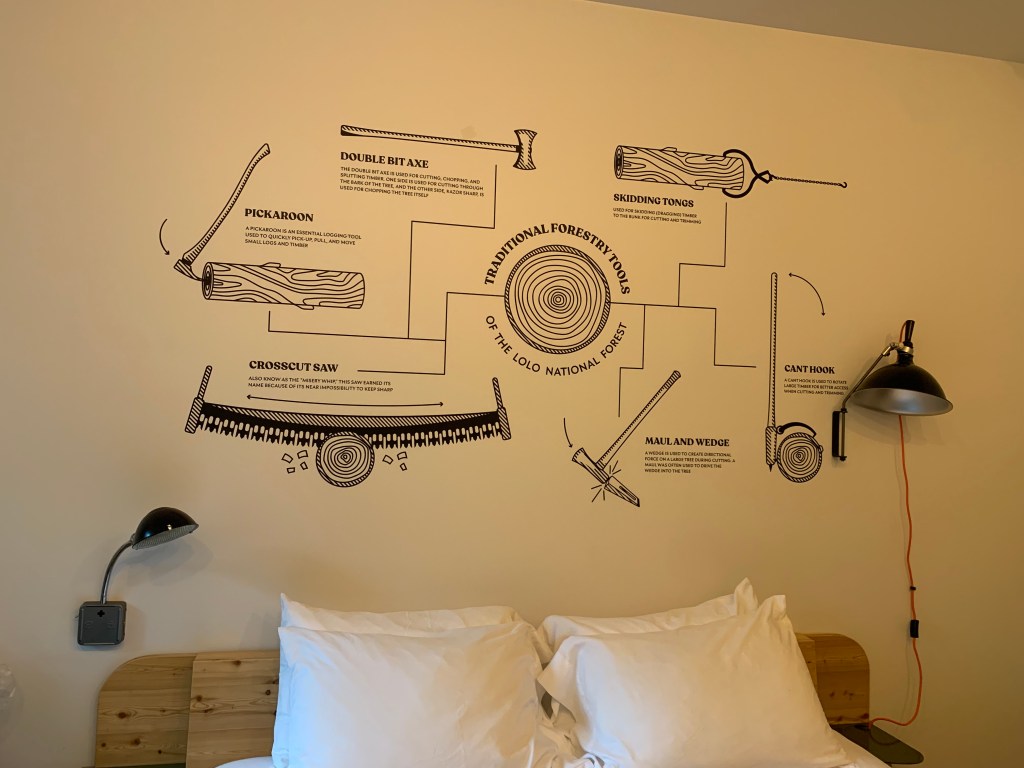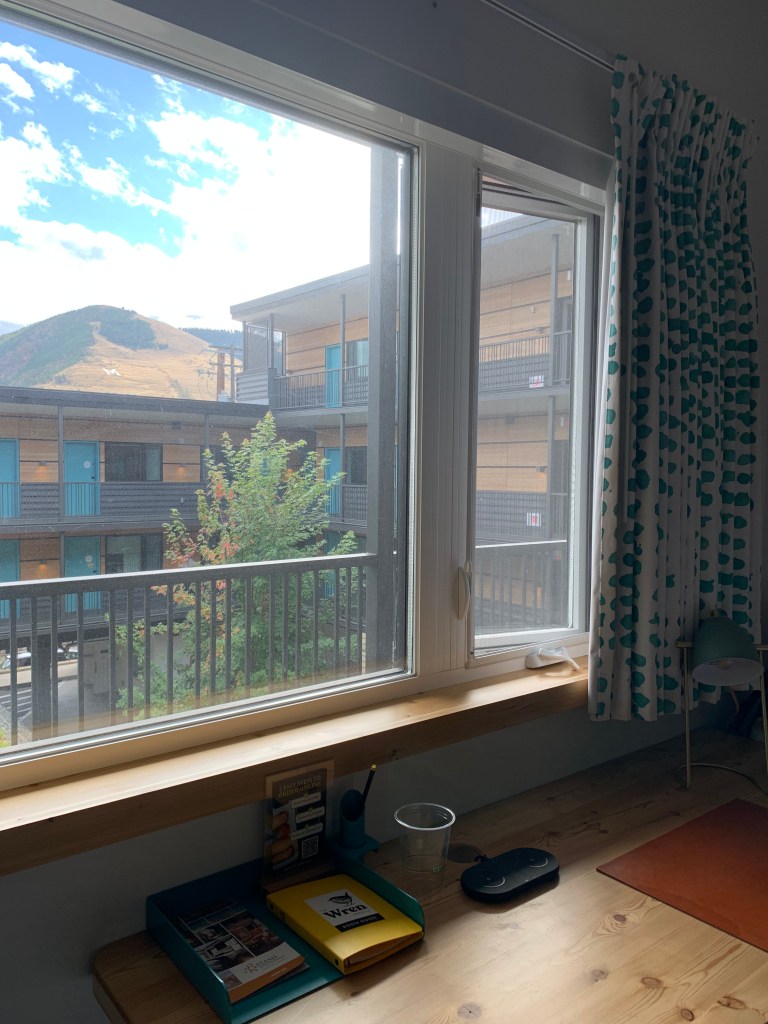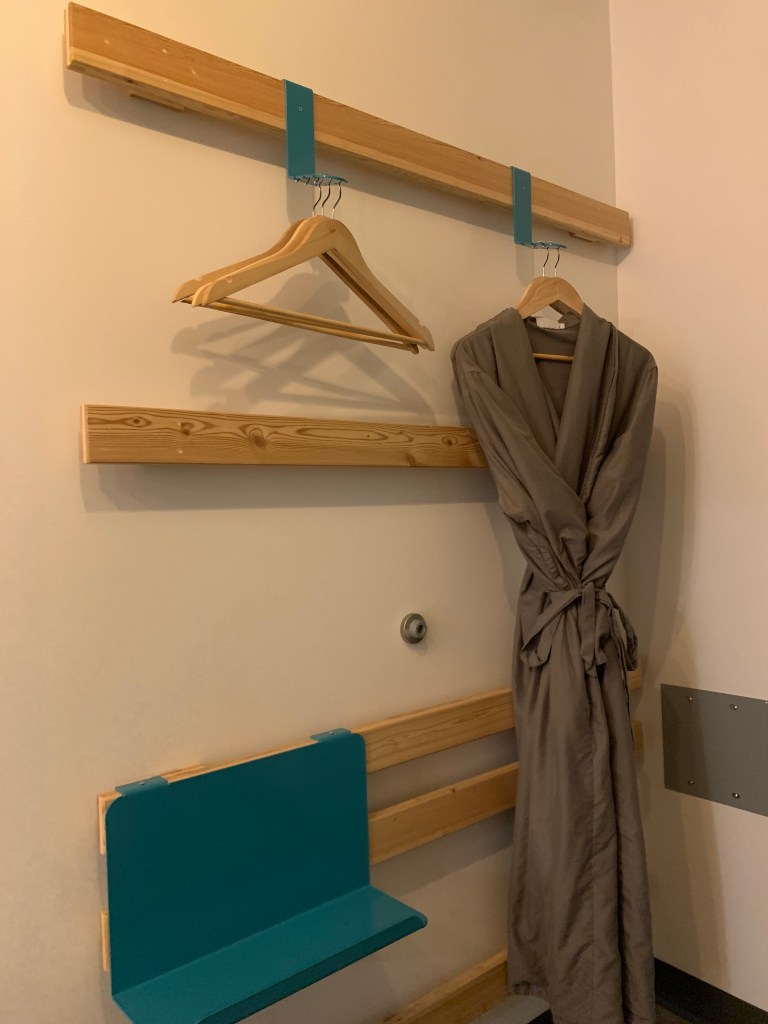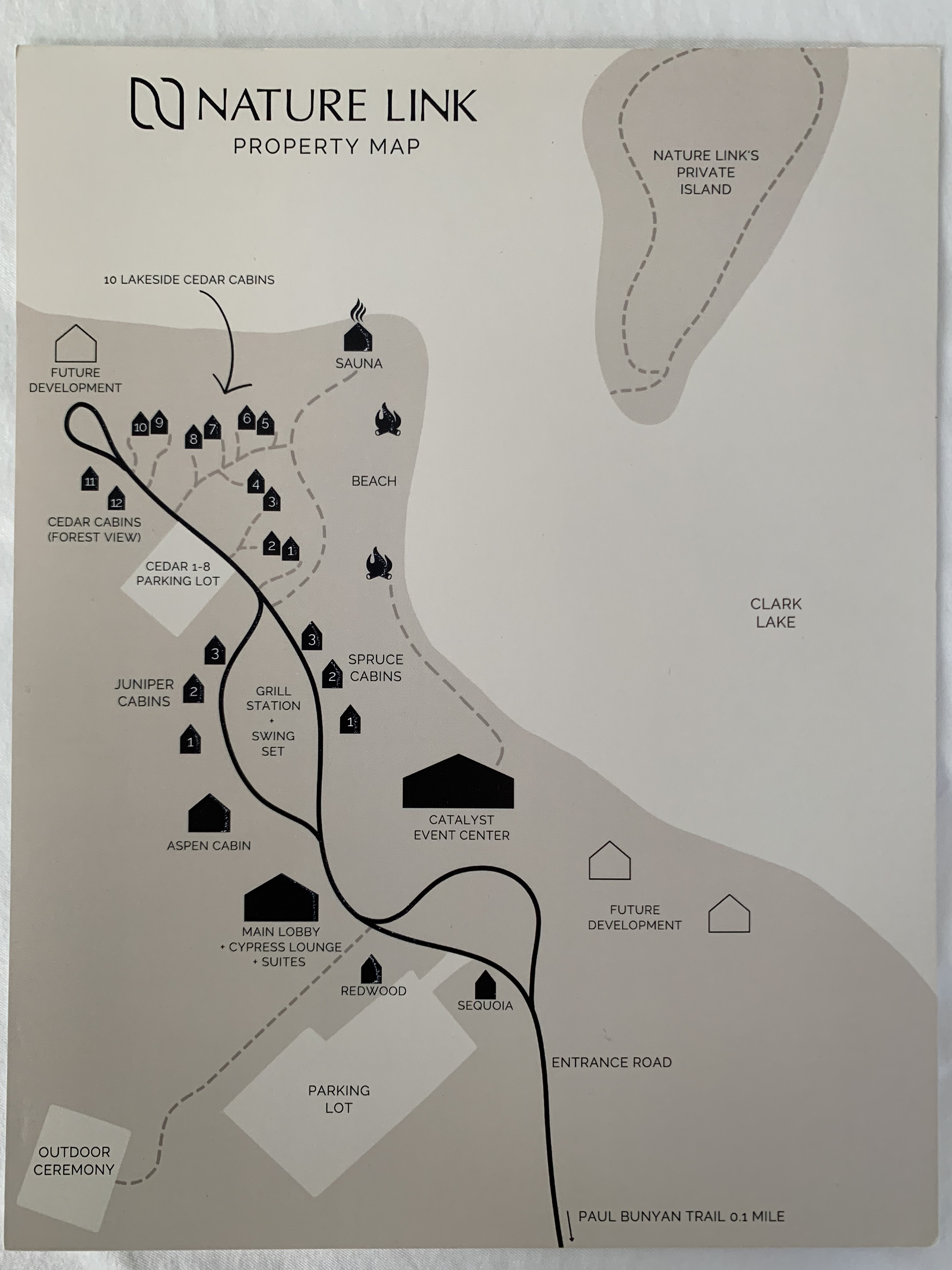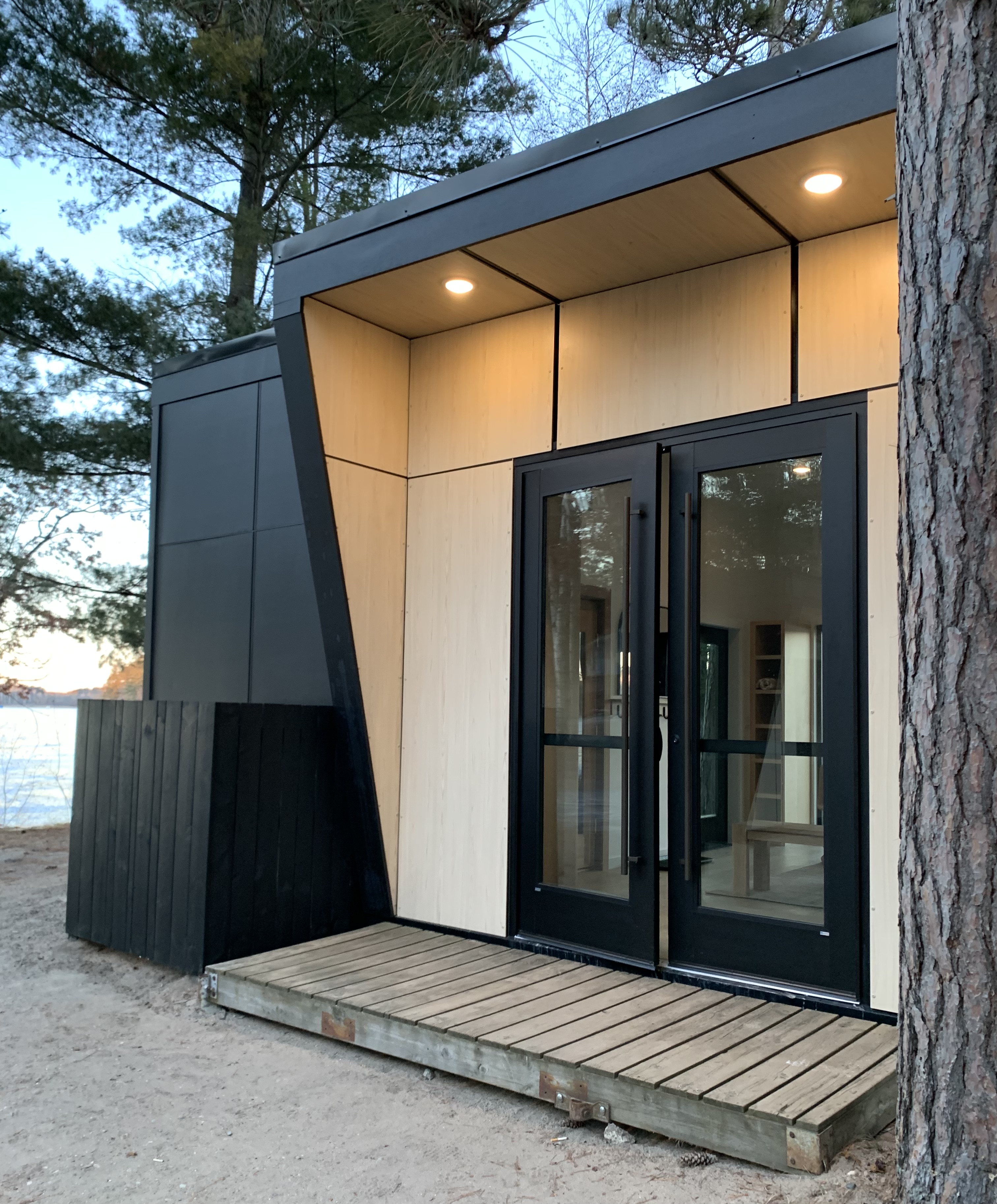
Nisswa, Minnesota, USA ~ Nature Link Resort

In the days following the new year, most people in our part of the world are on a bit of a holiday hangover and slowly returning to “normal” life. But we have a January 5 birthday in our house, and it’s actually a perfect time to get out of our neighborhood, which suddenly seems very lonely after all of the holiday happenings.

In the cold and dark days of a Minnesota winter, it might make the most sense to head south, but this year, we did the opposite, booking a few nights at Nature Link, a resort in central Minnesota that had been on our list for a few years.


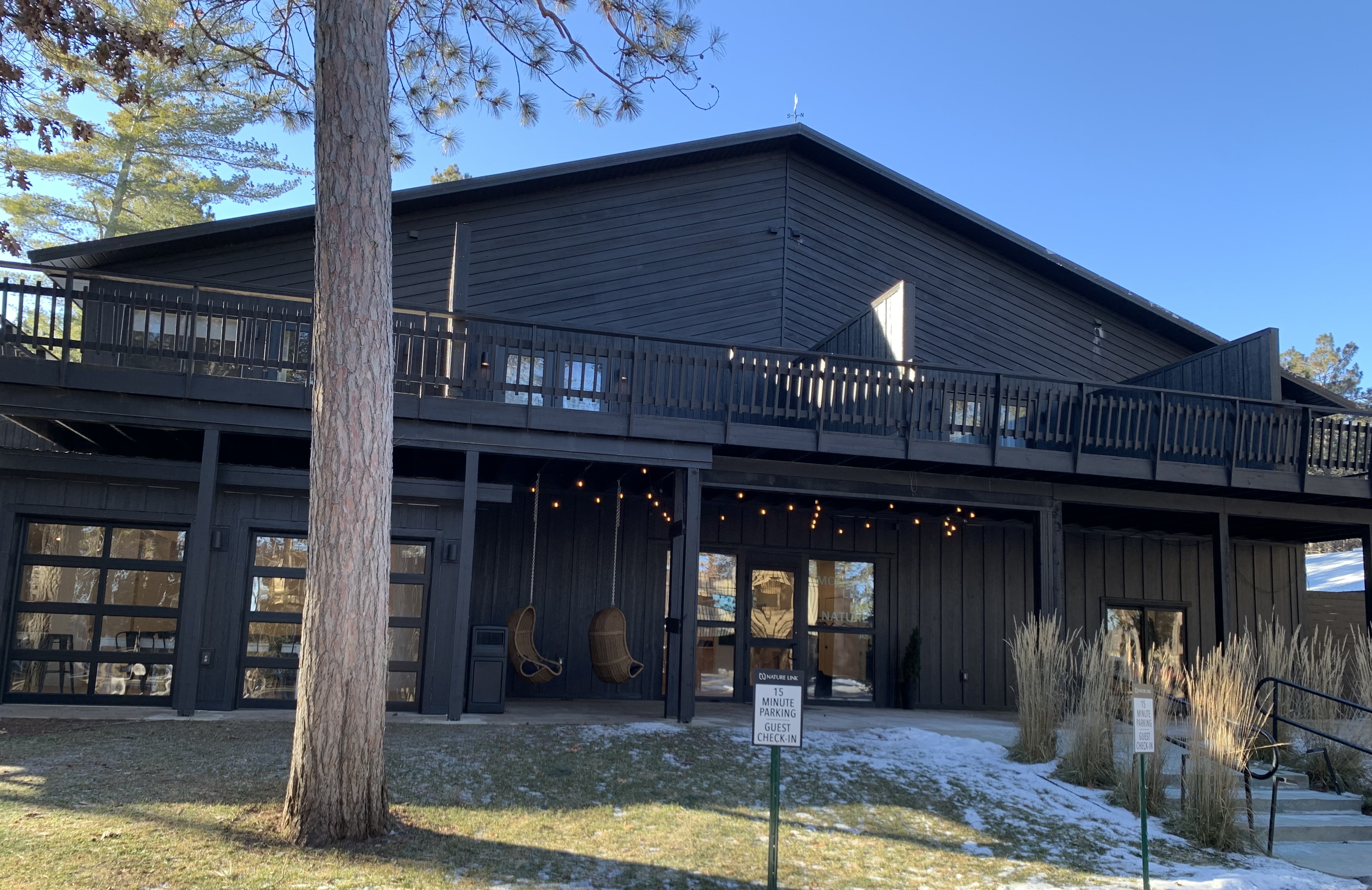
Nature Link is in the Brainerd Lakes area, and although the area is a popular destination and a place where many friends have cabins, we had never spent time there, opting instead typically to head to the North Shore of Lake Superior when we want to get into nature. We can’t even remember exactly how we found Nature Link – it was likely just a Google search of resorts near Nisswa, MN – but what we saw online was intriguing: modern, tastefully finished cabins on a smaller, off-the-beaten-path lake with an aesthetic that emphasizes slowing down and spending time with nature near the water and among the woods.
Summers are clearly the more popular time for resorts like this, but winters draw anglers for ice fishing, cross-country skiers and snowshoers, snowmobilers, and people like us who just want a little escape from the city. On the weekend we visited, there was no snow (a hardship for the local economy), but it was very cold, below zero. We love to get outside in the winter, and we did manage a walk into the town of Nisswa along the Paul Bunyan trail, which adjoins the resort. But the cold temps and lack of snow turned out to be a good excuse to either stay inside by the fire, looking out from our big windows to the forest, or to take the short trek to the newly finished sauna where we watched the sun move across the frozen lake.

Apparently, we weren’t the only ones who wanted this kind of weekend. When we first arrived at Nature Link on a Friday afternoon, we thought we might be two of only a few guests, but by the time we headed to dinner on Friday evening, lights were on in nearly all of the resort’s 20 or so cabins and suites.


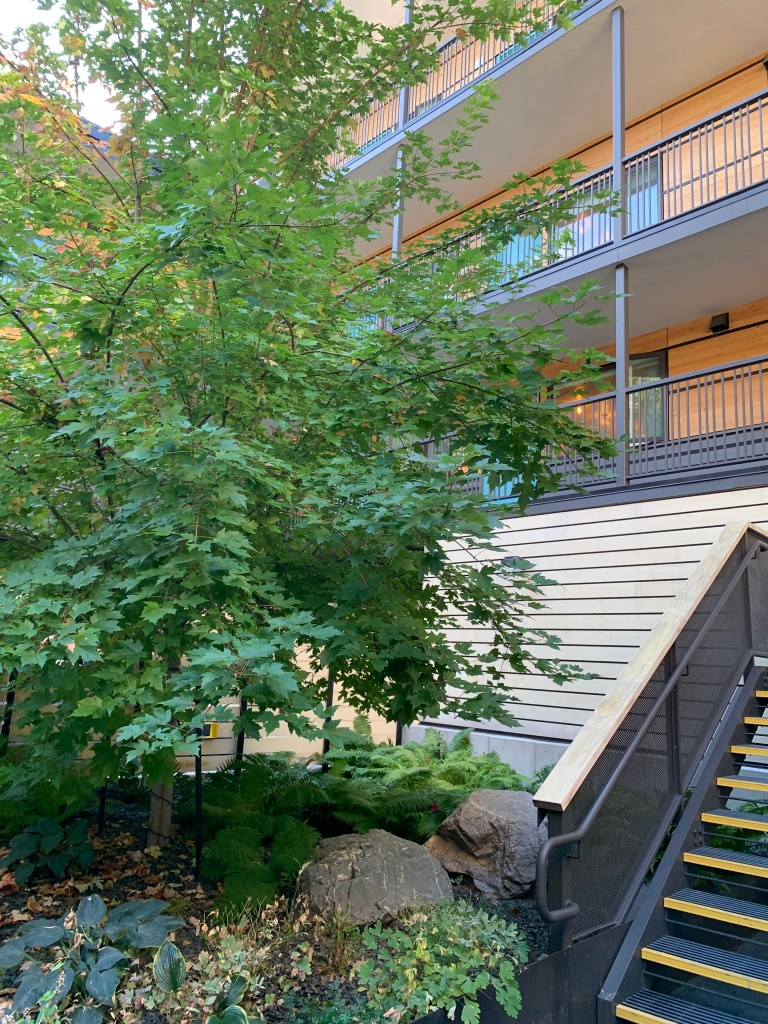
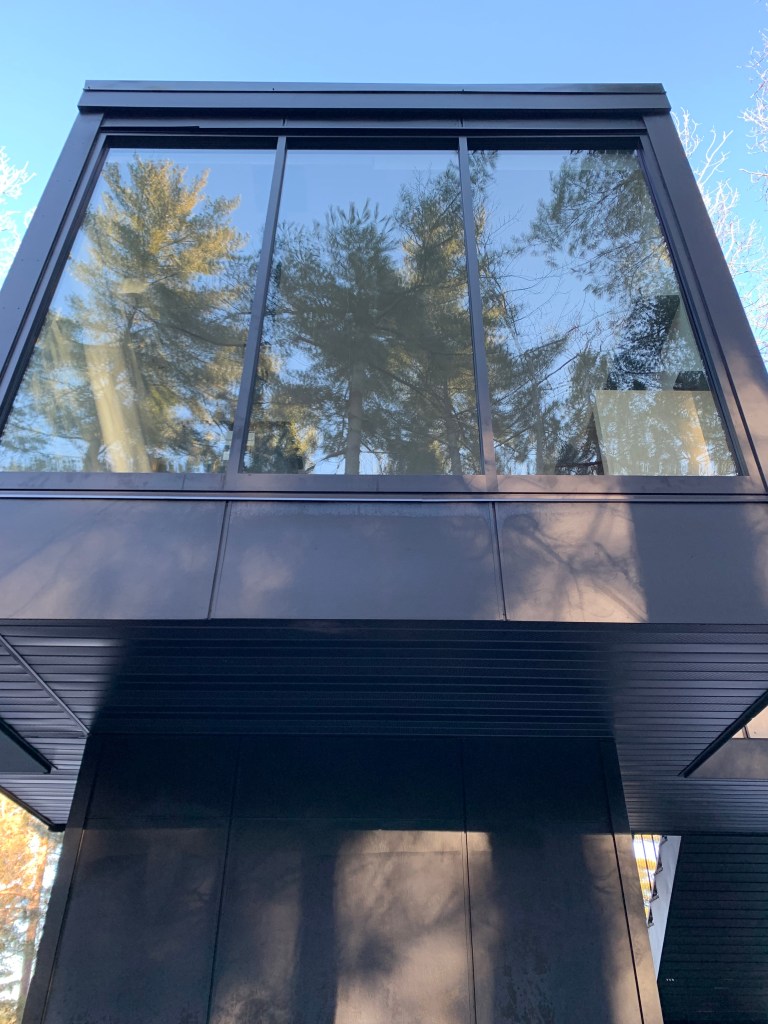
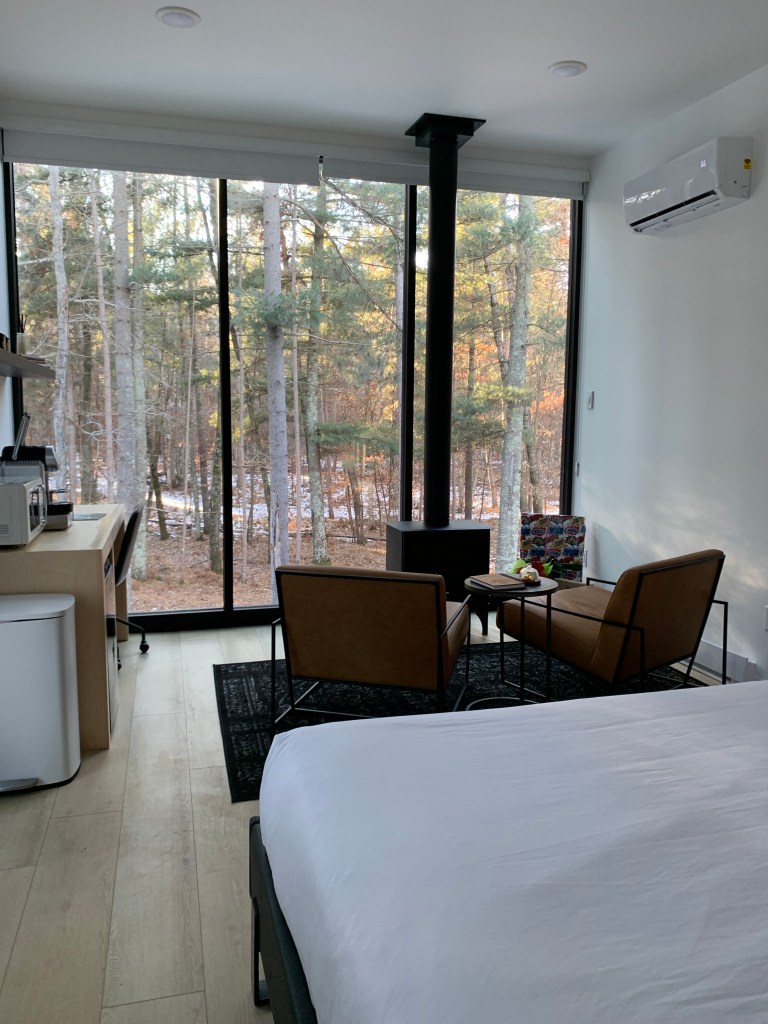
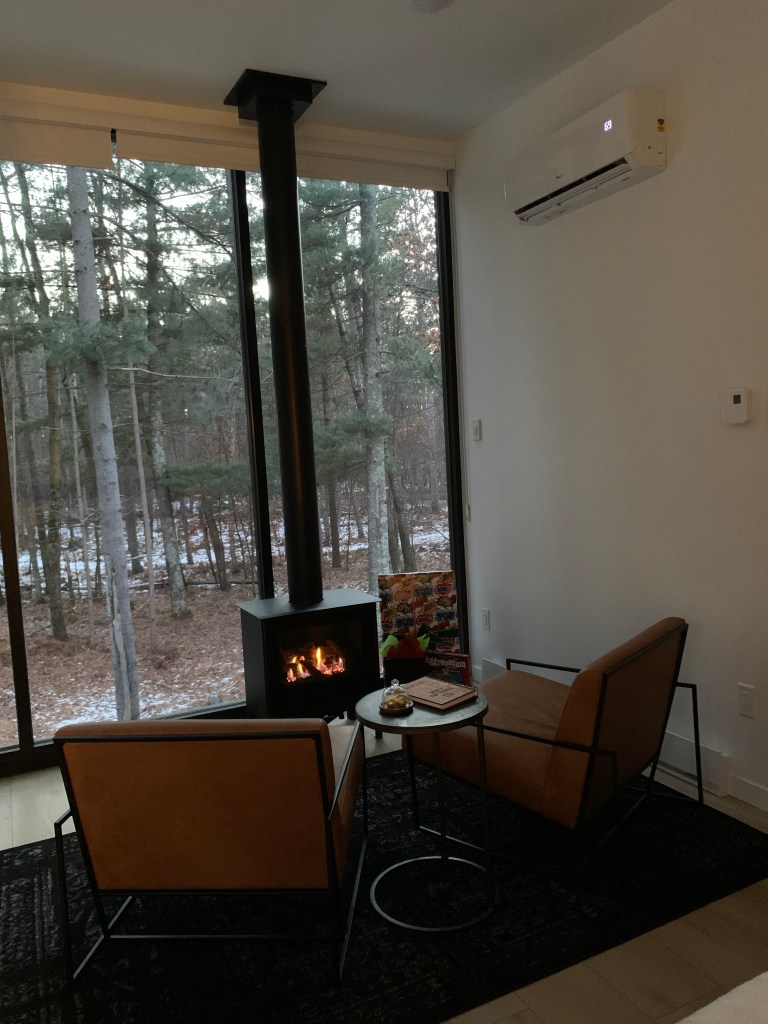
When we made our booking, we had a choice between a cabin looking out on Clark Lake or an elevated cabin facing into the forest. The treehouse experience sounded intriguing, so we chose that one, not knowing exactly what to expect. Upon arrival, we were directed to Cedar Cabin #11 – a stand-alone structure and one of two with this particular design – jutting up from ground level with access via an external staircase. Inside, a massive picture window looked out to the woods; it really did feel like a luxurious treehouse.

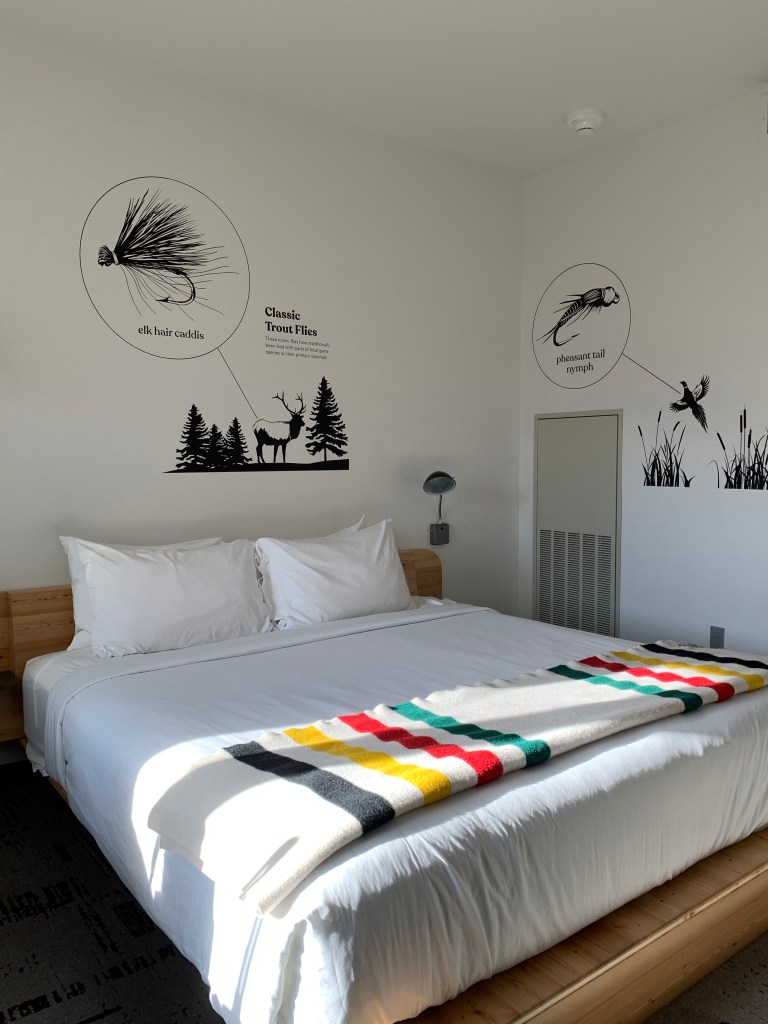
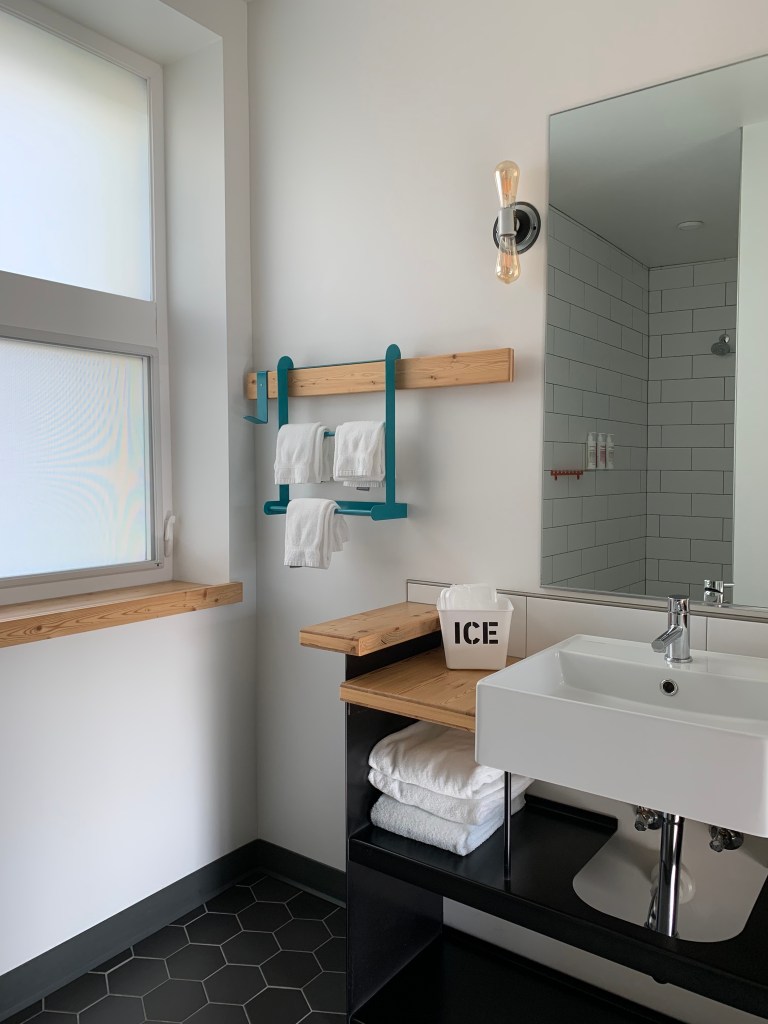
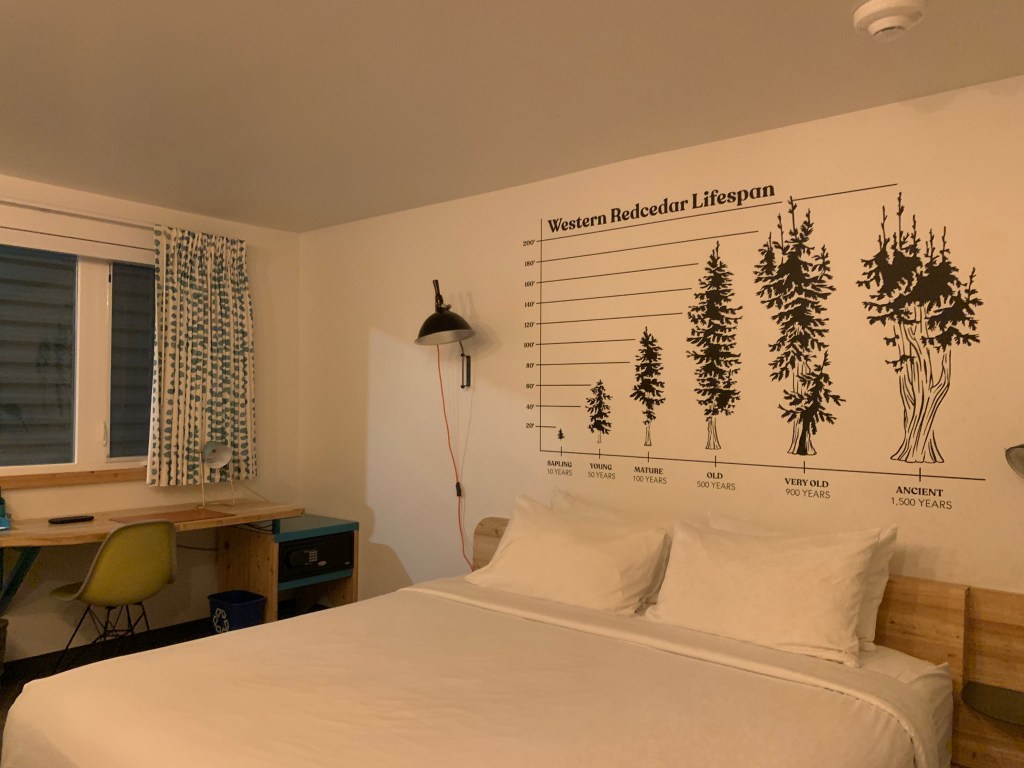
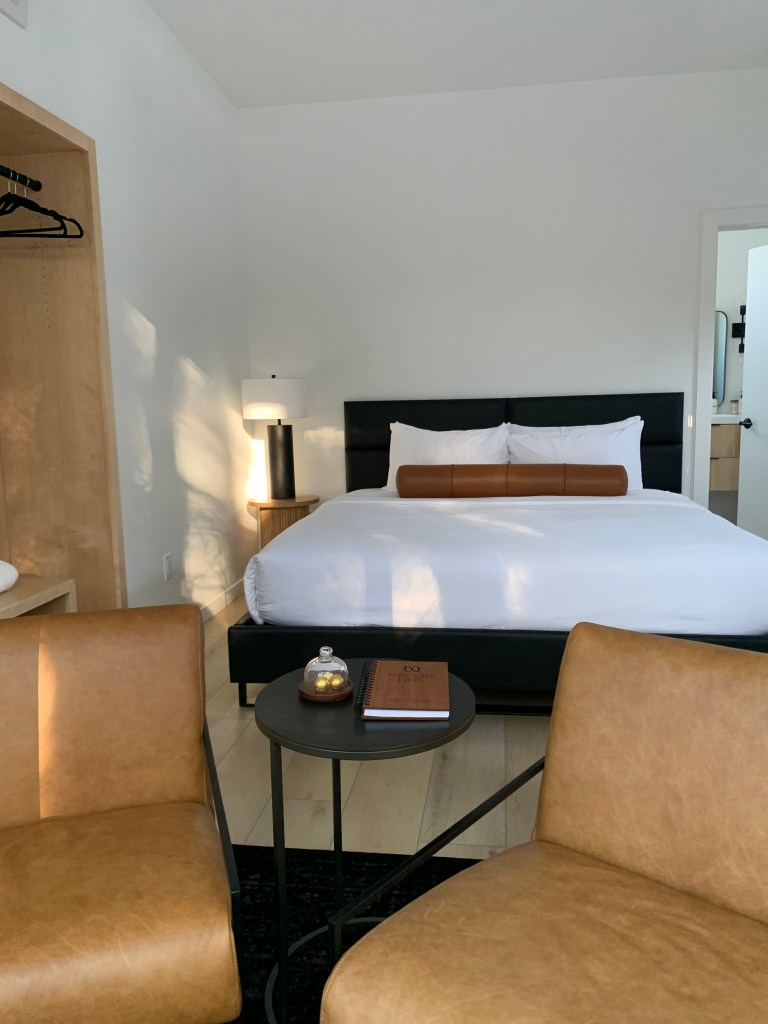
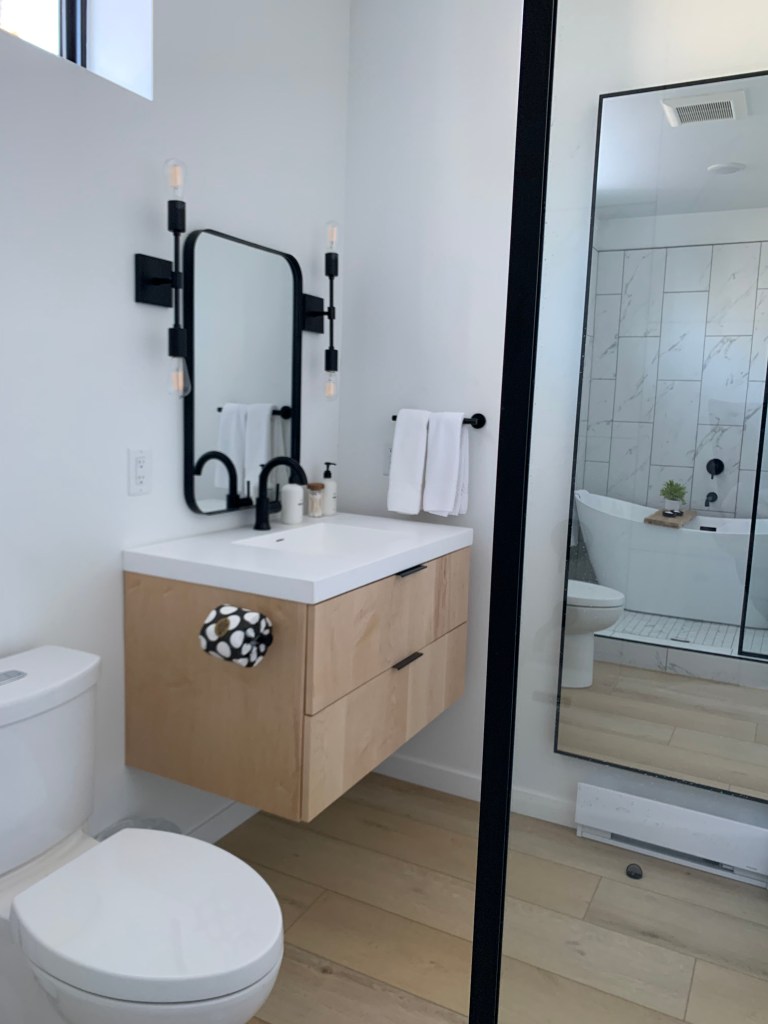
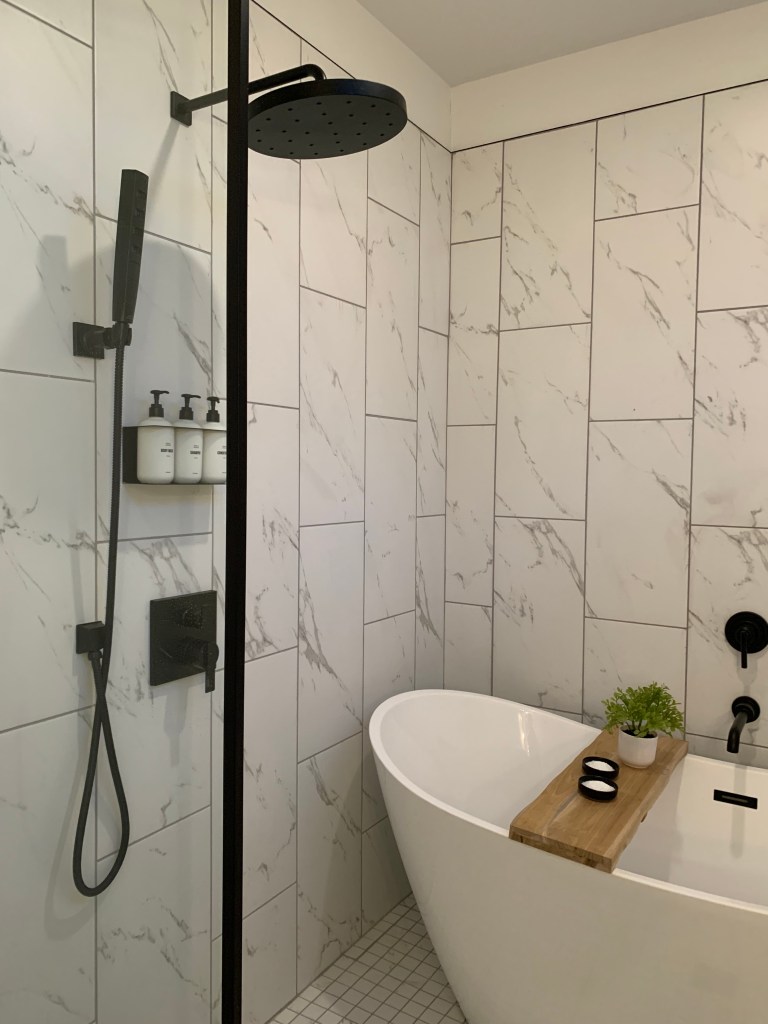
Inside, we found a gas fireplace, two leather chairs oriented toward the windows, a king-sized bed, and a nicely finished bathroom with a shower and deep soaking tub. The cabin also included a big Nespresso machine and a small refrigerator and microwave, along with some fun features: a deck of cards, tasty chocolates, a few books. There are no TVs in the cabins, which we welcomed, but the solid WiFi made sure we could stay connected with the outside world if needed.

The design and the quality of the furnishings and finishes exceeded our expectations. This is not your typical rustic cabin. We’ll note that Nature Link is only a few years old, and maintaining the standards will surely take constant work. In addition to guests, who can be hard on a property, the outside elements are relentless. On the days we stayed, the difference in the outside and inside temperatures was causing a fair amount of condensation on the window frames, and even though it was winter, we still tracked sand inside whenever we entered (the resort helpfully leaves a broom in the cabin). We hope the simple design and relatively rugged materials of the cabins lead to easier upkeep. In addition, because the resort is new, it’s still under development, and, although it was hard to tell in the winter, the landscape looks to be in recovery from some of that development.

One more note about the Cedar cabins: They are set up like a hotel room, and Nature Link doesn’t have a restaurant, so guests need to venture off property to eat. There are lots of options close by – more than we could explore on our long weekend – so this wasn’t an issue. But visitors to Nature Link who want to cook should book one of the bigger cabins with a full kitchen.


Without snow, many winter activities were out of the question, but that turned out to be just fine; it meant we could truly take it slow. Between short bursts of energy to walk around the property, visit the sauna, or explore Nisswa, we mostly just settled down near the fire and gazed out to the forest (or played the classic board game Aggravation). On our second day, we were entranced by a pileated woodpecker knocking away at a nearby tree and later watched as a herd of deer moved slowly across our view, feeding on the nibbles below the brush.

We’re curious how the resort feels in the summer when the whole area is brimming with people; we’ve heard the whole Brainerd Lakes region can be a pretty lively scene. We’re guessing that folks looking for something on the quieter side choose Nature Link; in summer, the resort provides bikes, kayaks, and hammocks for guests. And the resort has a private island that guests are encouraged to explore. All of this sounds terrific and right up our alley. We hope to return during summer to see more of what Nature Link has to offer, but it might just be that the quiet of winter is when the resort really shines.


Back to HOTELLING home

Milan, Italy ~ Senato Hotel Milano

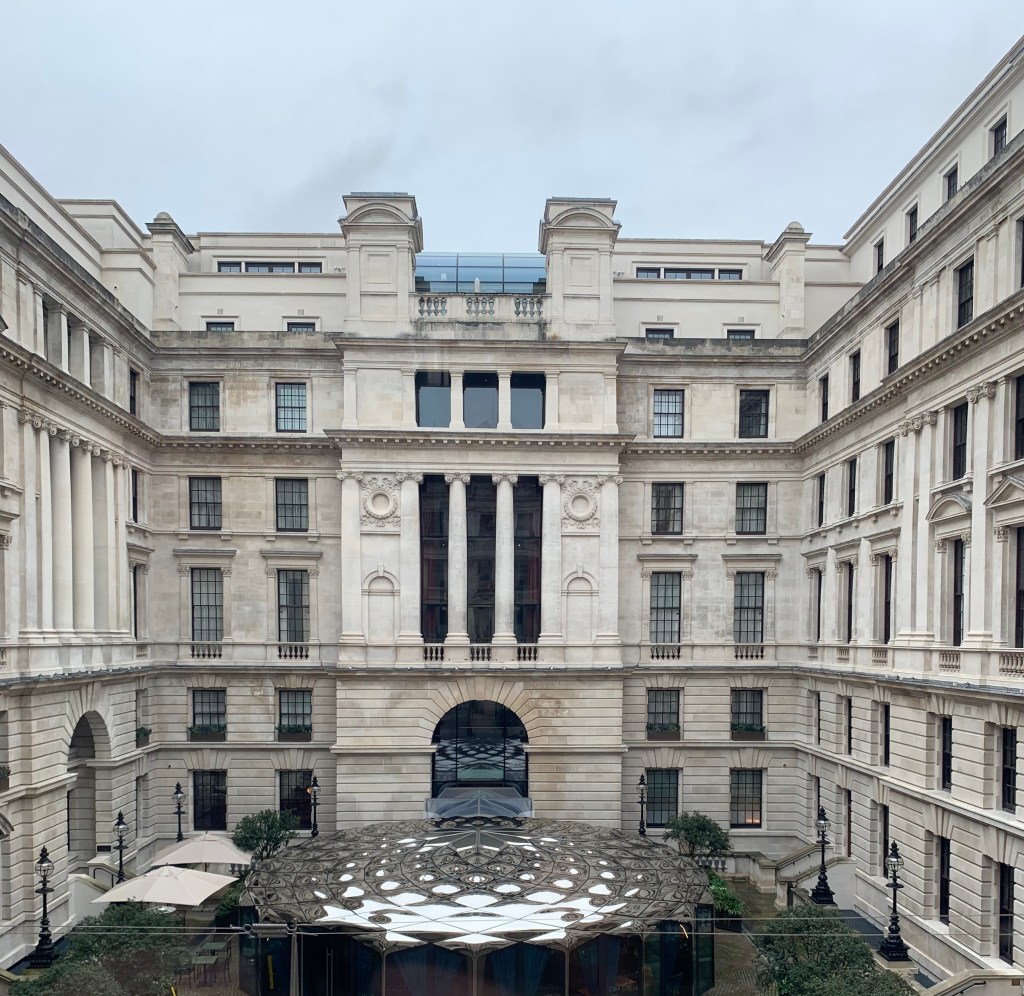
In a fashionable and sophisticated city like Milan, the experience of searching for a hotel is an embarrassment of riches. Beyond international chains like the Mandarin Oriental and Four Seasons, Milan hosts dozens of smaller independent hotels that, in our exploration, looked promising. In the end – and following the advice of Condé Nast and its “best boutique hotel” designation – we chose Senato Hotel Milano.

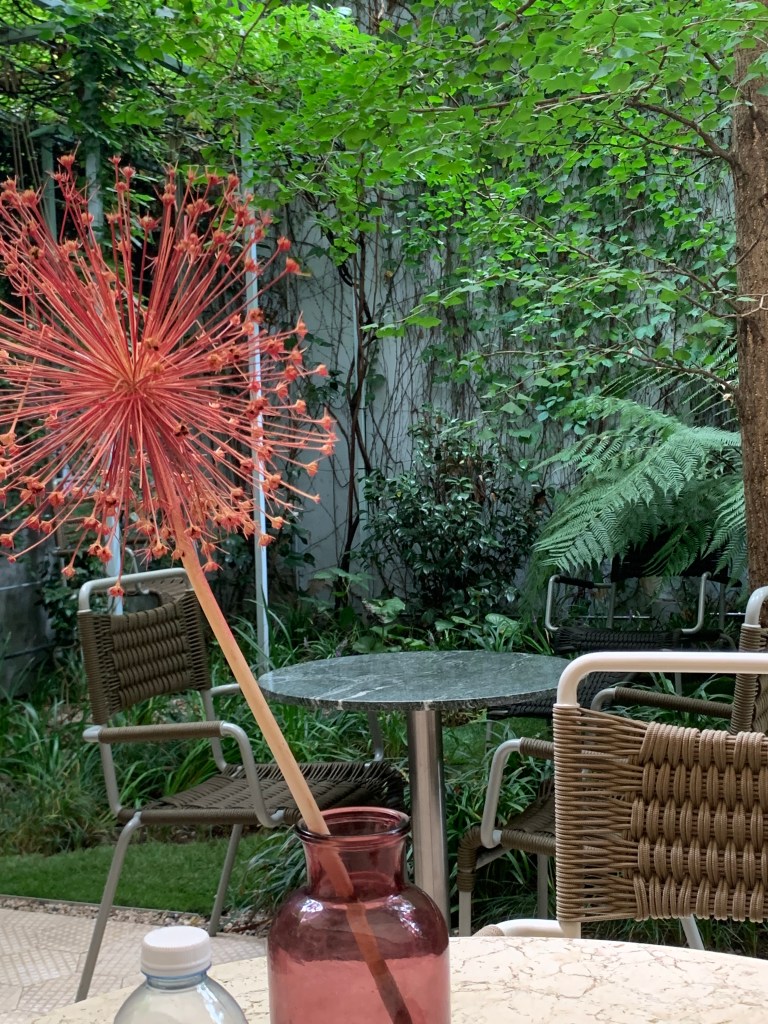
Senato Hotel is the former home of the Ranza family, who converted their neo-classical residence on Via Senato into a hotel and now operate the 43-room property. We arrived via taxi from Milan’s central train station and stepped from the almost-always bustling street (Via Senato is one of the roads that rings central Milan) into a tranquil lobby that adjoins the central courtyard, the expanse of which is covered by a shallow reflecting pool. Because we were quite early and our room wasn’t ready, we settled into the garden space of the café for a cappuccino and the “salad everyone loves” (we loved it too) before checking into our room. On our way back to the registration desk, we paused to admire the tillandsia collection, which is tended by Milan-based gardener-landscape duo Bonanomi Benatti.

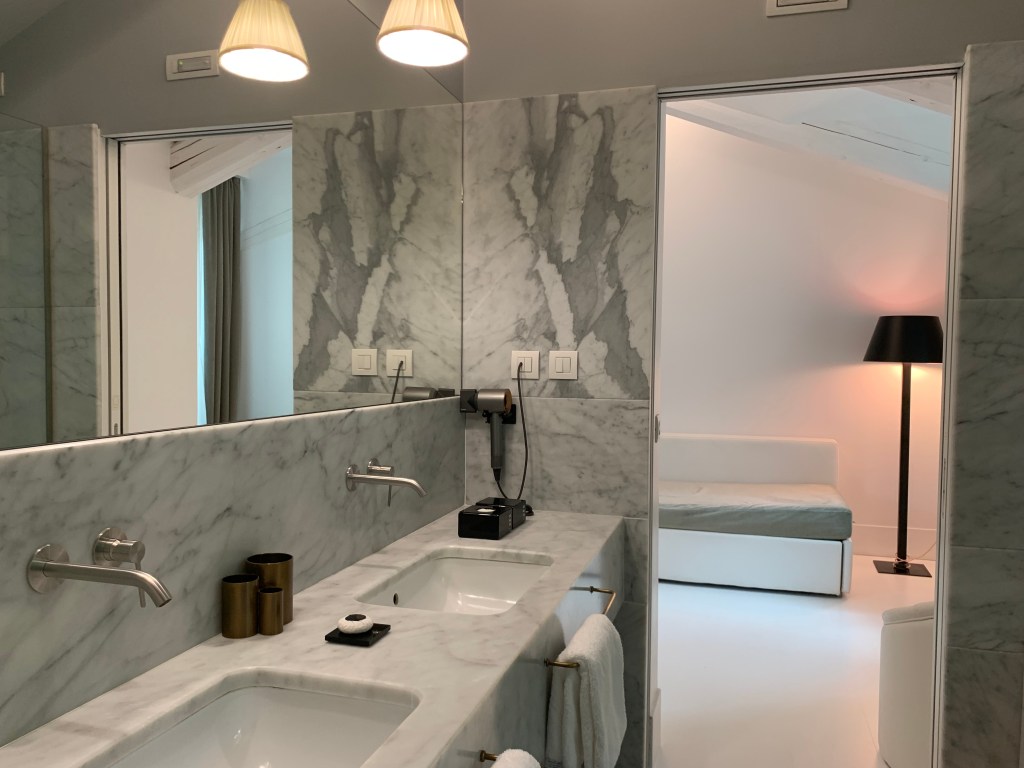
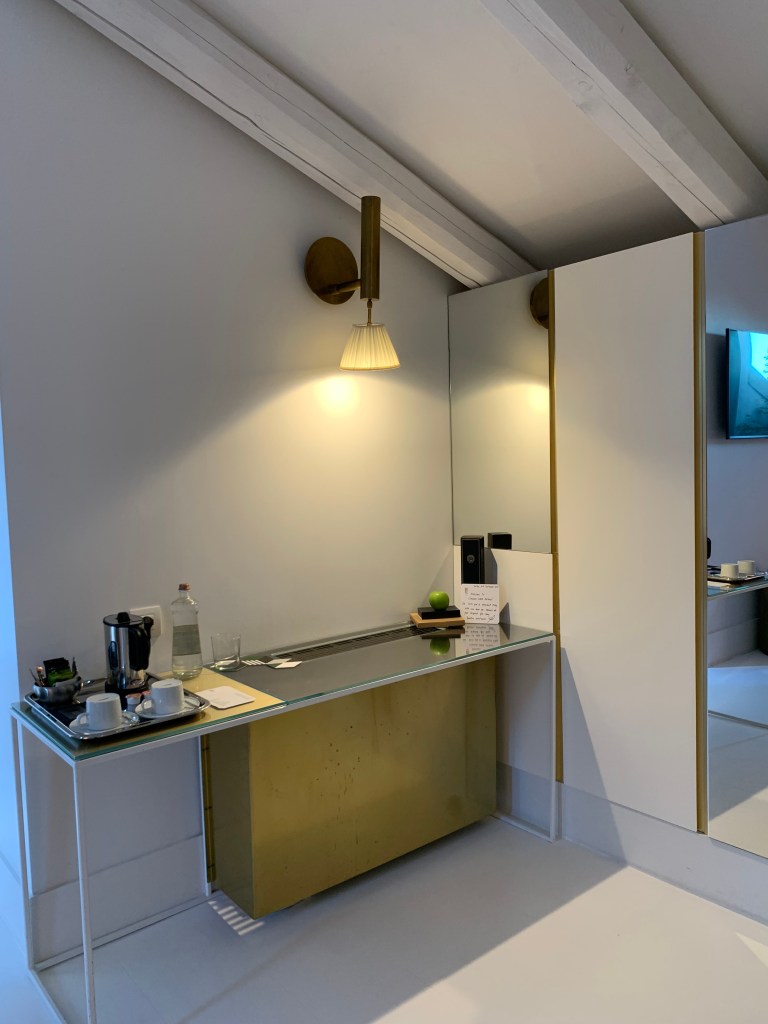
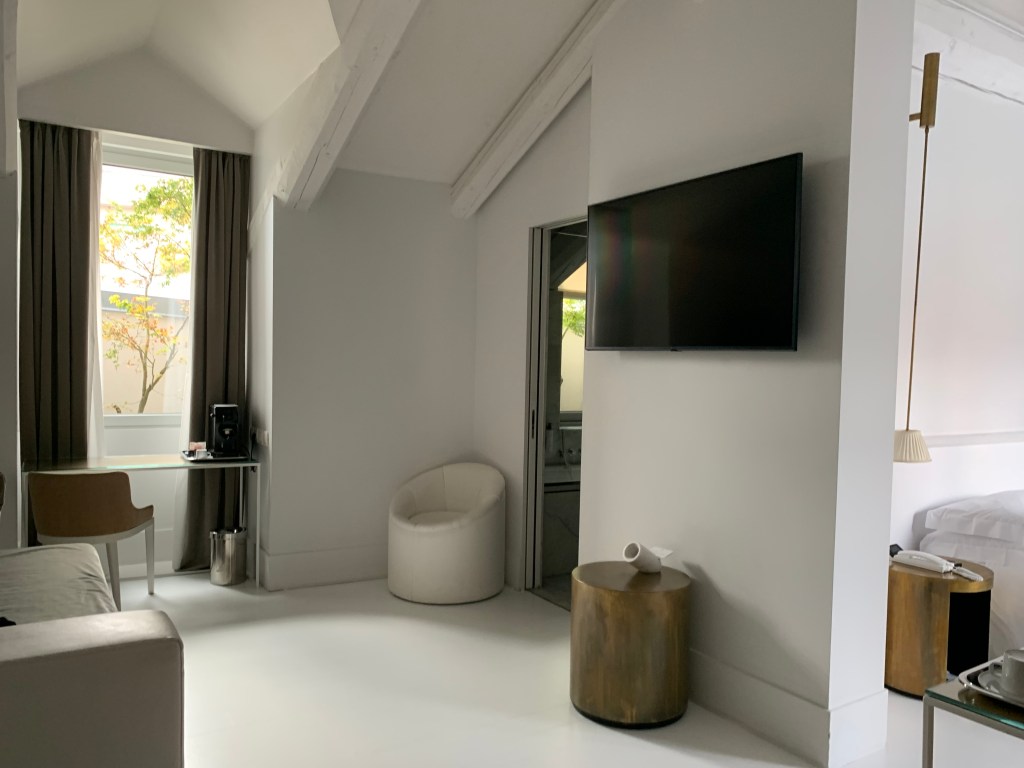
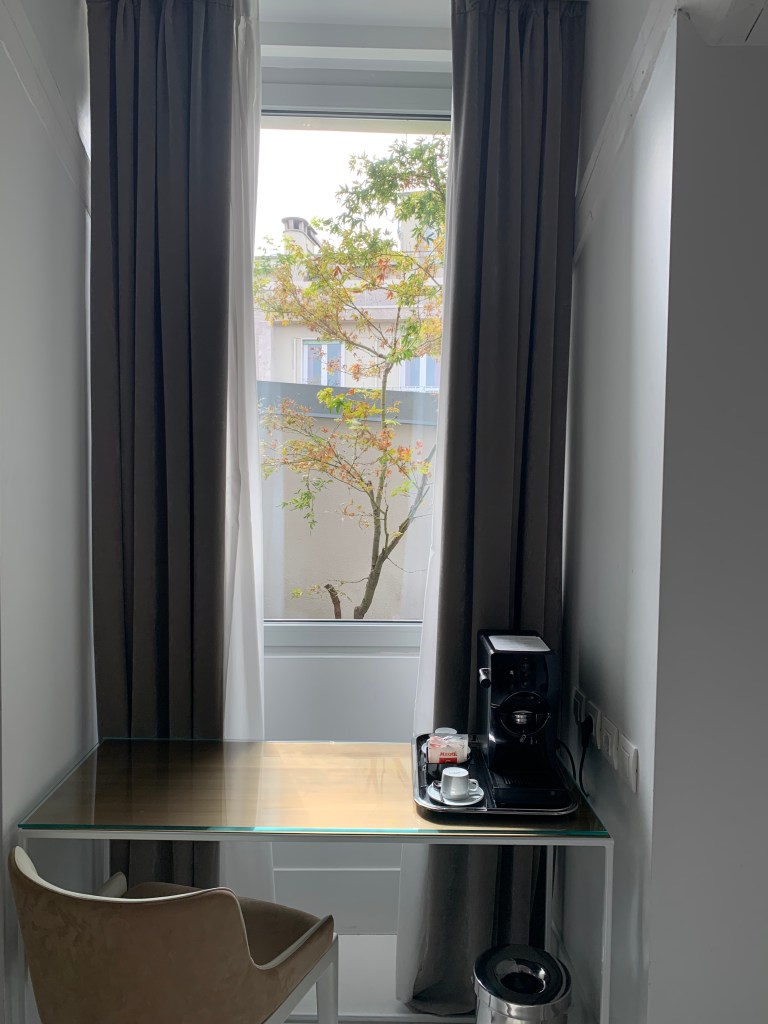
As we exited the elevator on the top floor, we were greeted by a skylit corridor with angled roof beams and only one other room besides ours. We felt a little like we had been given a passkey to a secret attic chamber. Our room at the end of the hall – the Senato Junior Suite –  was really three rooms: a living space with daybed, desk, coffee and tea bar, and large closets; a bedroom with a big terrace, and a beautiful Carrara marble bathroom with a separate water closet.

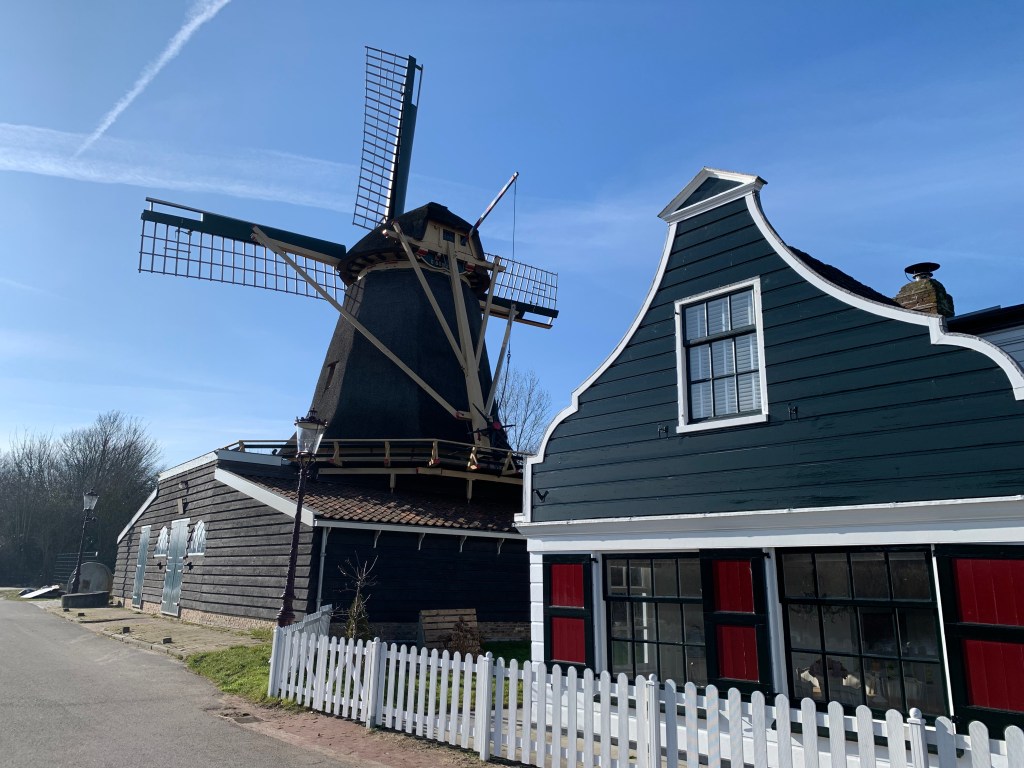
In our suite, the white floors, walls, and beamed ceilings served as a neutral and cheery palette to highlight the custom-designed furnishings made by Milanese craftspeople and well-chosen lighting and accessories. The room felt clean and uncluttered, and we appreciated that every surface wasn’t covered with something. This allowed the architectural elements of the room to shine, and we loved that the structure of the building was incorporated into the room’s design. (Side note: On this holiday, we had an unplanned overnight in Amsterdam, and were able to stay in one of our very favorite hotels, The Dylan. The room at The Dylan was also on the hotel’s top floor and featured attic-like ceiling lines with exposed beams. Both Senato and The Dylan do a fabulous job of capitalizing on a building’s architecture.)

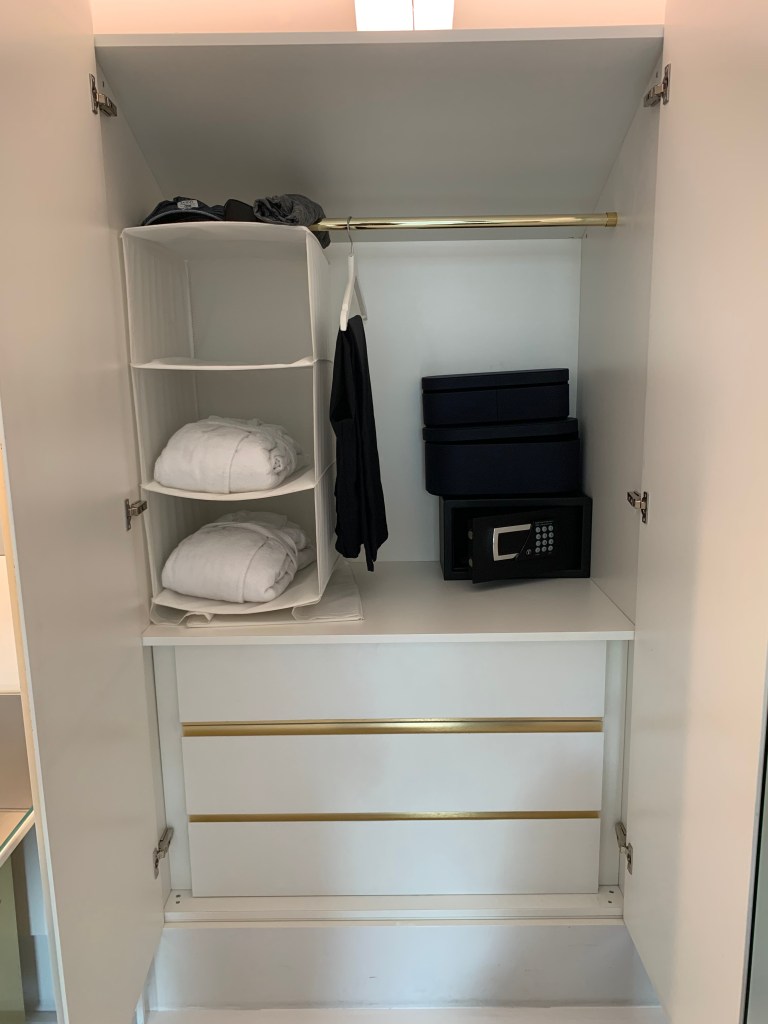
When we’re staying somewhere for more than one night, we like to unpack and stow away our luggage, which is never more than two carry-ons and a backpack. The large closets in our suite featured drawers, shelves, and hanging space that allowed us to put our clothes and our bags behind closed doors. In the bathroom, a long vanity with two sinks provided room for both of us, and we appreciated the separate water closet with toilet, bidet, and free-standing sink. The bedroom – also simple but beautiful – was oriented toward the terrace and the courtyard; we loved sleeping with the doors open and couldn’t hear any of the activity down below.

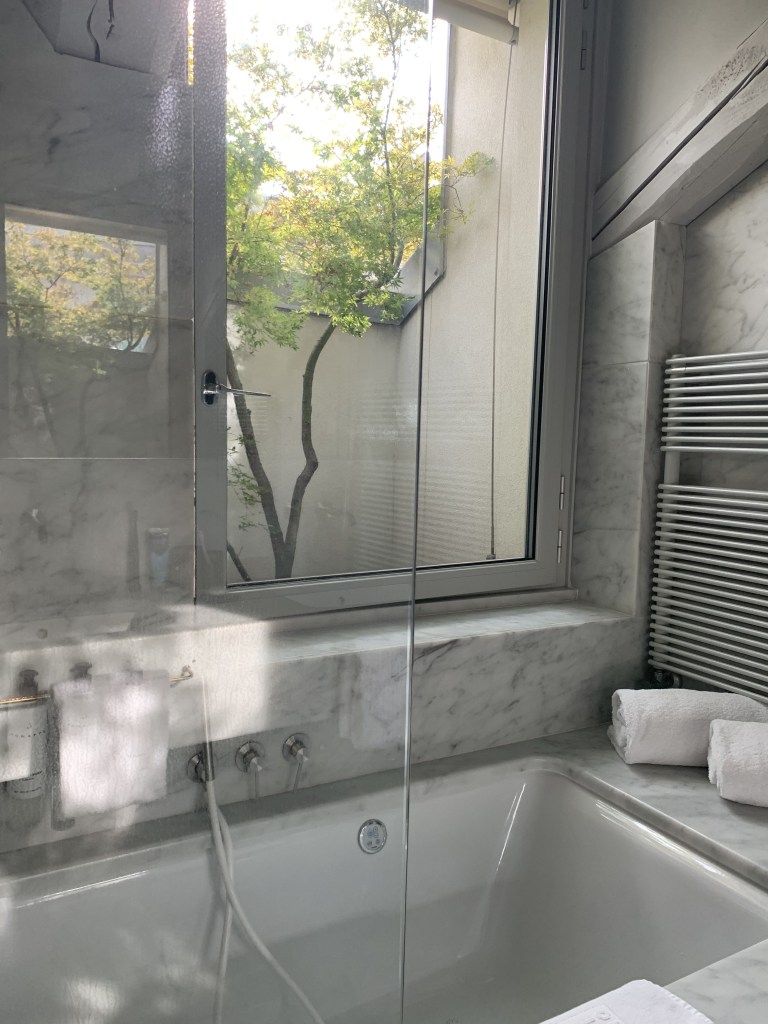
Our room featured two dormer windows oriented toward Via Senato: one in the living room and the second adjoining the jacuzzi tub and shower. The particular location of the windows in relationship to the rest of the building was the topic of some debate because we couldn’t see them from the street, but we eventually concluded, based on the footprint of the 5th floor, that they were likely set back from the rest of the building. Both of these windows were encased in short walls, and a lovely little tree – perhaps a maple or plumb – was planted outside each one.

When we were at the hotel in early October, the trees were just beginning to change color for autumn. Taking a bath or shower in a rooftop room with a view out to a live tree made our suite feel like a sanctuary. We will note that neither these windows facing the street nor the glass doors to the terrace afforded any kind of panoramic view, but that didn’t bother us; after all, a view is what the terrace of the Duomo is for!

Our second favorite feature of the Senato suite was a marble sculpture that served as a speaker for playing music from our iPhones. The OVO amplifier worked so well that we were tempted to bring one home, and the hotel shop sells them, but carrying home something made of Carrara seemed a little weightier than what we had in mind.

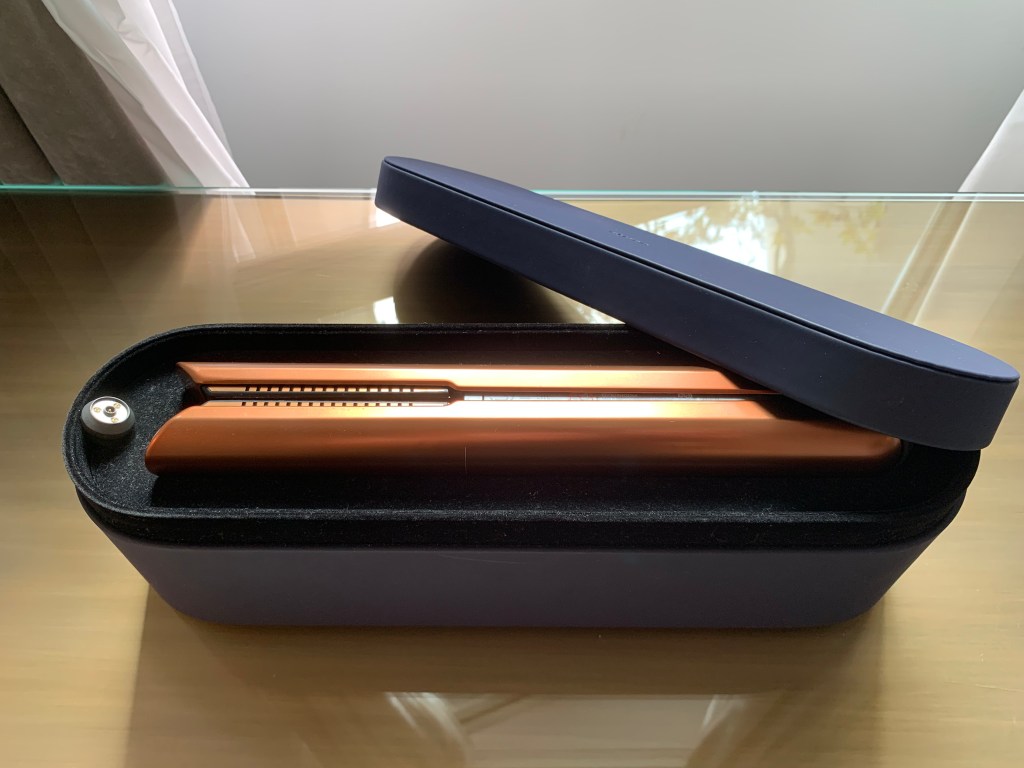
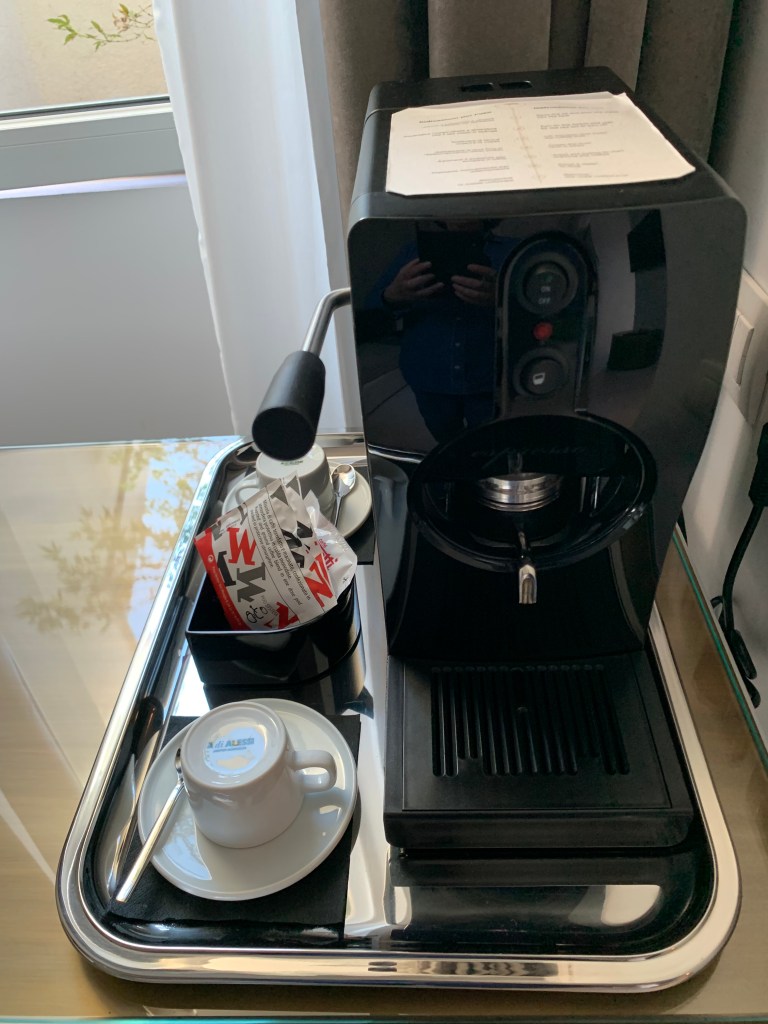
Following the theme of design and function, we both loved the espresso machine that allowed for a customized espresso shot. And for one of us, the Dyson hair dryer and hair straightener – the equipment our hair stylist uses – felt luxurious and came in very handy on the days it rained.  

We arrived in Milan after a short stay in Como at a vacation apartment that we found on the Plum Guide. While that experience was worth trying, we looked forward to checking into a hotel, and we were hopeful that our experience at Senato would match our expectations. It did; we loved everything about Senato. From the central location that provided easy access to all of Milan’s charm to the understated calm of our top floor oasis, everything worked. The Ranza family can certainly count us among its fans, and we can’t wait to return to get to know the hotel and Milan a little better.

Back to HOTELLING home

Santa Monica, California, USA ~ Shutters on the Beach

This weekend trip to Santa Monica served as a condensed re-do for a Southern California vacation we had planned the year before but had to cancel last-minute. For that longer holiday, we had chosen Santa Monica Proper, which is still on our list (it looks terrific), but because we had only one full day in California, we wanted to be closer to the ocean. Shutters on the Beach – as the name implies – is directly on Santa Monica beach and very close to its famous pier, so we figured it would give us the quintessential LA experience. It ended up being a California hotel in Cape-Cod clothing, a combination that worked just right for what we wanted.


Our flight arrived at LAX at 10:30 in the morning, and we were at the hotel by 11:15. (Worth noting: For any visitors to LA trying to fit maximum fun with minimum time in a car, Santa Monica is a good choice.) With such an early arrival, we were prepared to drop our bags and return later for check-in, but the hotel had a “partial ocean view” room ready to go. After getting a helpful explanation from the staff member at the front desk about the difference between “partial ocean view” and “ocean view” – an explanation that included a hand-drawn diagram and his personal assessment of both choices – we decided to go for the room that was ready so we could get settled and get on with our weekend.


The route to our room took us from the street-side lobby – a space we didn’t appreciate right away but later understood why it’s called the “living room” – up one elevator to the pool level on the third floor, down a corridor, into a second elevator, up to the sixth floor, and then around the corner to our room on the opposite side of the horseshoe. Upon exiting the first elevator, we stepped into an inside/outside space with – you guessed it – shutters separating the in from the out. At that time of day, the shutters were wide open, and a cool breeze coming in from the ocean blew through the corridor. When we left the second elevator, we were happy to see that its hallways were the same with guest rooms on one side and shutters to the outside on the other.

It didn’t take long for the shutters in the hotel – literally counting every one we encountered – to become a bit of a game for us. We discovered that navigating through the hotel was best done via stairs whenever possible, and those stairs led to many combinations of spaces divided by shutters. Reading this may lead you to think that the hotel took the shutters theme a little too far, but it seemed to work both from an aesthetic sense and a practical one. The shutters provided multiple options depending on the day’s weather: shade without stuffiness, air flow without wind and heat, and the perfect level of darkness for sleeping in without sleeping all day. It felt as though a member of staff – invisible to guests – was in the background constantly adjusting the shutters to match the current conditions.


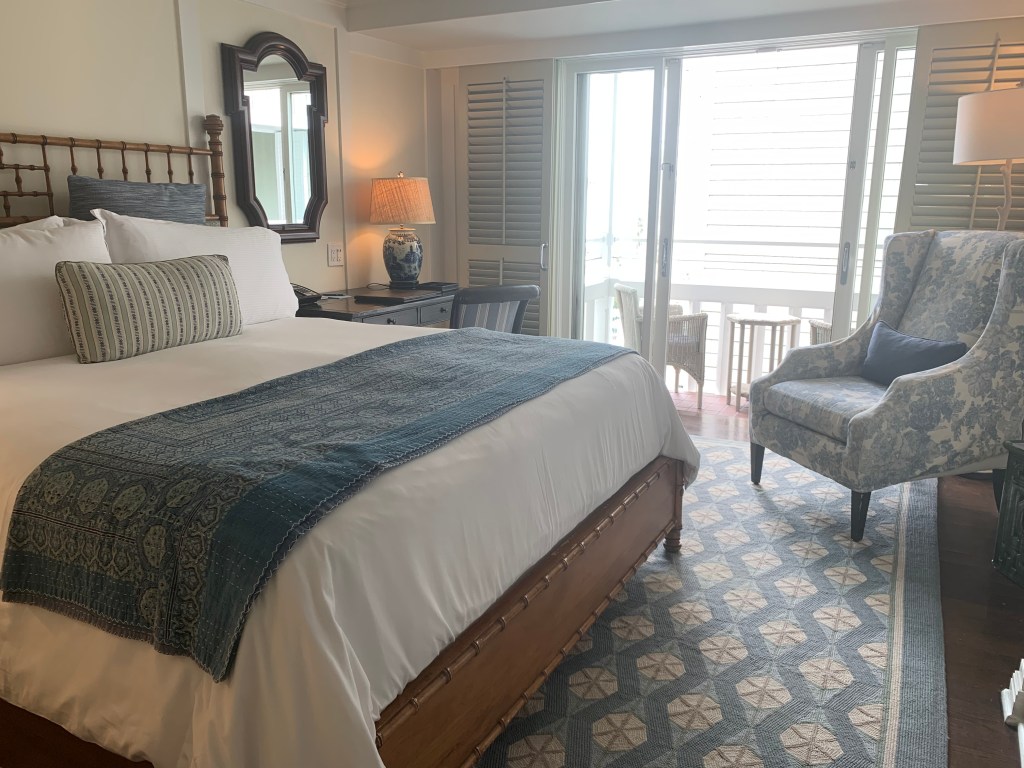
The hotel’s website advertises it as “an acclaimed Santa Monica beach hotel” that “recalls the quintessential cottages of Cape Cod.” We’ve never spent time in one of these cottages, but the guest room and common spaces did make us feel like we were staying at the home of friends…in all the best ways. Shutters features nearly 200 rooms and suites, so it isn’t a small property – certainly not a cottage – but the design and décor were personal and intimate. Our partial ocean view room on the 6th floor had a perfectly lovely view of the ocean from its sliding doors and balcony. (A second note: Santa Monica beach is quite wide; an ocean view room is still a good distance from the ocean even if it’s right on the beach). And while we loved looking out to the beach and ocean, we spent as much time studying the contours of the building – its shingles, balconies, stairs and, yes, shutters.

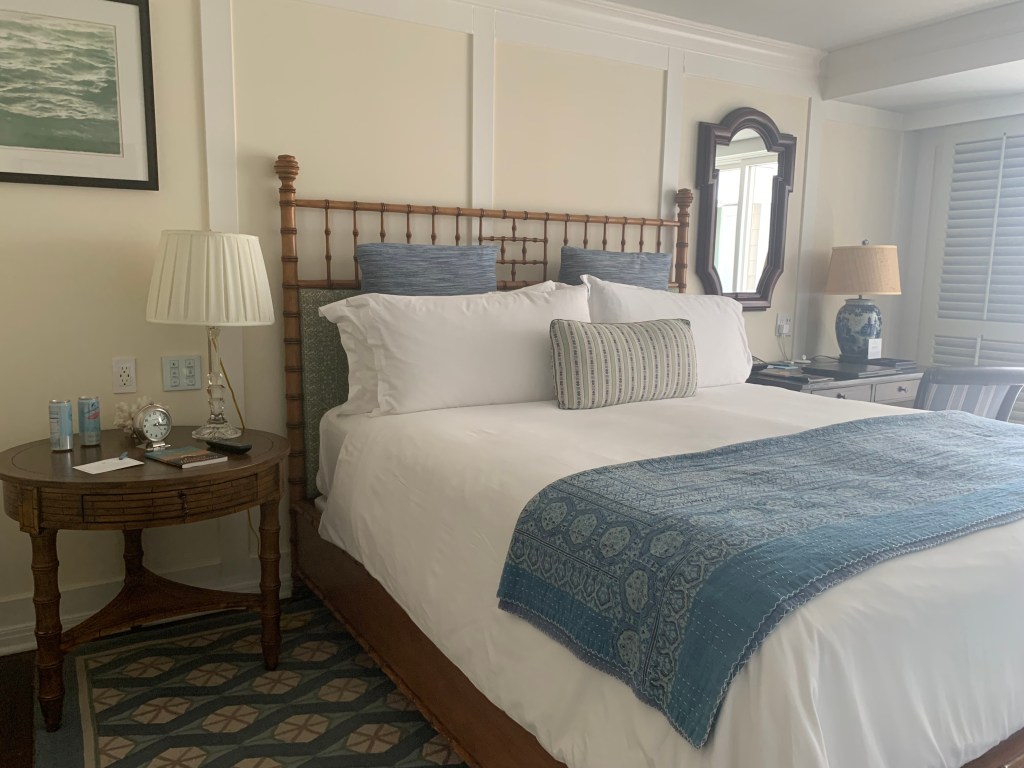
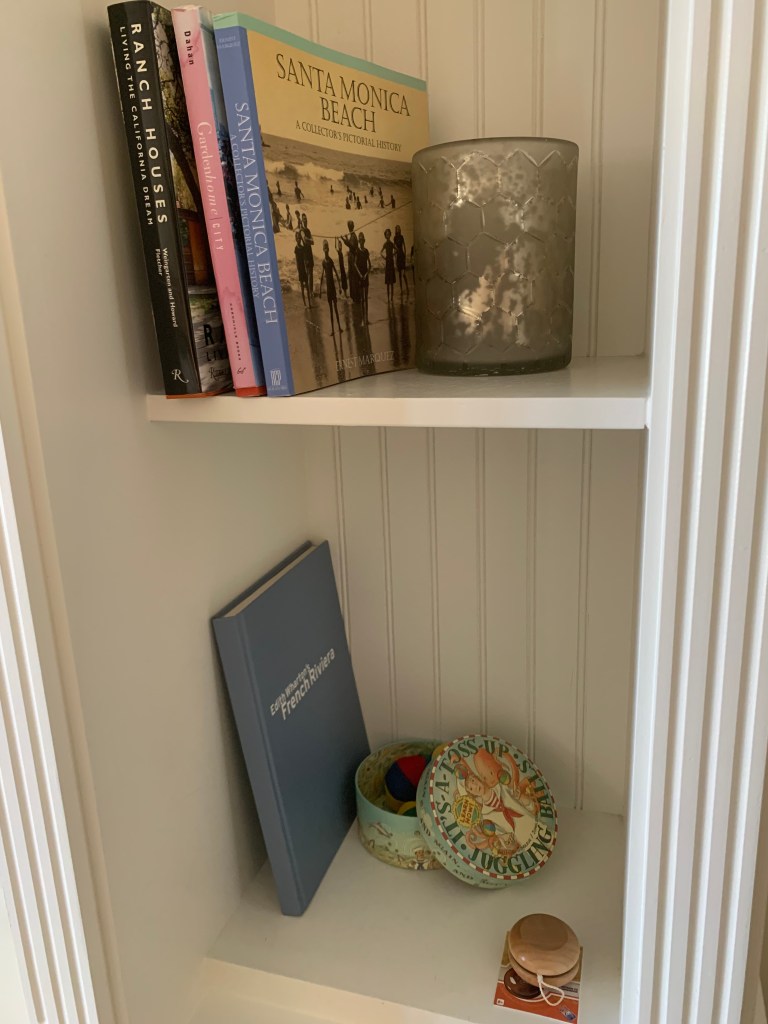
The room’s interior felt non-corporate with bookshelves holding books we actually took time to peruse; a large round bedside table with a piece of coral, a push-button alarm clock, and a copy of Hemingway’s Old Man and the Sea; and a slipcovered wingback chair next to a Chinese ceramic lantern. Some of the furniture had a few scratches and dings, but as we settled into the Shutters vibe, we began to question whether it was purposely distressed – an effort at making us feel like visitors to a friend’s house and not anonymous hotel guests.

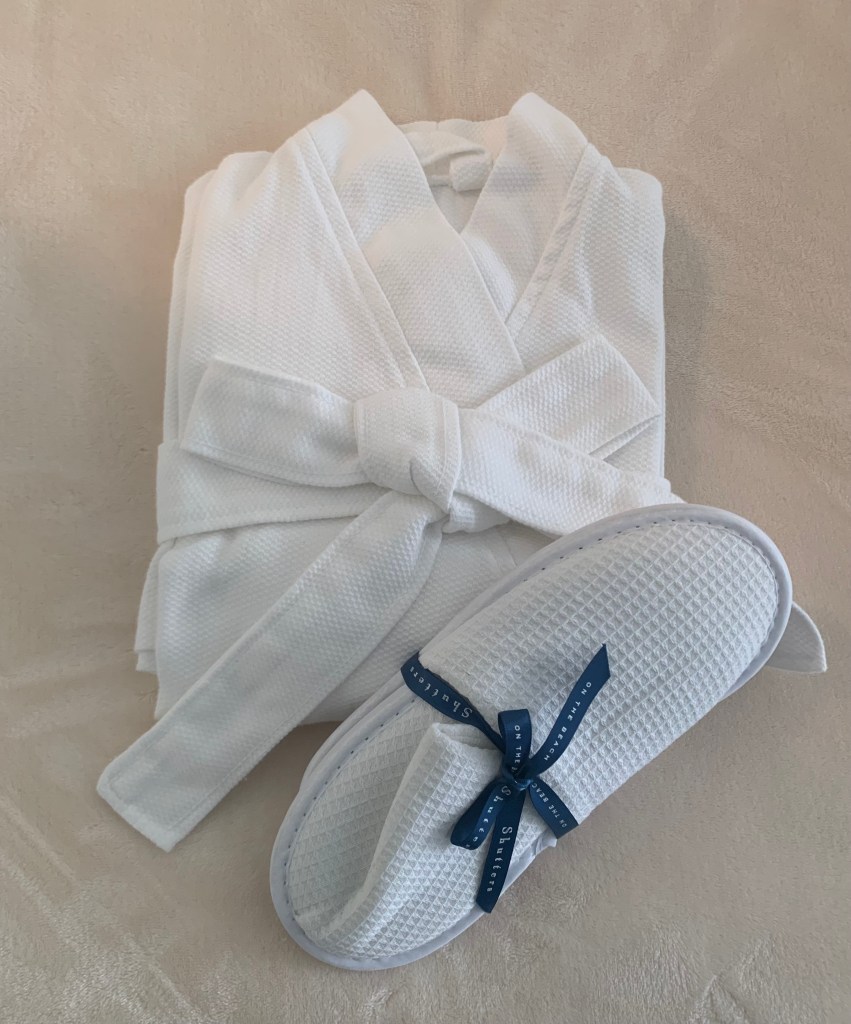
When we first arrived in our room, it was set up for an extra guest – a kid – with a rollaway bed and a kid-sized robe and slippers. We’re not sure whether the rubber whale bath toy was for the kid or for all guests, but we appreciated the effort the hotel took to welcome its younger customers even though we were only a party of two. We’re pretty sure our early arrival got in the way of someone else’s request, but after a quick call to the front desk, everything was whisked away to, we assume, another room for the party of three.

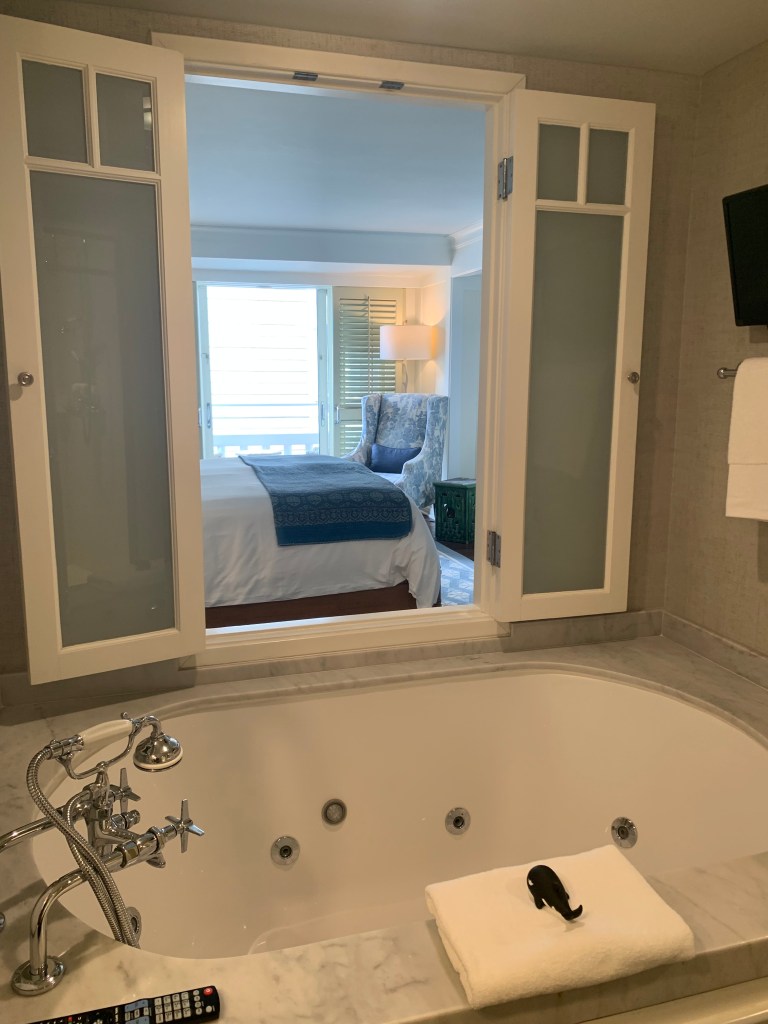
Our favorite part of the room was the opportunity it provided to sleep on the ultra-comfortable bed with the shutters only partially shut and the fresh, cool air coming in all night.  We also enjoyed coffee in the morning on the balcony (the first morning, we made it ourselves from the Nespresso machine; the second morning, we went down to the living room where it was already brewed and waiting for us). And the deep tub, also separated from the bedroom by shutters, so accessible to the fresh air, tempted us in. When, by the way, is the last time you’ve seen a hotel supply a real candle and matches next to a tub?

In our room, we encountered a few things we would change in a perfect world. The aforementioned Nespresso machine was tucked away in a cabinet with no obvious place to set it up if we actually wanted to make coffee. With that said, the housekeeping staff noticed we used it on our first morning and made space for it on the desk for day 2.  (Note # 3: The hotel staff was exceedingly attentive and friendly during our stay; a stand-out moment was a staff member noticing us sitting on the balcony in the afternoon and handing us two cans of water across the railing from an adjacent balcony.)

Other small observations: The mini bar and the cabinet near the bath with lotions and potions were secured with a zip tie, which seemed like a mismatch for the clientele the hotel was clearly trying to attract. And the deep tub with the real candle had jets that didn’t work. This didn’t really bother us, and the hotel was quick to respond with a restaurant credit when we reported it upon check-out, but it seems like something that should be on a punch list with each room turnover.


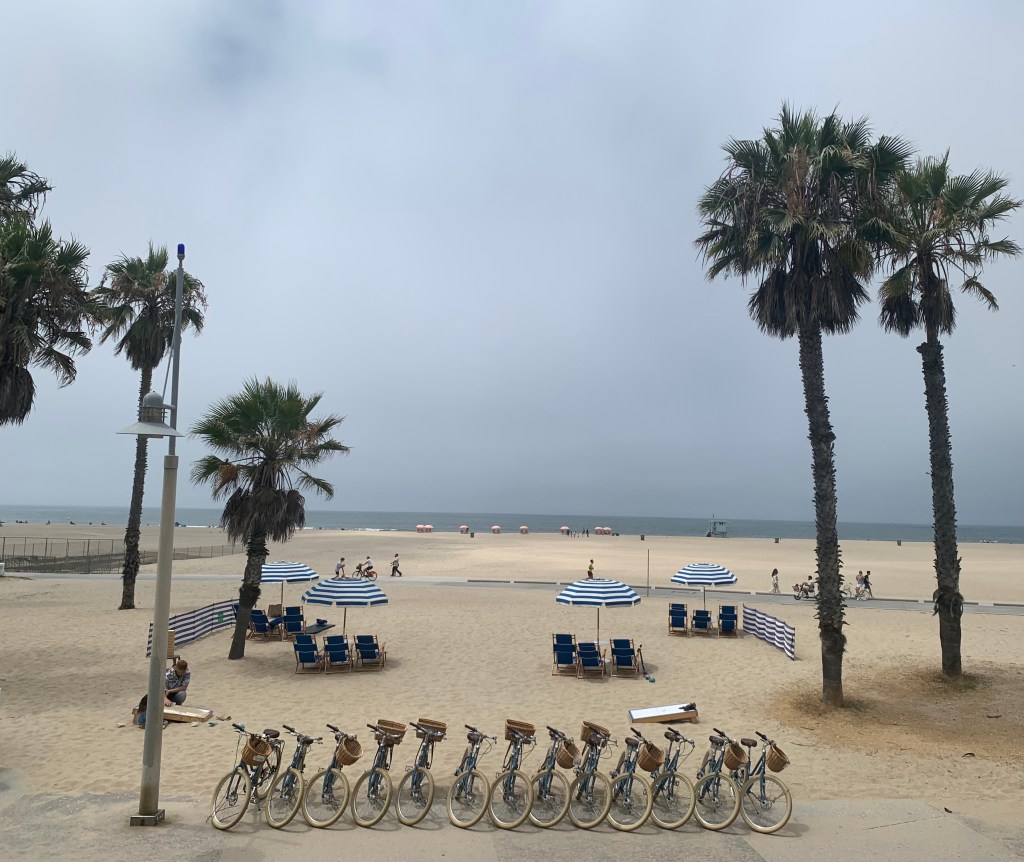
We didn’t have much time, but the hotel helped us make the most of it. Our first adventure was a bike ride along the Marvin Braude bike trail. The hotel set us up with two cruiser bikes, and we headed south toward Venice. We intended to take another adventure north but didn’t manage to fit it in. 

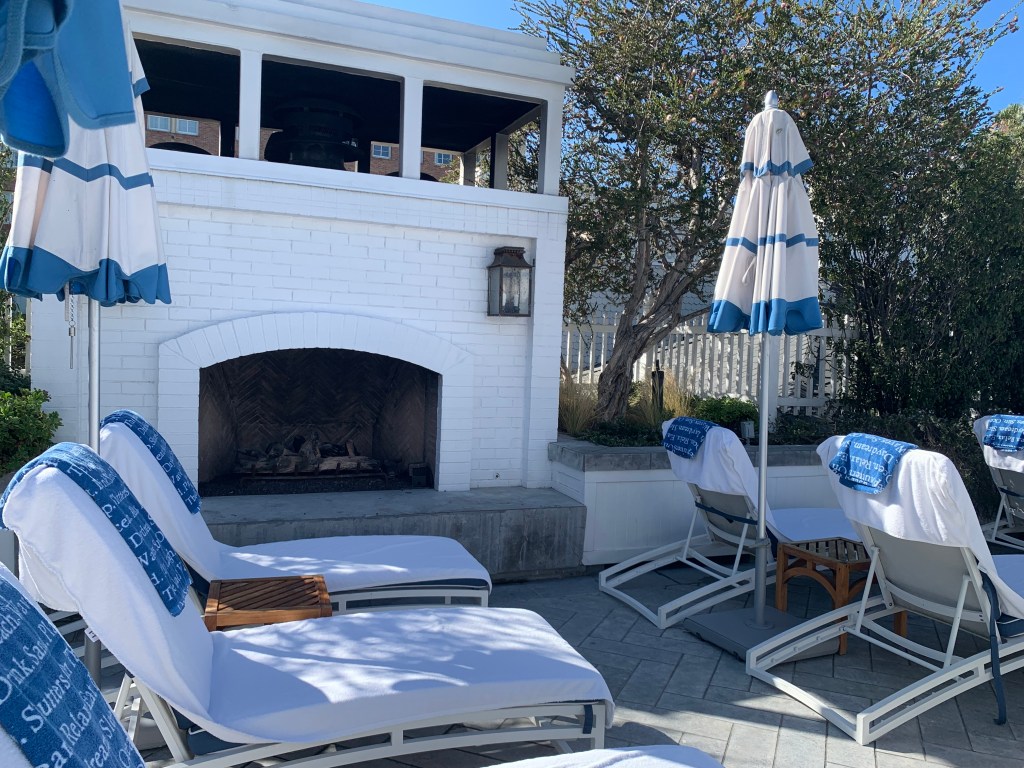
If you’ve read other blog entries from us, you’ll know that we love the ocean and the beach, but we aren’t avid swimmers and sunbathers (with the exception of time spent in the Caribbean Sea in Puerto Rico). More often than not, on warm-weather vacations, we end up at the pool under the cover of an umbrella, and the Shutters pool was a really nice spot to recline, have a cold beverage, and catch up on some reading. When we were there, it was full of kids – cute kids – so we didn’t actually get in the water. But we loved the energy of the space, the view out to the beach and the ocean, and the big fireplace that made us want to come back when the weather would call for sitting on a lounger in a warm sweater.

On the day we checked out, we made time to do a self-guided tour of the hotel’s art collection. When we first arrived, we noticed a handful of terrific pieces hanging in the lobby but only later came across a booklet with a self-guided tour of 30 prints from the likes of David Hockney, Jasper Johns, Cales Oldenburg, and Alex Katz. (We’re now realizing that there is representation from only one woman: Yayoi Kusama.) We had a lot of fun wandering through the living room, the hallways on the main level, entries to the restaurants, and the meeting rooms to view and read about each pieces. It was like having a semi-private visit to a museum; we could linger as long as we wanted, and the only people we encountered were focused on other things, but they seemed to recognize and appreciate what we were up to. The art tour was the perfect diversion before we checked out and headed back to the airport and back to real life.


Back to HOTELLING home

Chicago, Illinois, USA ~ The Langham

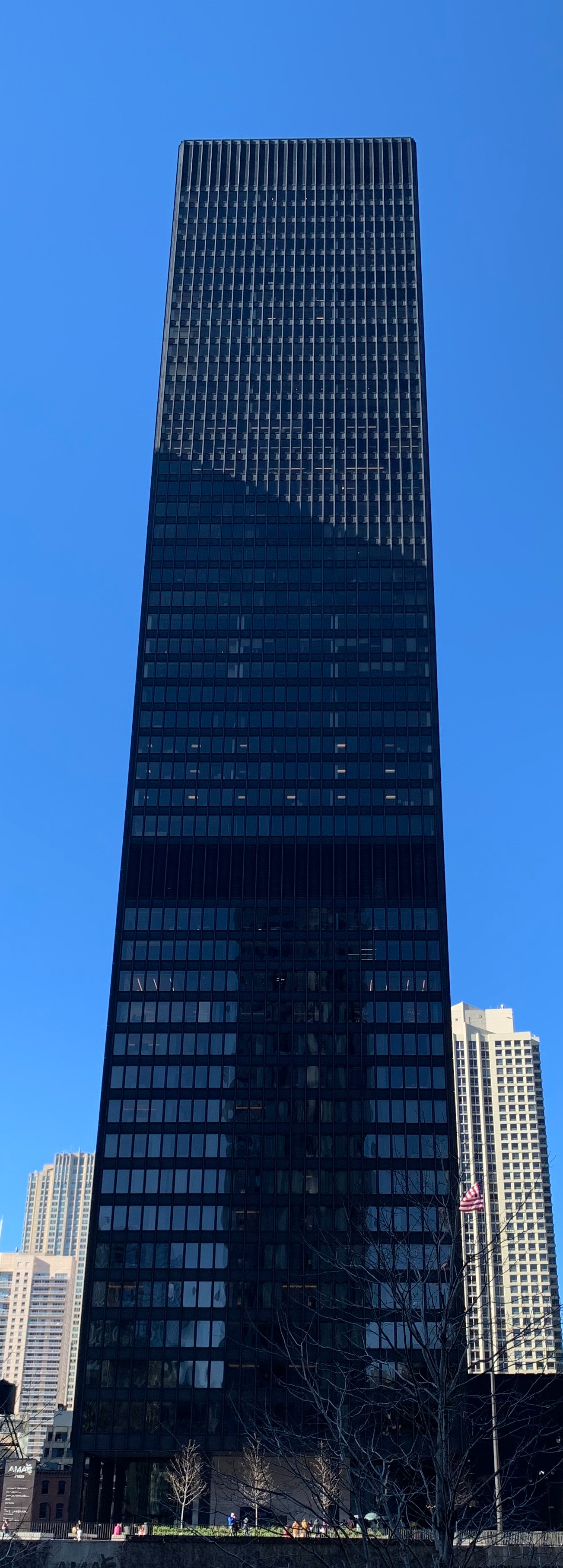
The Langham had been on our list for a long time – in fact, since it opened in 2013 in an iconic Ludwig Mies van der Rohe tower on the Chicago River. The sleek black building in the modernist international style — the former regional headquarters of IBM — has always been a favorite of ours among the dozens of standout skyscrapers in downtown Chicago, and we were excited when we learned that part of it was converted to a hotel. But other travel plans, the pandemic, and life in general kept us away until now when we had a weekend to make a quick run to the Windy City to pick up some wine from a favorite importer.

We shouldn’t have waited so long.


Arriving to downtown by car, we dropped into Lower Wacker Drive and traversed the bowels of the city, emerging via an exit just a few blocks from The Langham. Although we had been near the building dozens of times, this was our first opportunity to get up close and personal. After leaving our car with the valet, we walked through the ground floor sitting area – pausing to greet a portrait of van der Rohe – and then took the elevator to the second-floor lobby and reception desk.

The peacefulness and somewhat intimate feel of the first floor was replaced with a bustling and lively scene when we emerged into the soaring and light-filled space on the second floor. In addition to encountering a wedding party that had gathered for photos, we saw families heading left to what appeared to be a salon hosting high tea and another group on its way to the bar on the opposite side.


The Langham Chicago is one of 17 Langham hotels in Asia, Europe, the Pacific, and North America, with more on the way. The Langham London opened in 1865 and was the largest building in London at the time and Europe’s first “grand hotel.” After World War II, it was bought by the BBC but returned to operations as a hotel in 1991 and is the namesake of the Langham Hospitality Group.

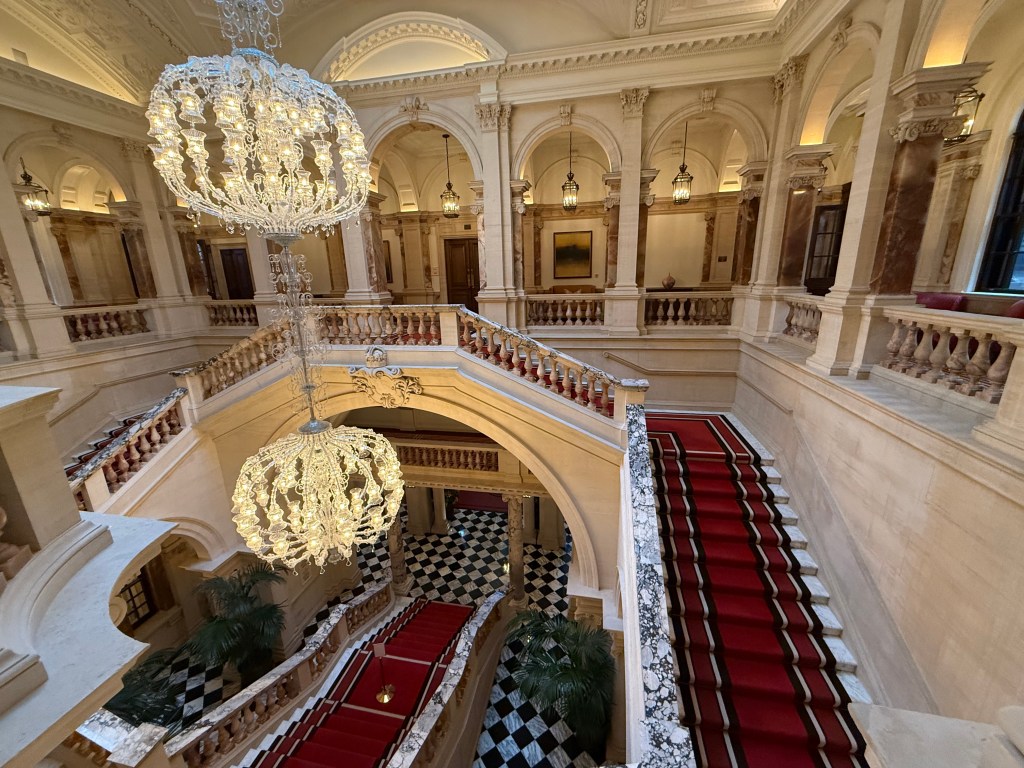
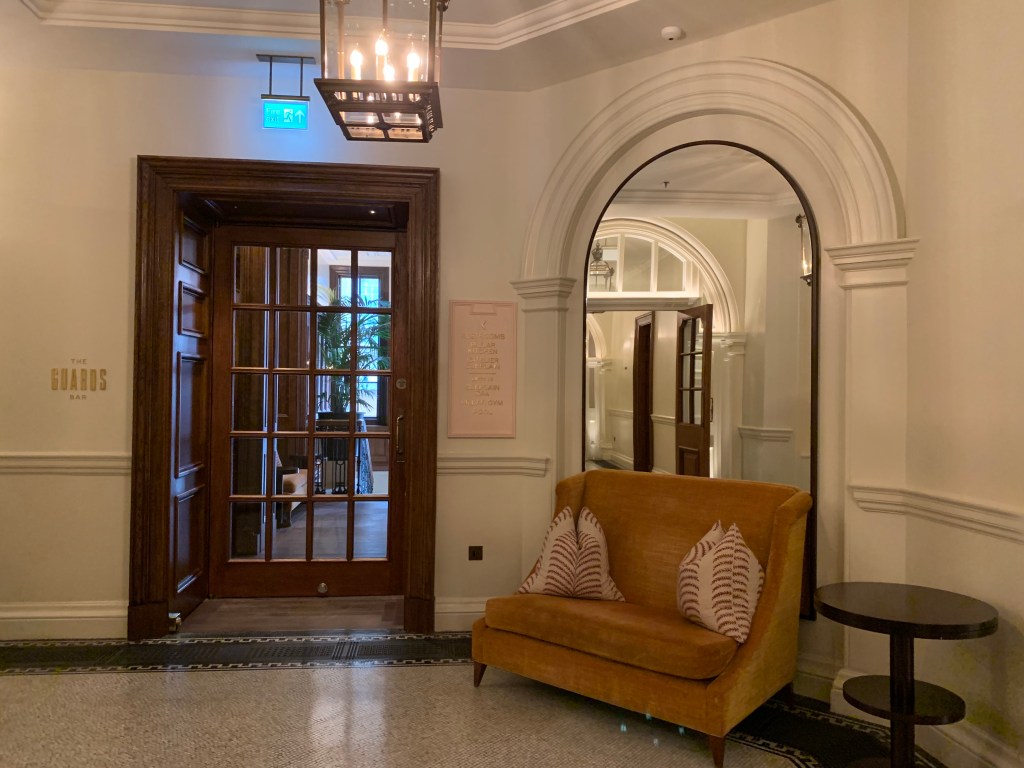
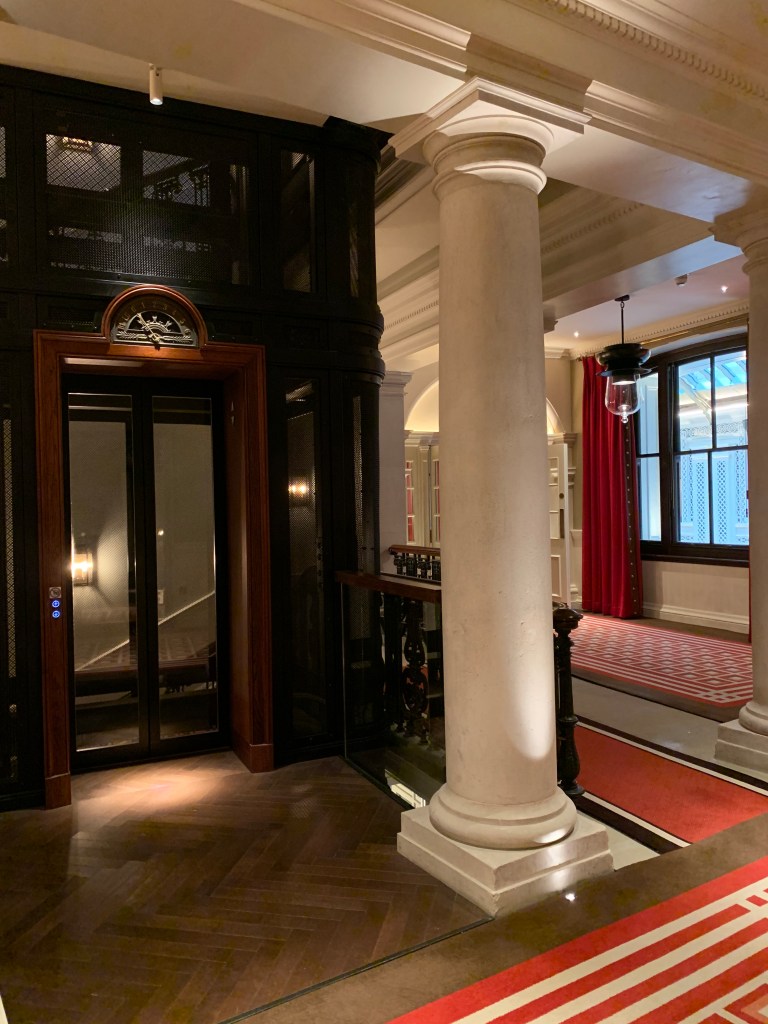
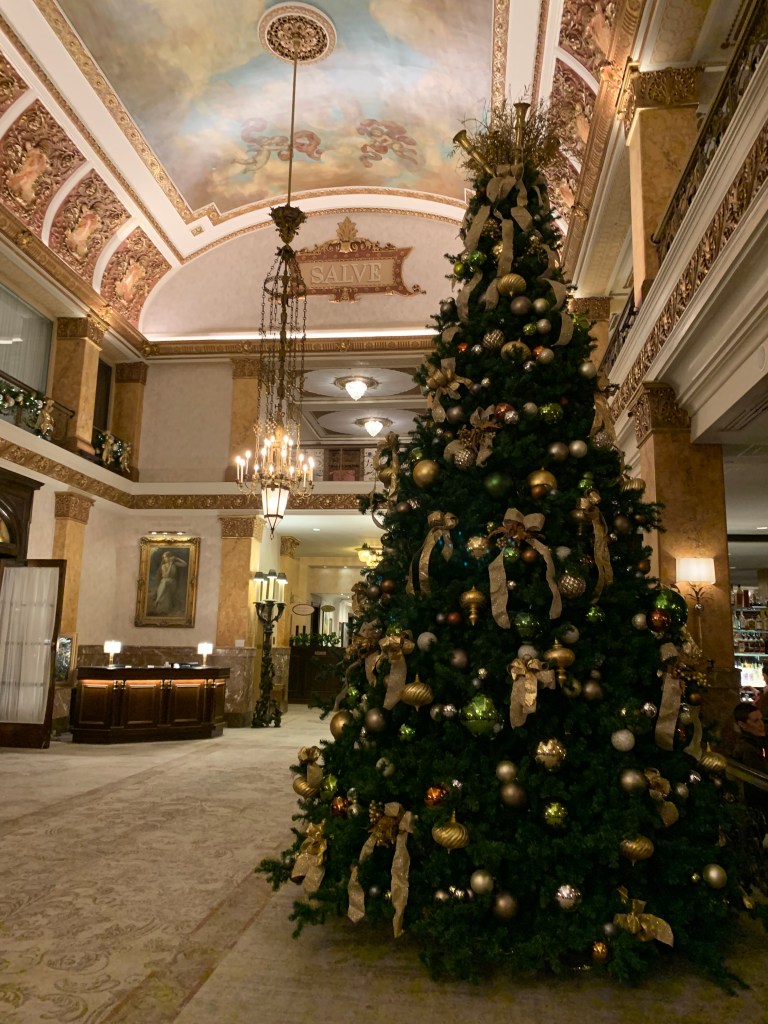
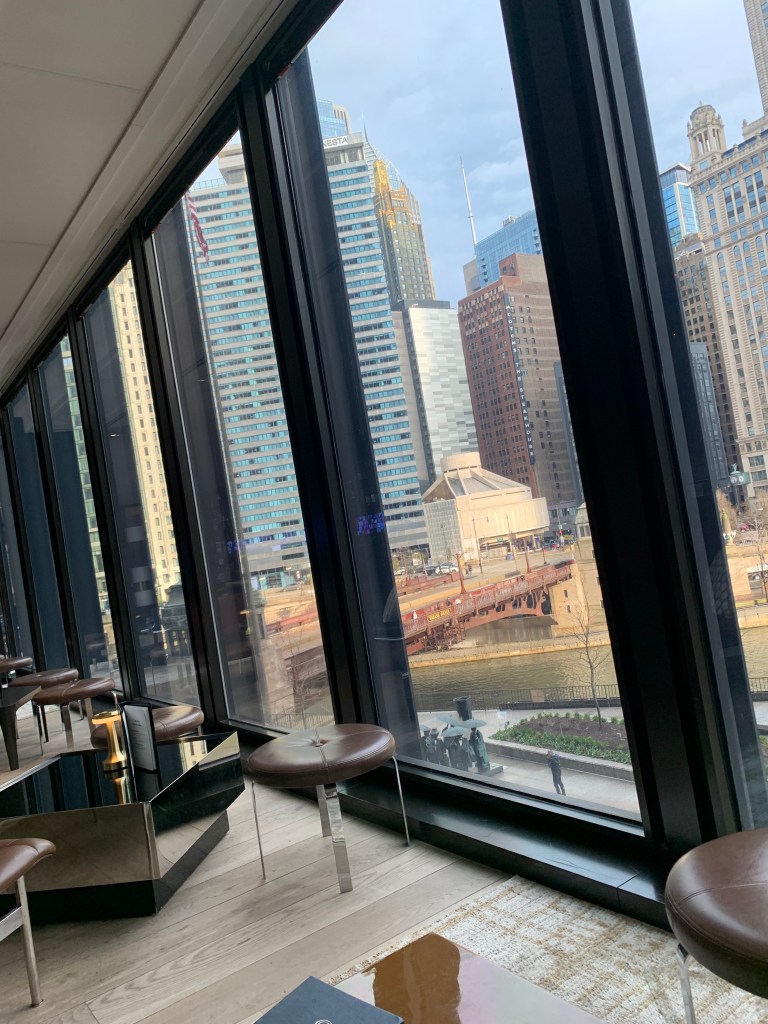
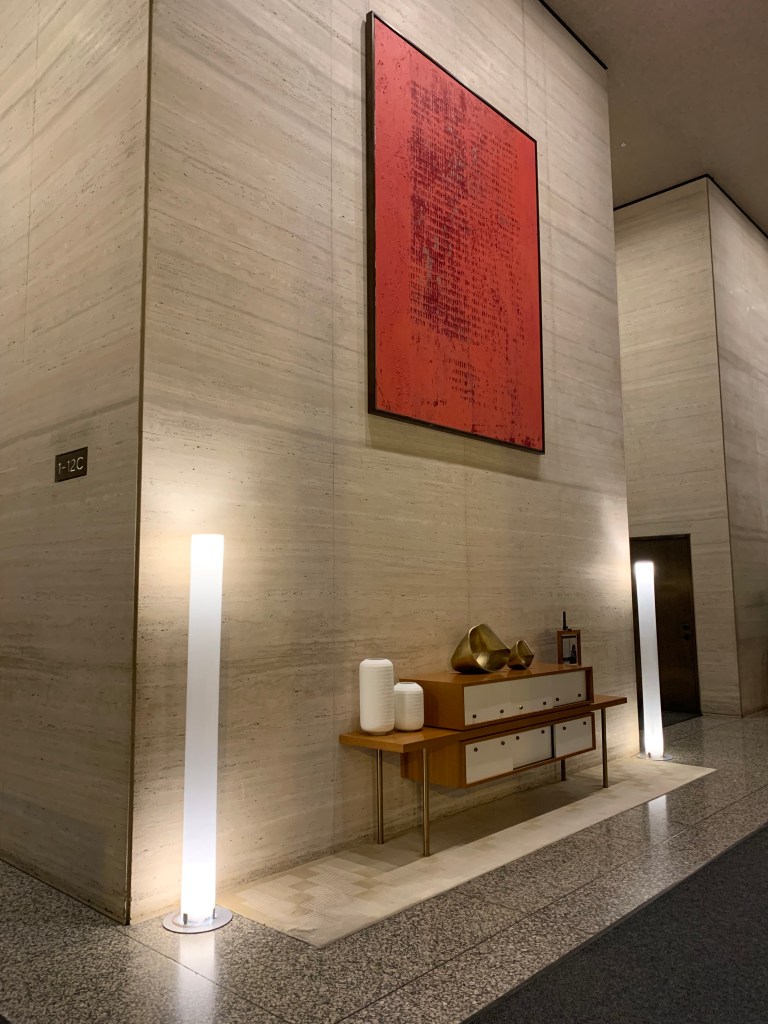
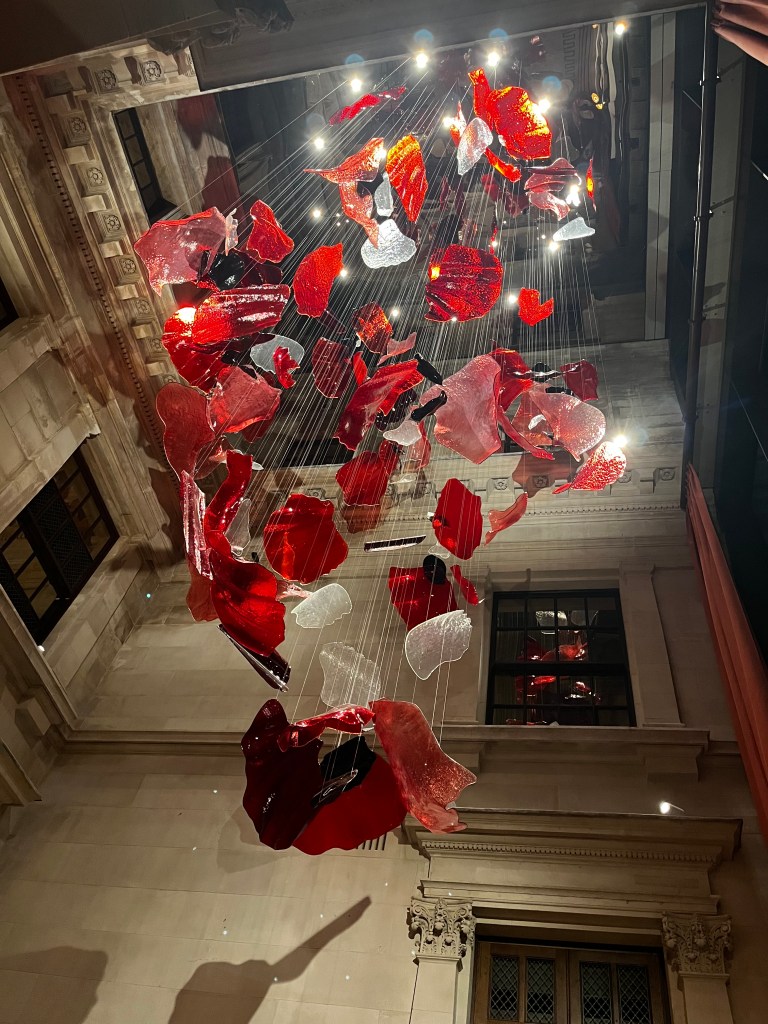
The Langham Chicago occupies the lower 13 floors of the van der Rohe tower, which was completed in 1971 and is on the National Register of Historic Places. As of now, The Langham is the only hotel in a van der Rohe building. A professed pillar of the Langham Hospitality Group is design with each hotel “manifesting a unique story through its architecture, design, and one-of-a-kind local art.” We were excited to see how the black tower, built as a corporate headquarters, would be interpreted as a hotel, and the common areas proved to be a great preface to the rest of the story. The skeleton of the building – anodized aluminum and bronze-tinted glass – featured prominently, but the modernist lines were softened and even complemented by curvy patterns in the stone floor, a playful suspended sculpture of blown glass, and plush couches and chairs. With two floors of light bouncing off all of the reflective surfaces, the lobby nearly glowed.


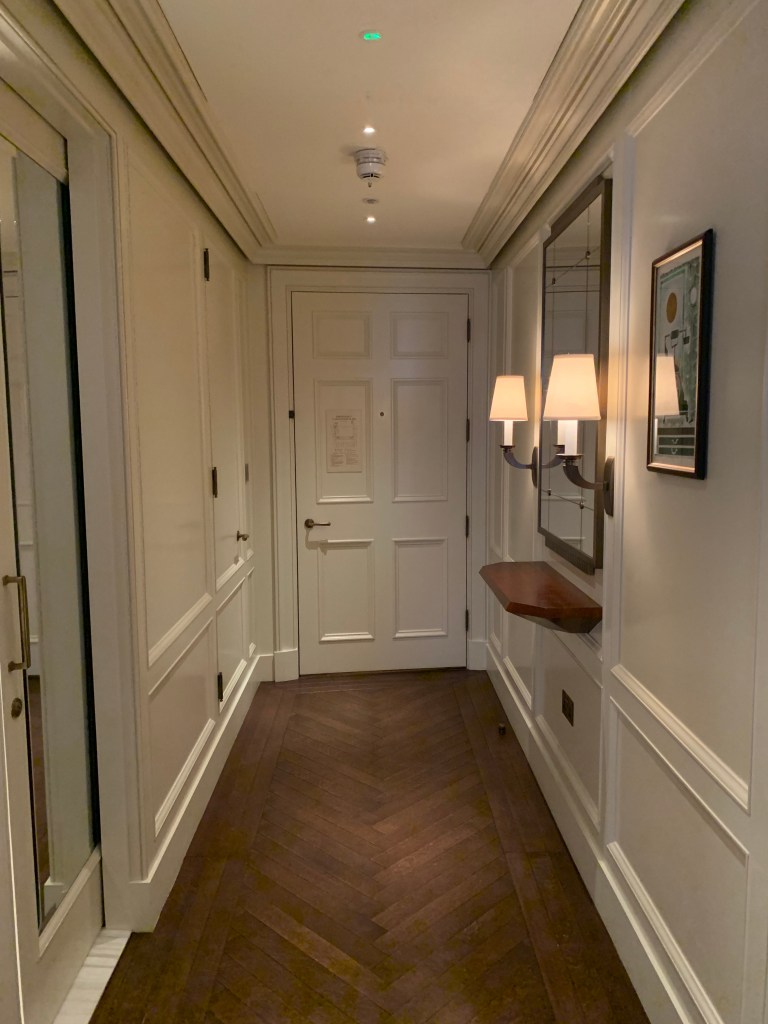
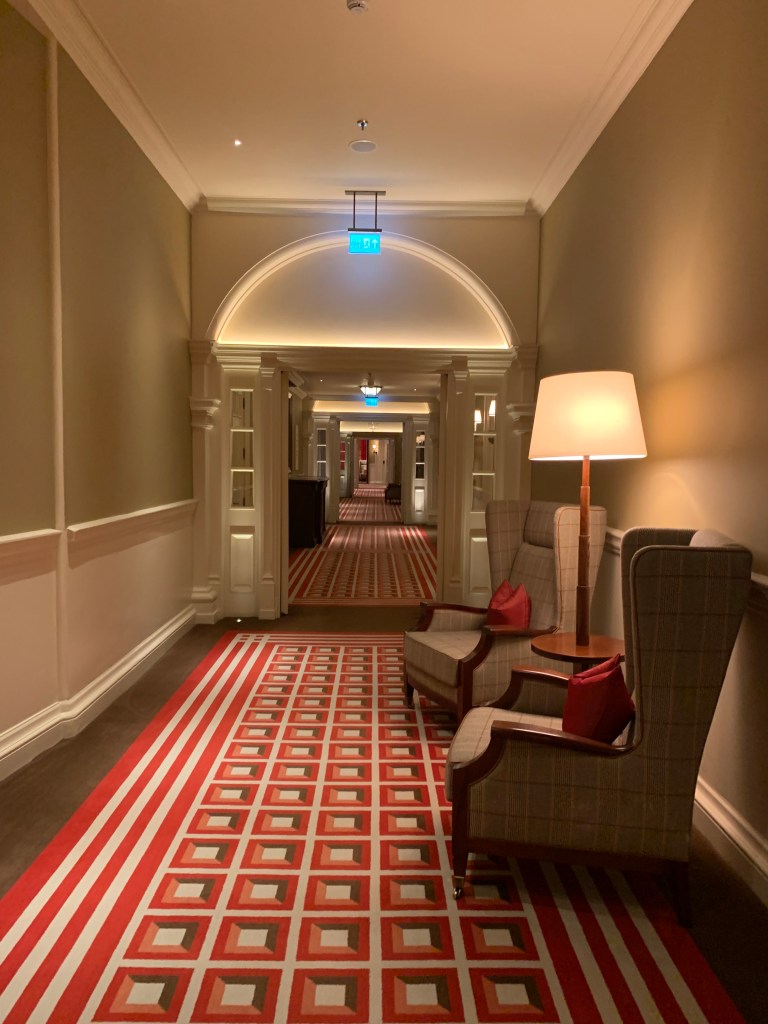
After a friendly and efficient check-in and a promise to return soon for a drink and dinner recommendation, we stepped back in the elevator for a lift up to the tenth floor and our room. The guest room hallways were expansive yet cozy with dark wood paneling, intermittent mirrors, low lighting, and a beautiful runner rug. It felt like yet a third interpretation of the building’s spaces after the intimate ground floor sitting area and the soaring second-floor lobby.

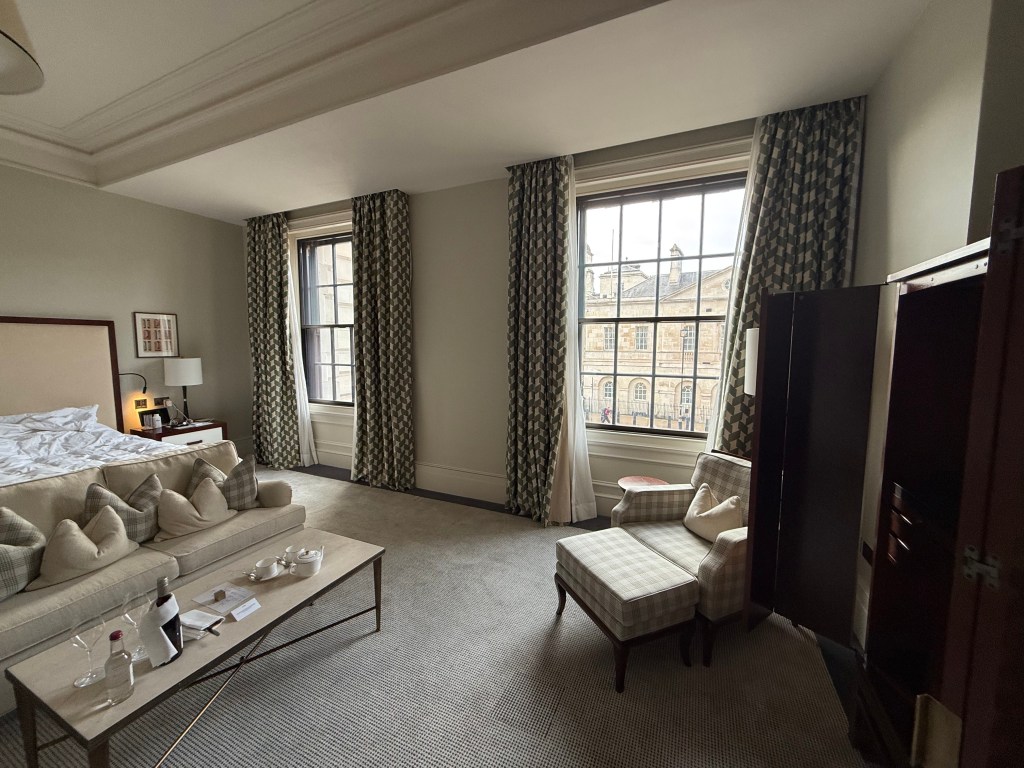
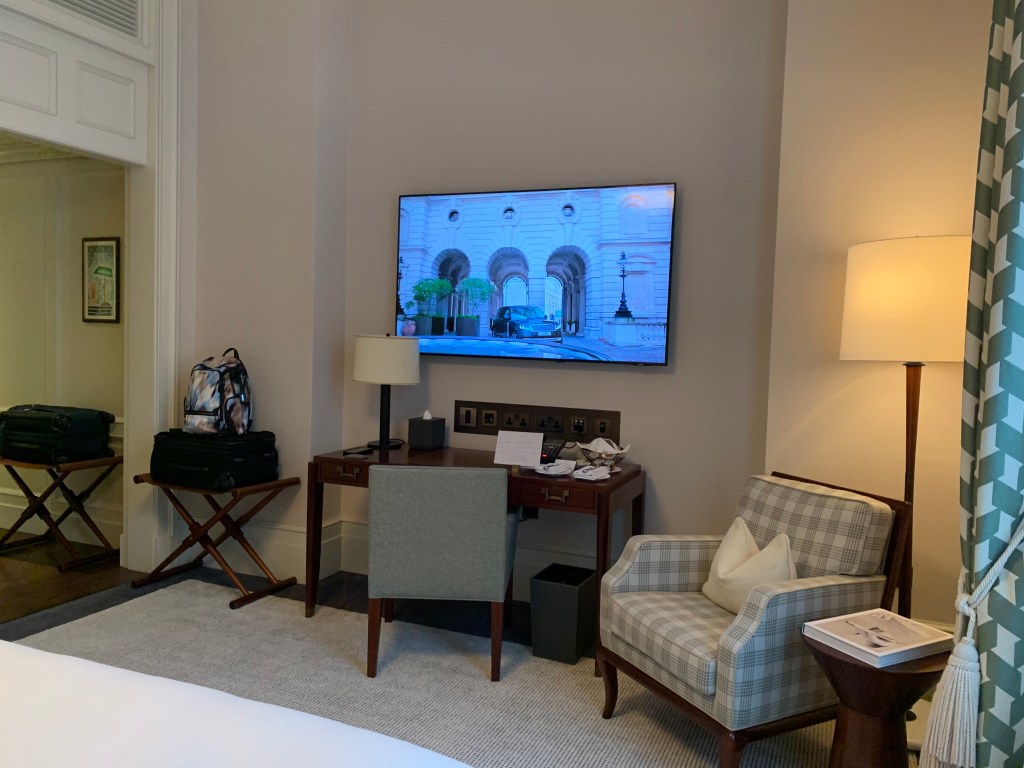
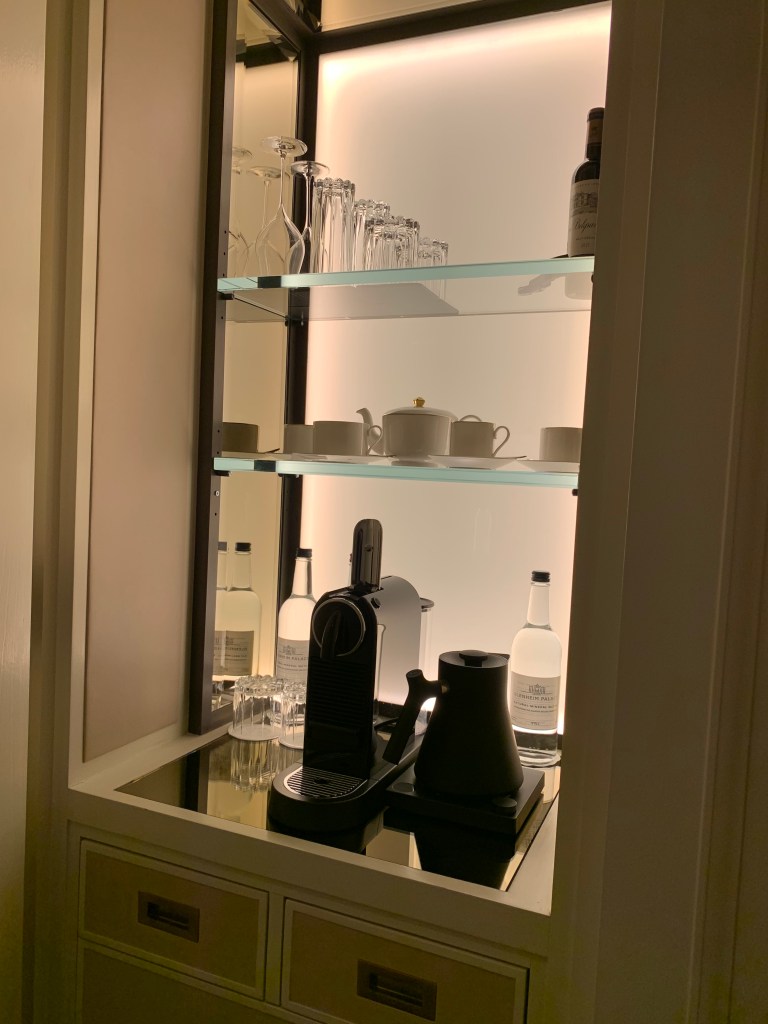
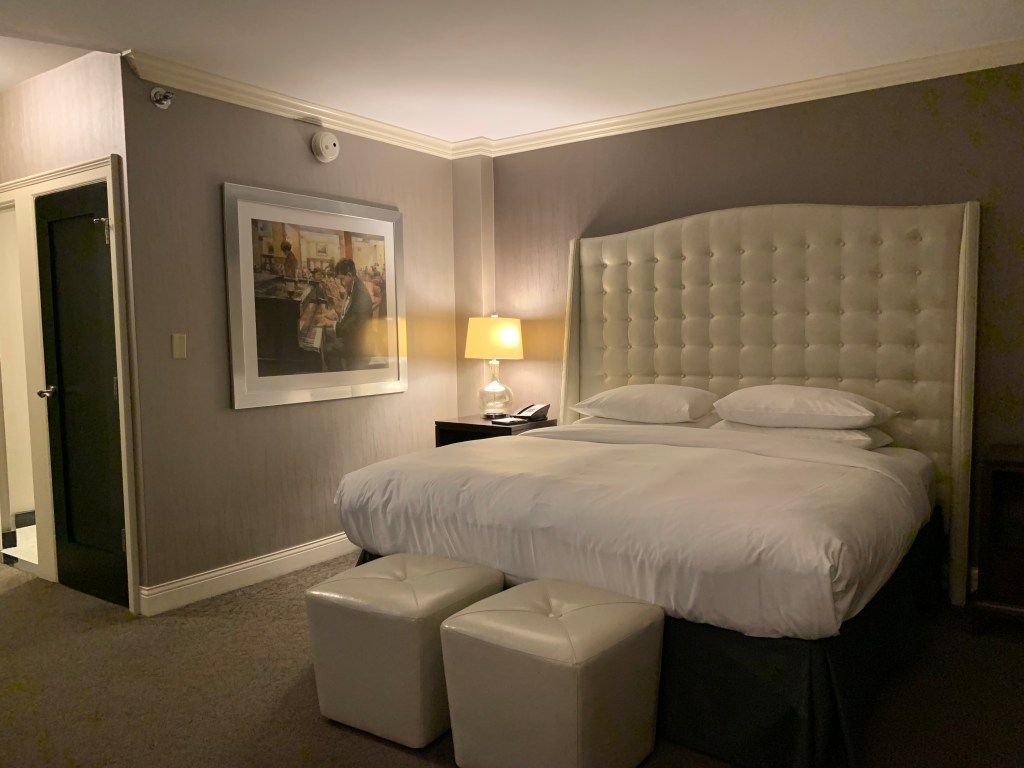
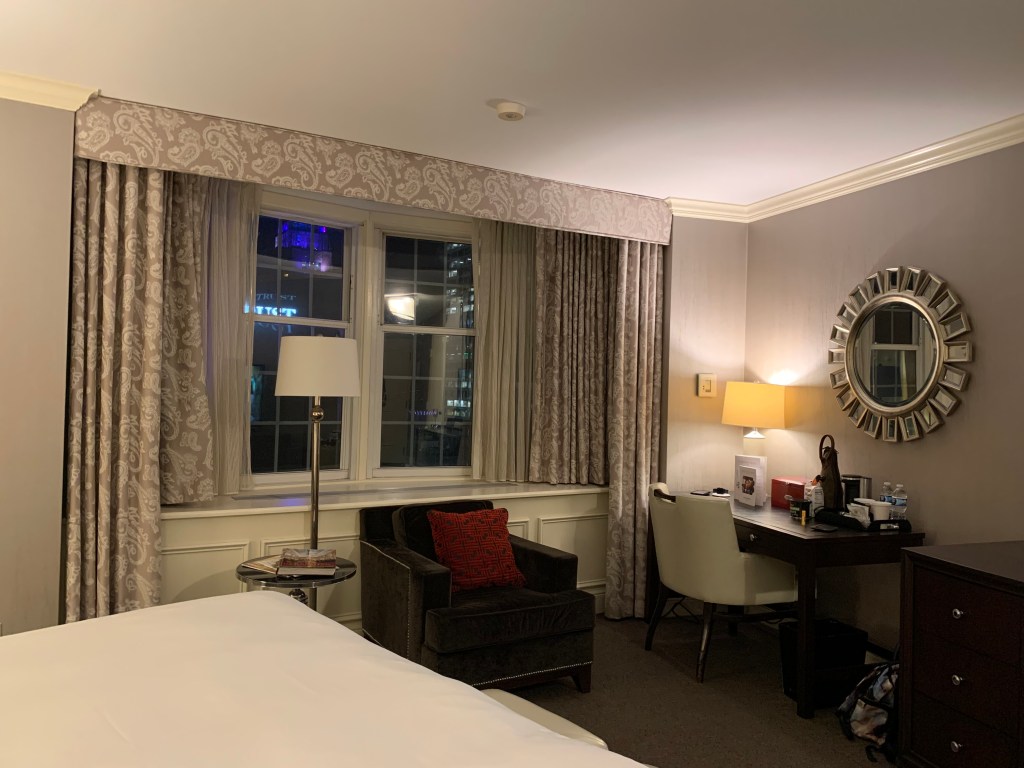
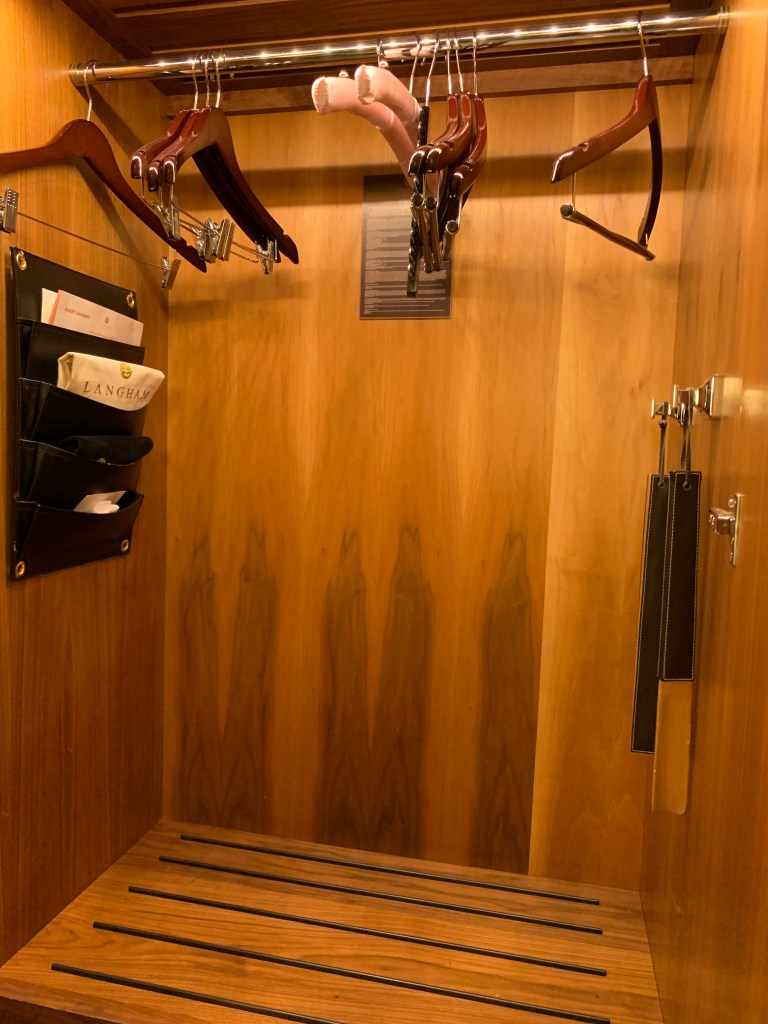
Our room — #1015 – was beautiful. A tiled entry foyer separated the main space from the door; off to one side was the bathroom and a bit further down on the opposite side was a dressing room, closet, and vanity. A wall of floor-to-ceiling windows with expansive views of nearby skyscrapers and the river let in lots of natural light, and the classic mid-century furnishings and white upholstery and linens felt refined. We loved the piece of furniture that housed the mini-bar and coffee station; it opened up in all kinds of interesting ways and looked a little steam punk. (The Langham calls the custom-designed piece a “cellarette.”) It was a fun addition to an otherwise fairly serious room design.

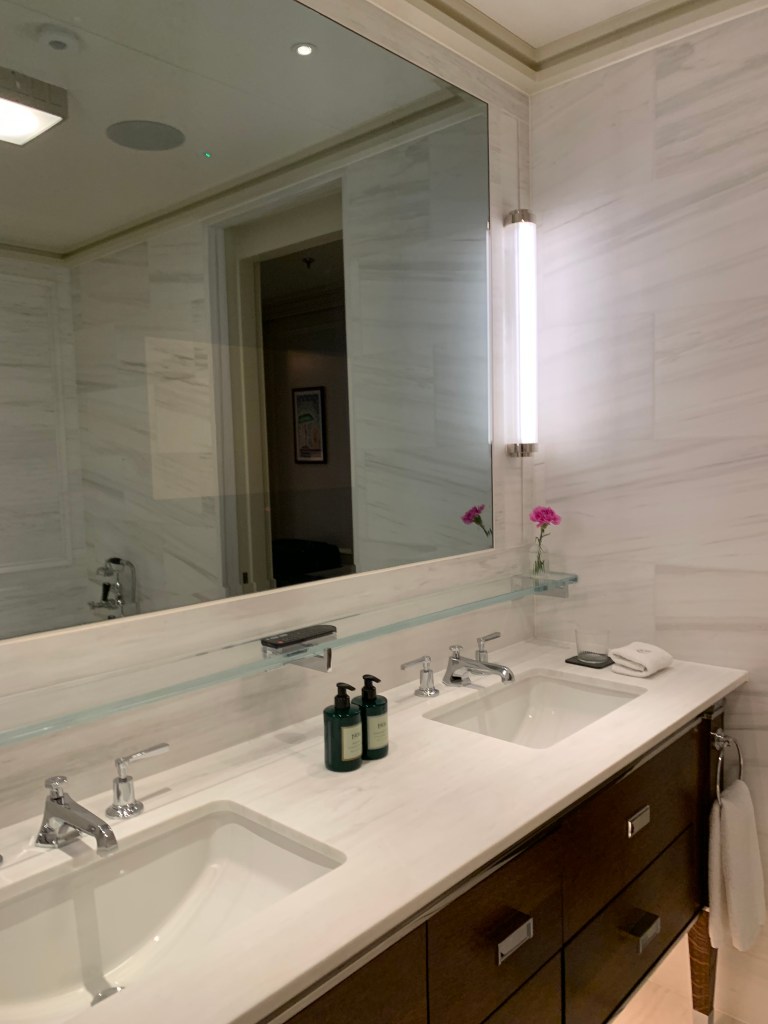
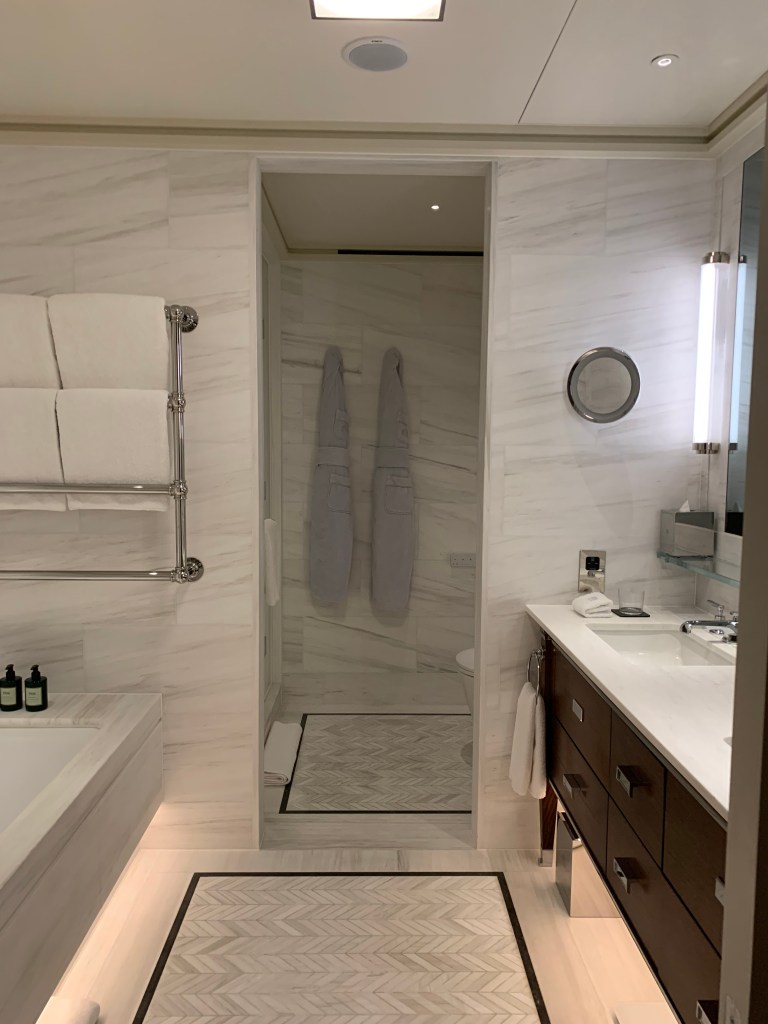
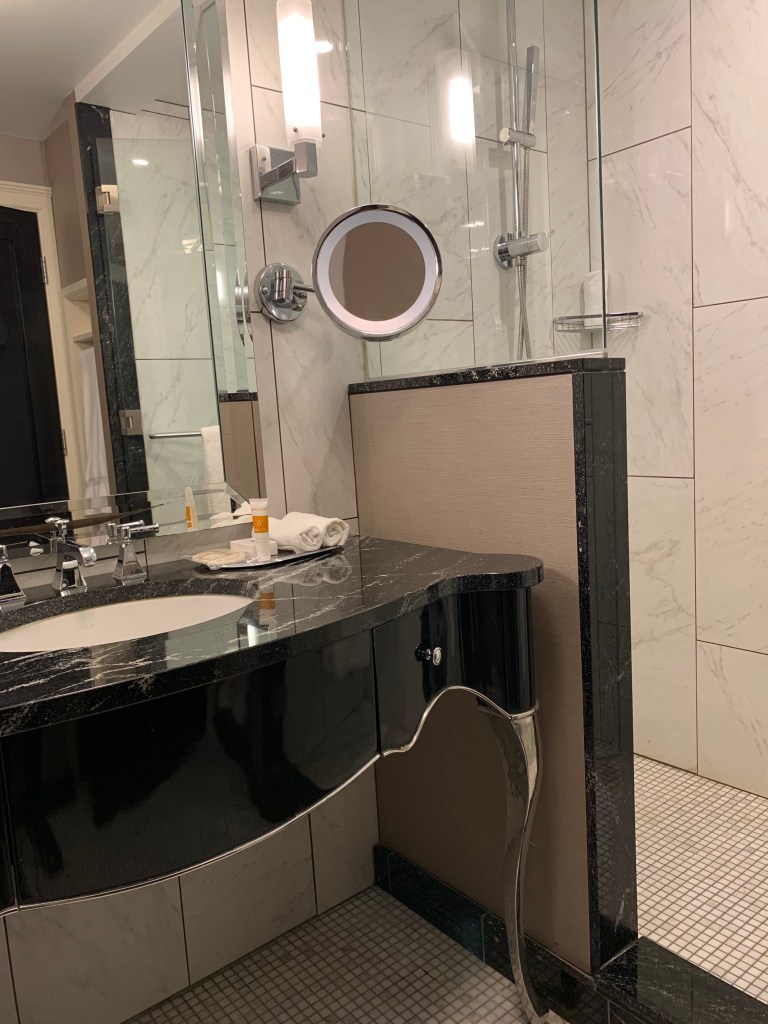
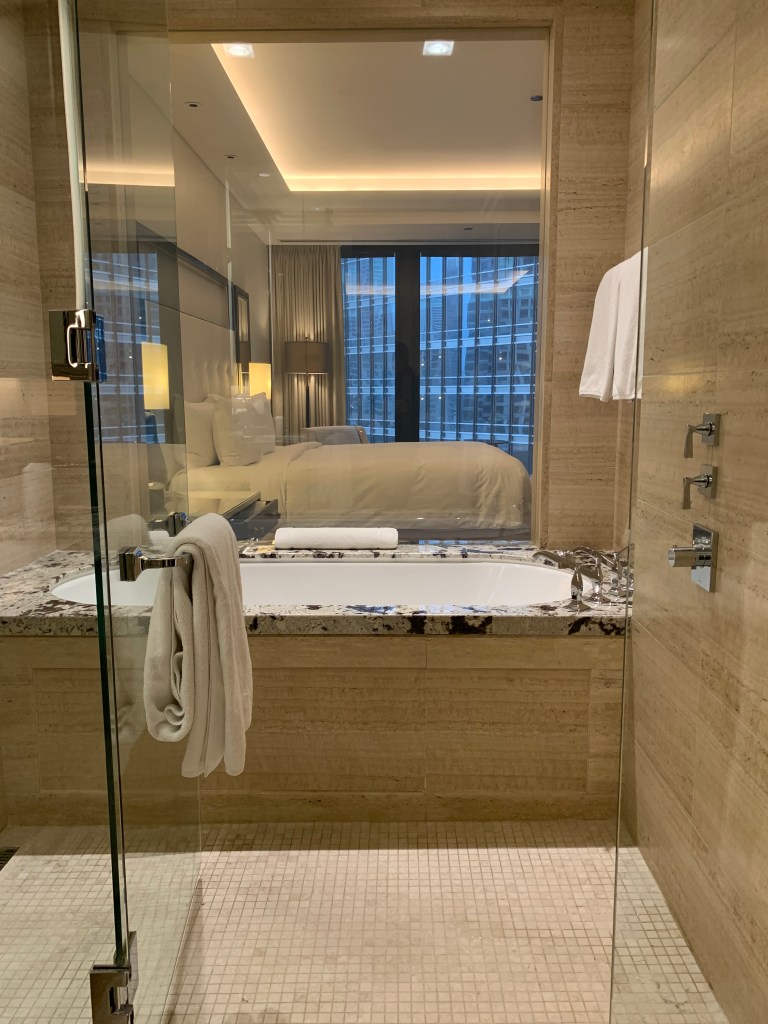
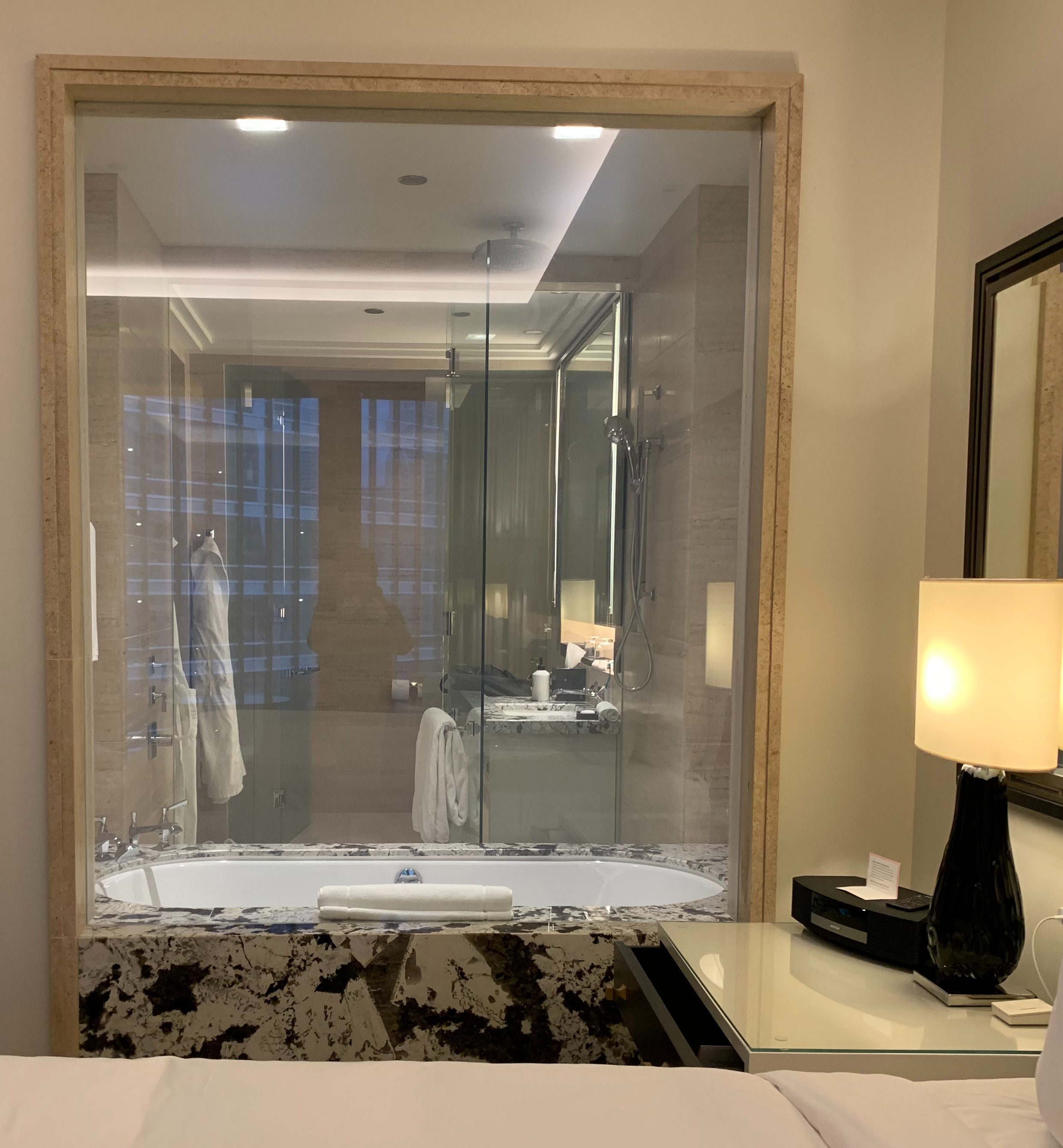
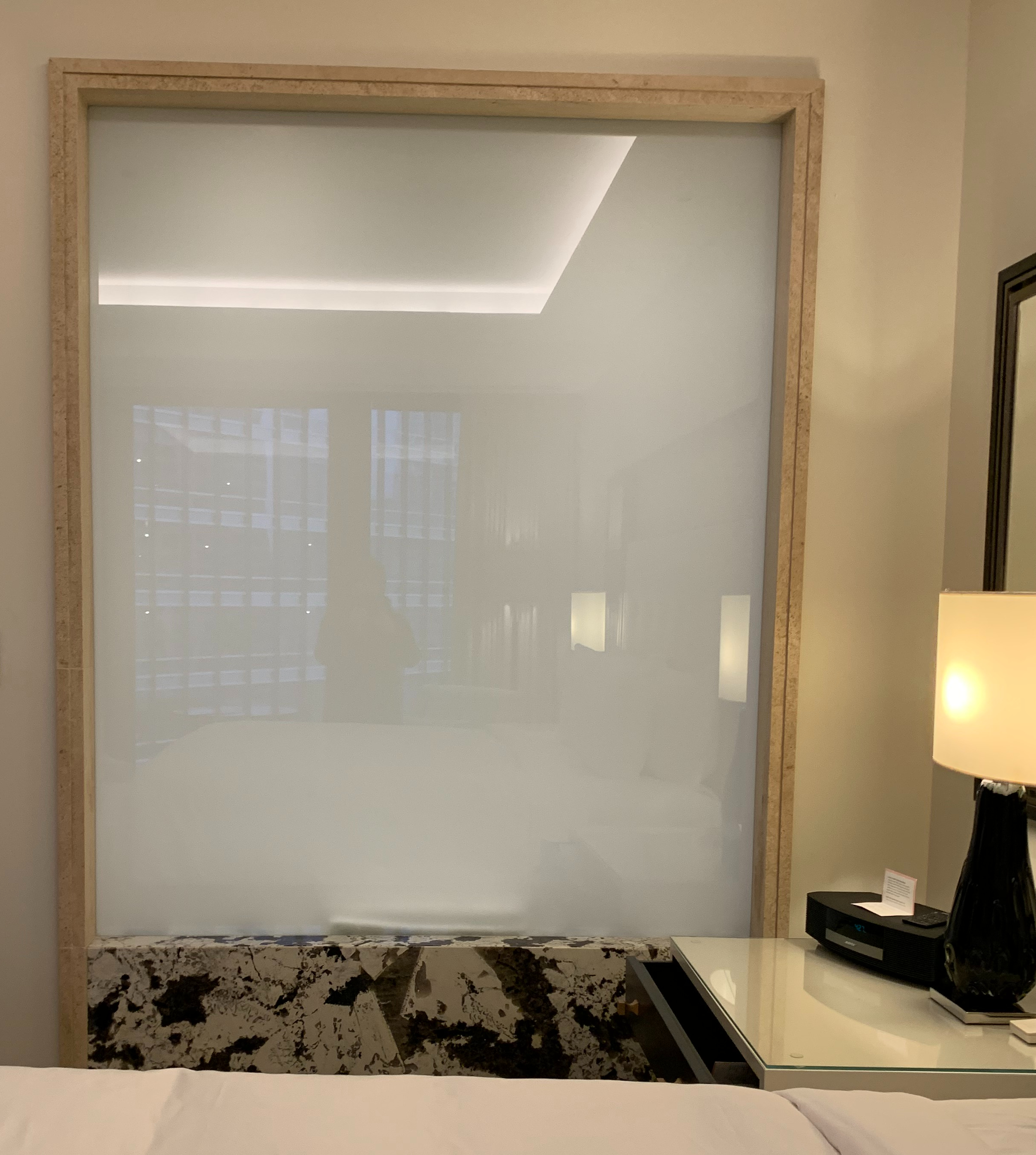
We also couldn’t get enough of the magic glass that separated the soaking bathtub in the stone and tile bathroom from the bedroom. With the flip of a switch, it changed from opaque to translucent. And the dressing area and vanity was a special indulgence. One of us felt the need to do a bit of primping – even though we had nowhere fancy to go – simply to use the space.

Magic glass separating the soaking tub from the bedroom

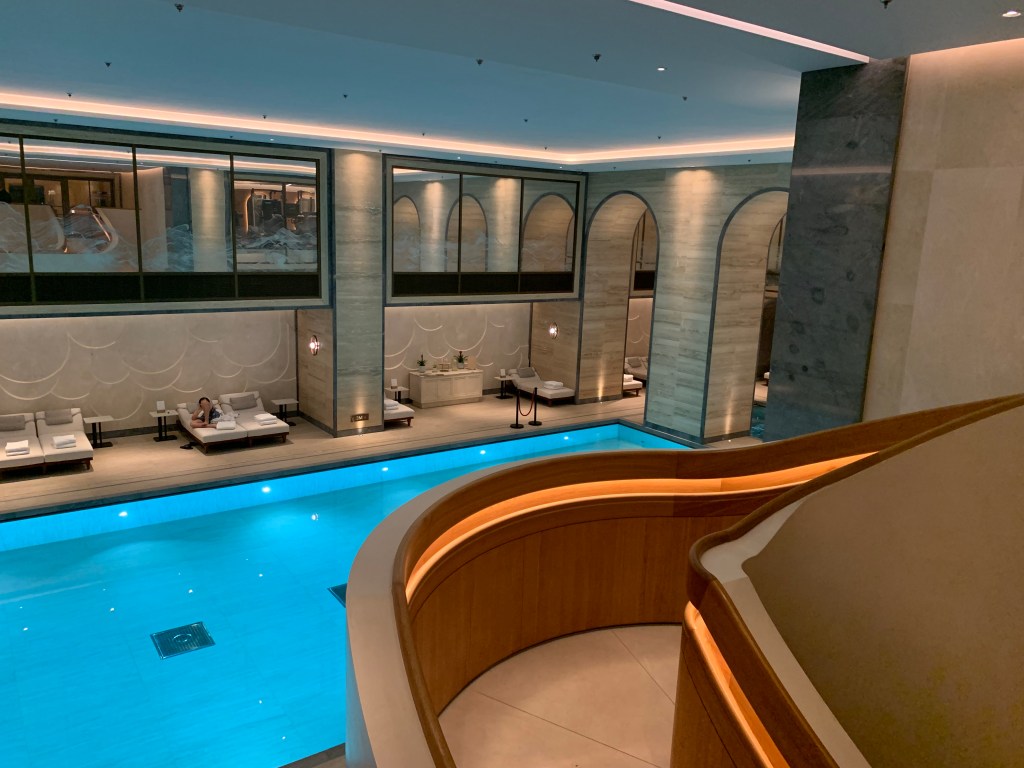
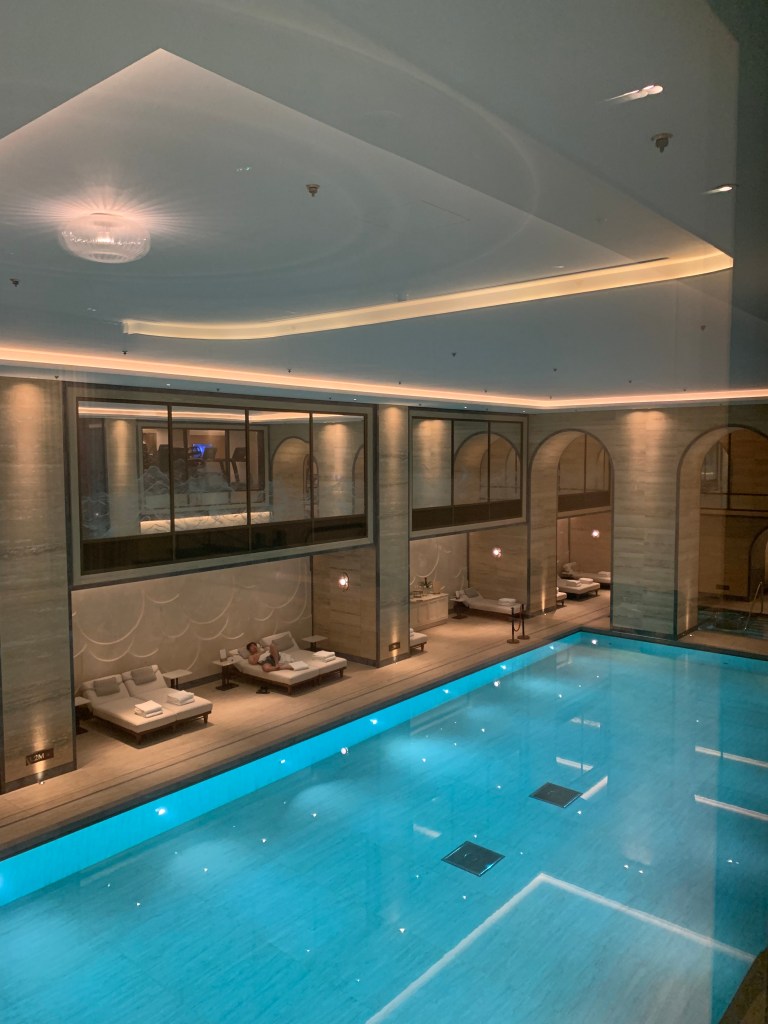
Our time at the Langham went by in a flash. We managed a stop at the hotel bar for a cocktail but didn’t have time to fully explore the hotel’s amenities. The tearoom was lovely and the pool, like the lobby, was also built by removing floor slabs to allow for a view out of two floors of windows. Chicago is such a terrific city, and The Langham matches up. We’ll be back, and next time we’ll stay longer.


Back to HOTELLING home