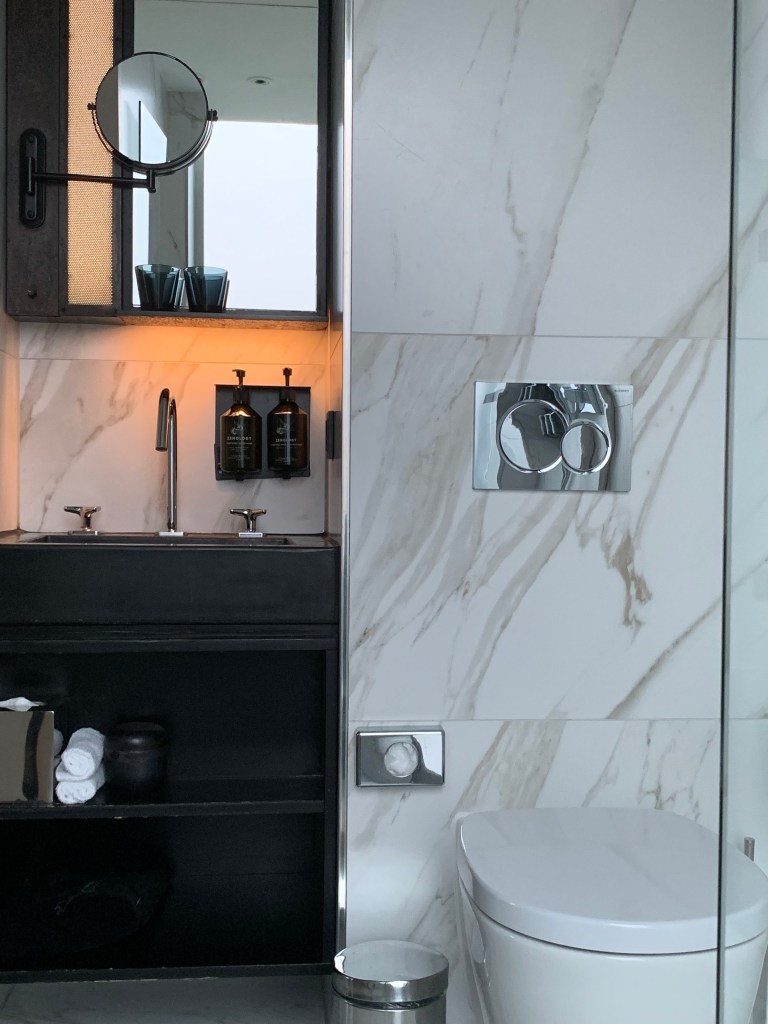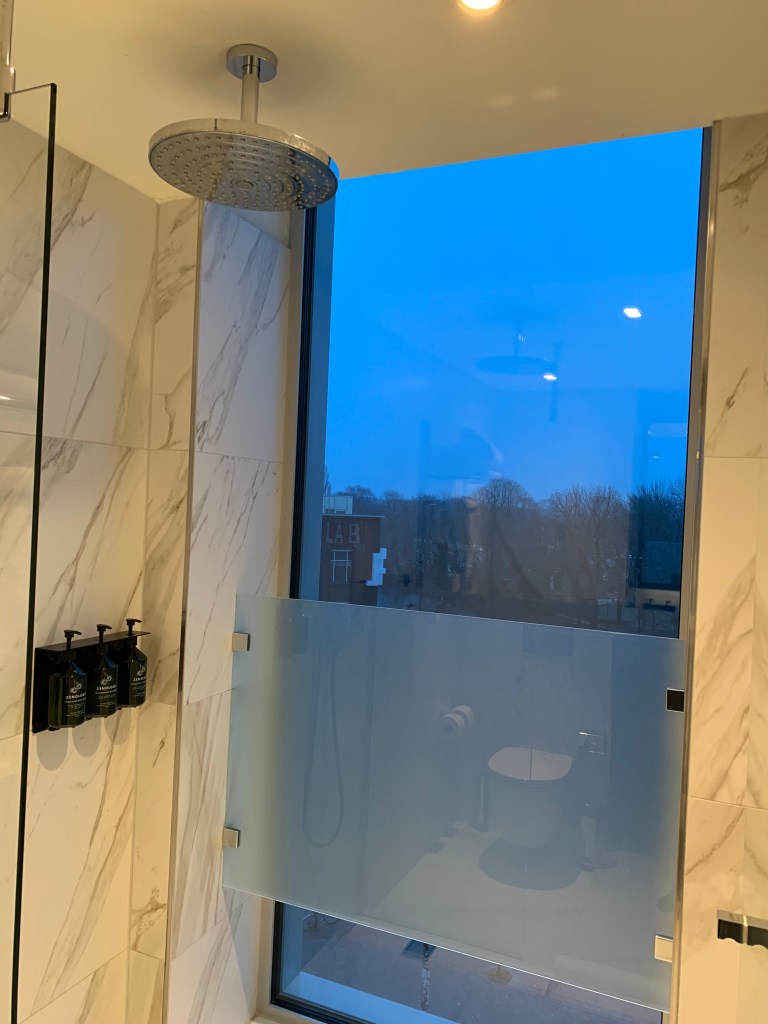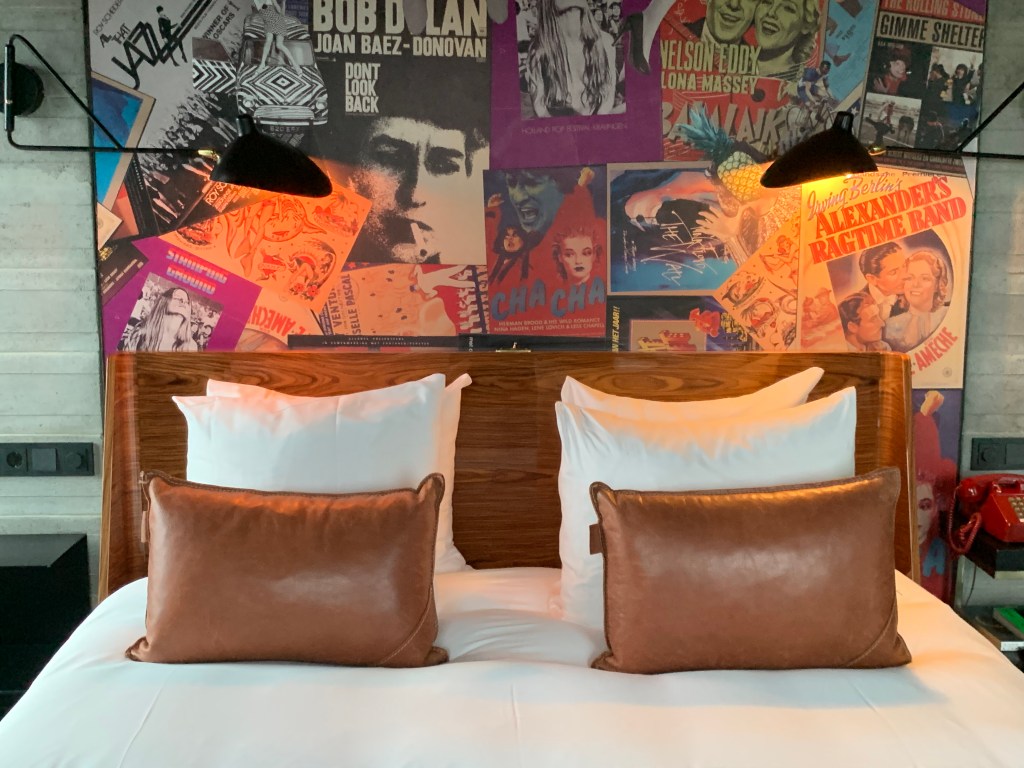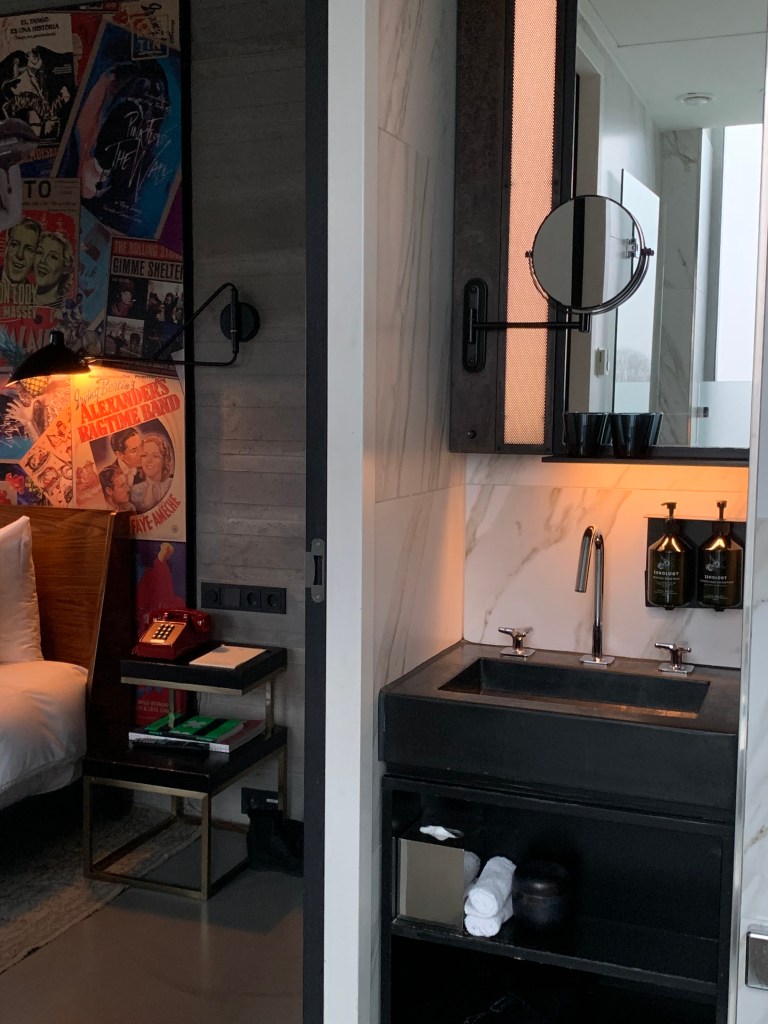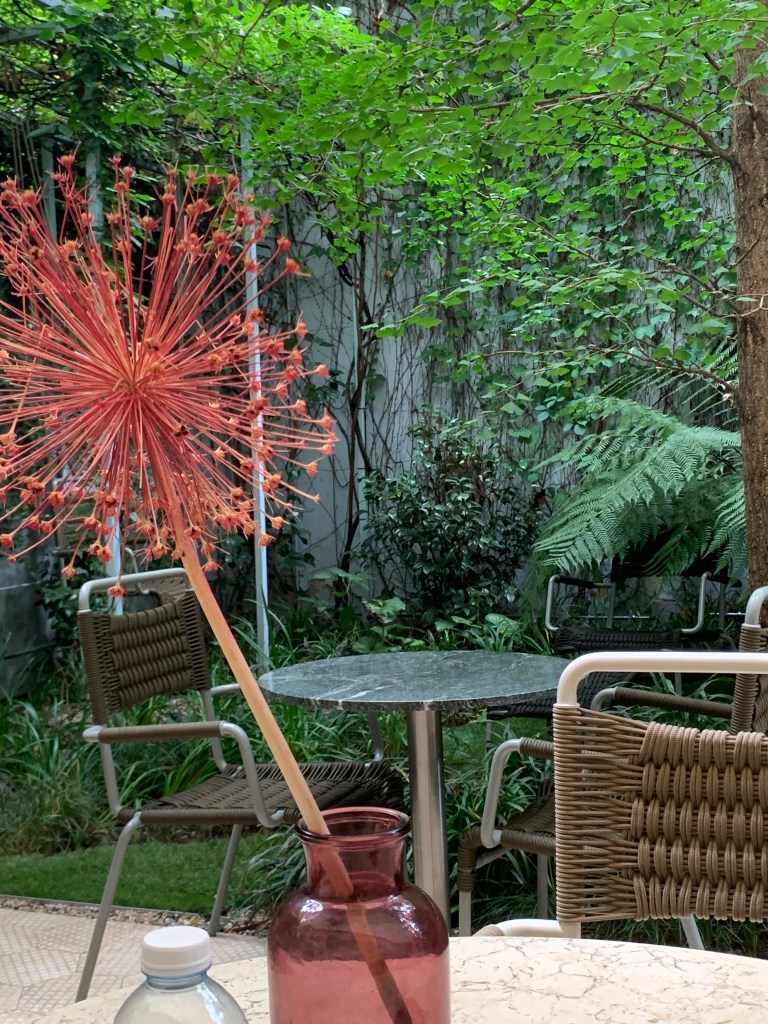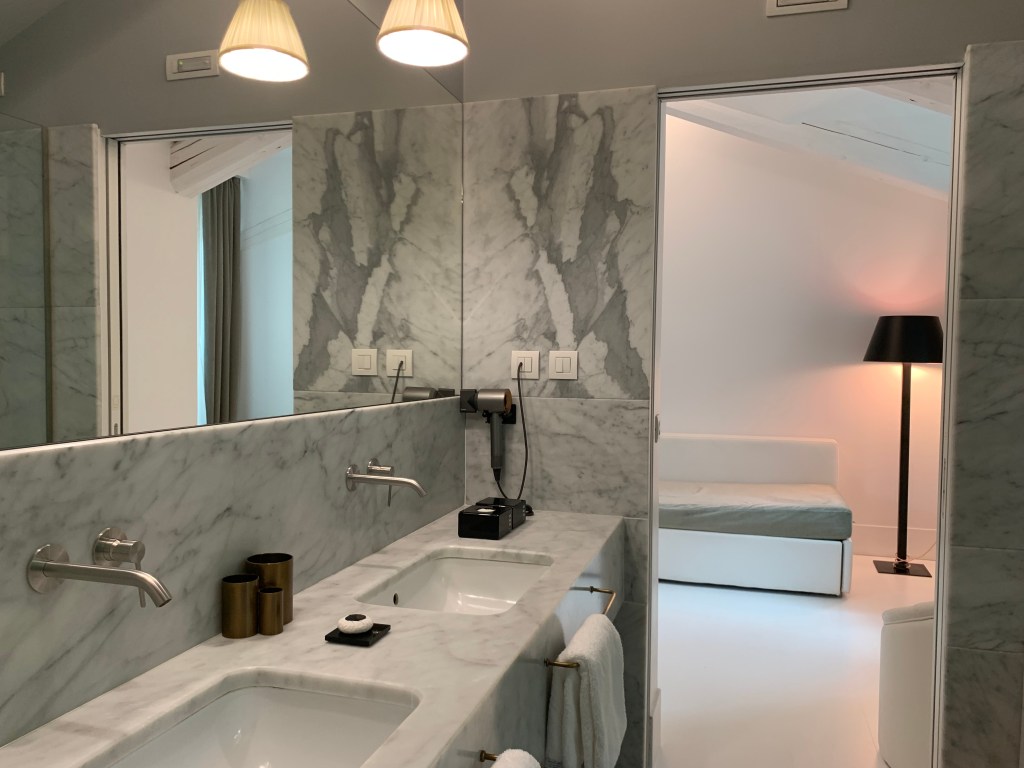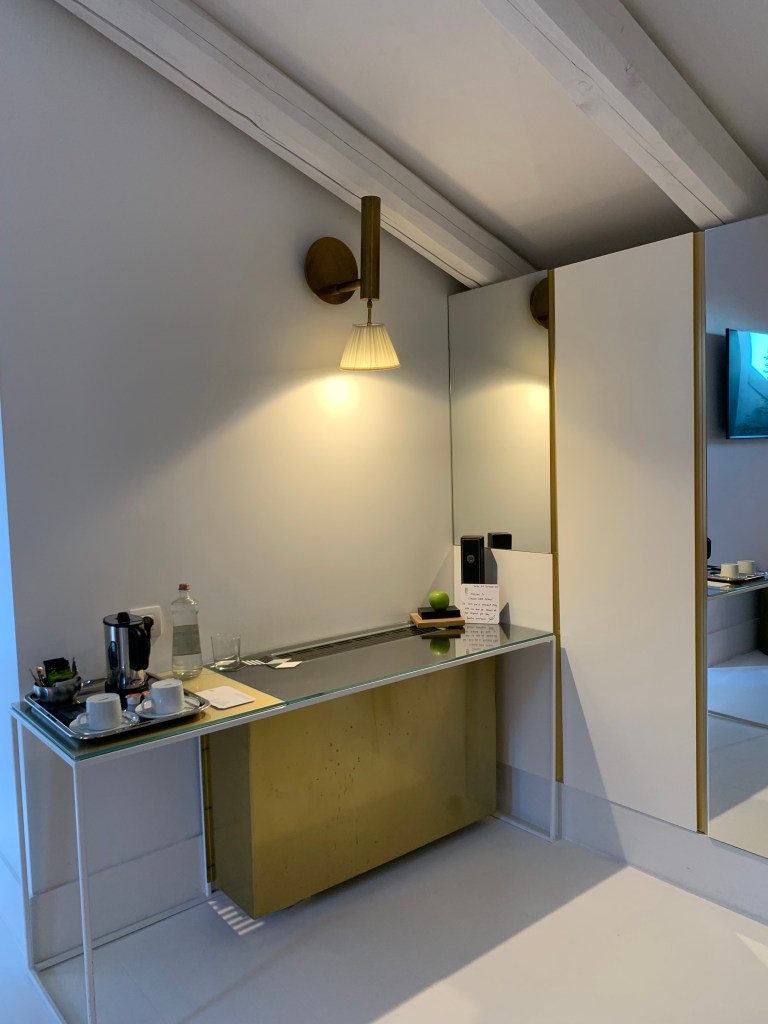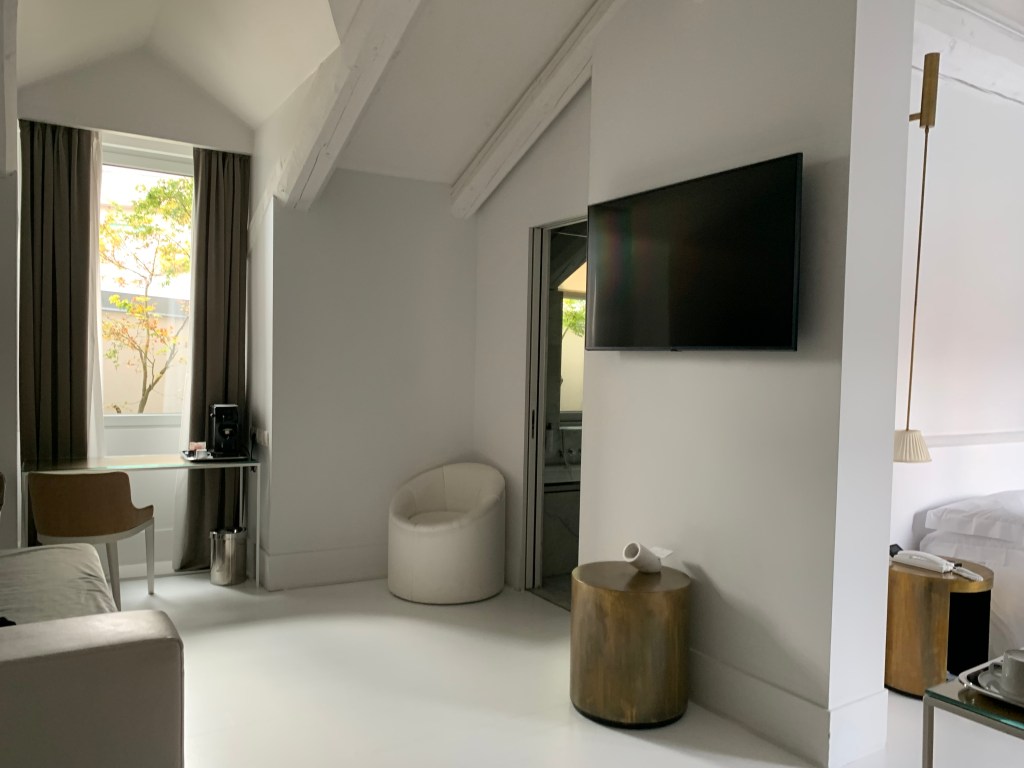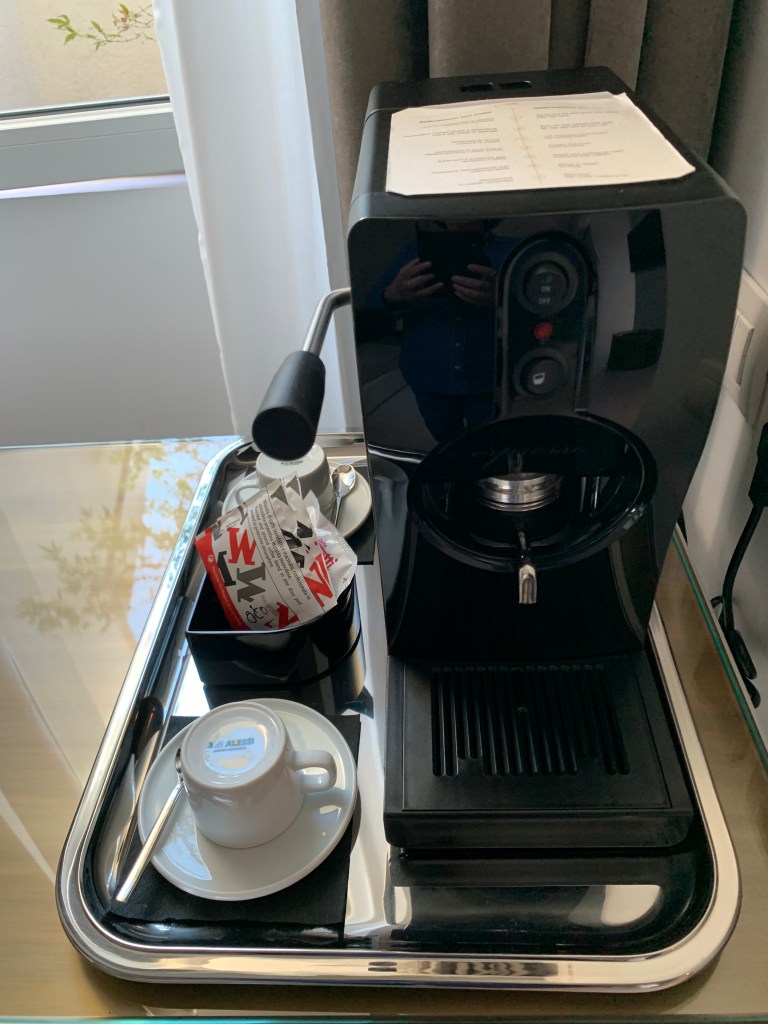
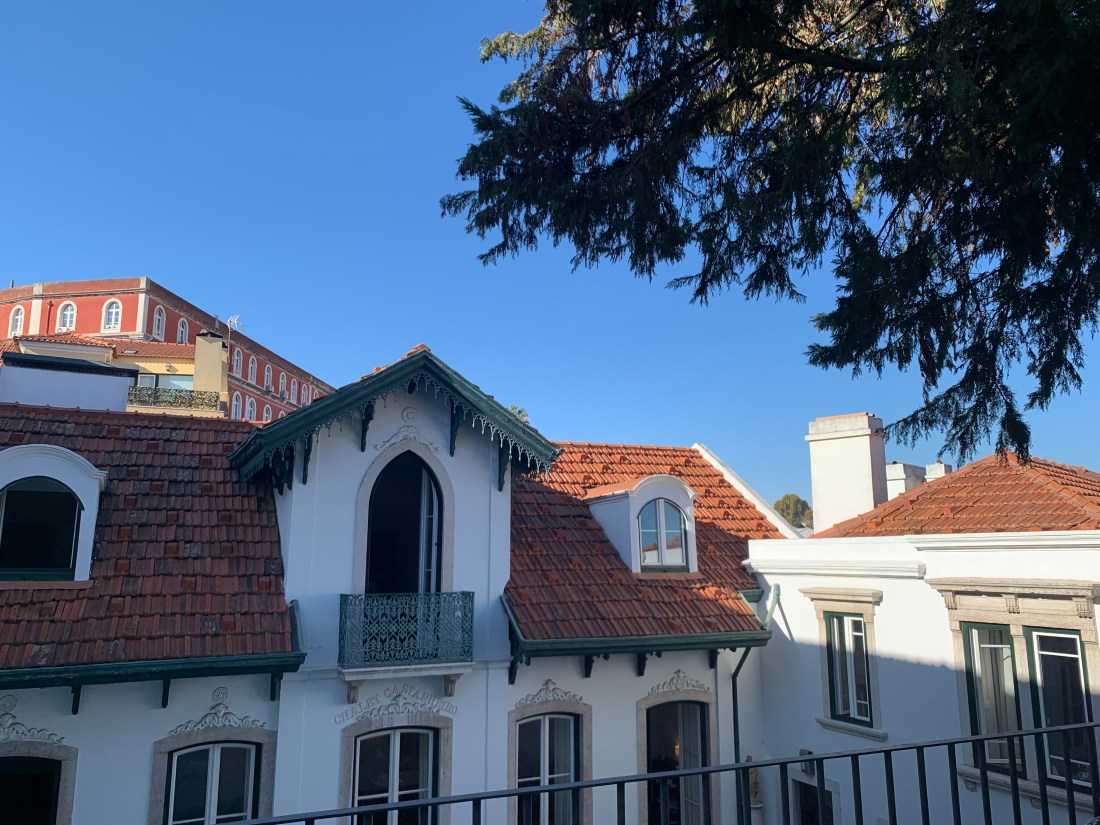
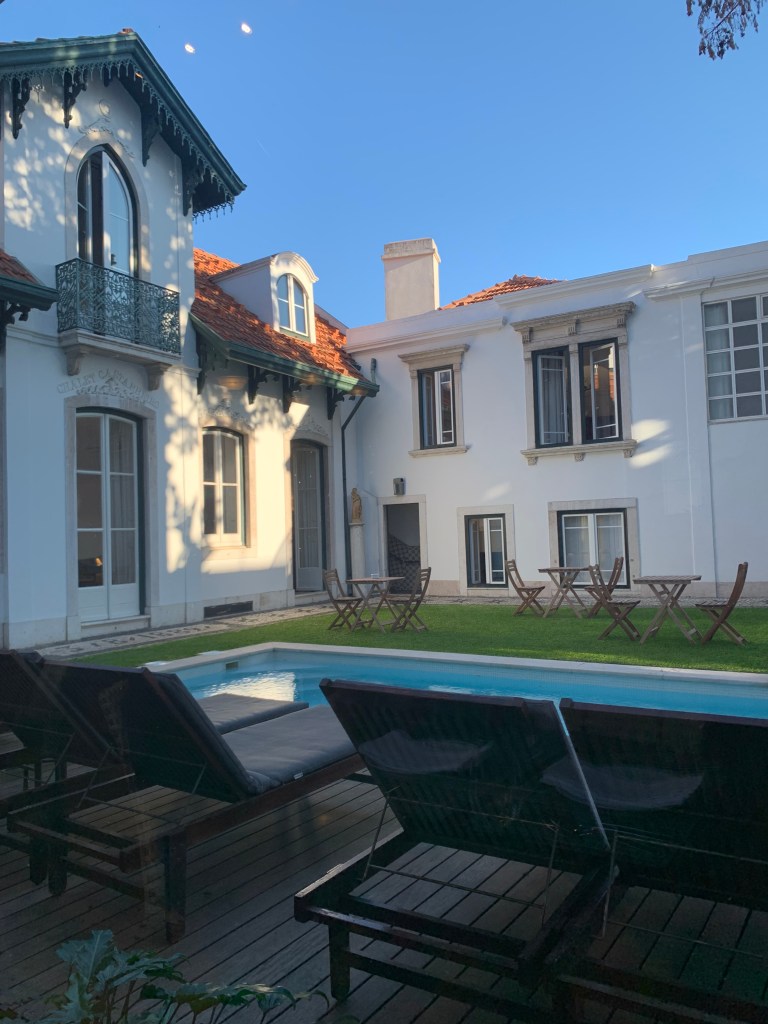
Lisbon, Portugal ~ Casa Balthazar

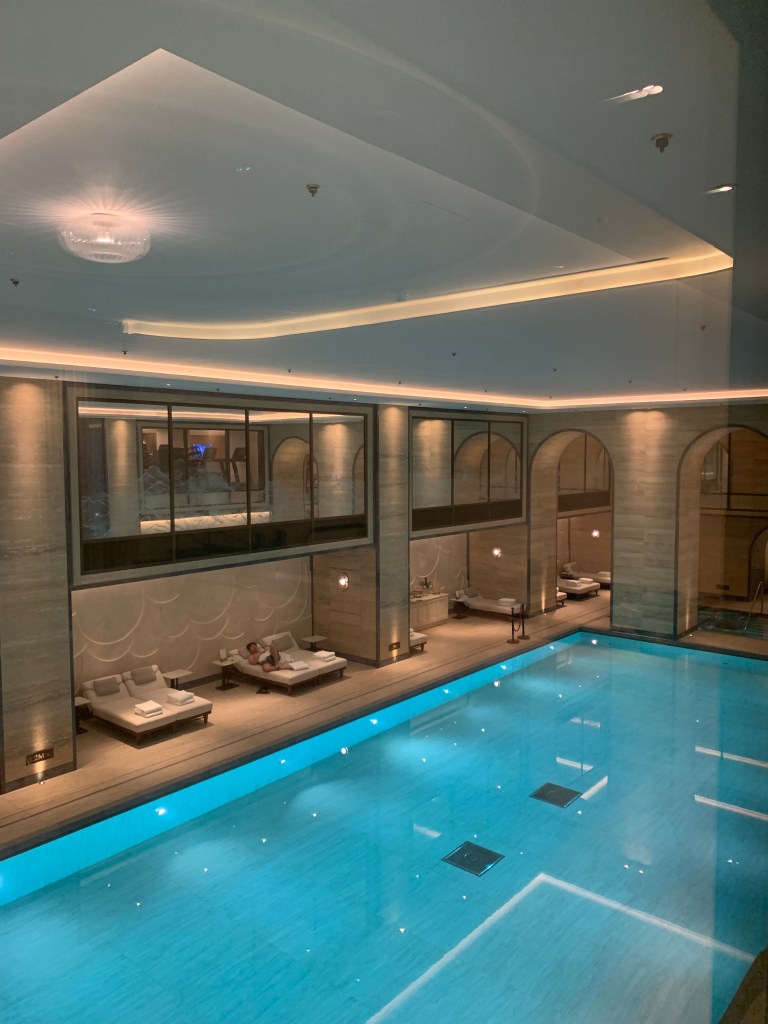
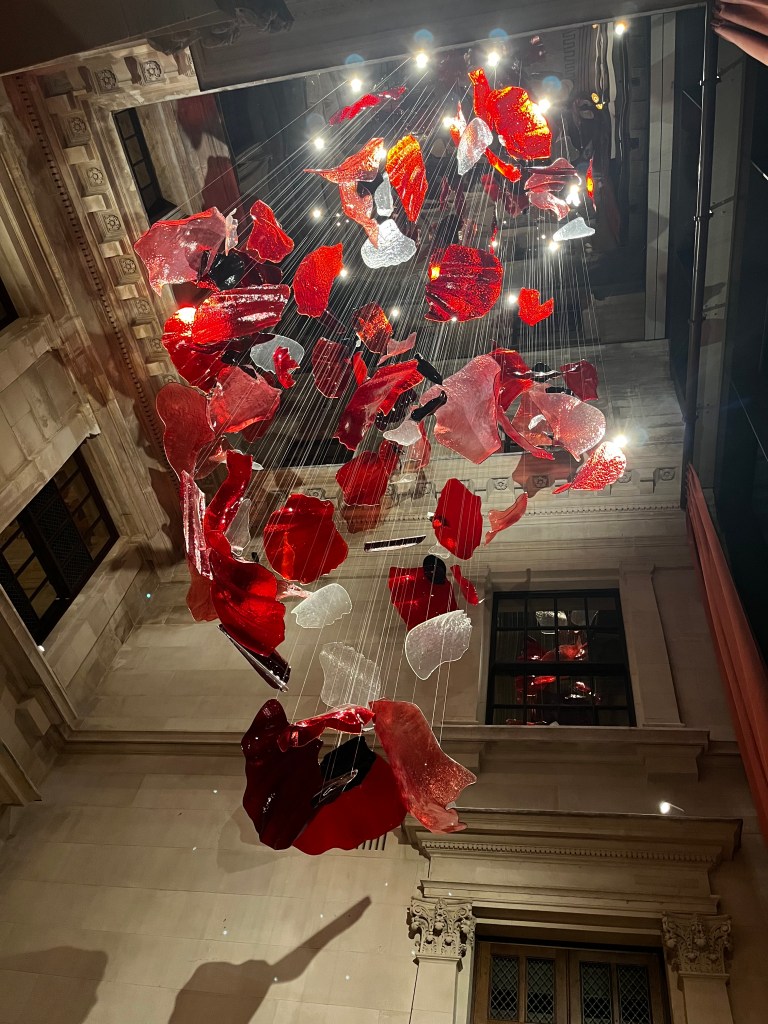
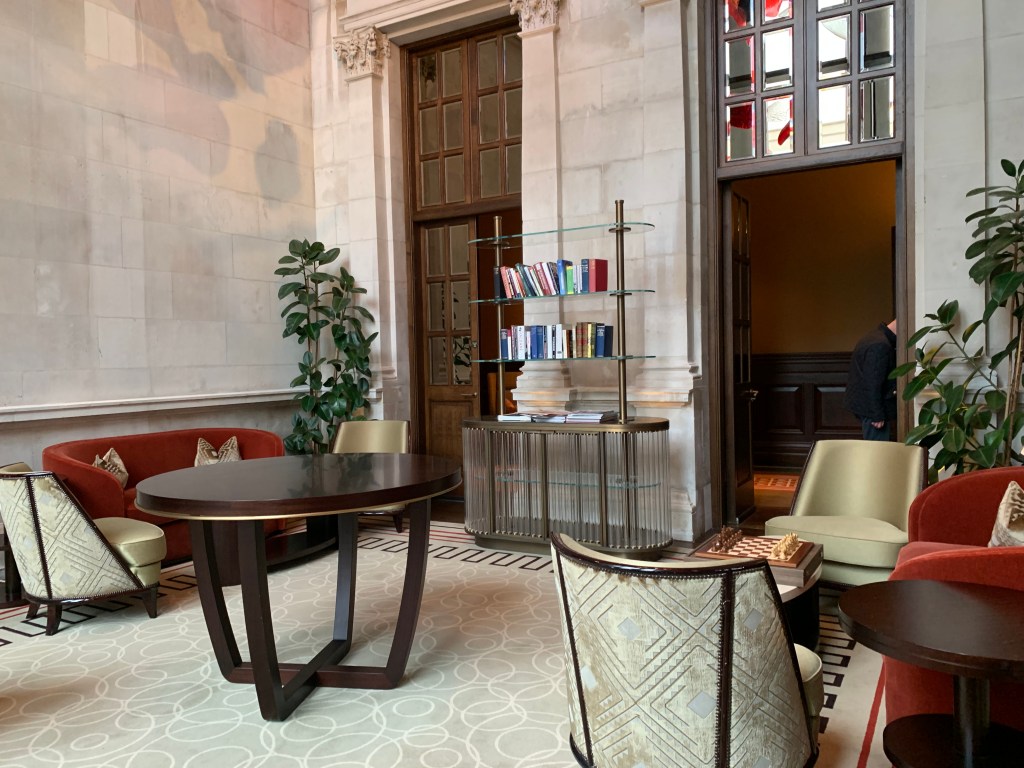
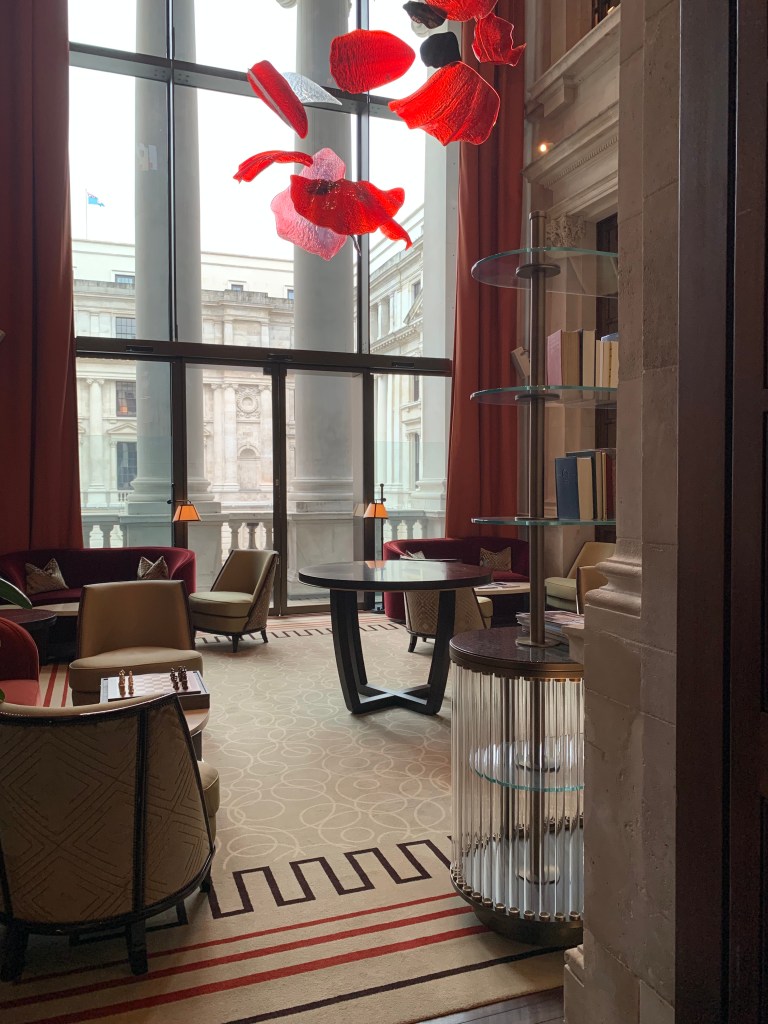
Lisbon was the last stop on our 36-day Iberian Peninsula adventure, so we felt a fair amount of pressure to find an amazing place before we headed home.

In an effort not to bury the lede…we succeeded.

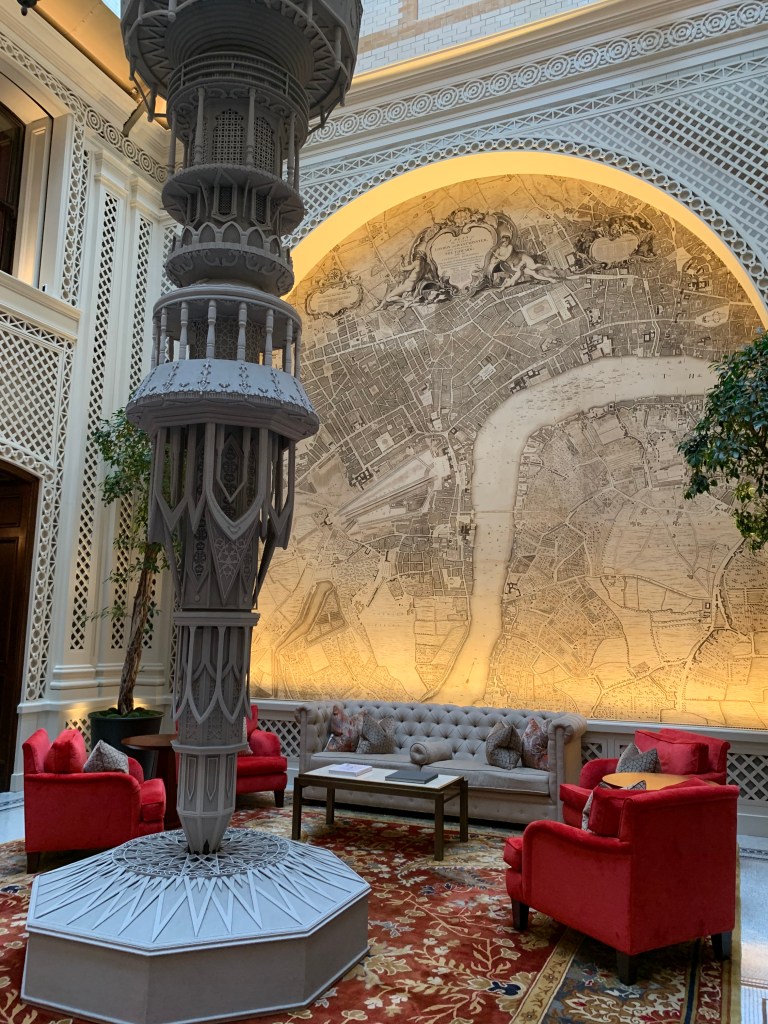
To make sure we capture both our voices (W and T), this post replicates a conversation we had about Casa Balthazar while enjoying a cocktail near its garden pool midway through our stay.


Do you remember us trying to book the hotel while we were on the train to Seville? There was only one room left, and we kept losing cell reception. We were worried we would miss out and have to find another place.

I do remember that, and I think we were both frantically poking away at our phones, trying to put in a credit card number before we lost reception, and then realizing American Express wasn’t accepted so having to start over. In the end, we got the room. Casa Balthazar was a London Telegraph recommendation, and its description made the hotel sound like a little oasis in the city; we were ready for an oasis.

A question for you: Did you completely trust my judgment on this? I don’t think you even looked at the Telegraph review or anything else before we made the booking.

Complete trust. I’m happy to follow your lead — you always make good choices — although you also know that I always ask about the price.

You know I care about price too, but I’m also looking for something unique and memorable.
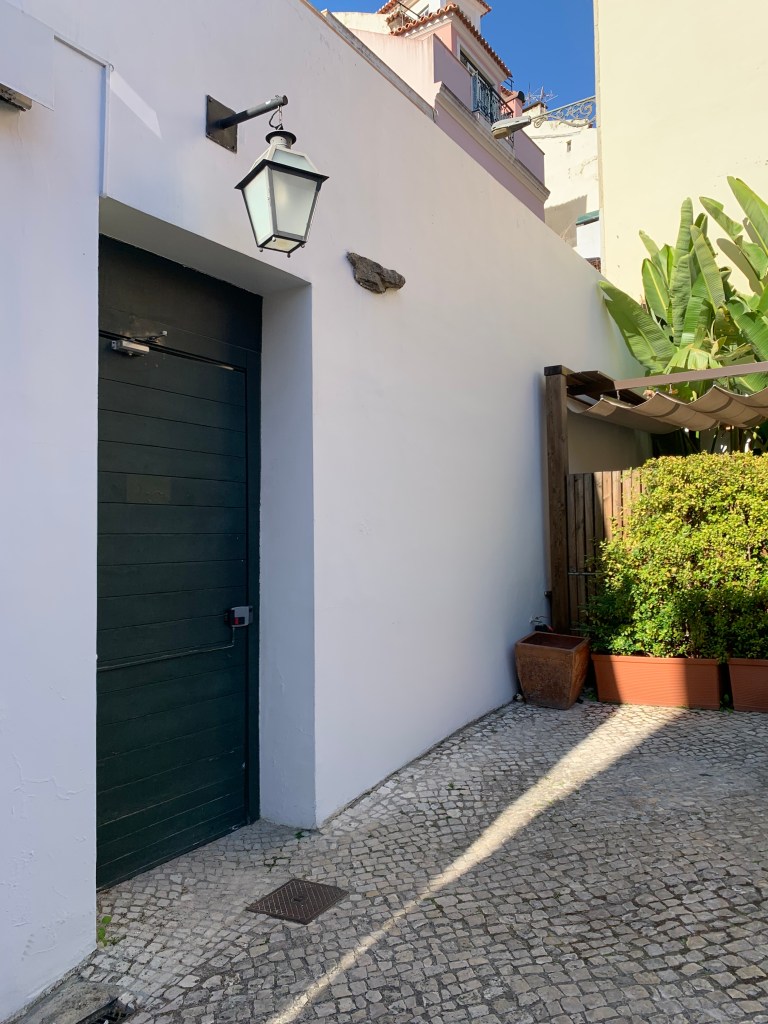
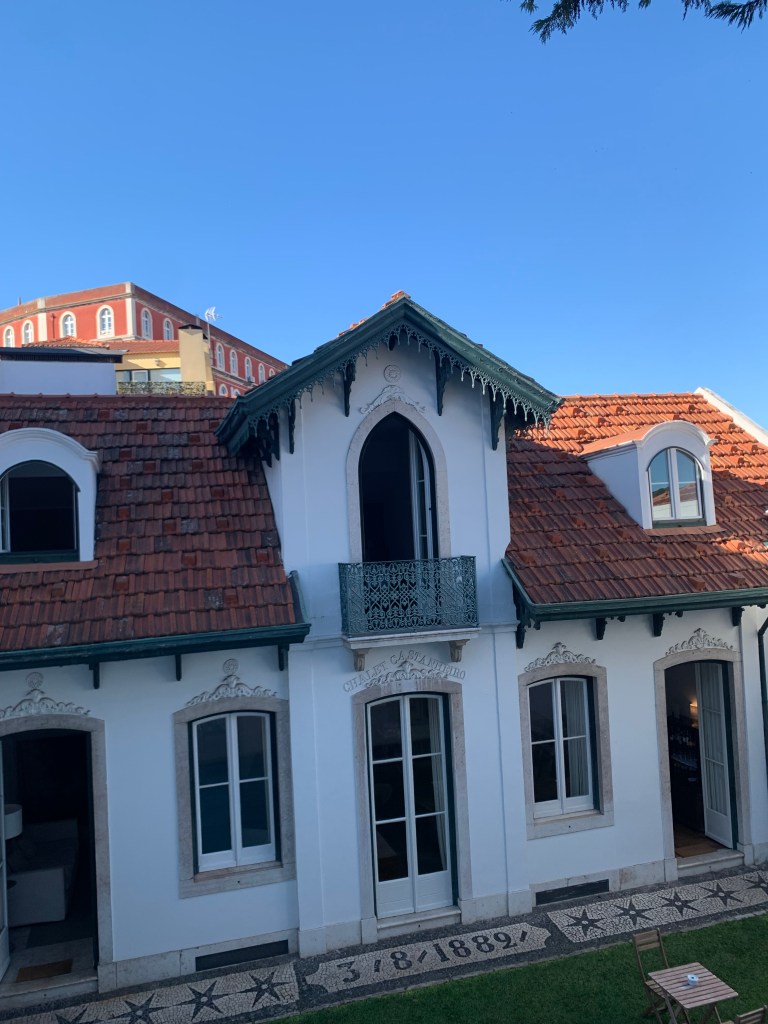
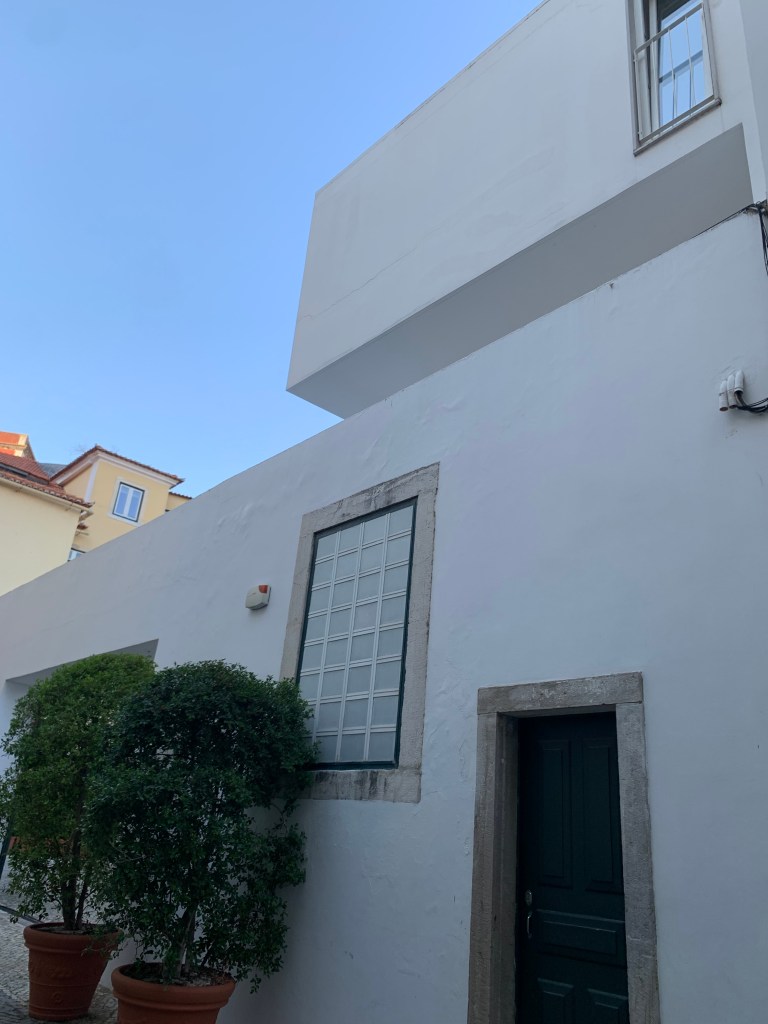
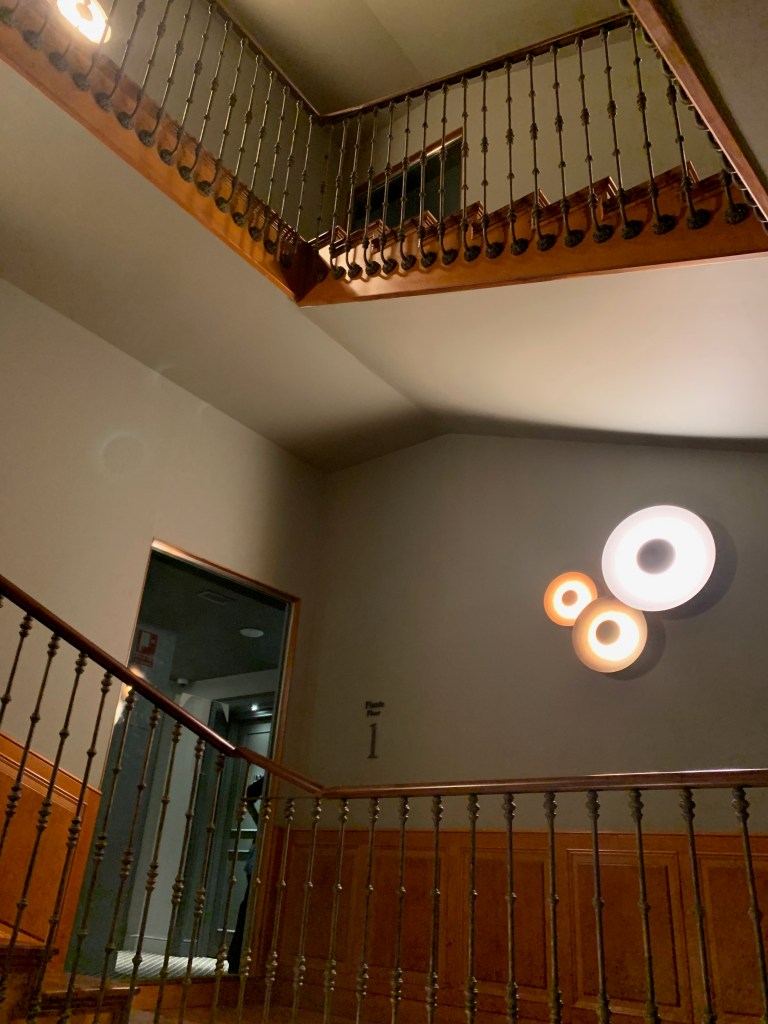
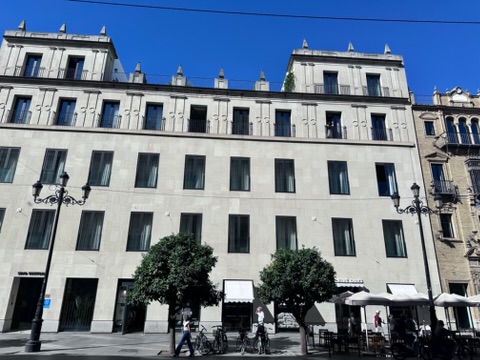
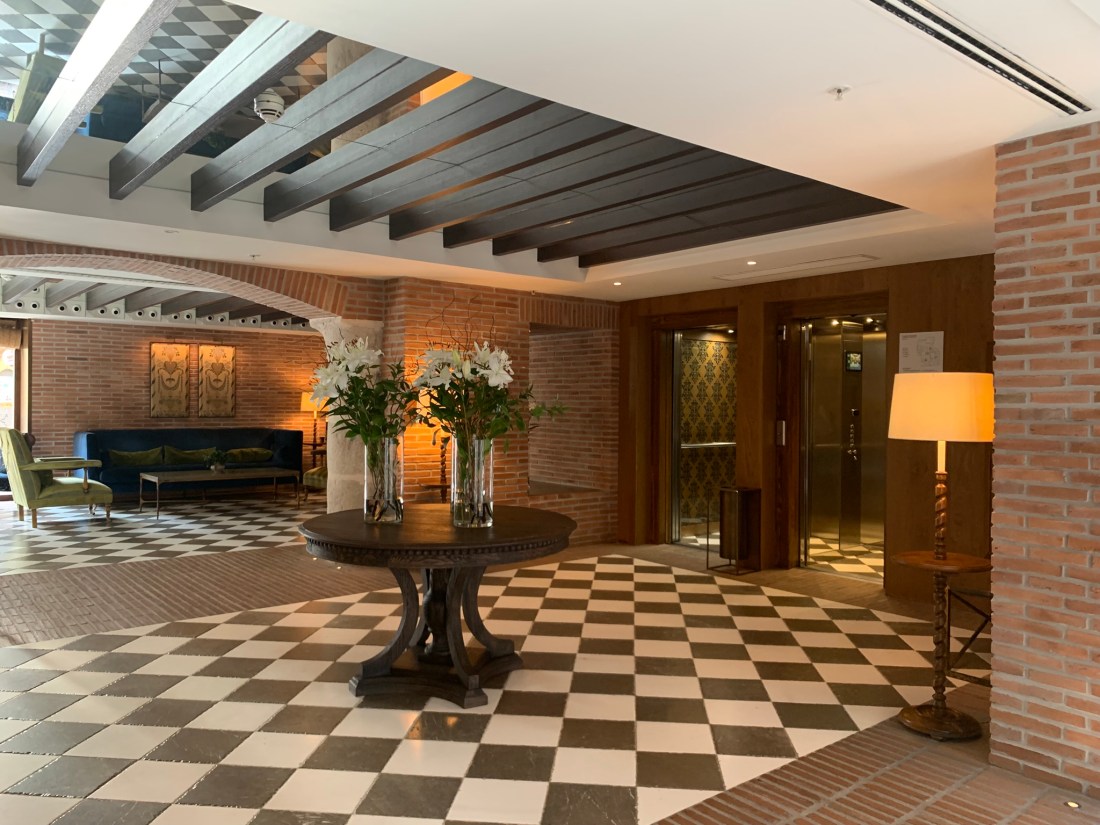
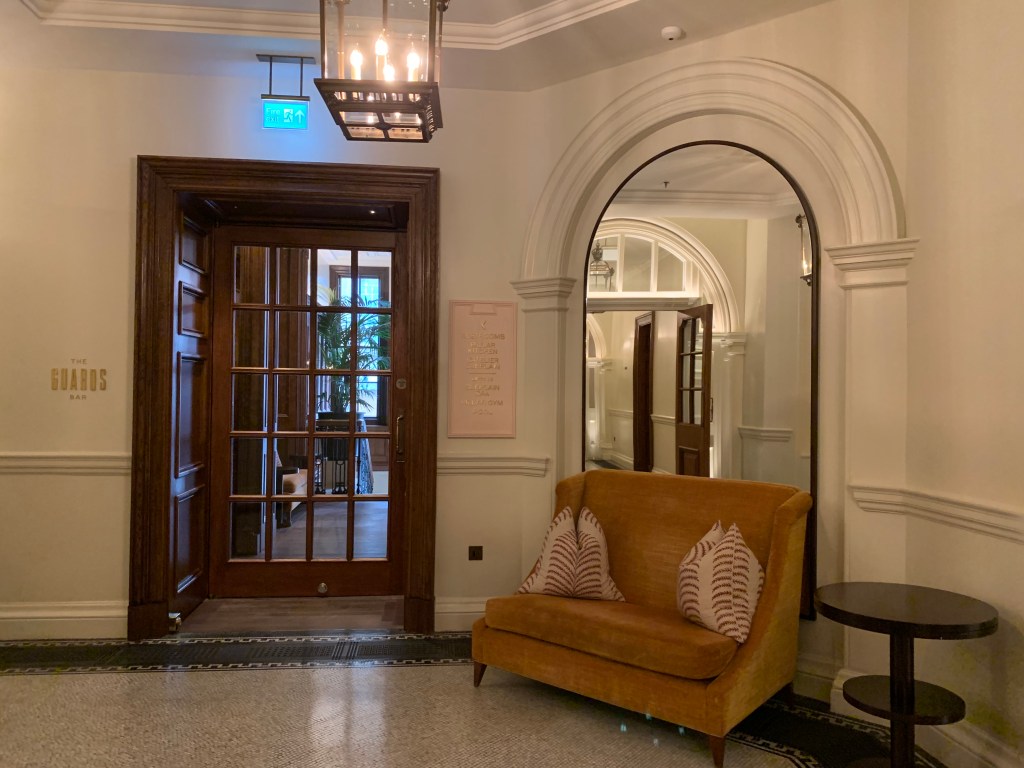
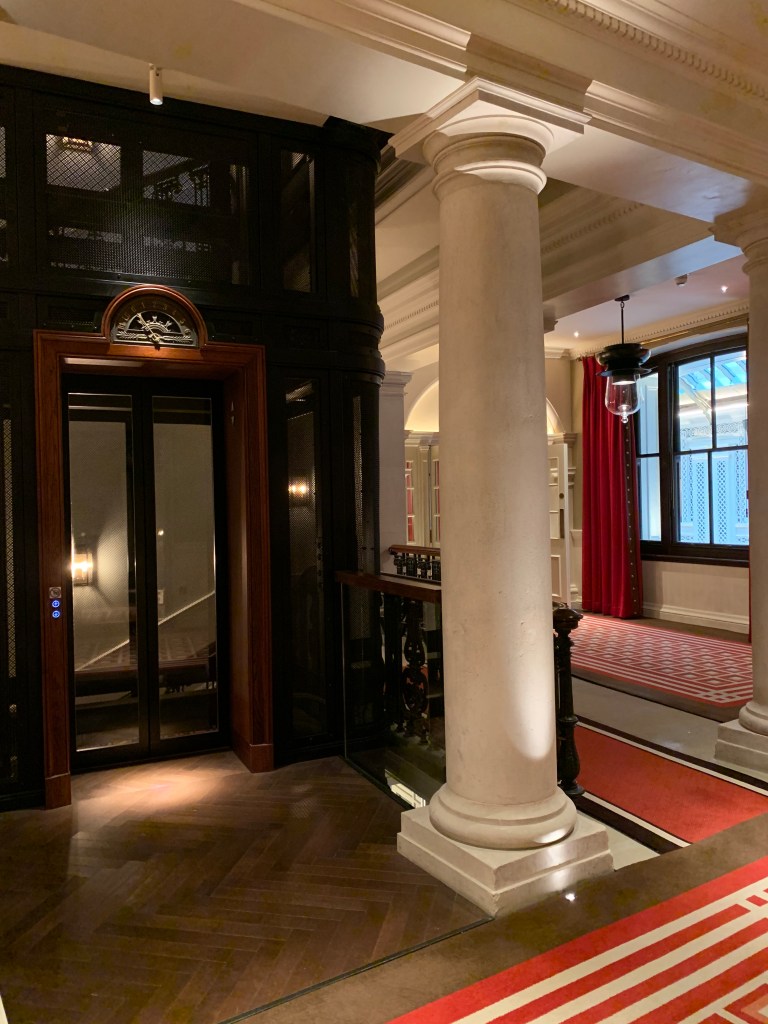
Casa Balthazar is that, for sure. The Telegraph alerted us that the hotel sits behind a closed green door on a narrow lane halfway up the (very steep) hill of Chiado. We were also warned that many taxi drivers wouldn’t drive down the lane, which was true in our case. In fact, our taxi driver dropped us near the Rossio metro station — on the flat part of Lisbon — and we hauled our bags up staircases and steep inclines to reach the hotel. This, I will note, is one of your least-favorite activities, and I could feel you getting grumpy as we climbed (to be fair, you did have the big bag). But the moment we walked through the door and were greeted with a genuine smile by the young Brazilian staff member, who also took our bags, we knew we were in for a treat.

The main part of the hotel consists of a house that has been in the family since 1829 and an adjoining building that started its life as the bakery Confeitaria Nacional, which is the oldest patisserie in Lisbon. It now resides downtown and provides baked goods to hotel guests and to the Presidency of the Portuguese Republic.

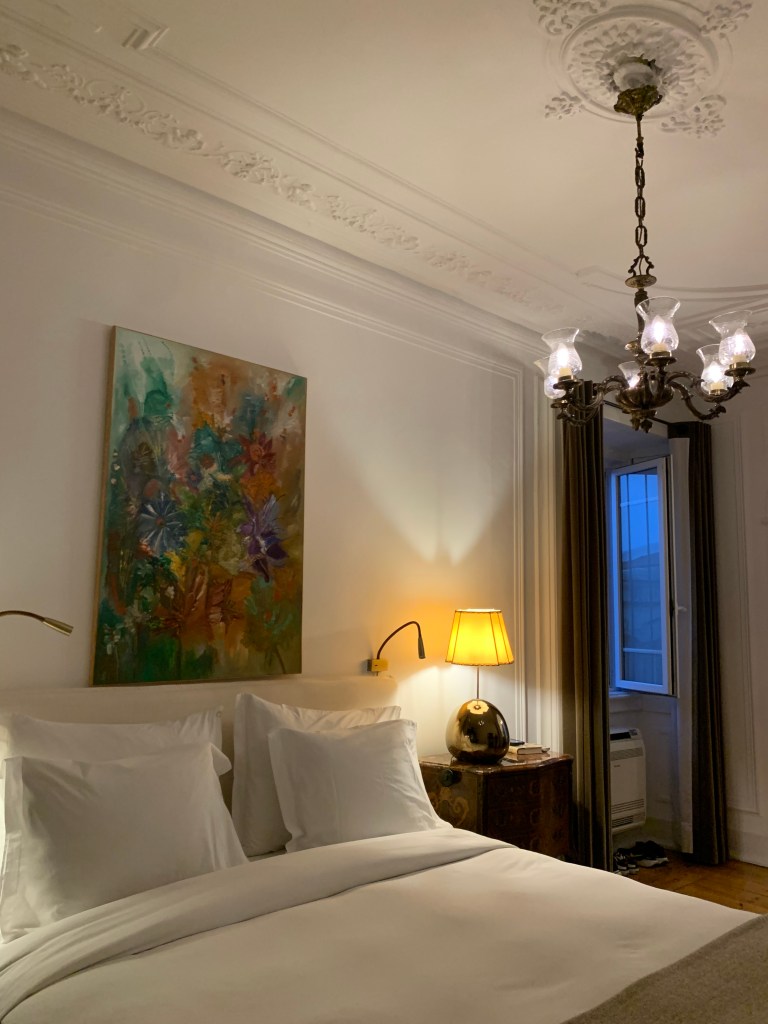
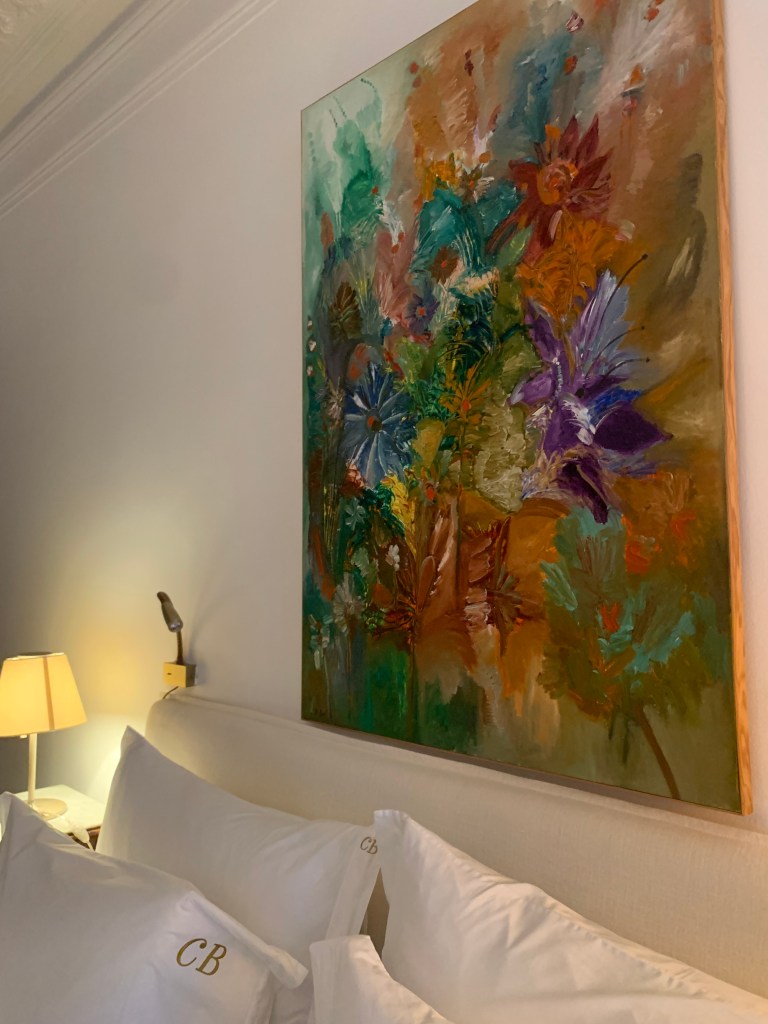
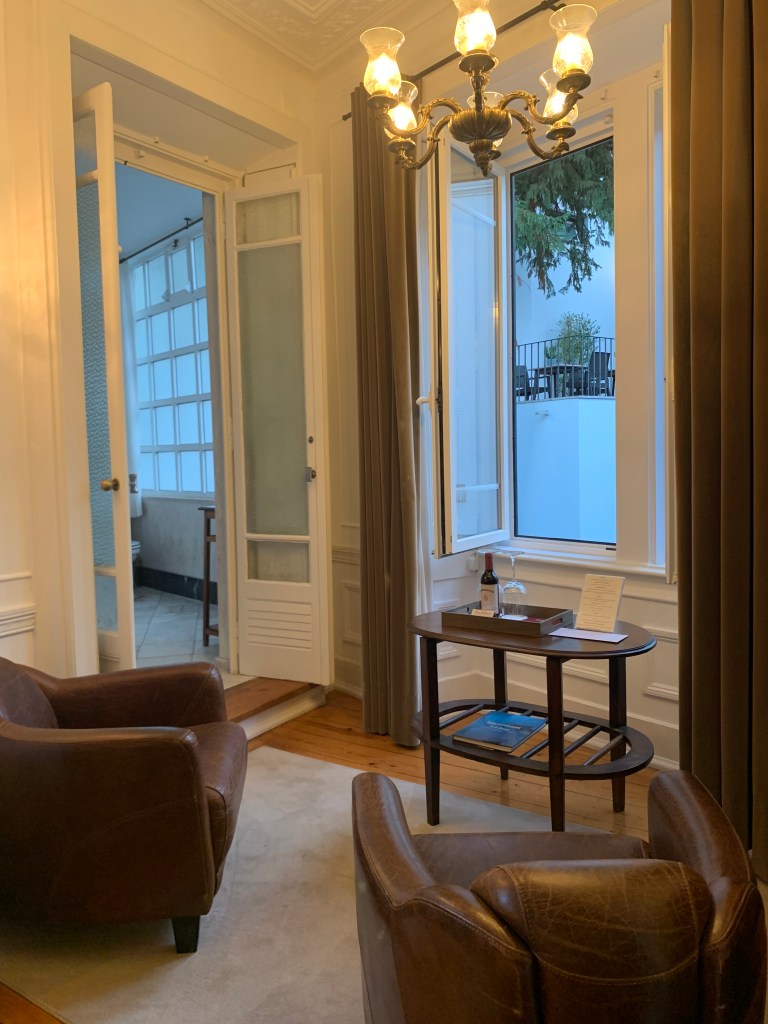
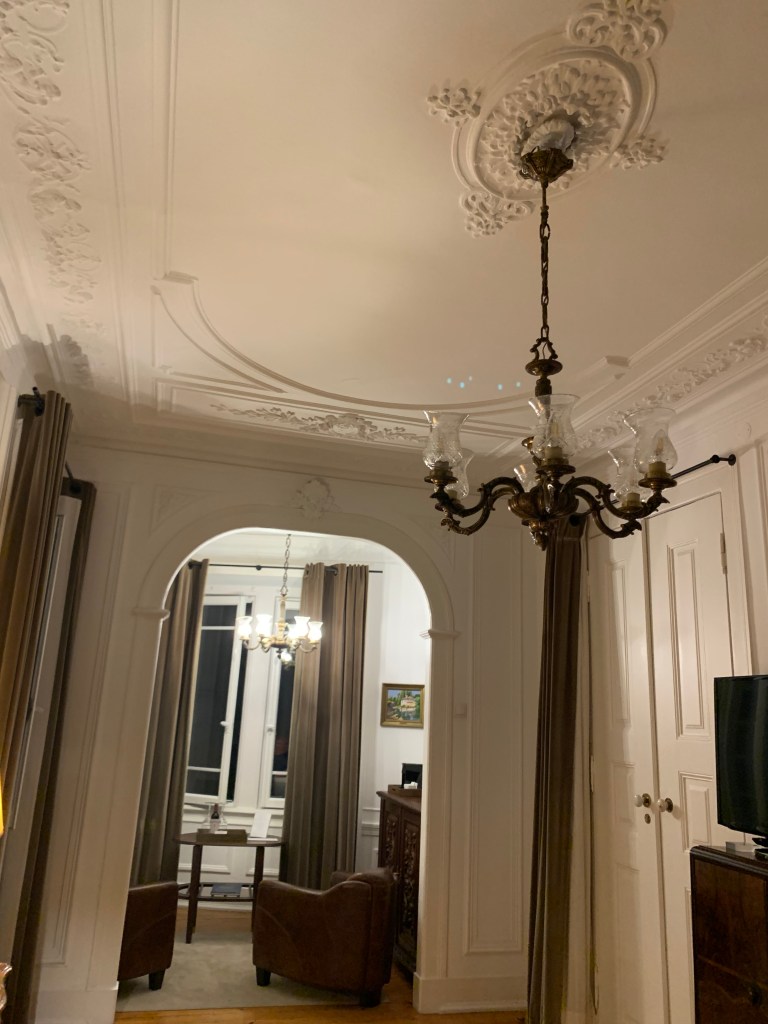
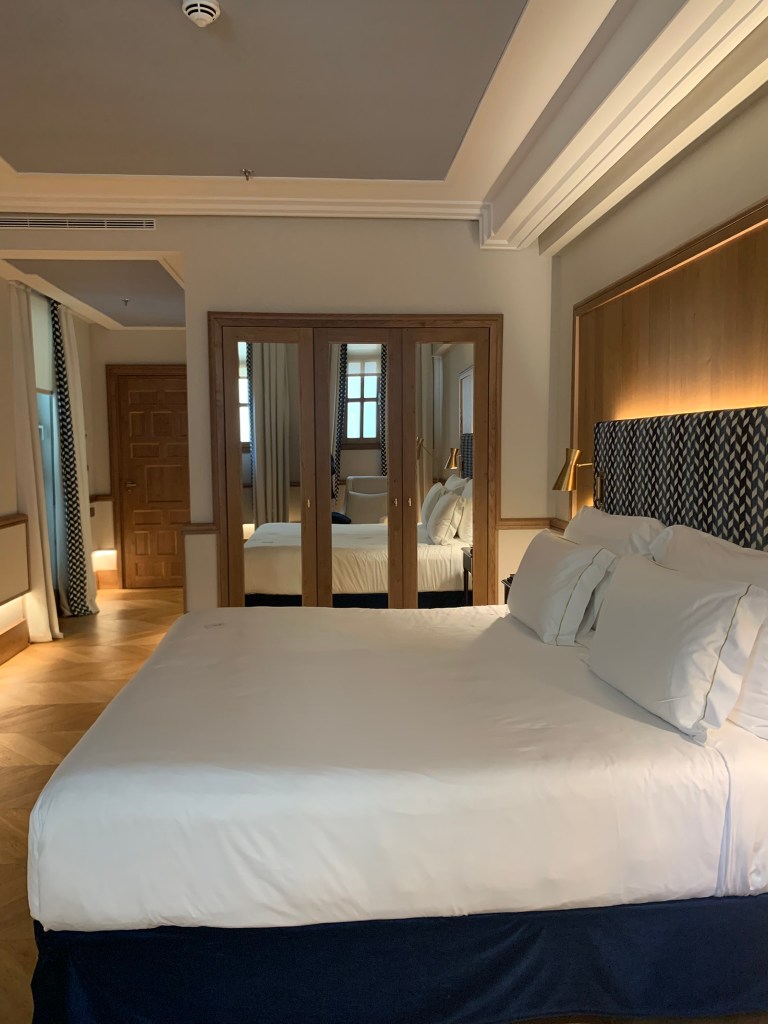
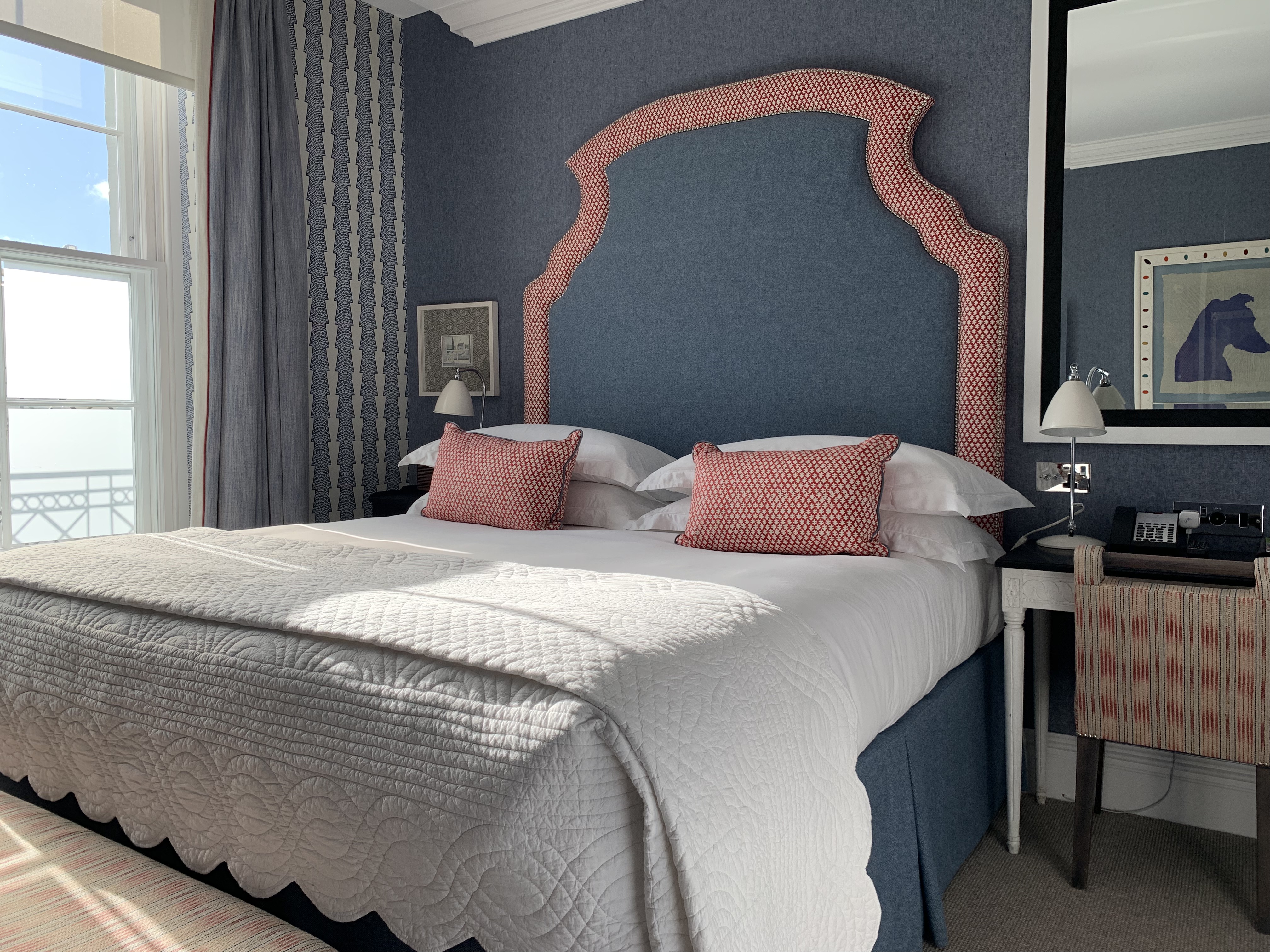
Our room, which apparently is the room the owner stays in when at the hotel, is quite unique and memorable, yes?

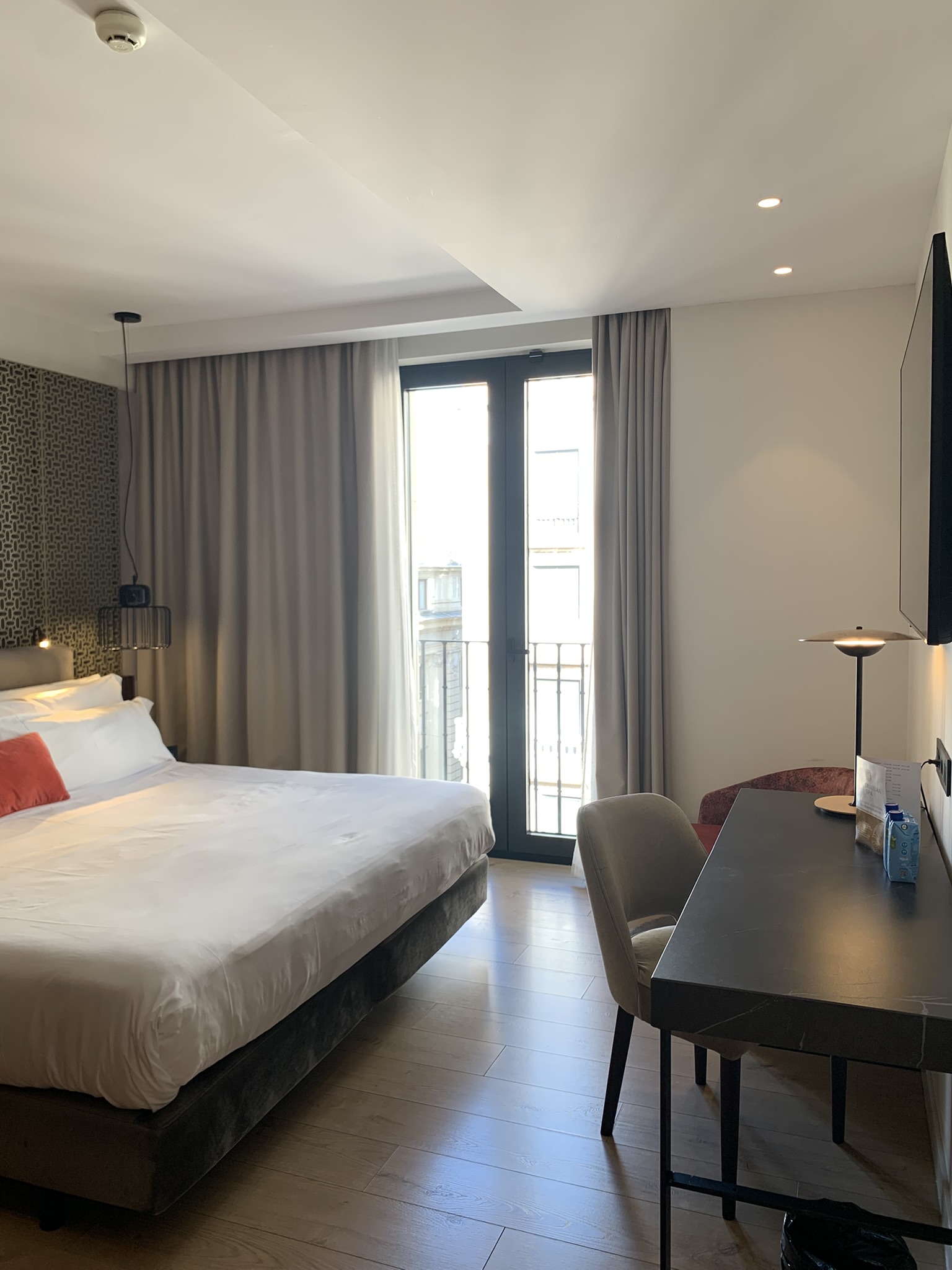
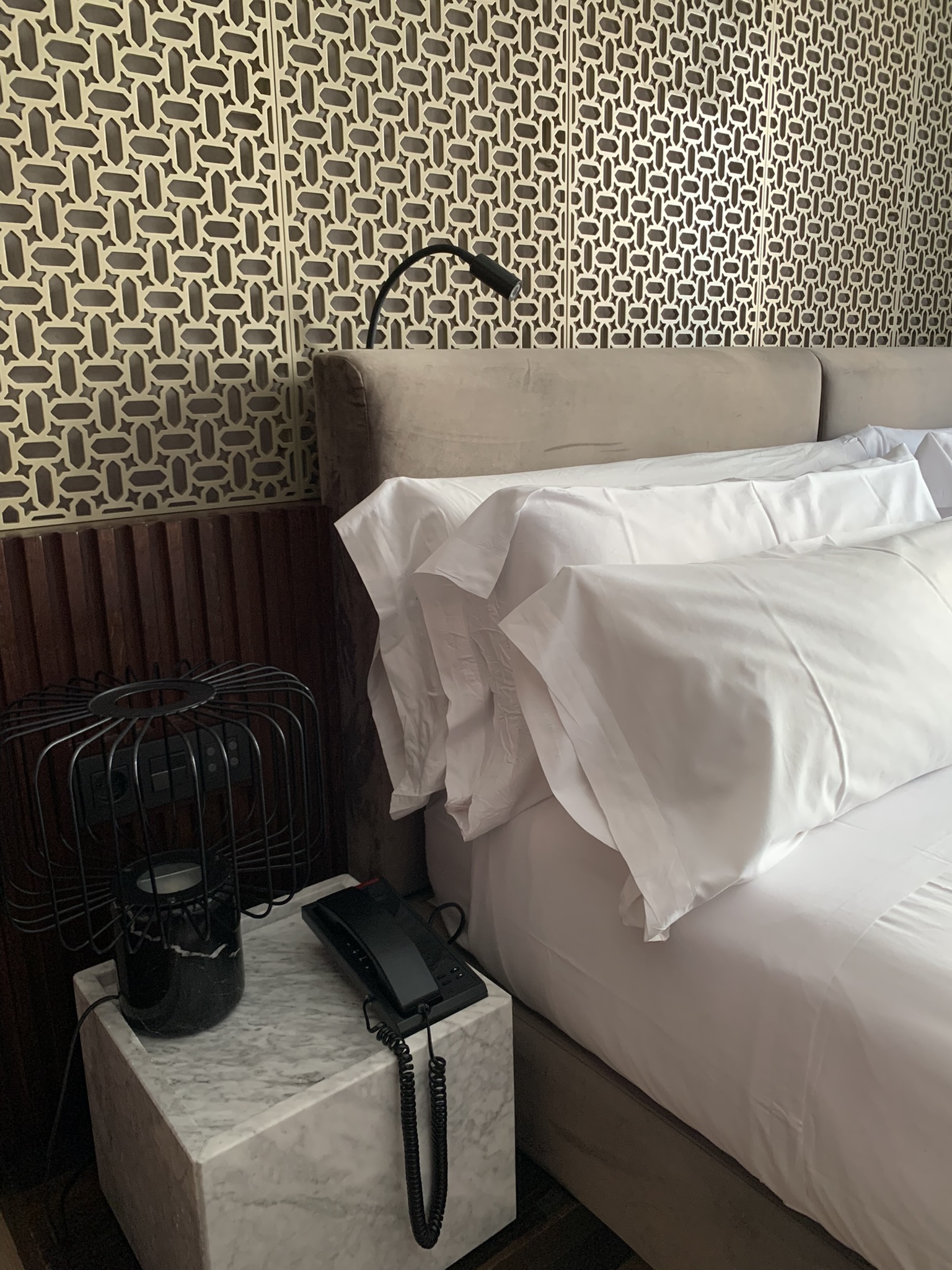
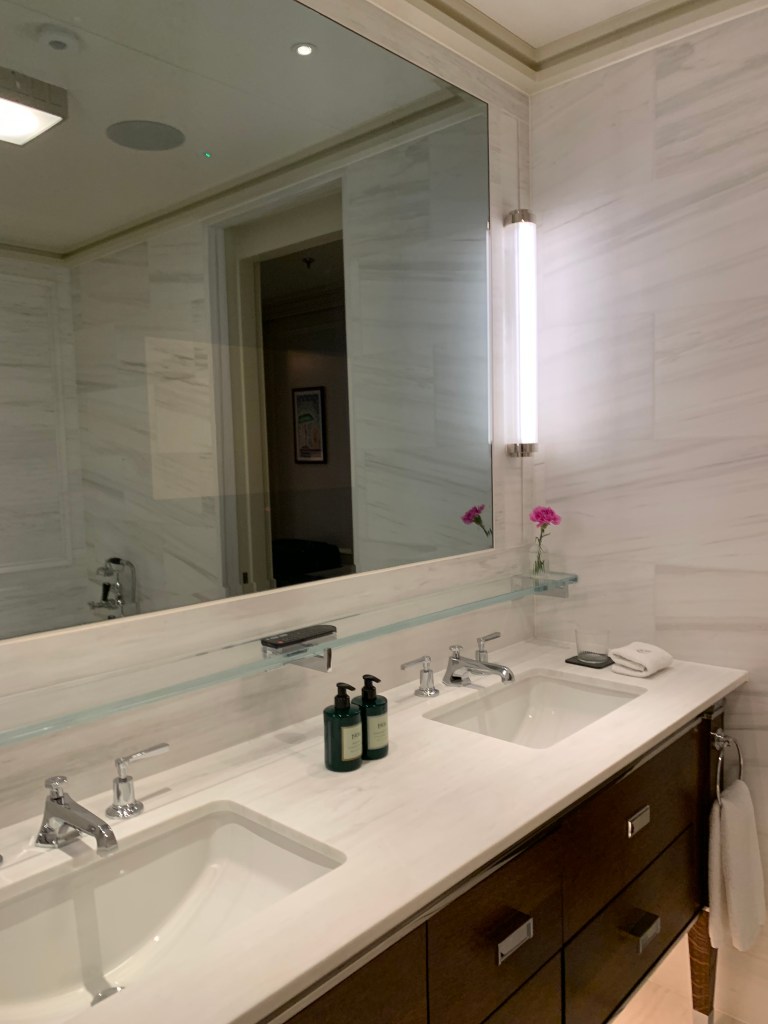
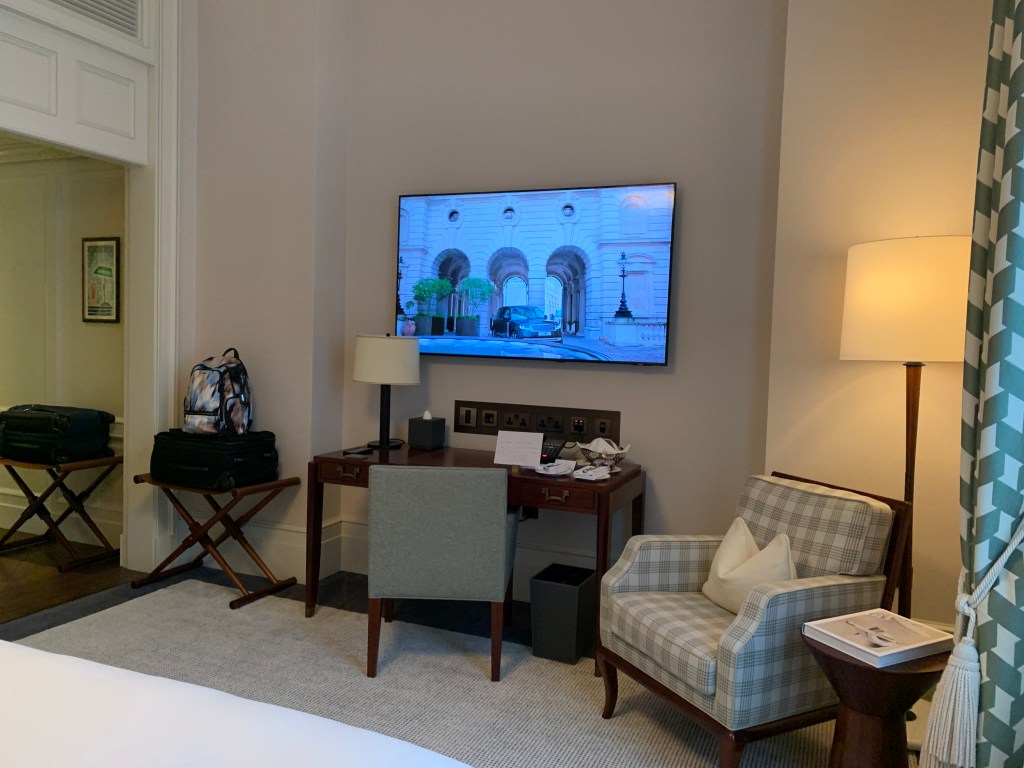
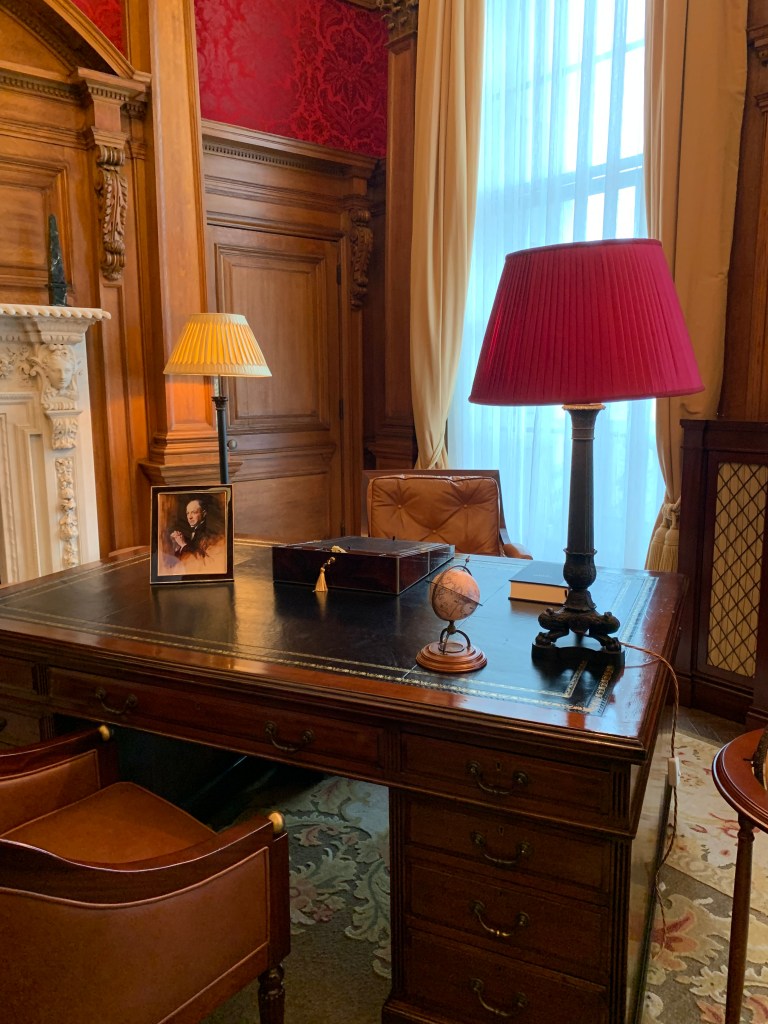
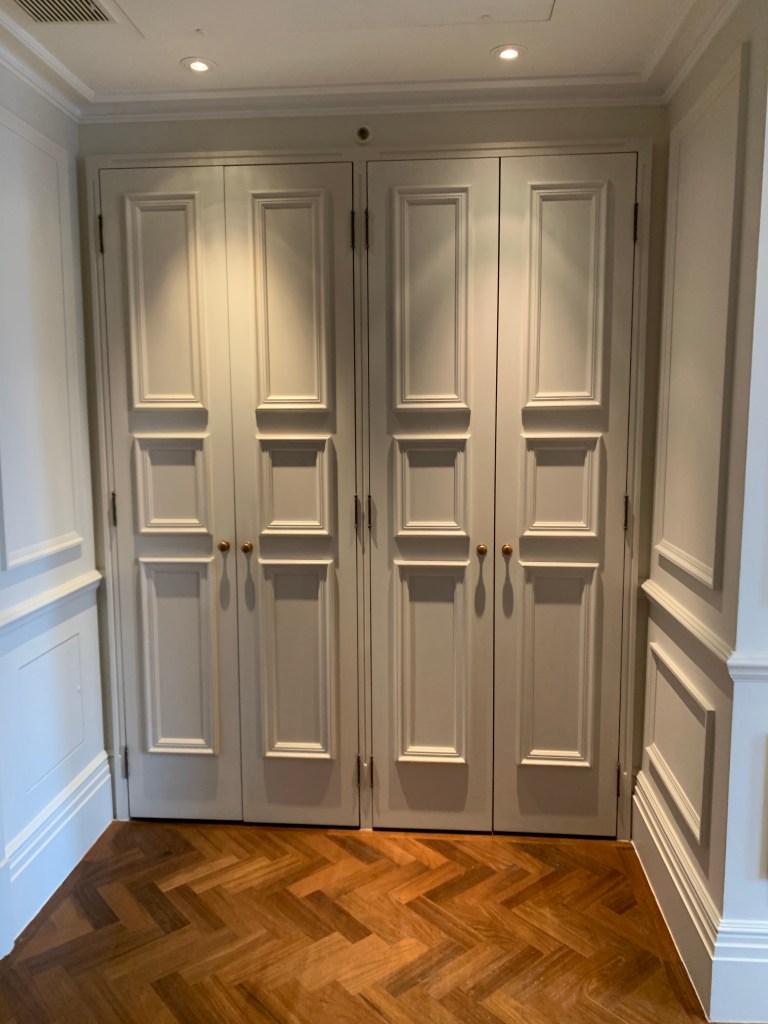
For sure. It’s full of character. We love the features from the original house — the shutters, doors, and floors — and all the furnishings in our room are pristine antiques but also functional. The huge armoire feels like it was the inspiration for The Lion, The Witch and the Wardrobe.
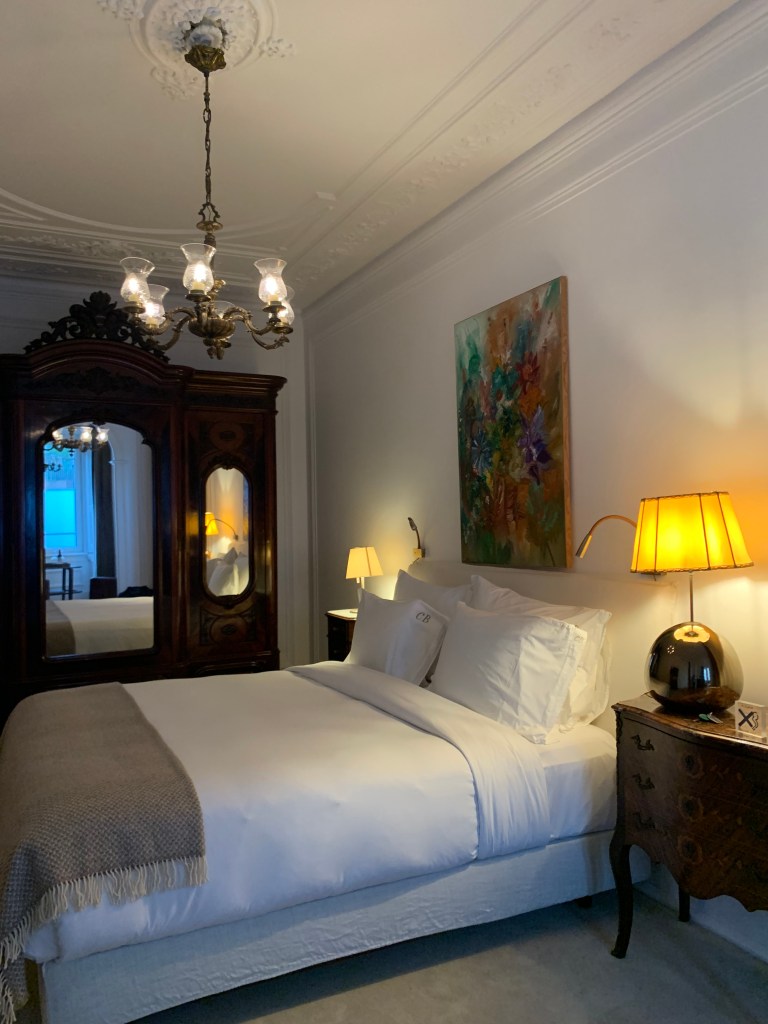
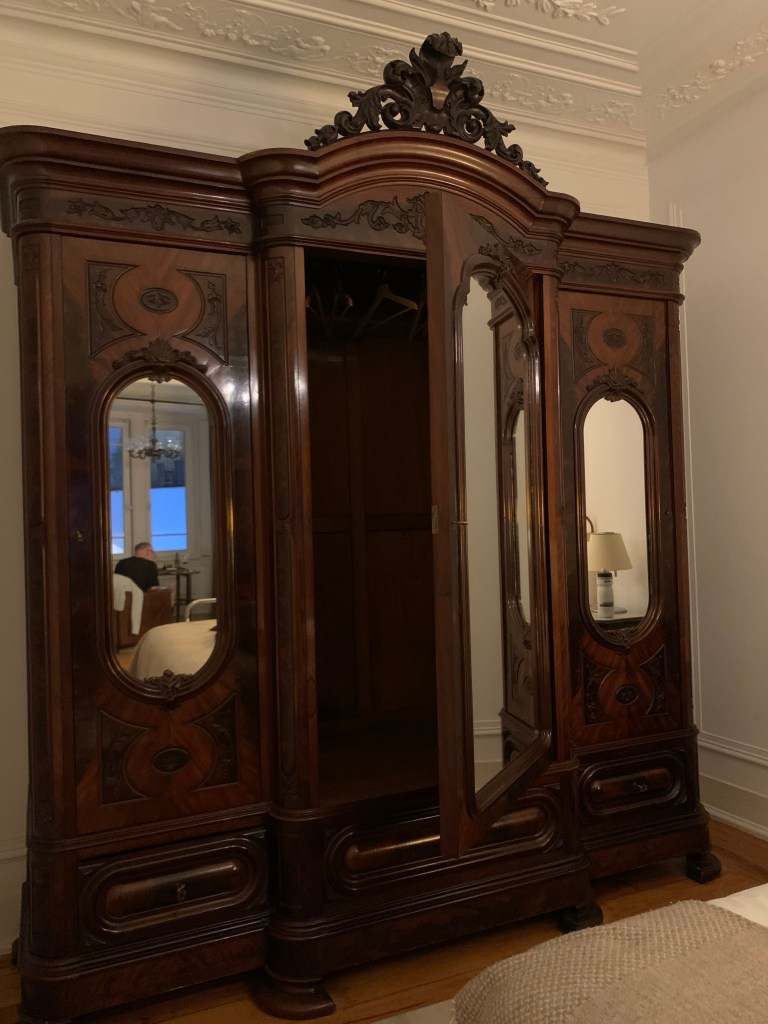
Yes, our very big bag fits lying open right inside that wardrobe. We didn’t even have to unpack it.

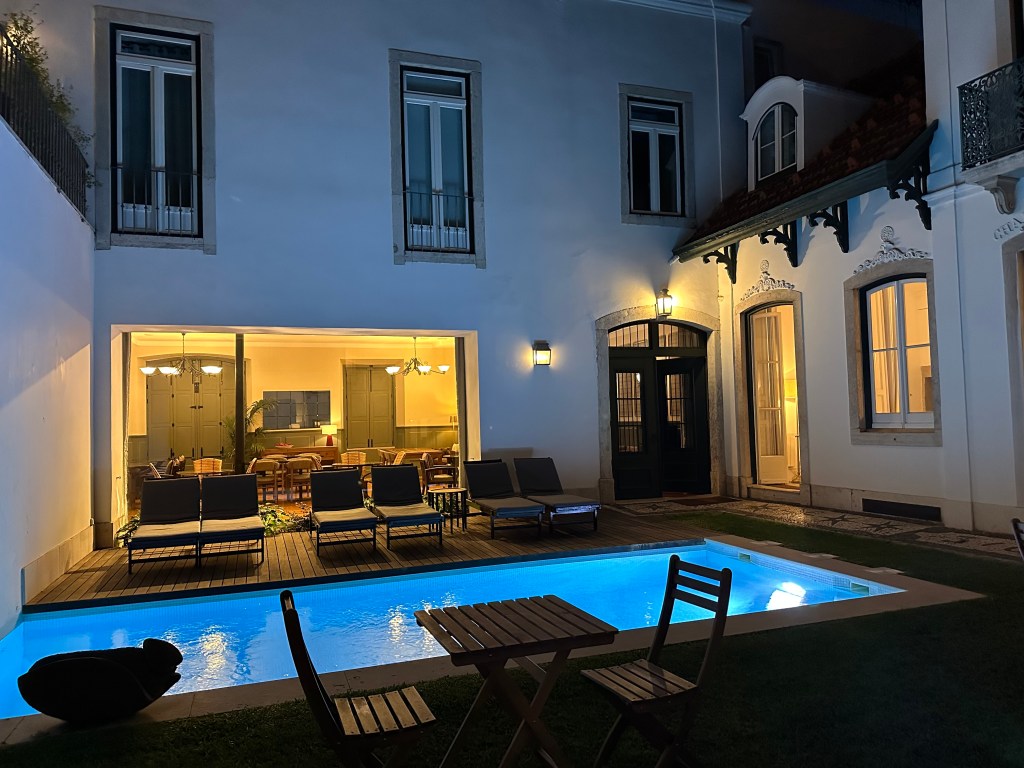
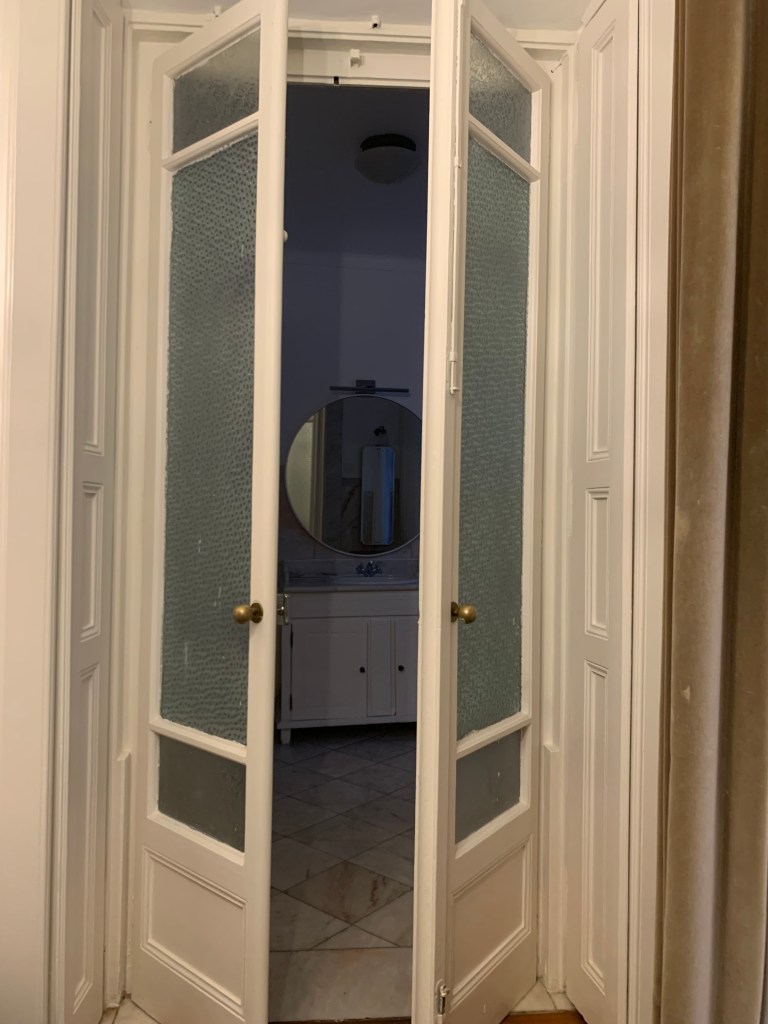
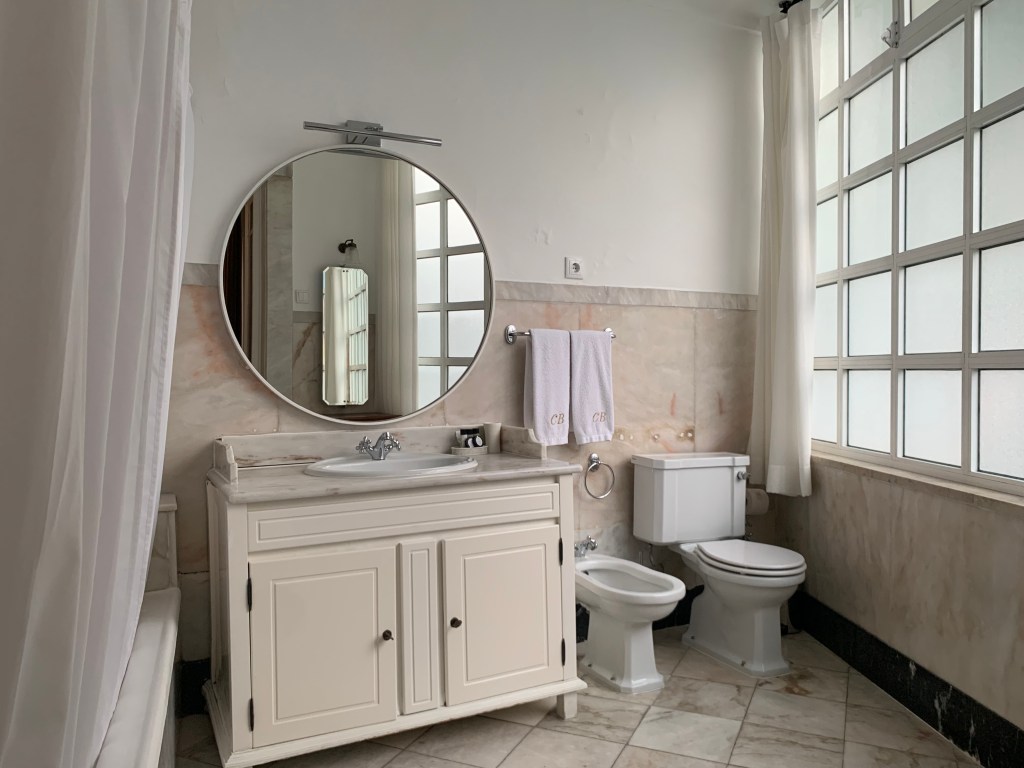
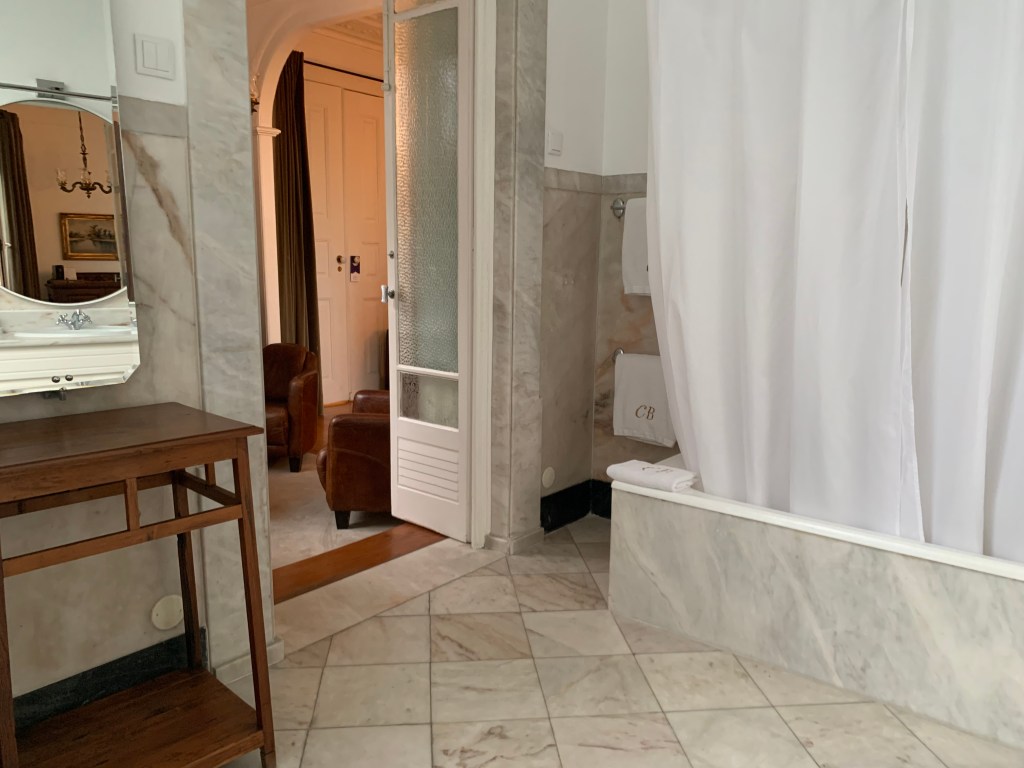
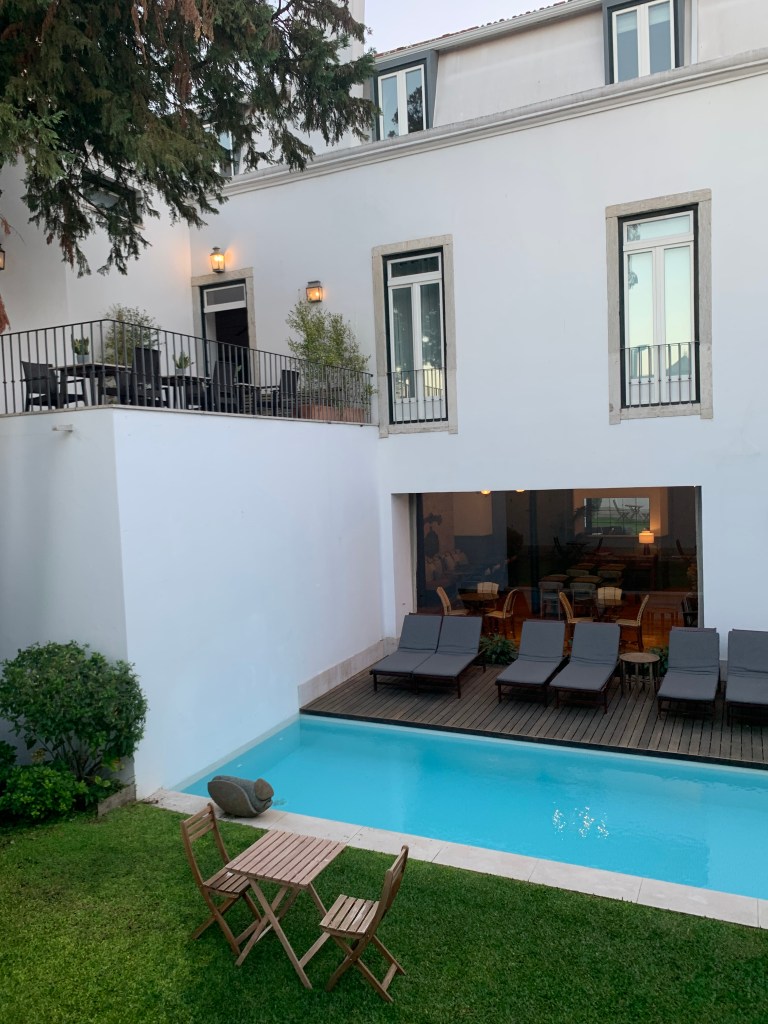
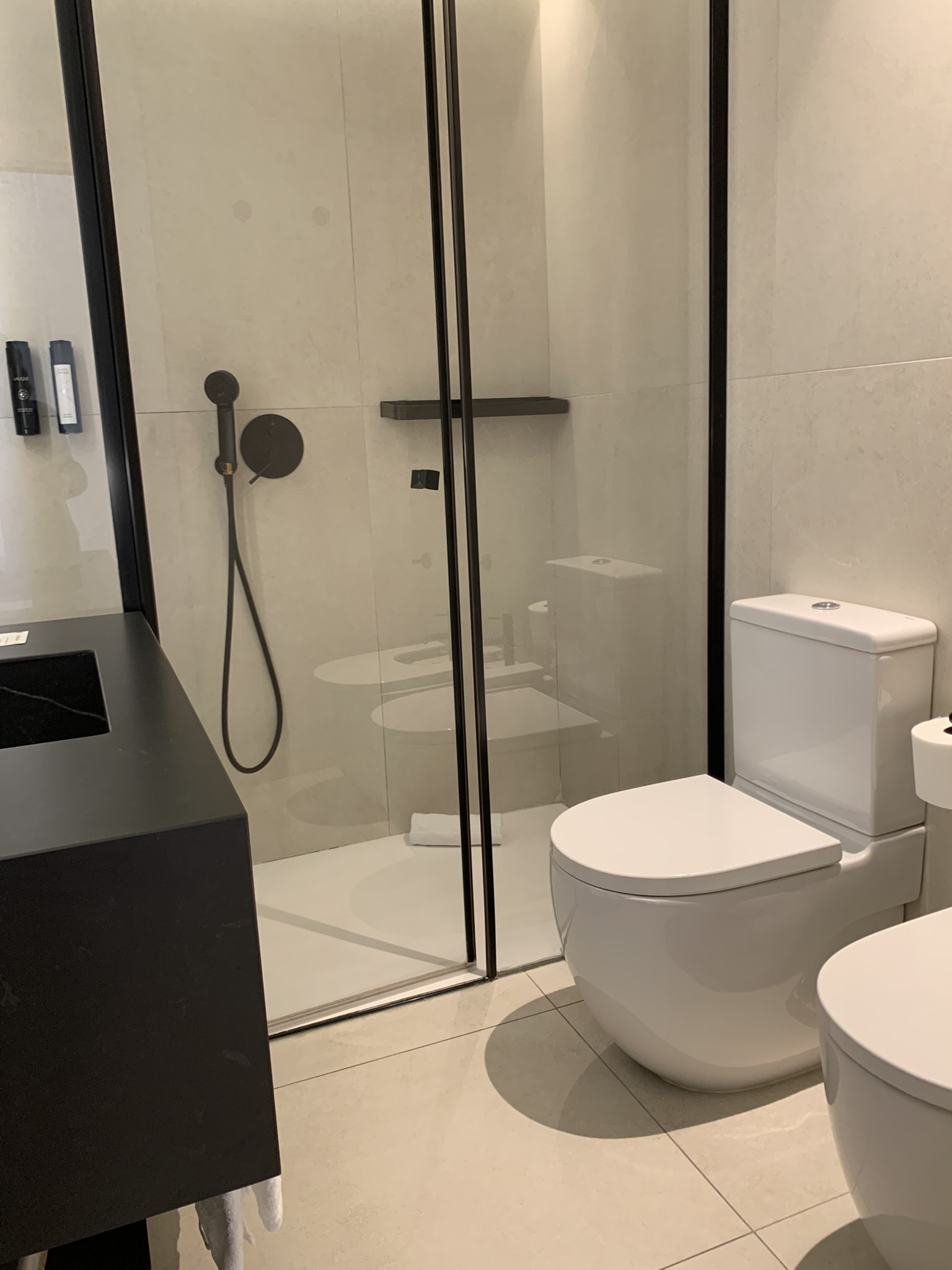
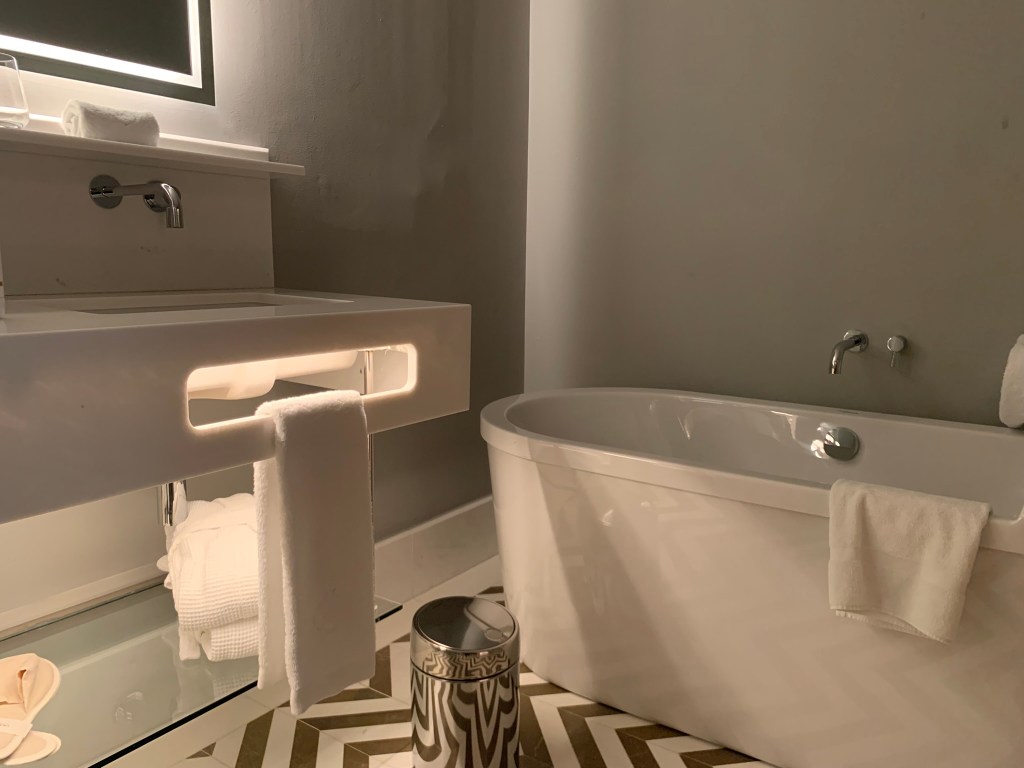
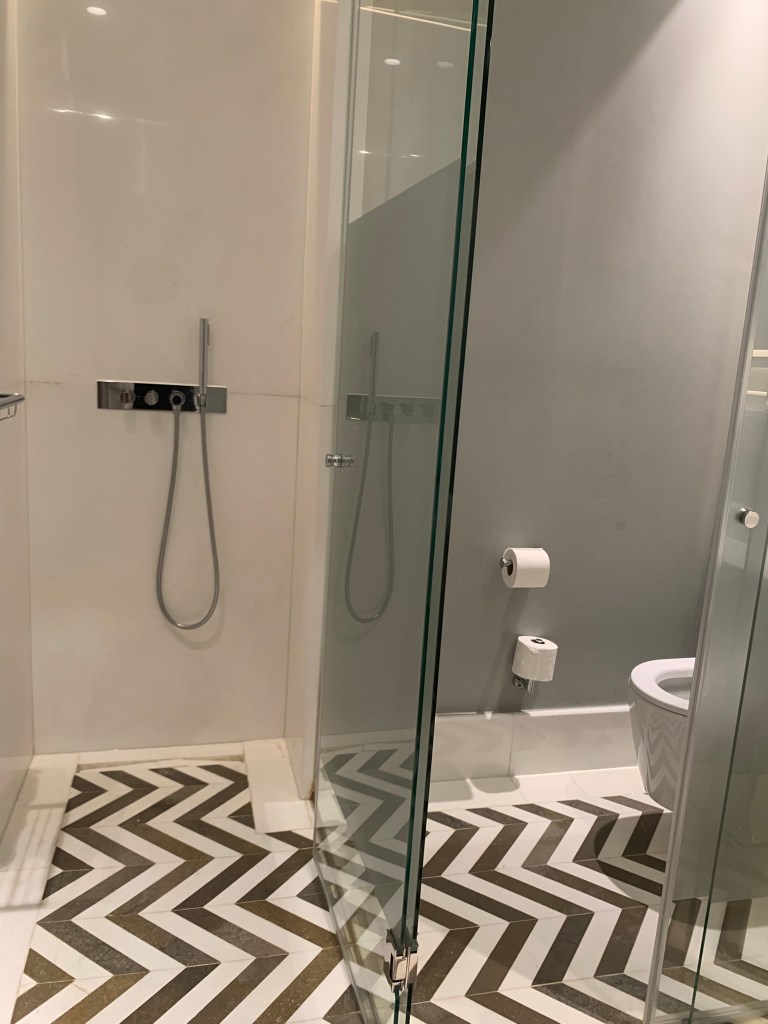
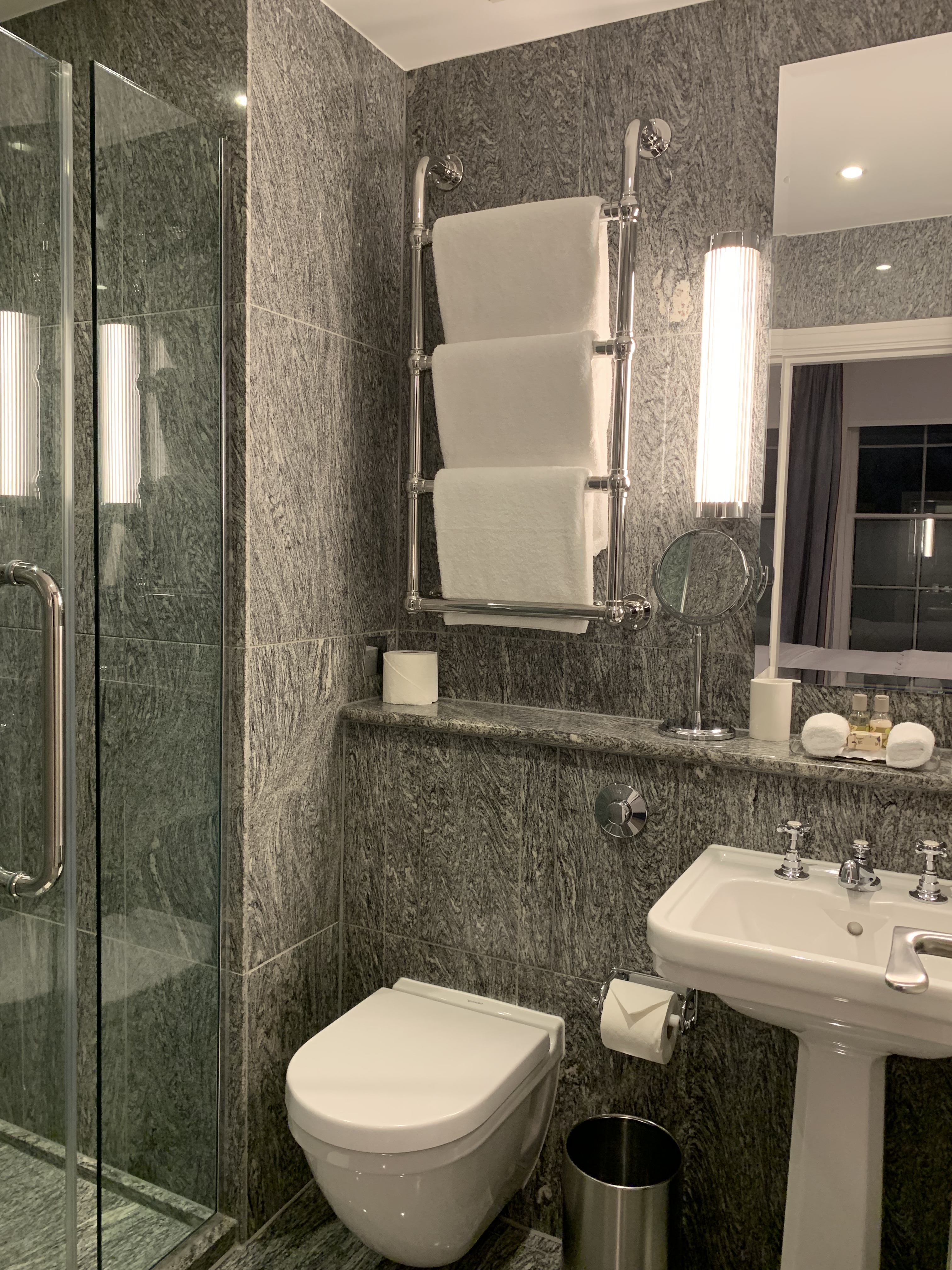
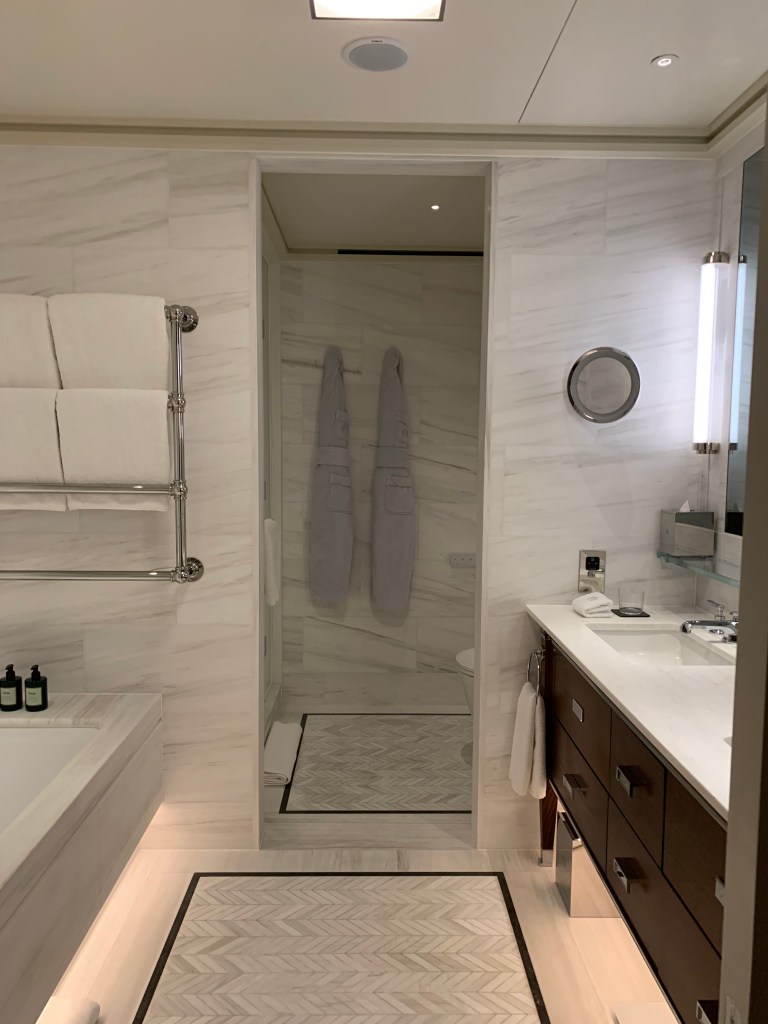
I love the two views from our room: one to the “outside” world — the buildings a bit down the hill — and another out to the pool and garden. We also have a wall of frosted windows in our bathroom, which lets in great light but also ensures privacy.

We could easily linger in our room, but the house offers lovely common spaces. Which is your favorite?

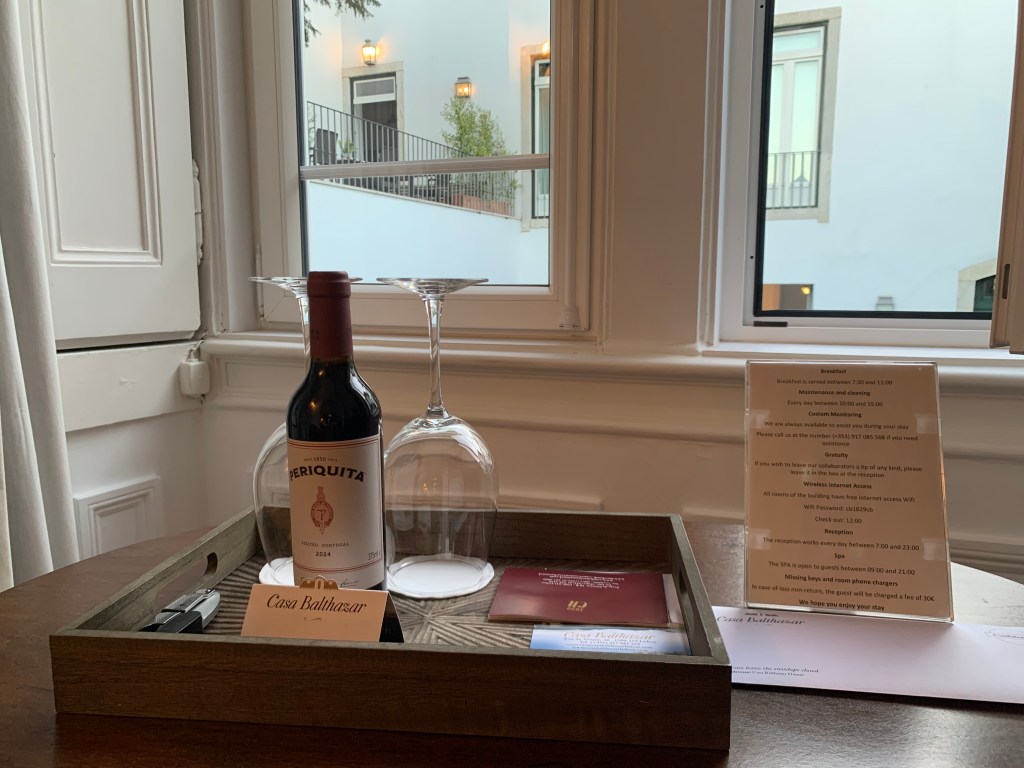
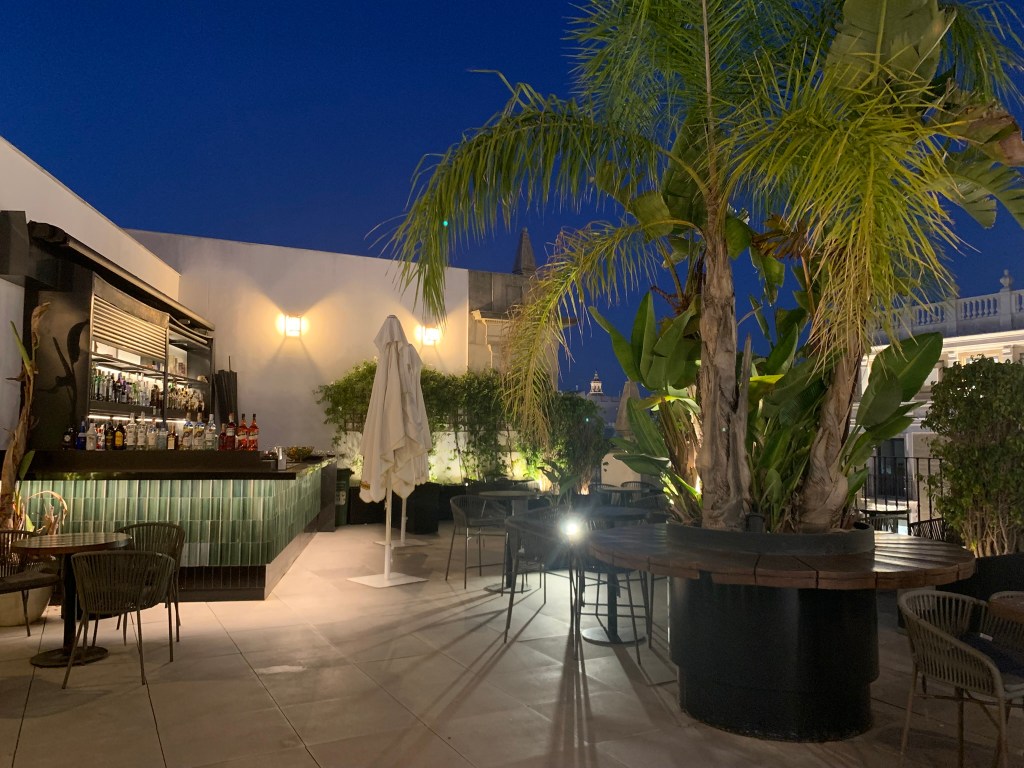
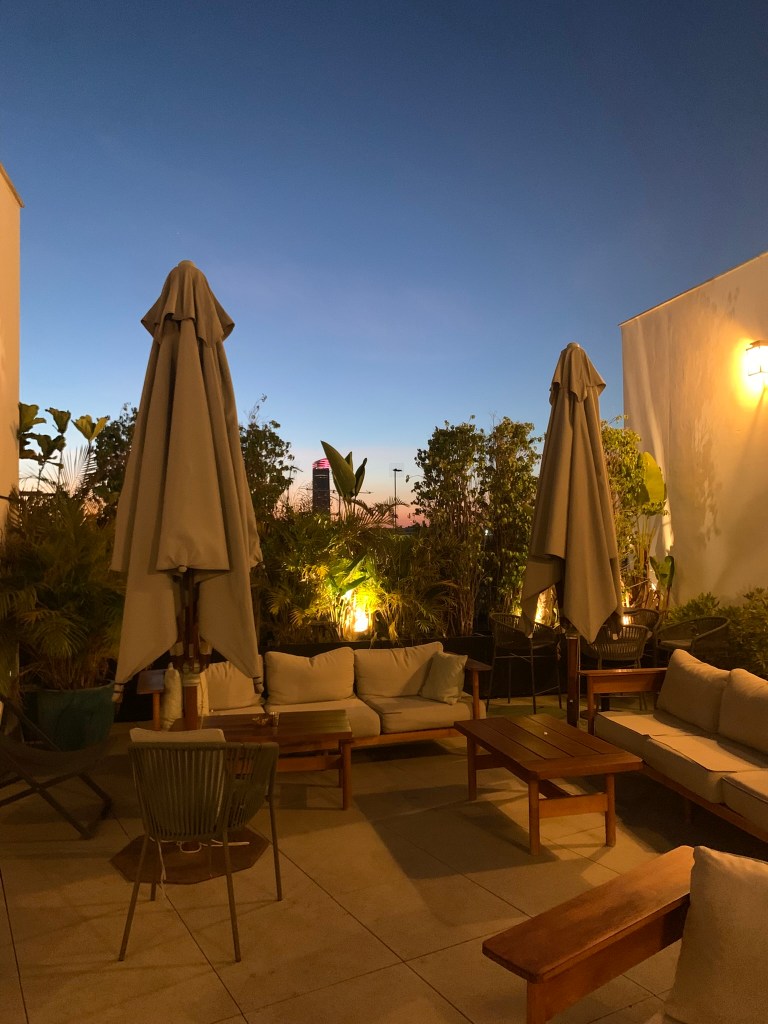
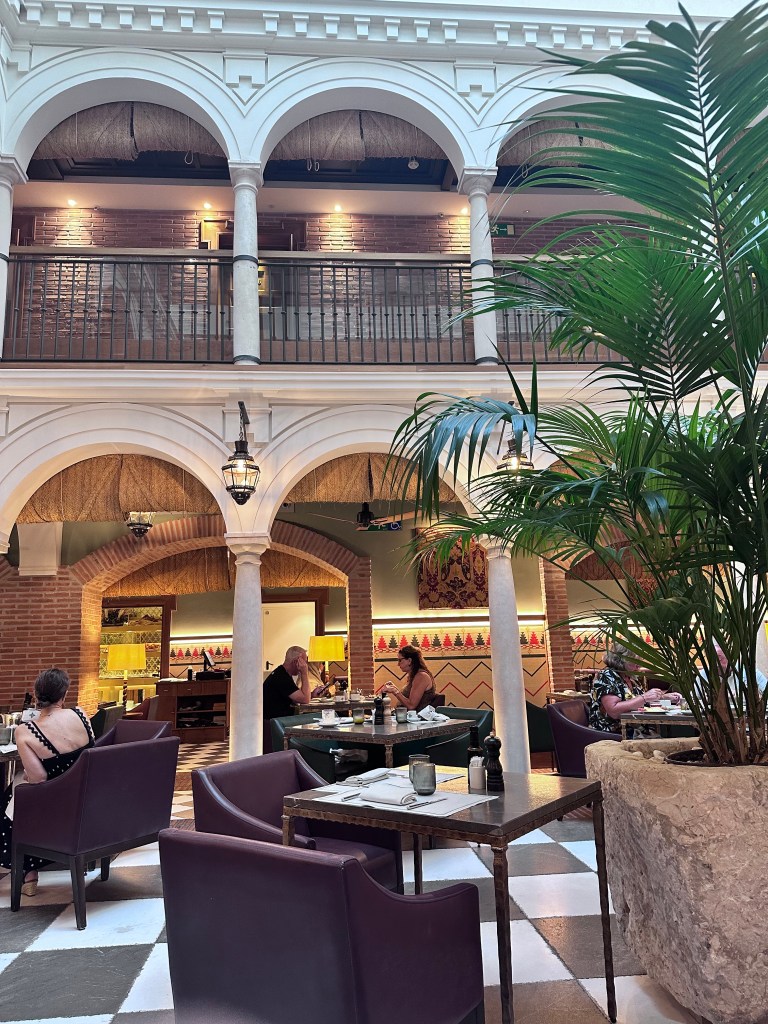
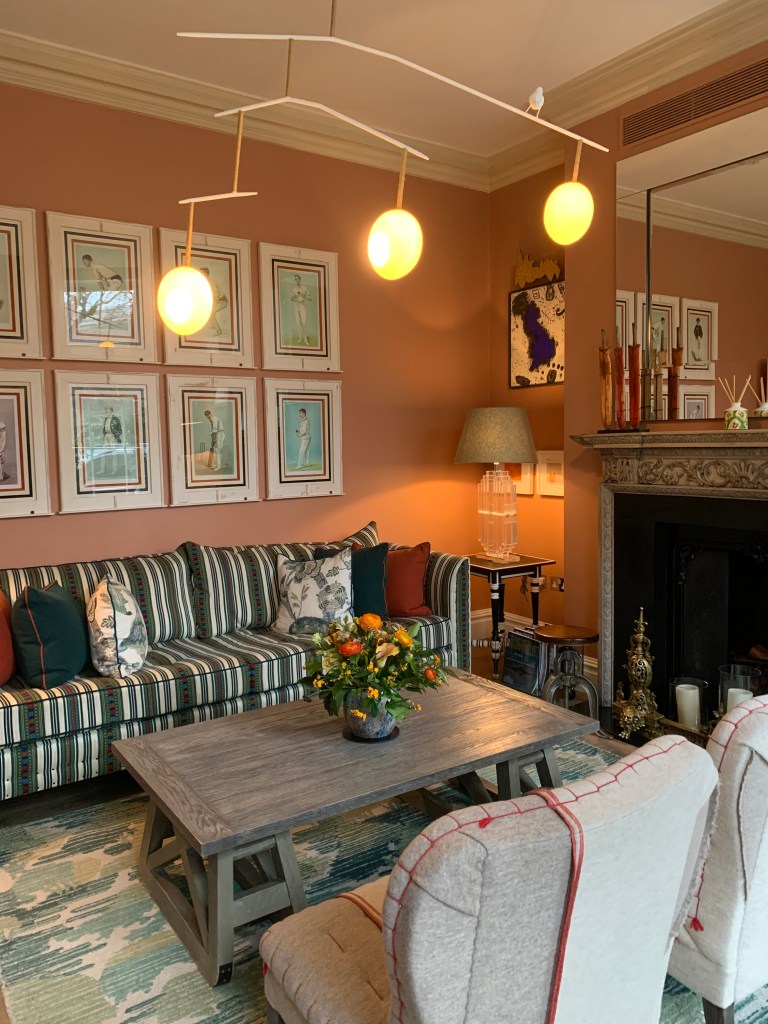
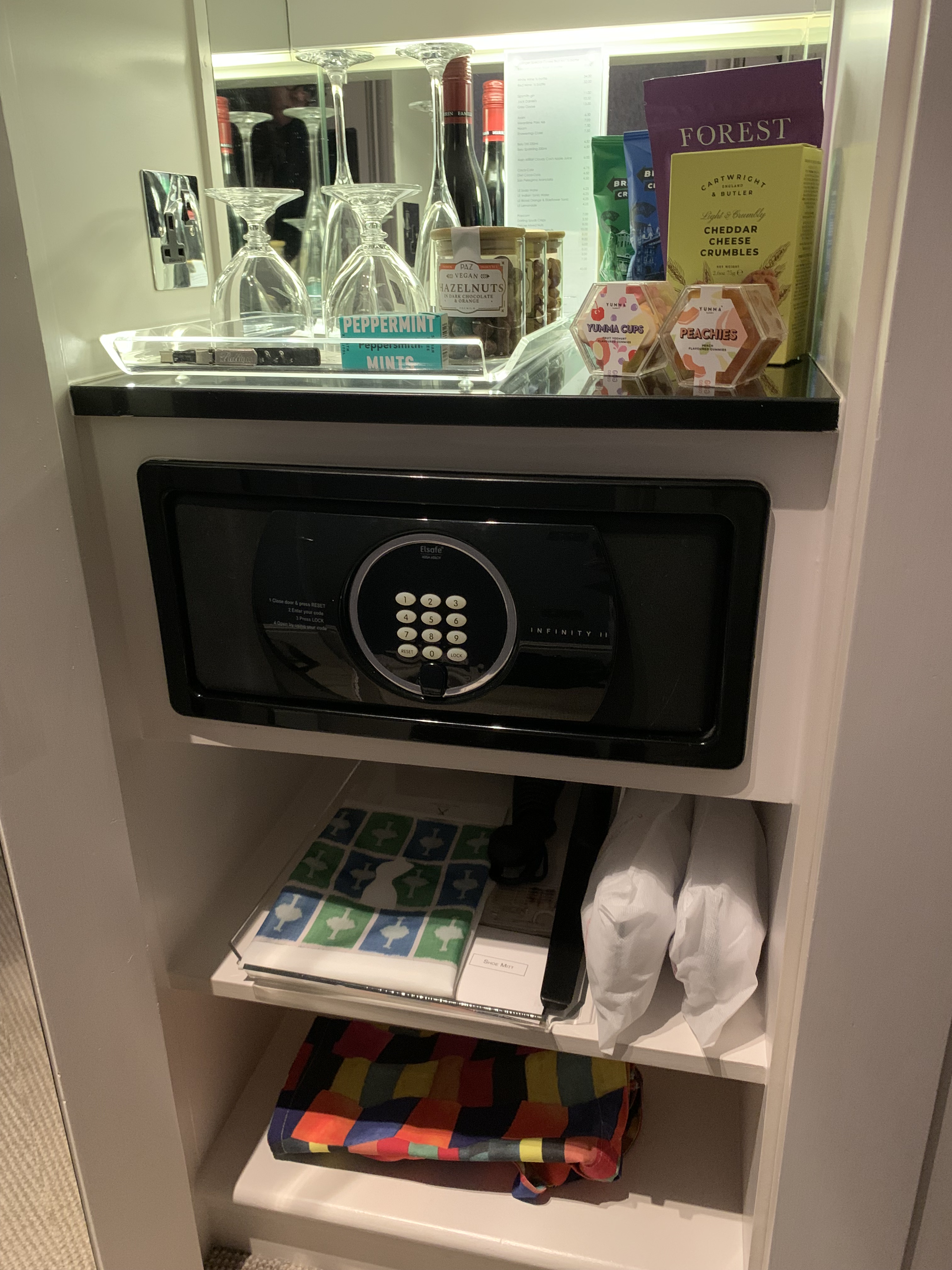
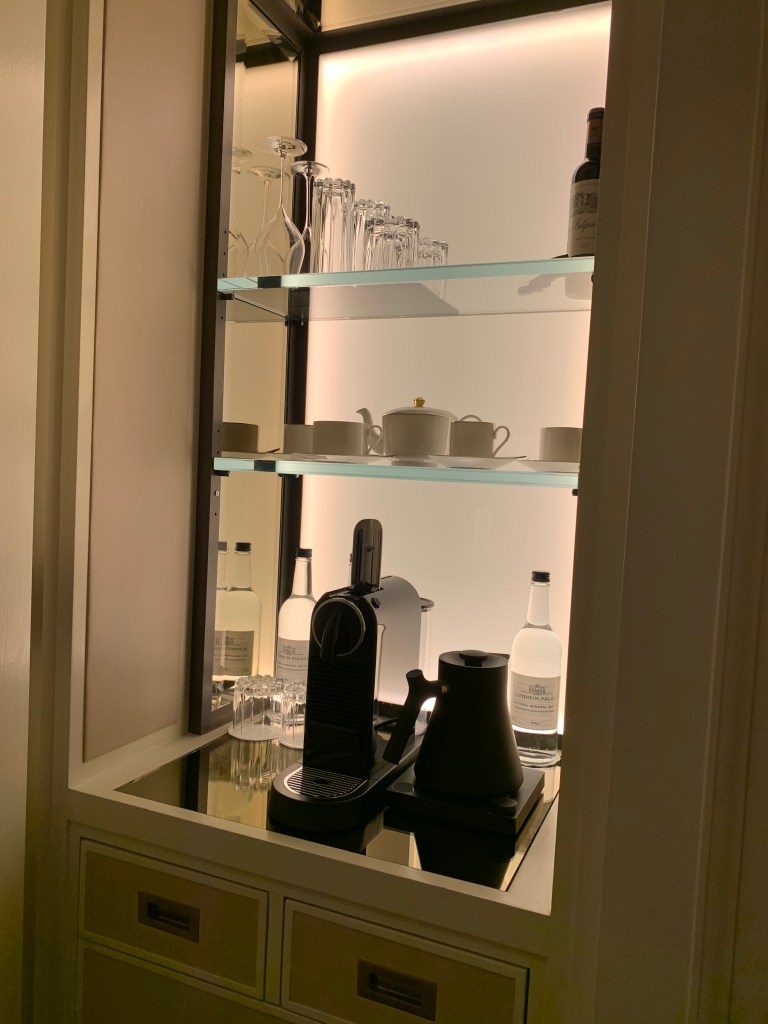
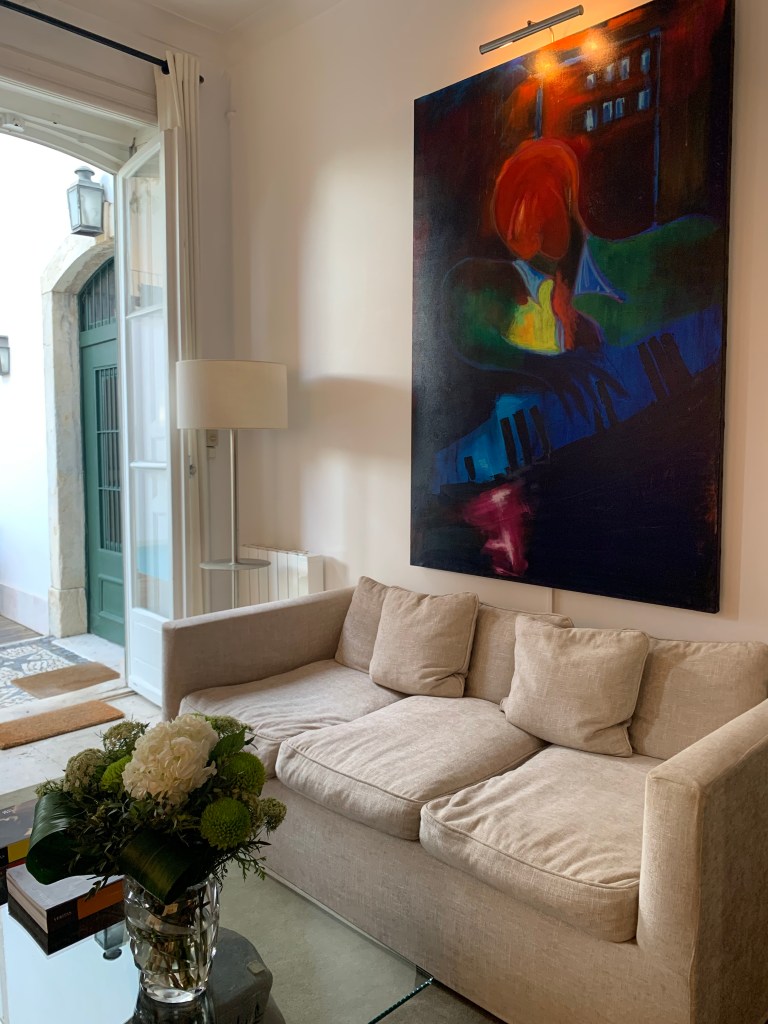
The living room, which has an honor bar and all-day-long fresh baked goods from Confeitaria Nacional, would be perfect when the weather isn’t good. And the breakfast room (a delicious breakfast comes with the stay) is worth exploring beyond breakfast hours. But my favorite has to be the poolside garden with its close-cropped grass, shrubs and trees, petite picnic tables (where we’re sitting now), and year-round pool. It’s a calming, pleasant space — truly an oasis in the city. And the best part is that a portion of the garden is shaded by the house; I don’t have to put on sunscreen to spend time outside.
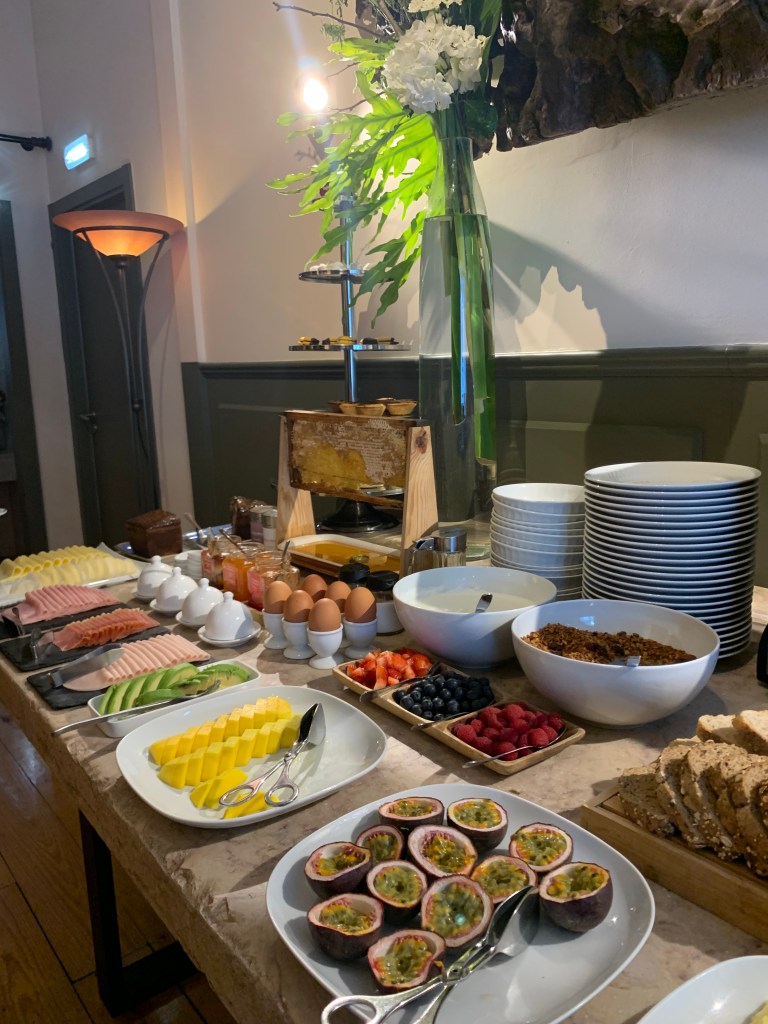
For me, when we’re staying at a hotel, the experience at the property is obviously important, but equally worthy of consideration is the location. We’ve been talking about the experience. What do you think of the location?

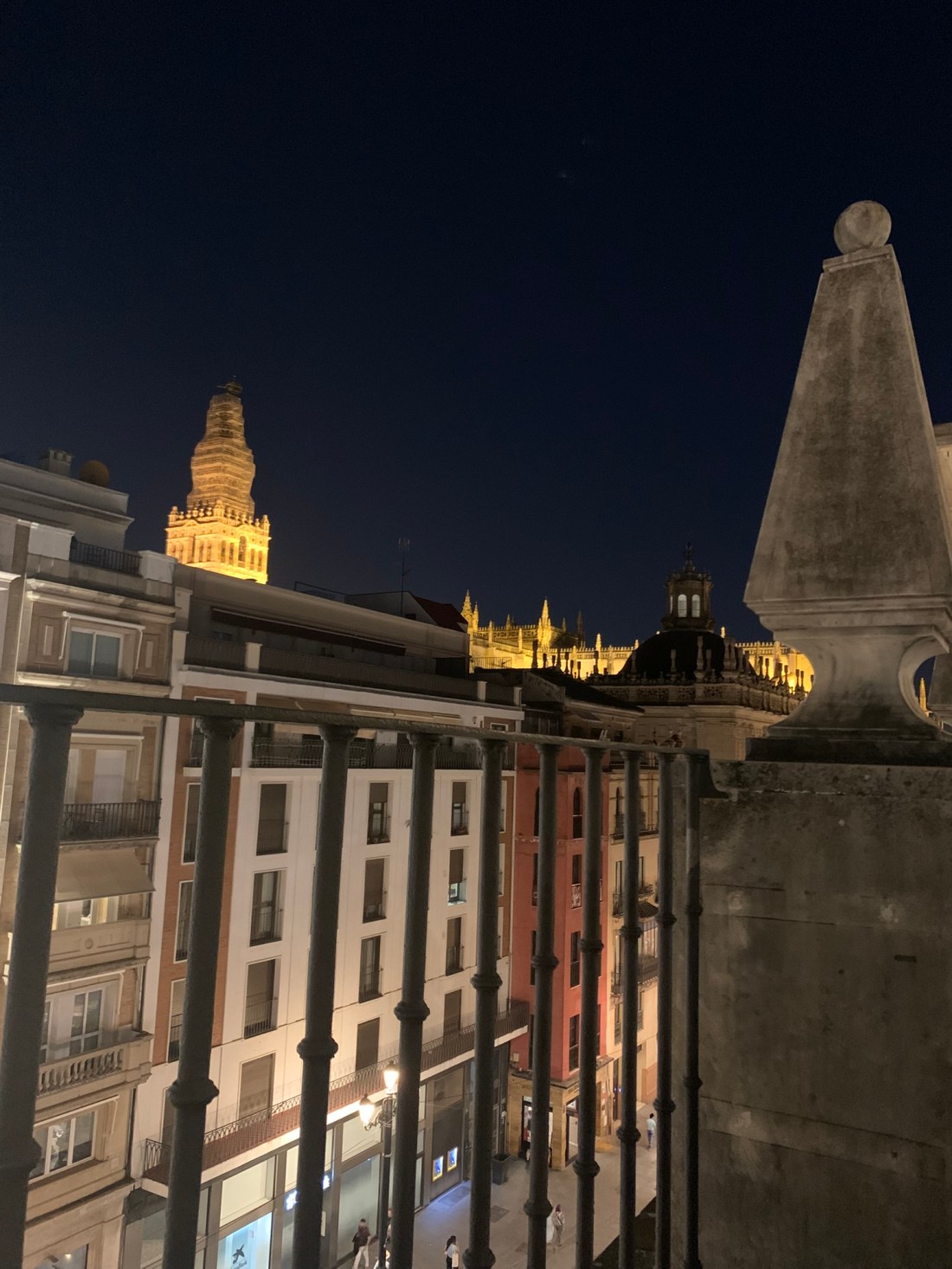
Love it. We can walk almost anywhere, but we aren’t on one of the big avenues in Baixa (where lots of hotels are found). It’s crazy how tucked-away we feel, even though we are literally a few minutes’ walk from what you might call the “center” of Lisbon. And we’ve been told that taxis will come to the hotel when requested by a staff member. Good to know for when it comes time to leave.

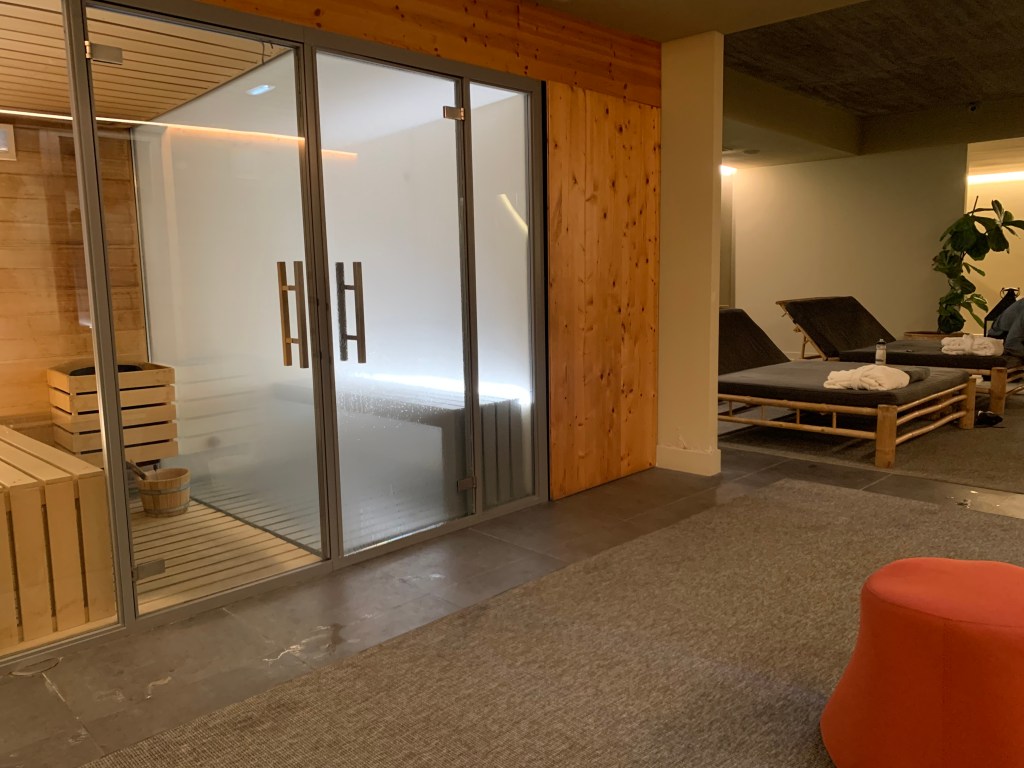
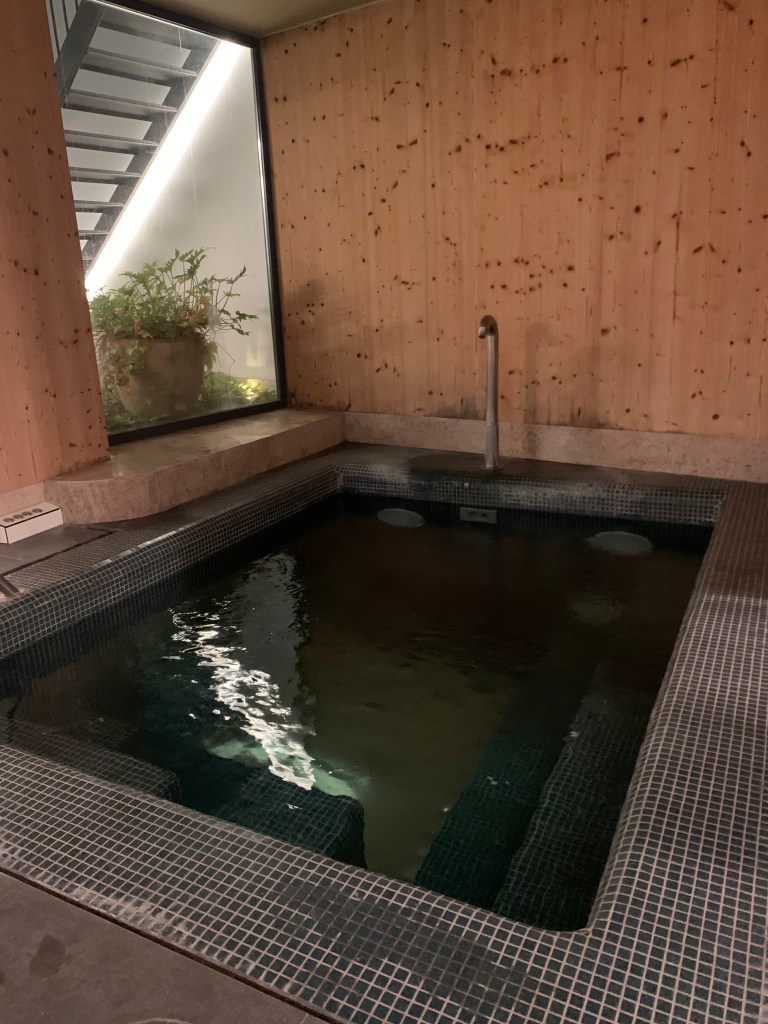
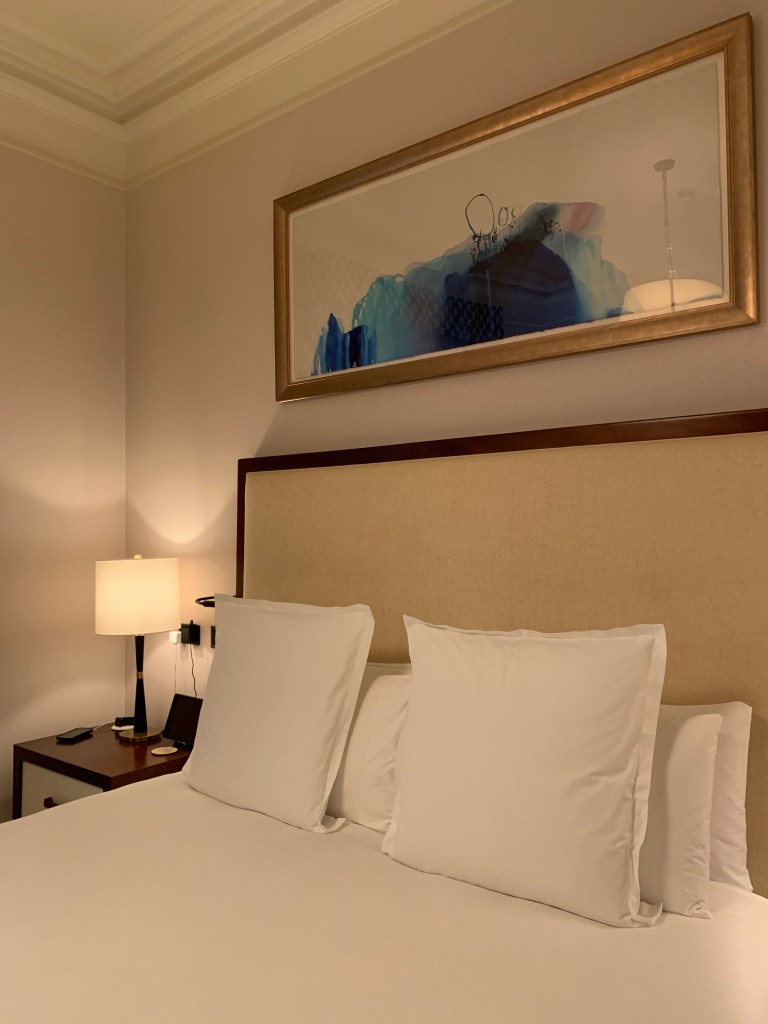
I want to point out a few more things: First, I love the modern art in the hotel. It’s a great complement to the antiques and classic architecture. Second, we get to book the spa all to ourselves for an hour each day.
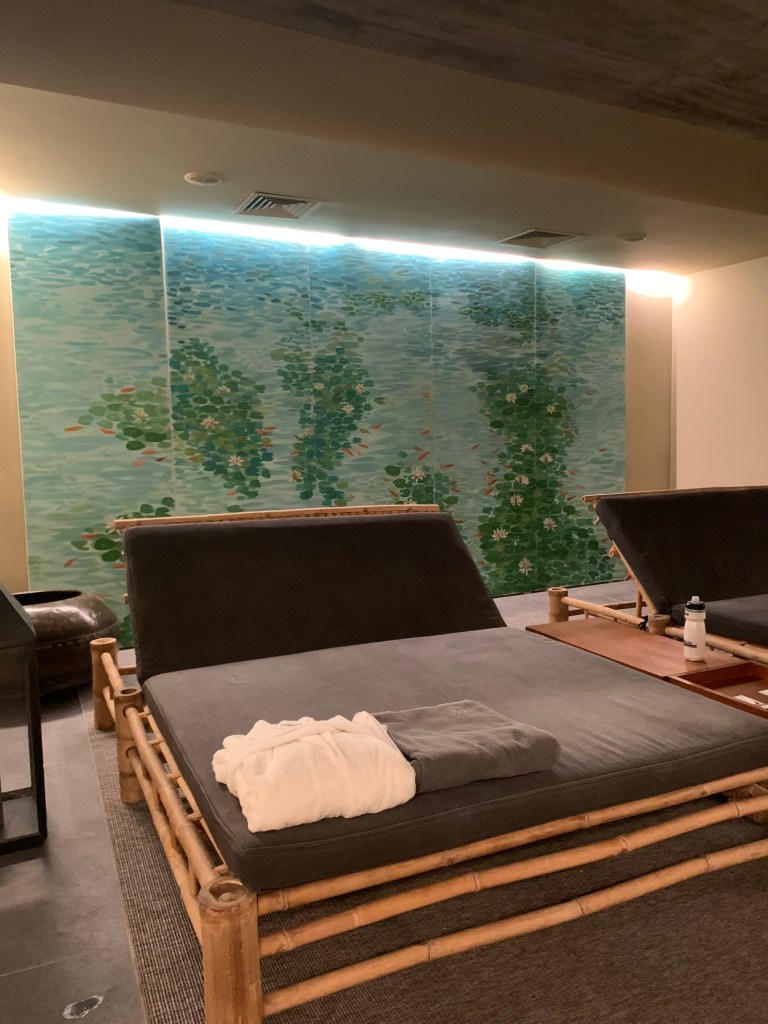
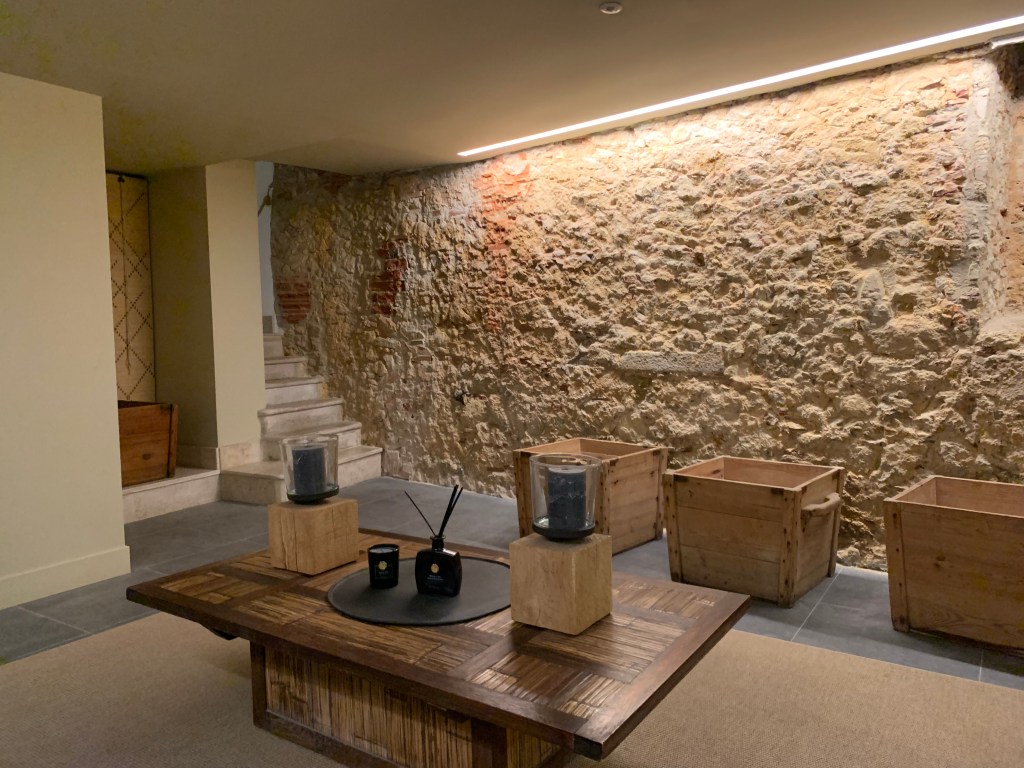
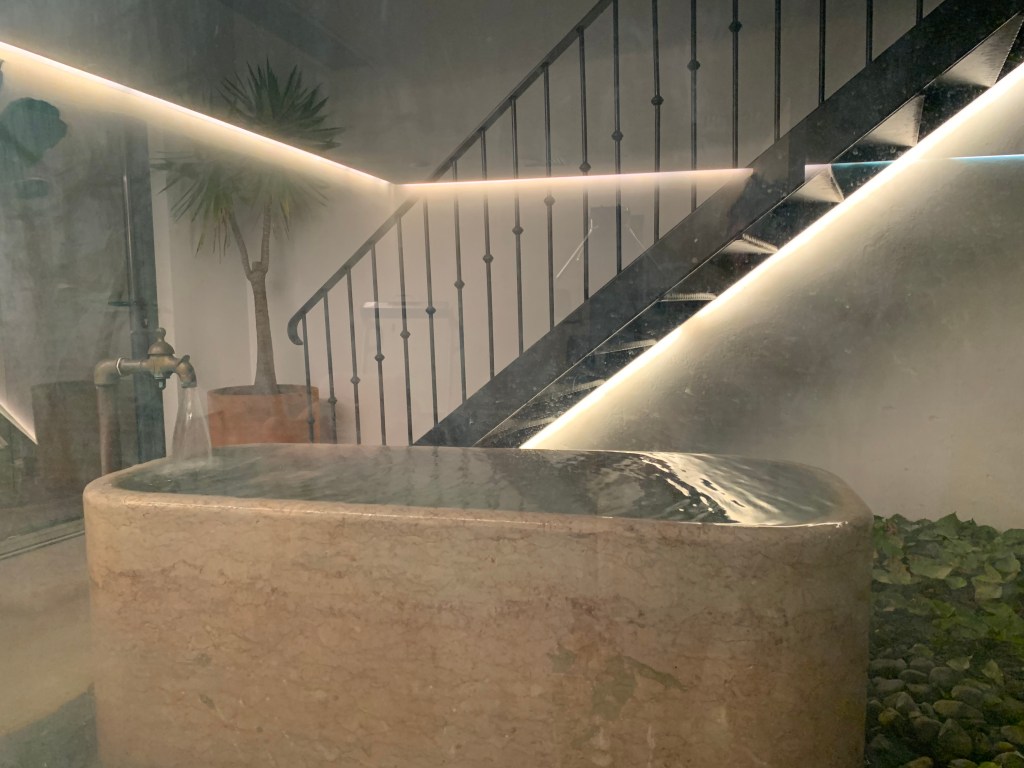
After walking up and down the hills of Lisbon all day, the hot tub, steam room, and sauna feel wonderful. The spa is in the basement of the house, and it reminds us of hammams we’ve experienced in Paris and Berlin — and the ancient ones we saw in Granada.

Okay, you’re the one who pays attention to price. Now that we’re here, what’s your assessment?

It’s an excellent value for the money. We don’t have a good sense of the lodging scene in Lisbon like we do in some other cities, but I’d give Casa Balthazar high ratings here.
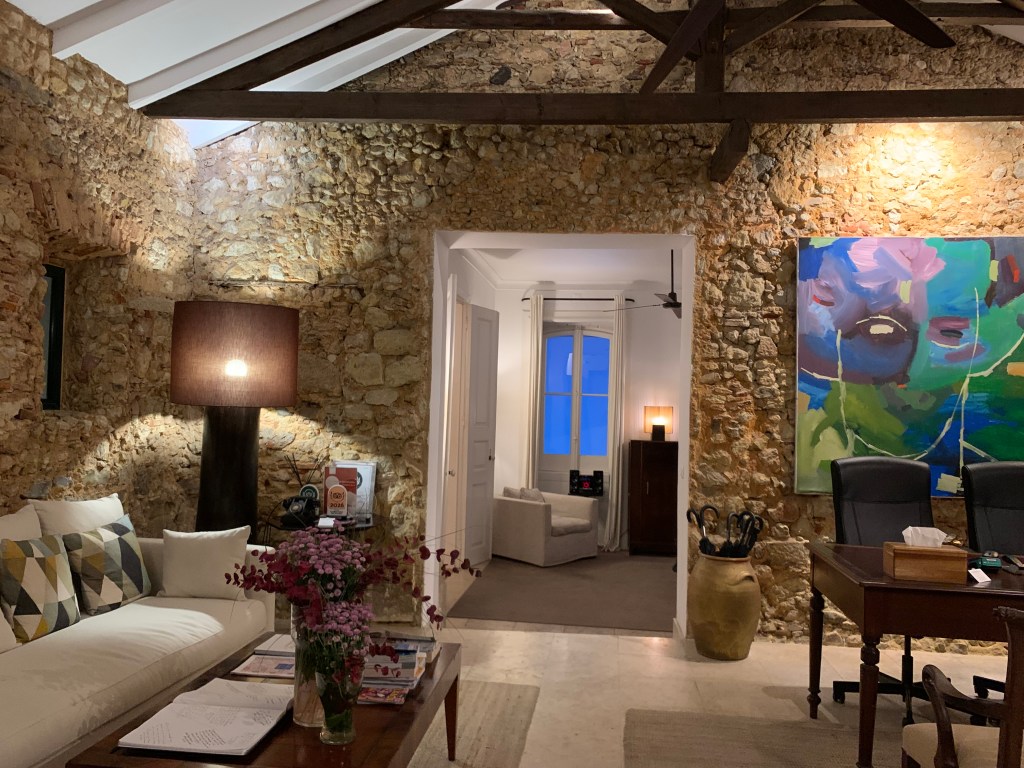
I also want to note two final things. At the front desk is a box where guests can leave tips for the staff. Assuming that the tips are distributed to all of the staffers who are making our experience a good one, I love this. It takes away the worry over tipping some people (the ones we see) and missing others. Additionally, there’s an envelope in our room with a sheet of paper that asks for our feedback. The envelope is addressed to the owner. We can’t guarantee that feedback actually makes it to the owner, but in a day when electronic surveys come via email — and come again and again if they aren’t completed — it’s refreshing to see an old-school format like this.

I think we both agree that Casa Balthazar is a great place to end our monthlong sojourn in Southern Spain and Portugal. As we sit here, in fact, we’re contemplating extending our stay.


  • Casa Balthazar, Rua do Duque, Lisbon
  • 3-night stay, Oct. 31-Nov. 2, 2026
  • Charm Room: “Antique”

Back to HOTELLING home

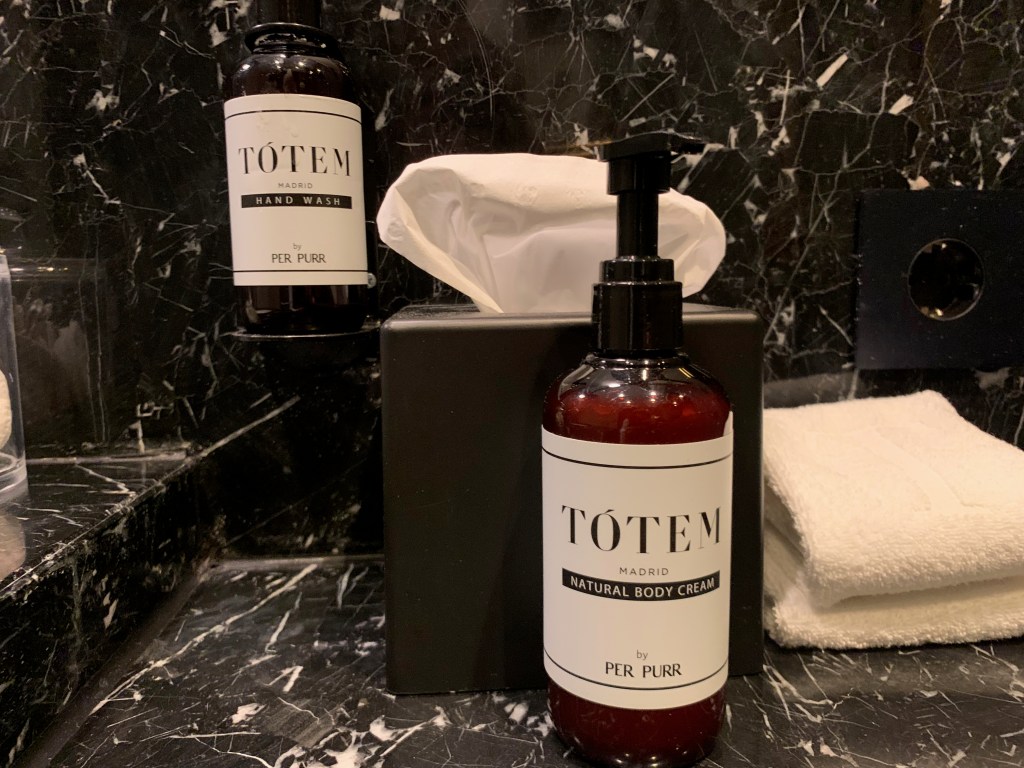
Madrid, Spain ~ Tótem Madrid

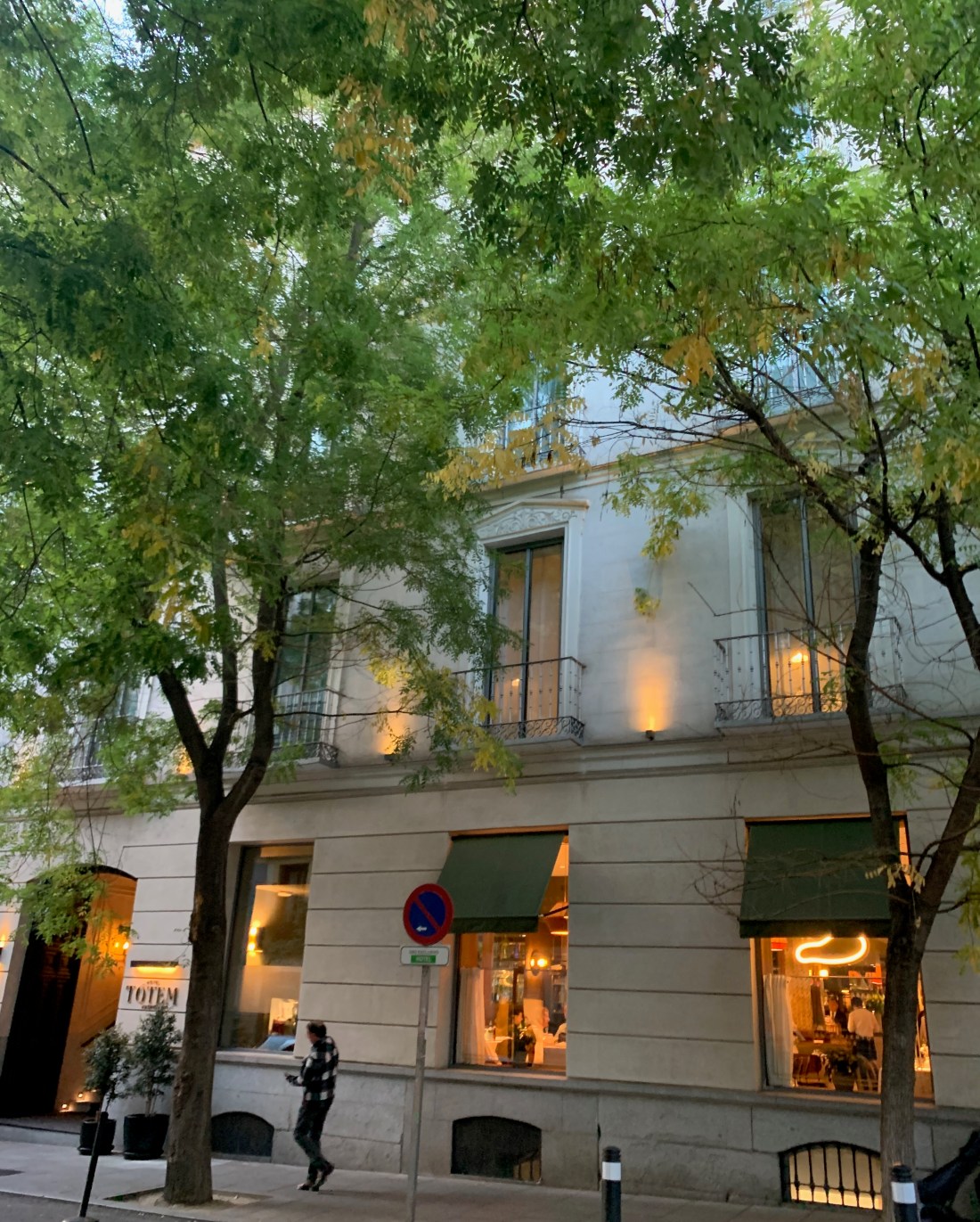
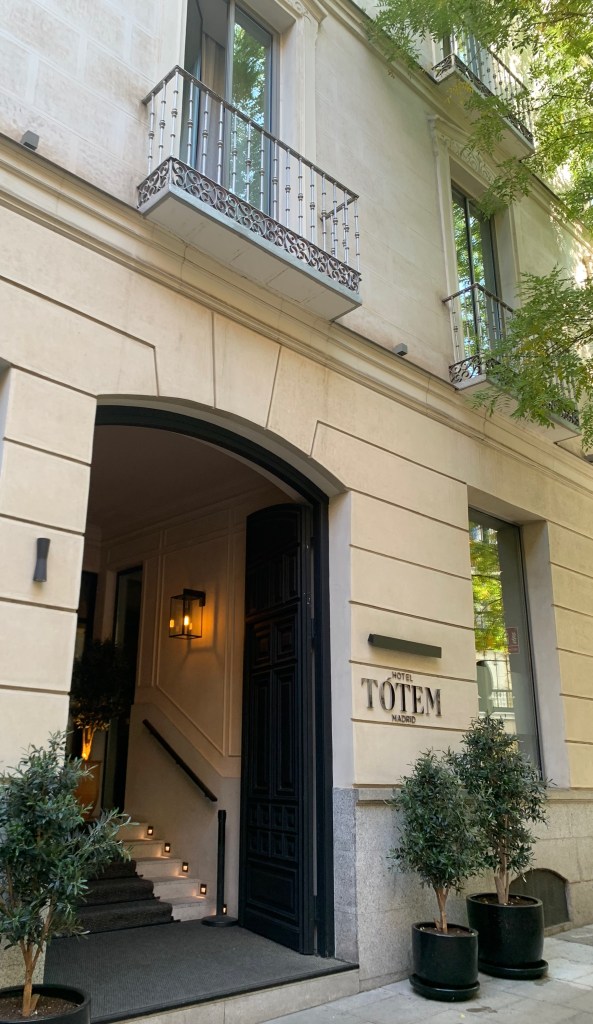
The sign on the front of Tótem Madrid

Our visit to Madrid at the end of our monthlong stay in Spain almost didn’t happen. The day before we were scheduled to travel by high-speed train from Granada to Madrid, a horrible crash on the same line killed 69 people, injured many others, and shut down the line for at least two months. After investigating options, it appeared that a long-distance bus was the best choice, and we were able to get two of the few remaining seats on an Alsa bus leaving the next day. As far as buses go, it was a nice ride, and we had fun gazing out at the olive tree groves and spotting roadside attractions along the way. But when we arrived in Madrid, we were ready for a little luxury.

It’s almost as if we were moving in slow motion when we got off the bus; Madrid hustles and bustles, and we had clearly adapted to the more leisurely pace in Granada. Rather than trudging across the city with luggage in tow (something we often do), we wisely decided to get out of everyone’s way and take a taxi from the bus station to the hotel. Traffic slowed down the drive, but it was a nice introduction to Madrid, and the closer we got to the hotel, the more intimate and leafy the streets became.

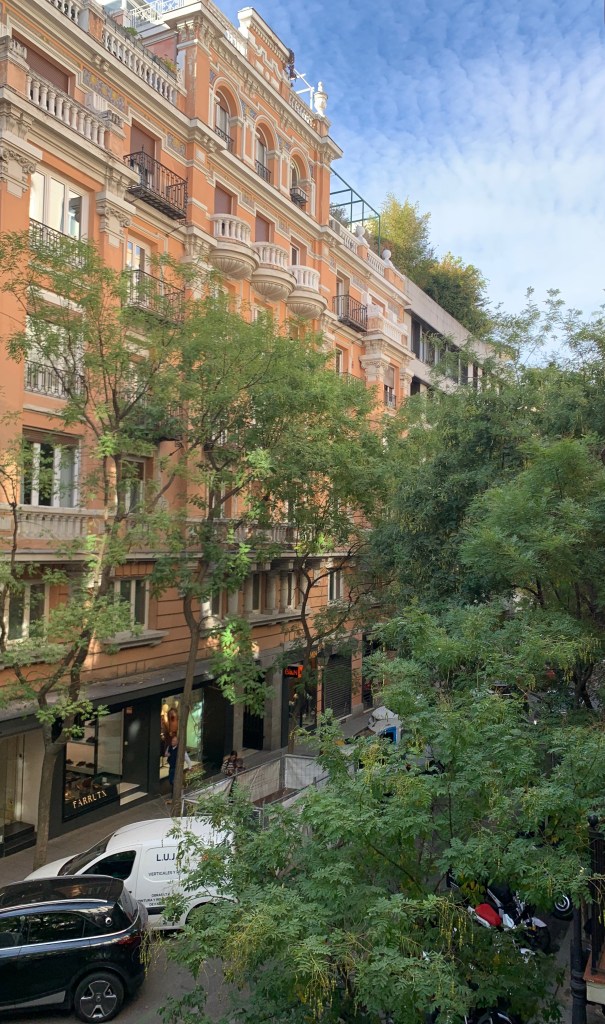
This was our first visit to Madrid, and we’d describe the city as cool…in the best possible way. Tótem perfectly captures that sense of cool. Situated on the corner of a narrow street filled with boutiques and restaurants, the hotel fits in with the profile of the neighboring buildings, which looked to have residences above the ground floor; only a small sign called out the Tótem as a hotel.

Inside, we were welcomed by a trio of staffers, who efficiently got us checked in and up to our room on the second floor. We even had a fun and genuinely authentic chat with the porter, who, upon learning we were from Minneapolis, told us about his time in the US and his love of hockey.

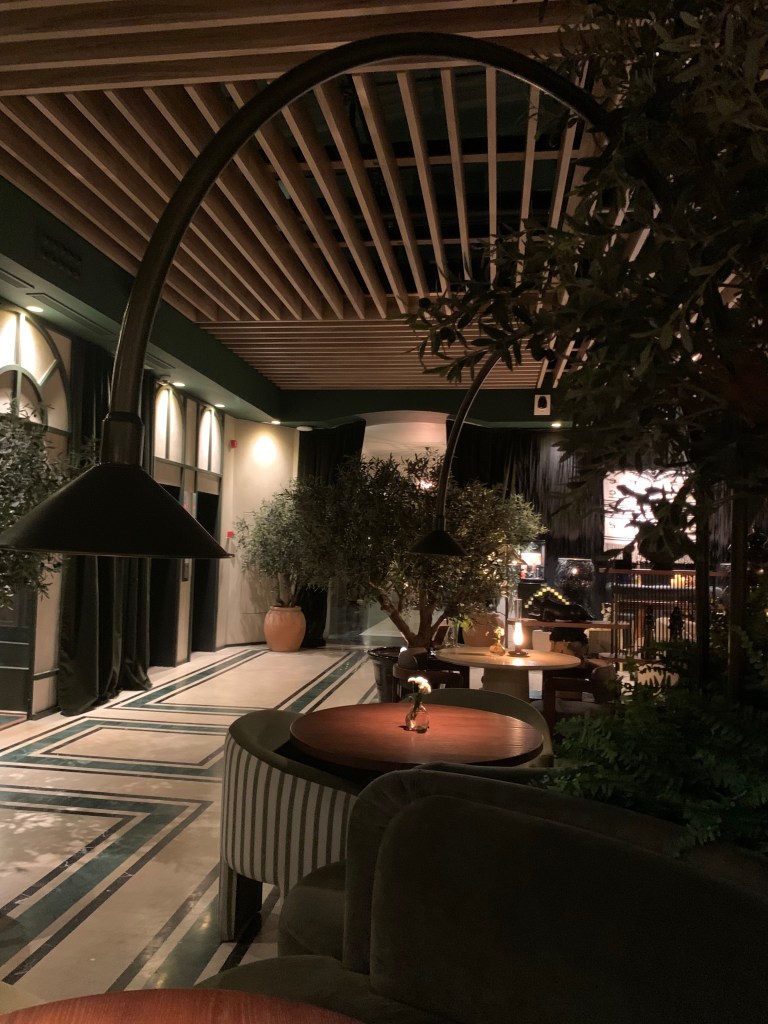
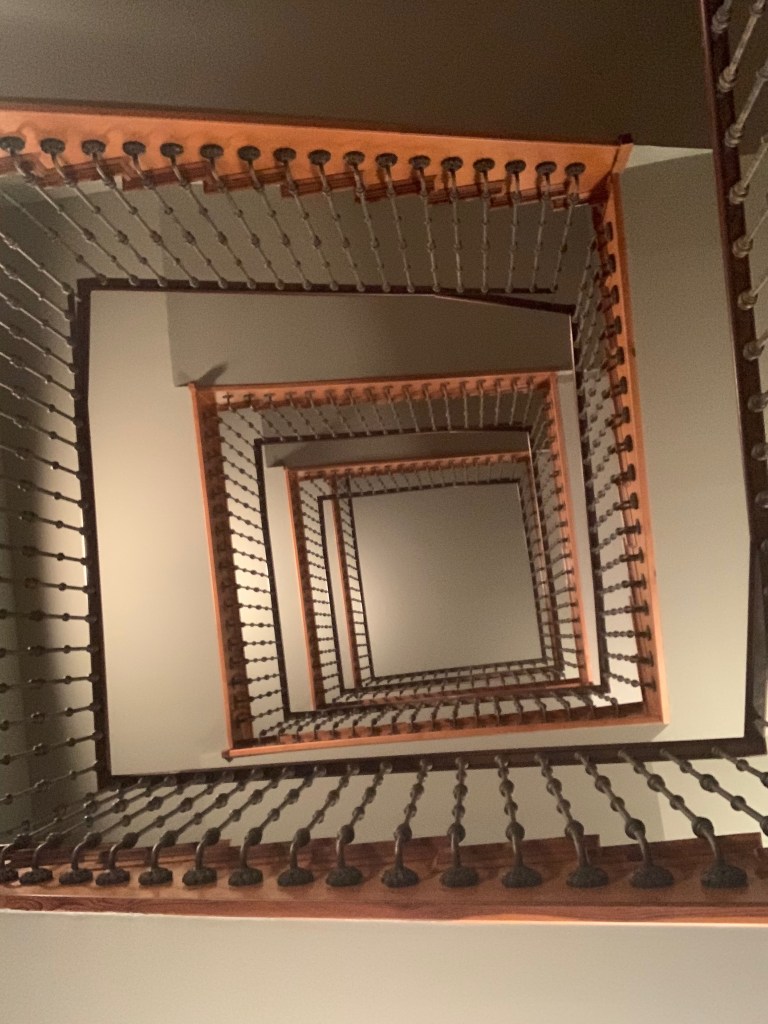
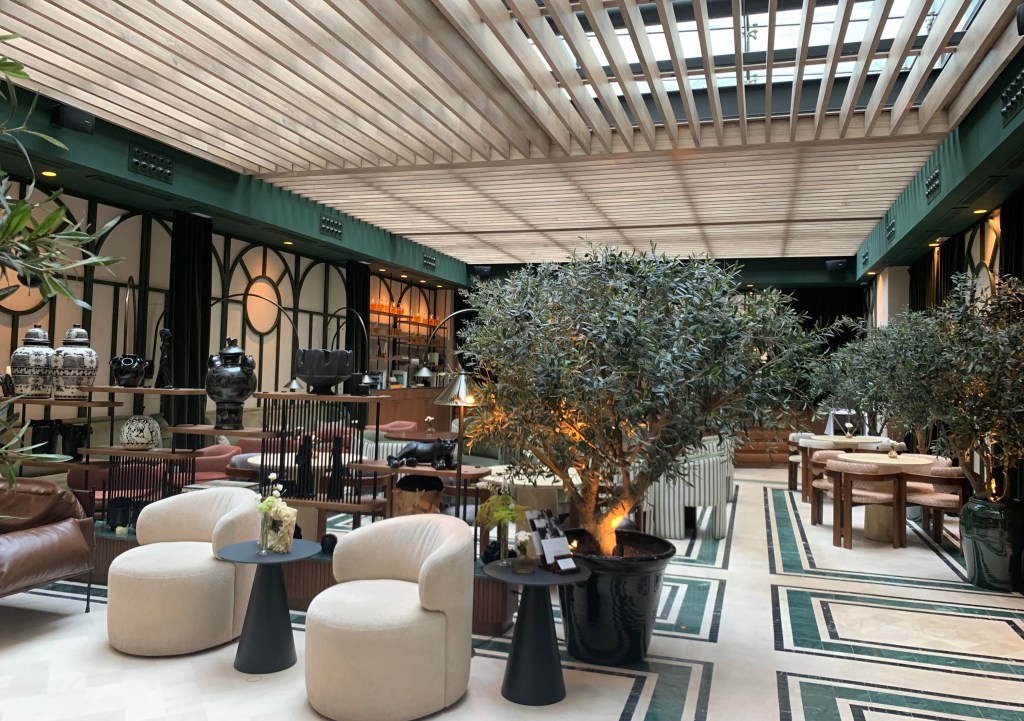
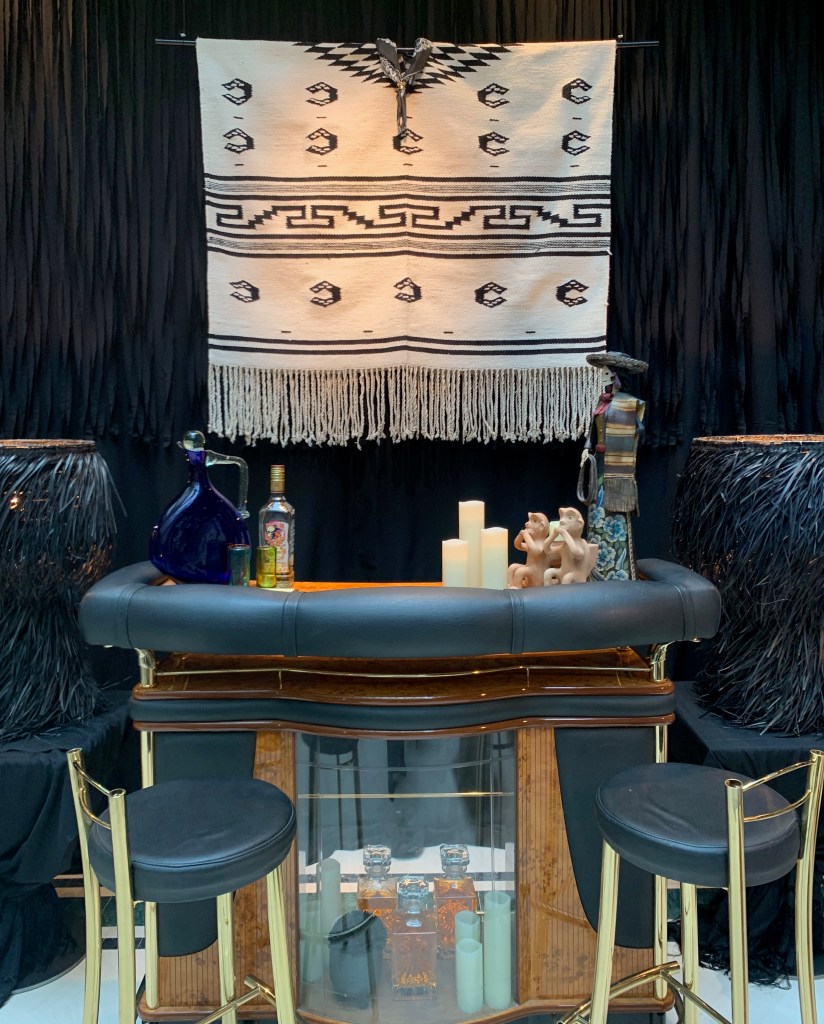
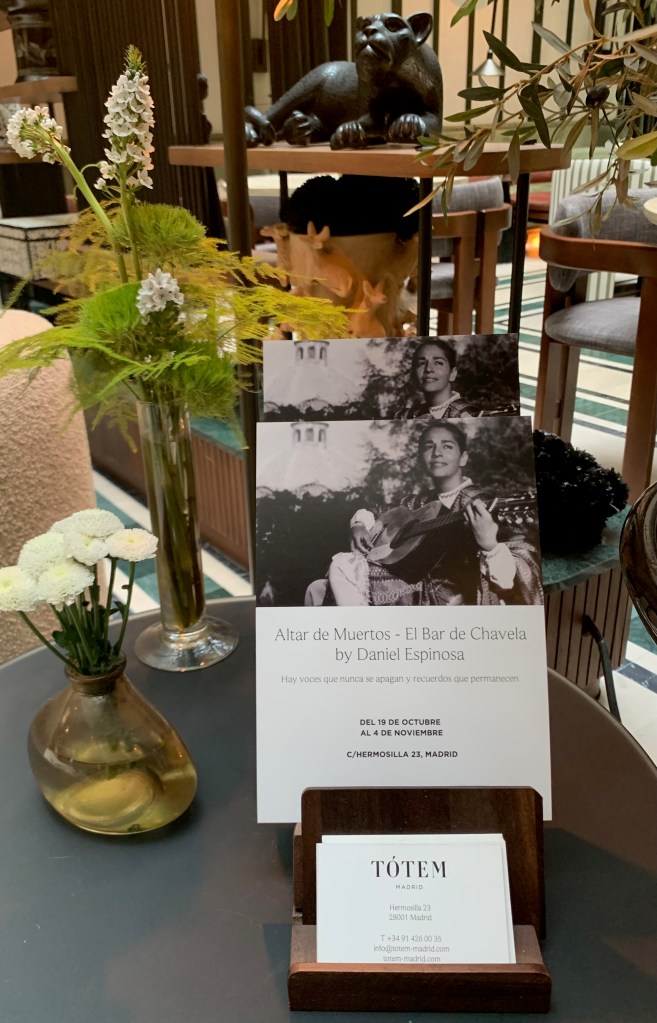
During our time at the hotel, we came and went via the central stairwell, which winds all the way up. The ground floor features a quiet cocktail bar and a well-regarded Basque restaurant, El Pimiento Verde, both of which we patronized. We were especially intrigued by the Day of the Dead installation — El Bar de Chavela — at one end of the cocktail bar. Dedicated to the Costa-Rican born Mexican singer Chavela Vargas, the altar aimed to transform part of the hotel’s bar into a space for memory, conversation, and music.

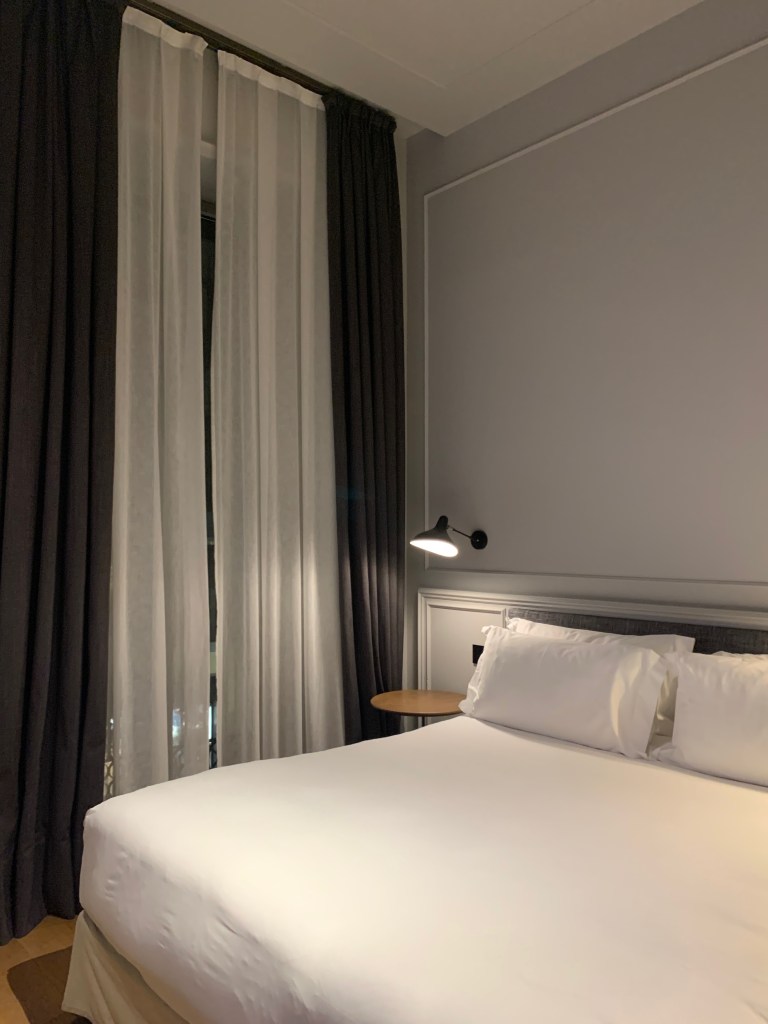
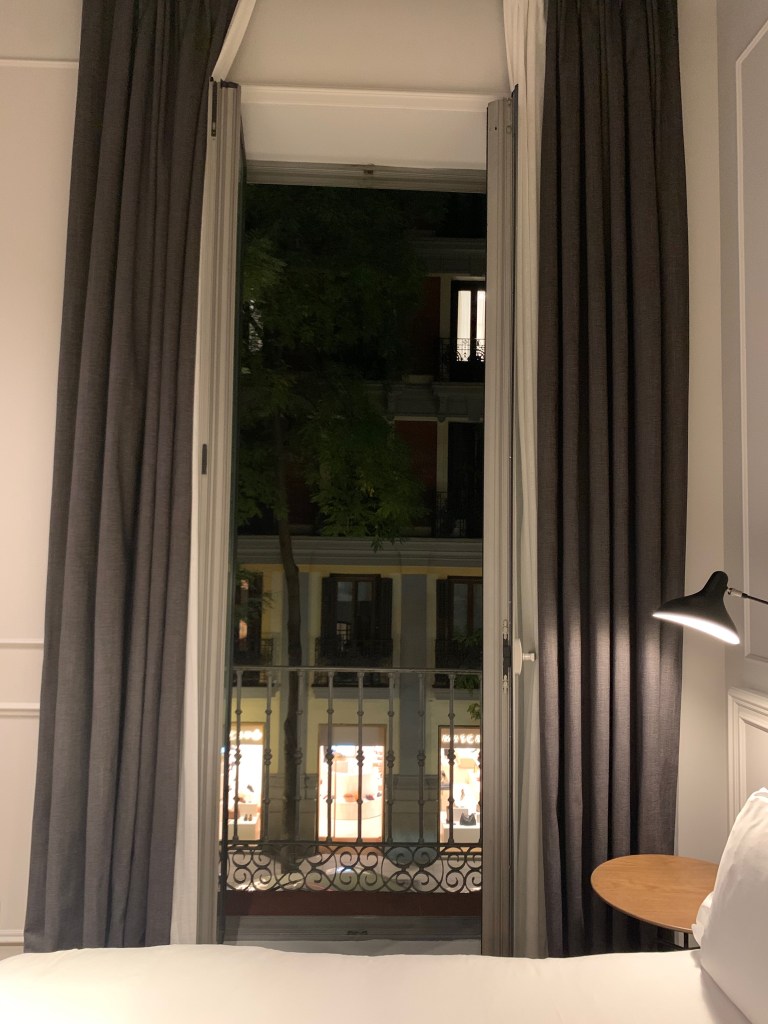
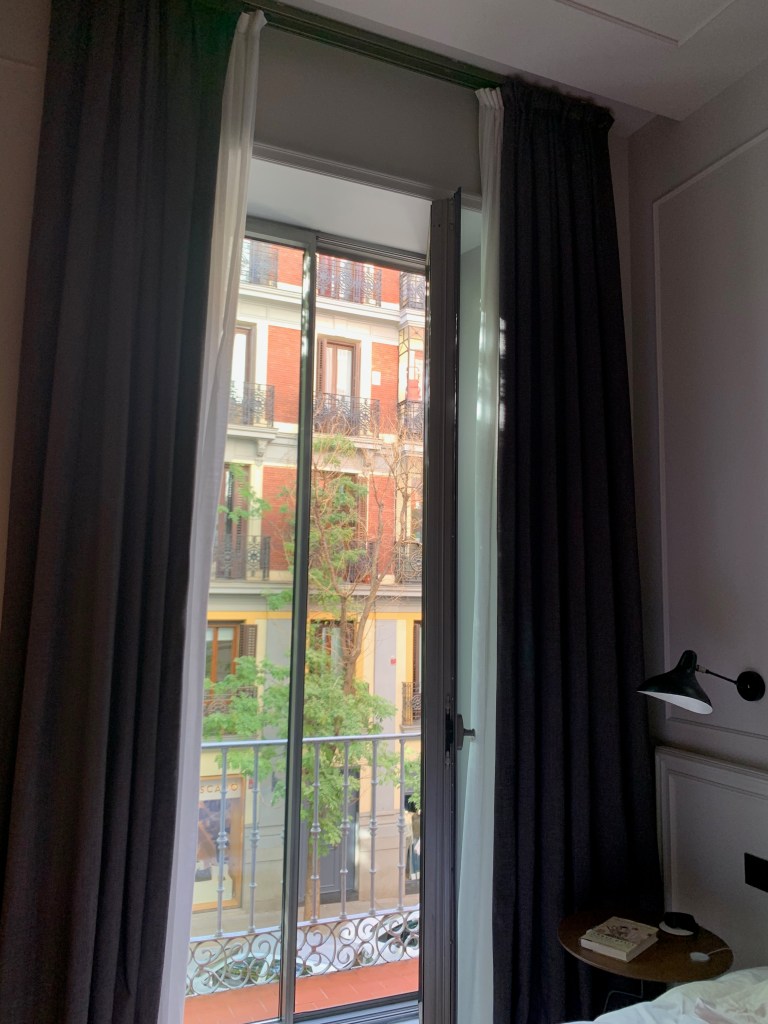
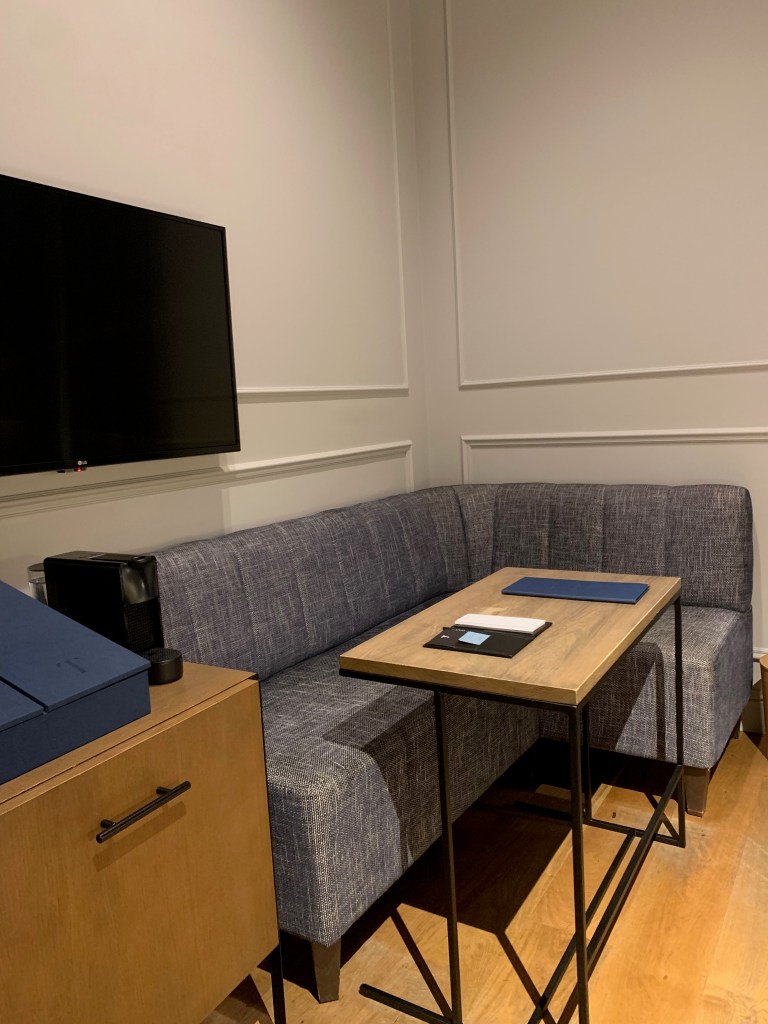
Our room, a “deluxe exterior” room, looked out onto the tree-lined Calle Hermosilla, and we opened the French doors to the Juliet balcony whenever we were in the room. After spending a month in a darkish rental on the ground floor in Granada, we relished the light and the leaves. While the room couldn’t be described as spacious, it was well-designed and well-appointed, and all of the high-quality furnishing and fixtures were clearly cared for. If we were staying longer, we may have wanted a little more room — perhaps one of the junior suite options — but for our two-day stay, we had everything we needed.

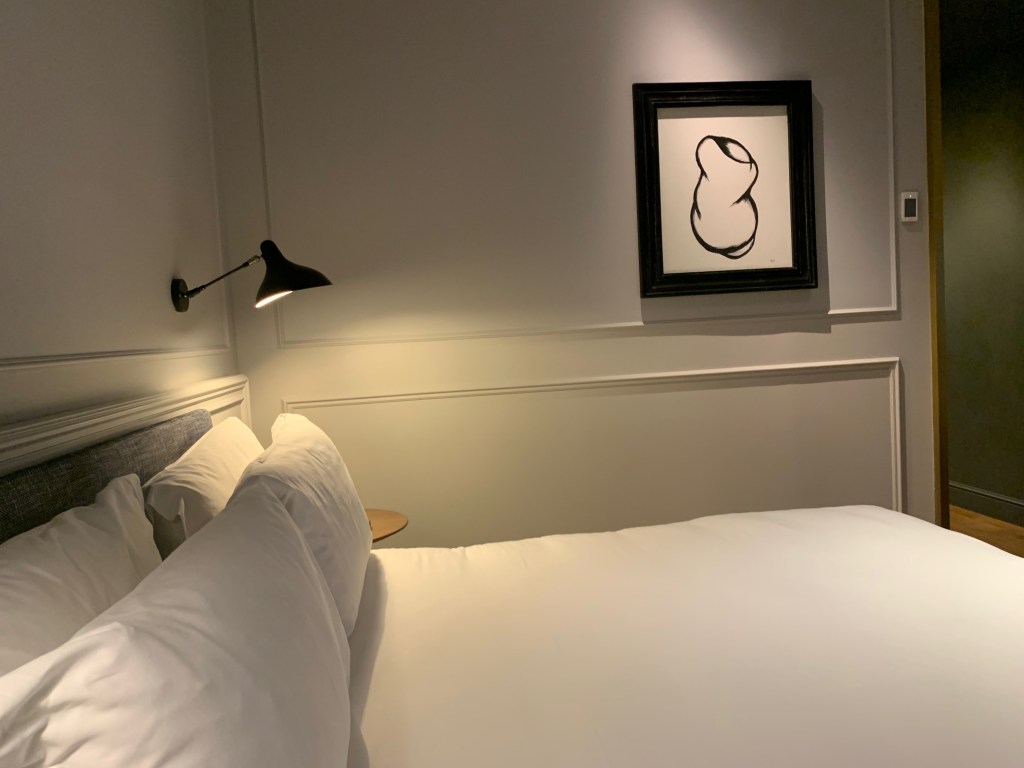
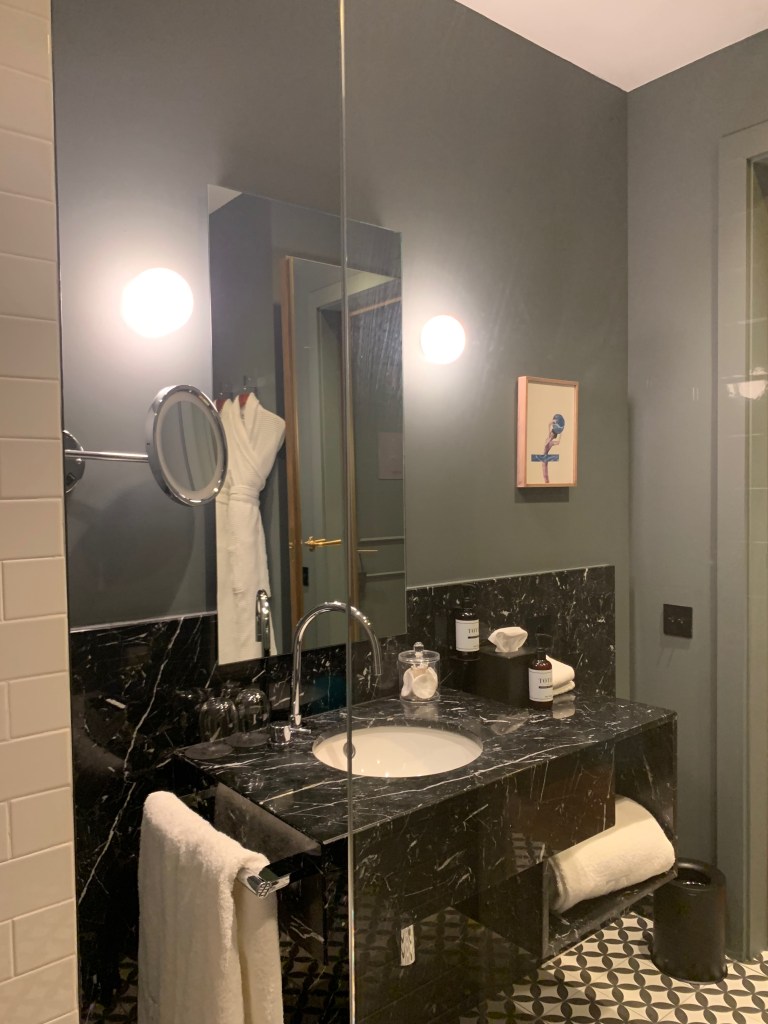
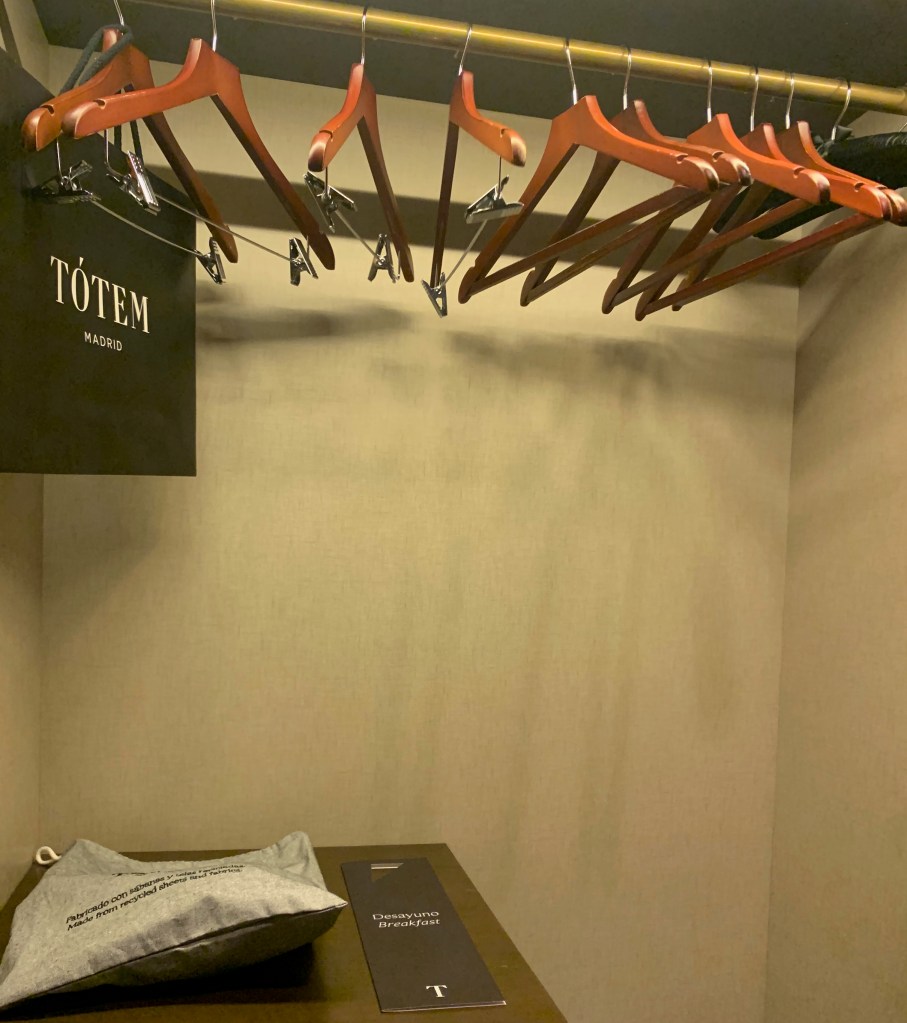
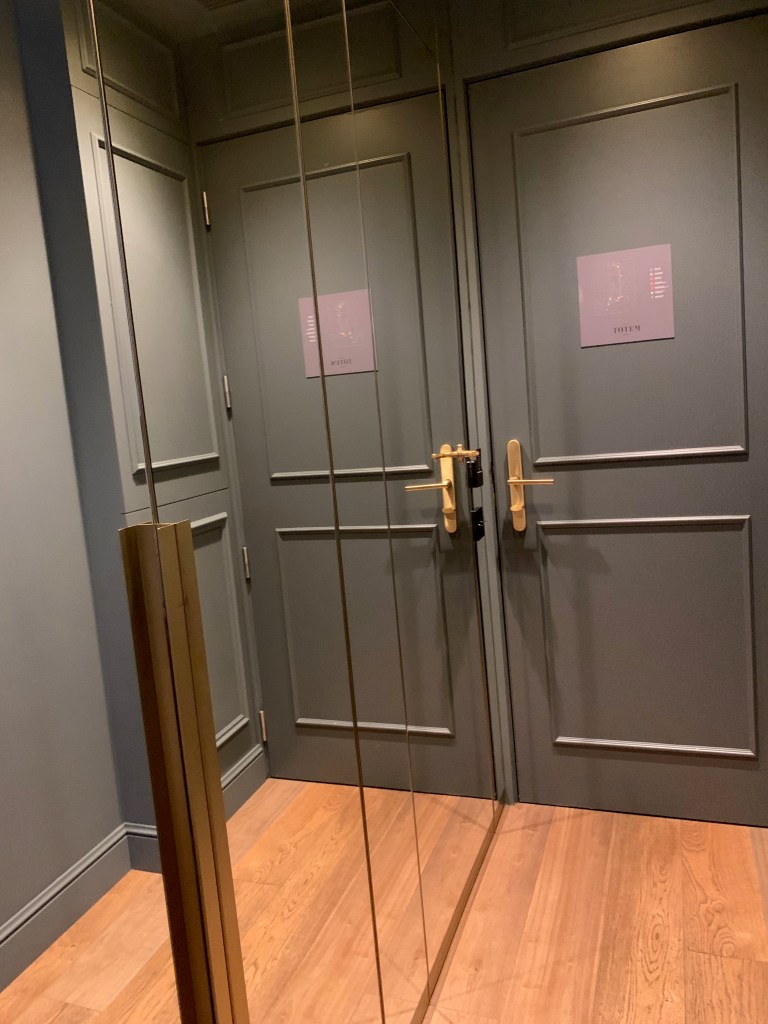
Design-wise, the London Telegraph, one of our go-to sources for hotel recommendations and the source that led us to Tótem, describes the hotel’s aesthetic as “minimalist luxor.” There was certainly nothing fussy about our room, and almost everything in it was there for a purpose. Both of us loved the color scheme: neutral but not boring with a sophisticated use of materials and textures. Our only (very small) complaint related to the automatic lighting in the closet; it shone down in a way that made it nearly impossible to see what was on the top shelf — and because our travels were fairly extensive, we needed that top shelf for storage.

This was our first visit to Madrid, and we’d describe the city as cool…in the best possible way.

We got only a taste of Madrid — barely leaving the Salamanca neighborhood — but we loved the city and can’t wait to return. When we do, we’ll book at Tótem again. It has surely tempted us with its delights, and we imagine it being the perfect place for a more extensive exploration of Spain’s capital city.

  • Tótem Madrid
  • 2-night stay, Oct. 29-30, 2026
  • Deluxe Exterior Room, #111

Back to HOTELLING home

Seville, Spain ~ Petit Palace Catedral

We knew we wanted to visit Seville during our month in Spain, but we hadn’t made any travel arrangements, so when we were ready to go and saw that train tickets between Granada and Seville weren’t as easy to come by as we expected (high season) and the same was true for hotel rooms, we grabbed what we could find without diving too deep into options. That led us to Petit Palace, which we found on booking.com and then reserved directly through the hotel.


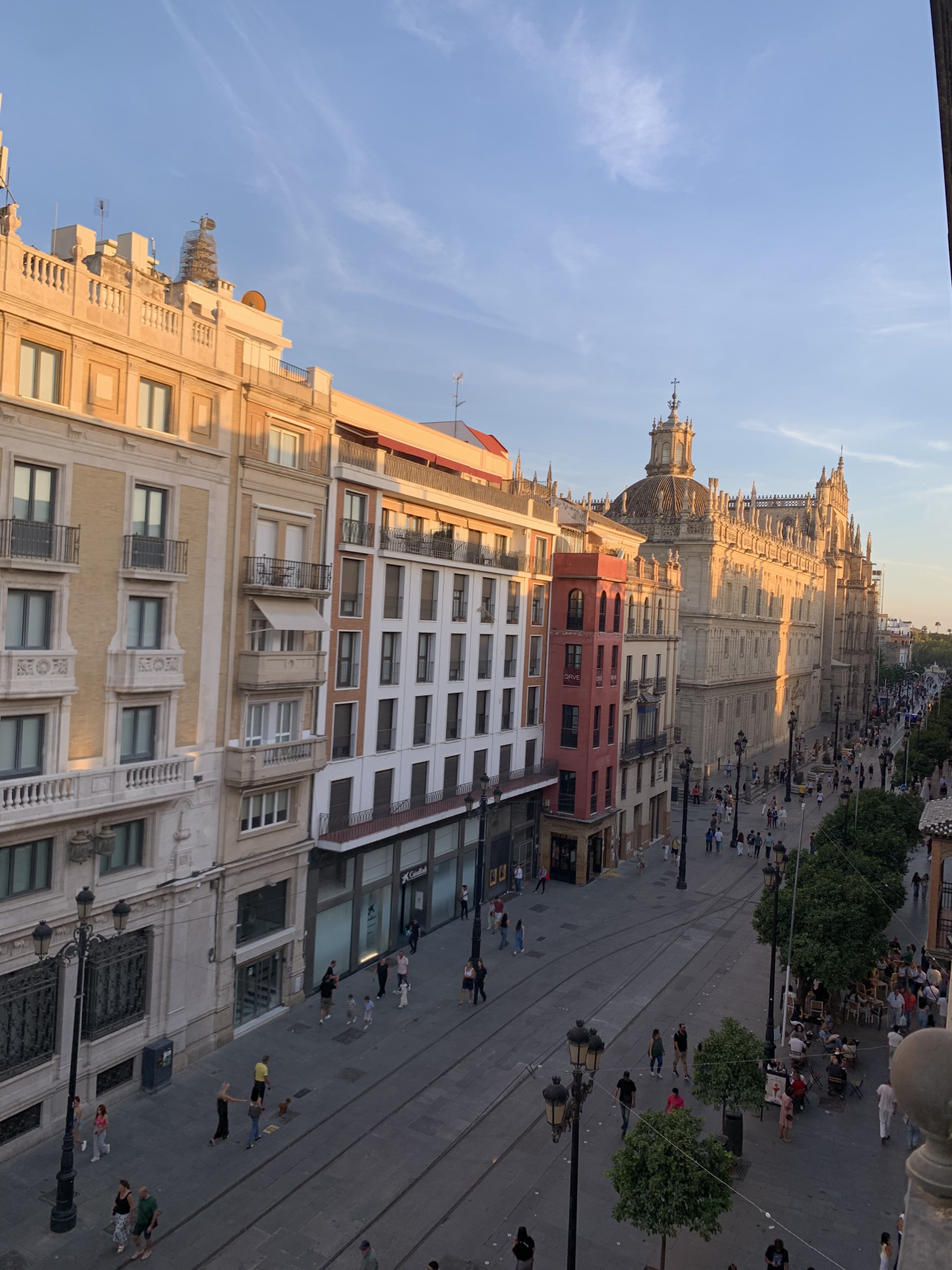
The cab from the train station dropped us at the top of Constitution Avenue, and we walked a pedestrianized block to the hotel. For certain, the location of the hotel can’t be beat if you want to be close to all of Seville’s main attractions. The hotel is less than a block from the Seville Cathedral, and we could see it from our hotel window. For the short time we had in the city (two days), it was nice to be able to get anywhere we wanted on foot.

The hotel itself is nothing to write home about, and while it served the purpose, we do think we could have found something far more interesting for a similar price if we had put in a little more work.

Our room was clean and perfectly functional, although it did smell a little like a recent guest had snuck a cigarette or two. When we asked about this, the hotel offered to put an air purifier in the room but told us it sucks all of the oxygen out of the room, so we’d need to be gone while it was working and be sure to open the windows when we returned. The strategy seemed marginally effective.

The room was bright, and we liked standing on the Juliet balcony watching the activity on Constitution Avenue below. We also appreciated that the bed was a king-sized mattress rather than two twins pushed together, which is not uncommon in Spain and something our apartment back in Granada featured. We had developed strategies to deal with it, but it was nice to sleep without having to be worried about getting sucked into the “big crack.”

During our stay, we learned that the hotel had recently become part of the Petit Palace group. Soho Boutique Hotels were integrated into the Petit Palace network, creating the largest independent urban boutique hotel operator in the Iberian Peninsula. But it didn’t appear that any renovations or refreshes had accompanied the change, and while the hotel was in acceptable condition from a redevelopment that occurred in in 2021, its “sell-by date” seemed to be approaching if it wanted to maintain its four-star status.


We do want to call out two things from our stay that deserve attention. First, the staff member at registration who checked us in handed us a paper map, which we love, and gave us an amazing primer on the city, circling neighborhoods and sites and making notes on restaurants, markets, and shopping. She was an amazing ambassador for the city and we appreciated the advice.

Secondly, we checked out the rooftop pool and bar when we first arrived, but it was quite hot and quite crowded. We returned on the second evening just as the sun was setting. It’s possible that everyone was still on siesta because we were the only ones up there. The temperature was perfect, the lights on the cathedral were coming on, and we enjoyed a nice chat with the bartender who mixed us a delicious pisco sour.


Back to HOTELLING home

Málaga, Spain ~ Palacio Solecio Hotel

We arrived in Málaga on a notably hot and humid day in late September to kick off a month-long adventure in the Iberian Peninsula. In our typically stubborn way, we decided to find our own way to the hotel rather than jumping in a taxi, even though one of our small roller bags had been replaced by a significantly larger suitcase. After a subway ride with a missed stop (usually we’re pretty good at navigating public transport; we’ll blame it on the jet lag) and a walk through the shiny cobblestone streets of the historic center, we arrived at Palacio Solecio ready for some cool air and a cold drink.

Happily, even though it was only midday, our room was ready. Once we were checked in — not the most efficient process, but we’re sure the heat was making us a little antsy — we were escorted to our room by a helpful staffer who offered an introduction to the hotel along the way.


Málaga is a port city with a beach right near its core, and we considered an oceanside hotel. But we were intrigued by the London Telegraph’s description of Palacio Solecio: “A luxe revamp of an intriguing 18th-century palace-mansion in the heart of Málaga’s lively old town.”

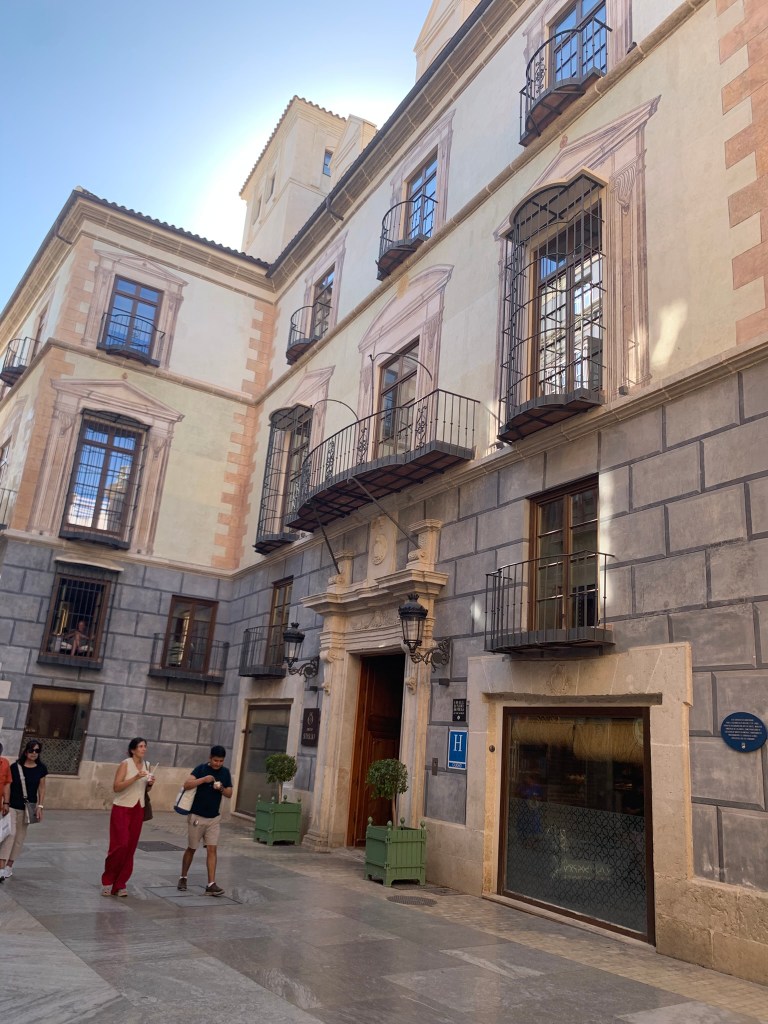
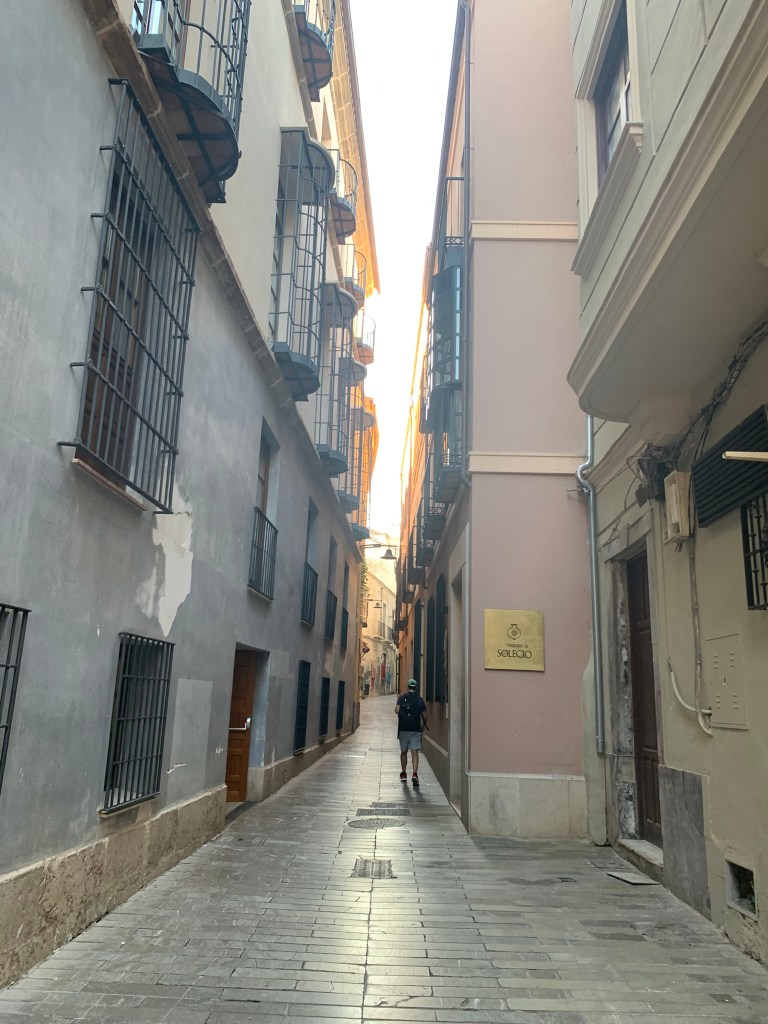
In fact, the hotel now encompasses two buildings: the original 1789 palace (the Palacio) and another building (the Solecio) across a narrow, pedestrianized lane. The Solecio added rooms that the hotel describes as a “contemporary interpretation of the same Andalusian identity” as well as a rooftop cocktail and tapas bar and a pool.

The hotel’s website has a history of the palace well worth the read, including details on its 8-year restoration, which begin in 2010 after the building had lain dormant for years.


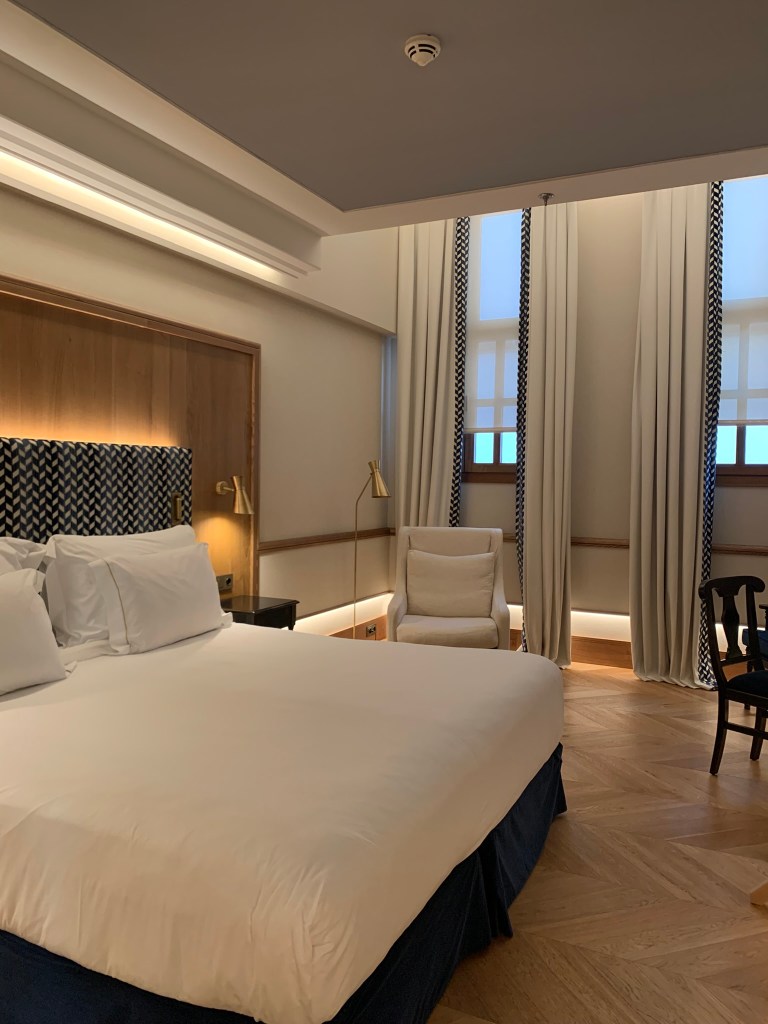
We chose a deluxe room in the Solecio building, which opened in 2023. Part of our choice was driven by the description of these rooms as “spacious and filled with natural light.” The room was certainly spacious — even with our over-abundance of luggage — but it couldn’t be described in even the most generous terms as light-filled. While it had large windows on two walls, two of them were situated quite high (above eye-level) and the third looked out to a lightwell. These windows, coupled with the long, narrow floorplan of the room made it feel a bit tomb-like to us.

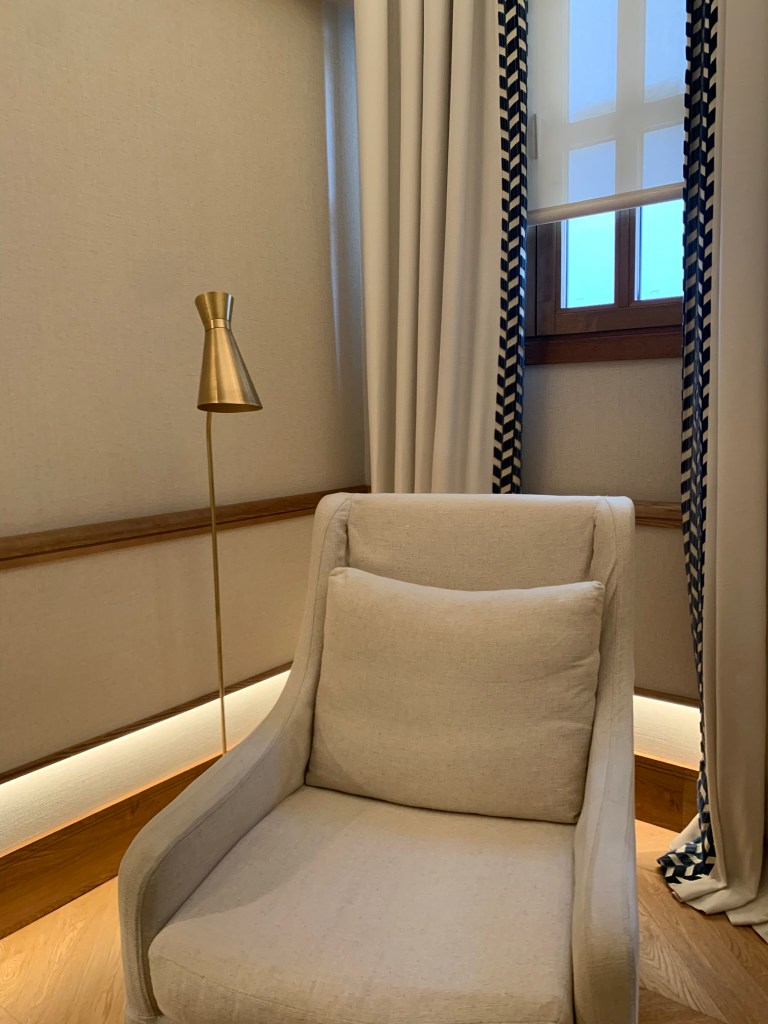
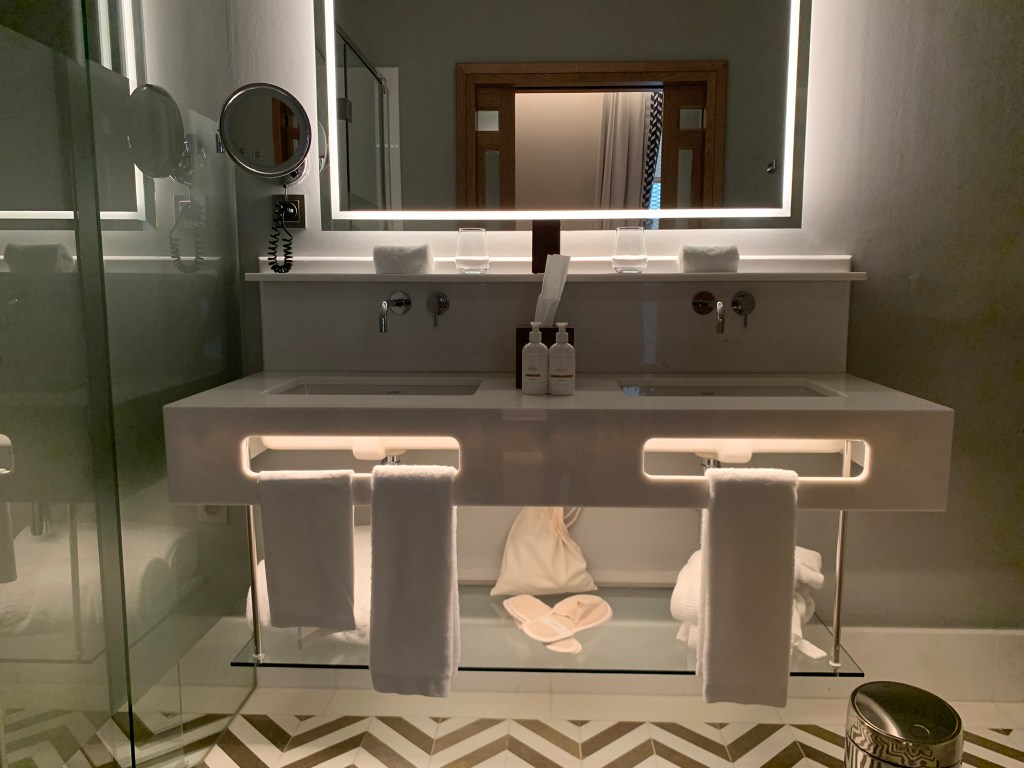
That criticism aside, the room was lovely, and it was a welcome retreat from the Málaga heat. The room felt a little moody (in a good way) to us. The end with the tall windows had a vaulted ceiling, and recessed lighting gave everything a warm glow. The mostly neutral color scheme accented with deep blue features was luxurious, and the parquet floors were laid in a fun pattern. For both of us, the bathroom was a highlight. We loved the stone tiles, the double sink and the deep tub (even though we didn’t use it). The best part, however, was the lotion and soap, which smelled AMAZING — something with a lemongrass essence; we intended to inquire whether it was a bespoke scent but never did.

And one important note about our criticism of the light in the room: We did share our concerns and received a helpful response that the hotel would have been happy to accommodate our preferences if they had known before we checked out. Each room in the hotel is different and not every room in the category we chose had the same high-set windows. Should we return — and there are many reasons to return — we’ll be sure to note our preference for a room with more natural light.


We chose Málaga as our first destination for this adventure primarily because it provided easy access to Granada, which would be our home base for the month. Quite honestly, we didn’t much know what to expect from the city and, upon arrival, were surprised at how filled with tourists it was — crawling with tourists, in fact. Of course, we were also tourists, but we weren’t disembarking from a cruise ship to spend half a day in the city with a group tour and then depart en masse.

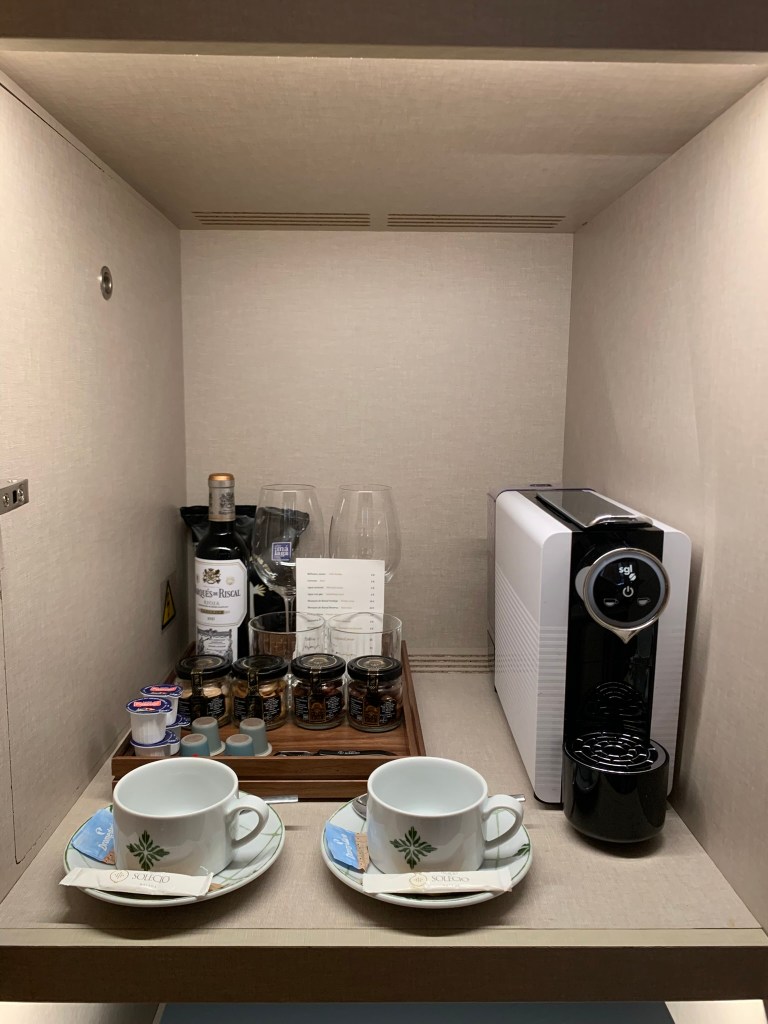
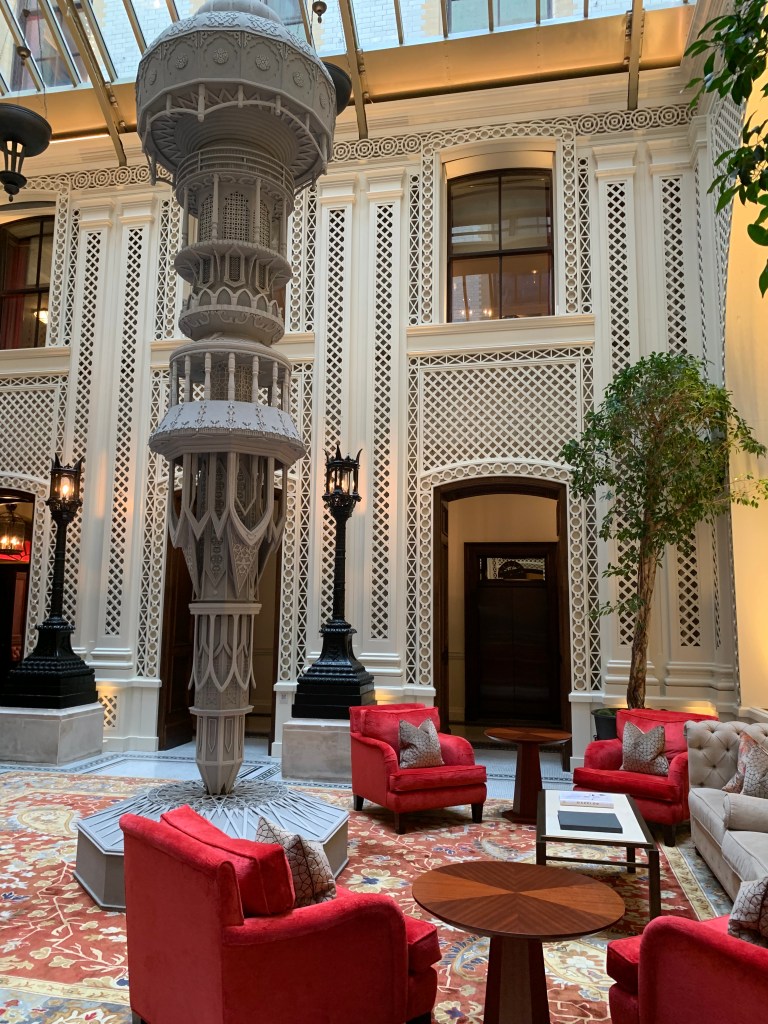
All to say, when we needed a break from the crowds or some nourishment, Palacio Solecio provided a perfect refuge. We had drinks in the bar (our first Cava was complementary), breakfast on one morning, beer and tapas on the rooftop, and a delicious dinner in Balausta, the restaurant in the hotel’s beautiful, arcaded courtyard.

A bonus: On our first visit to the hotel’s bar, the bartender gave us excellent ideas for things to see and do in Málaga.


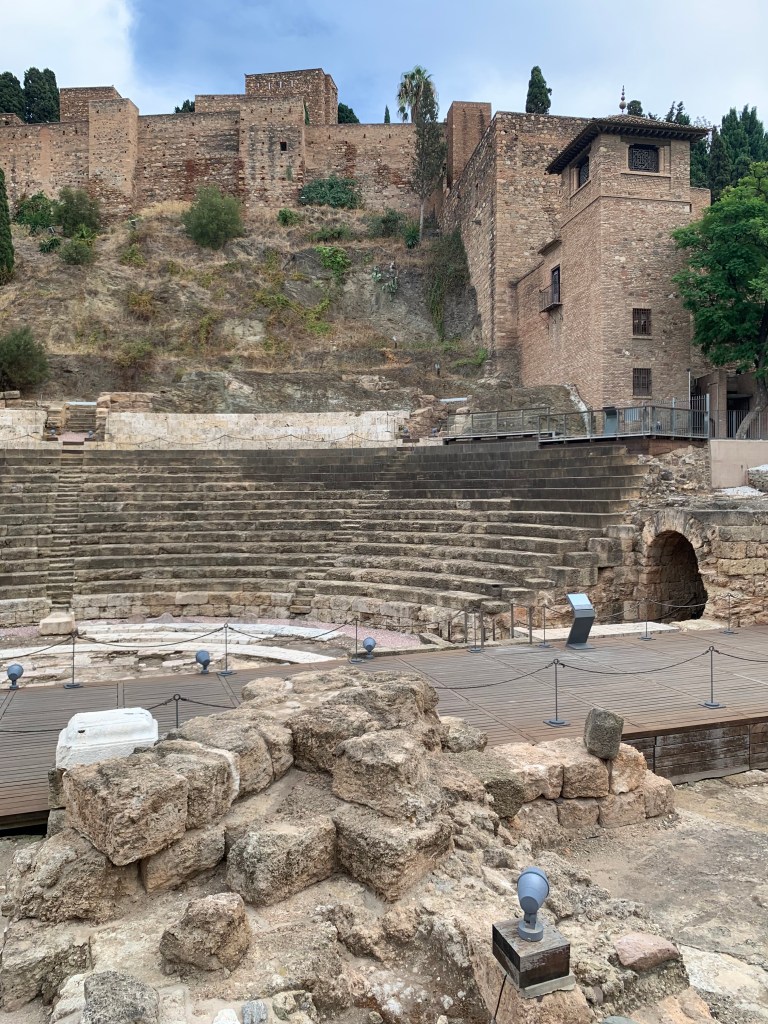
Roman theatre and Alcazaba

Back to HOTELLING home

Marylebone, London, UK ~ Dorset Square Hotel


The Raffles was amazing — and we would have happily stayed there forever — but we also love London’s neighborhoods and have been wanting to return to Bethnal Green in East London and a hotel with fond memories for us: Town Hall Hotel. But when it came time to make the booking at the Town Hall, it wasn’t available; we figured this was our sign to try something new.


London has so many wonderful hotels; it really is an abundance of riches, and it can be hard to make a choice. Rather than looking to our go-to sources, we started with the idea of visiting a property connected with the hotel that gave us the original idea for our blog: the Crosby Street Hotel in New York. We don’t have a full entry for the Crosby Street because hoteling.org didn’t exist yet, but we chose a picture of the hotel for the featured image on hotelling’s home page, and we mention it in our “Past stays and reminiscences” entry where we note the hotel is one of our top 3 (it was on our list of favorites for a long time).

Crosby Street is a Firmdale hotel, one of (now) three in the U.S. The Firmdale brand is the brainchild of Ken and Kit Kemp, whose company includes 11 hotels. The very first property the Kemps opened is — you guessed it — Dorset Square. Since staying at Crosby Street, we have wanted to try another Firmdale hotel, and we thought it would be fun to check out the original.


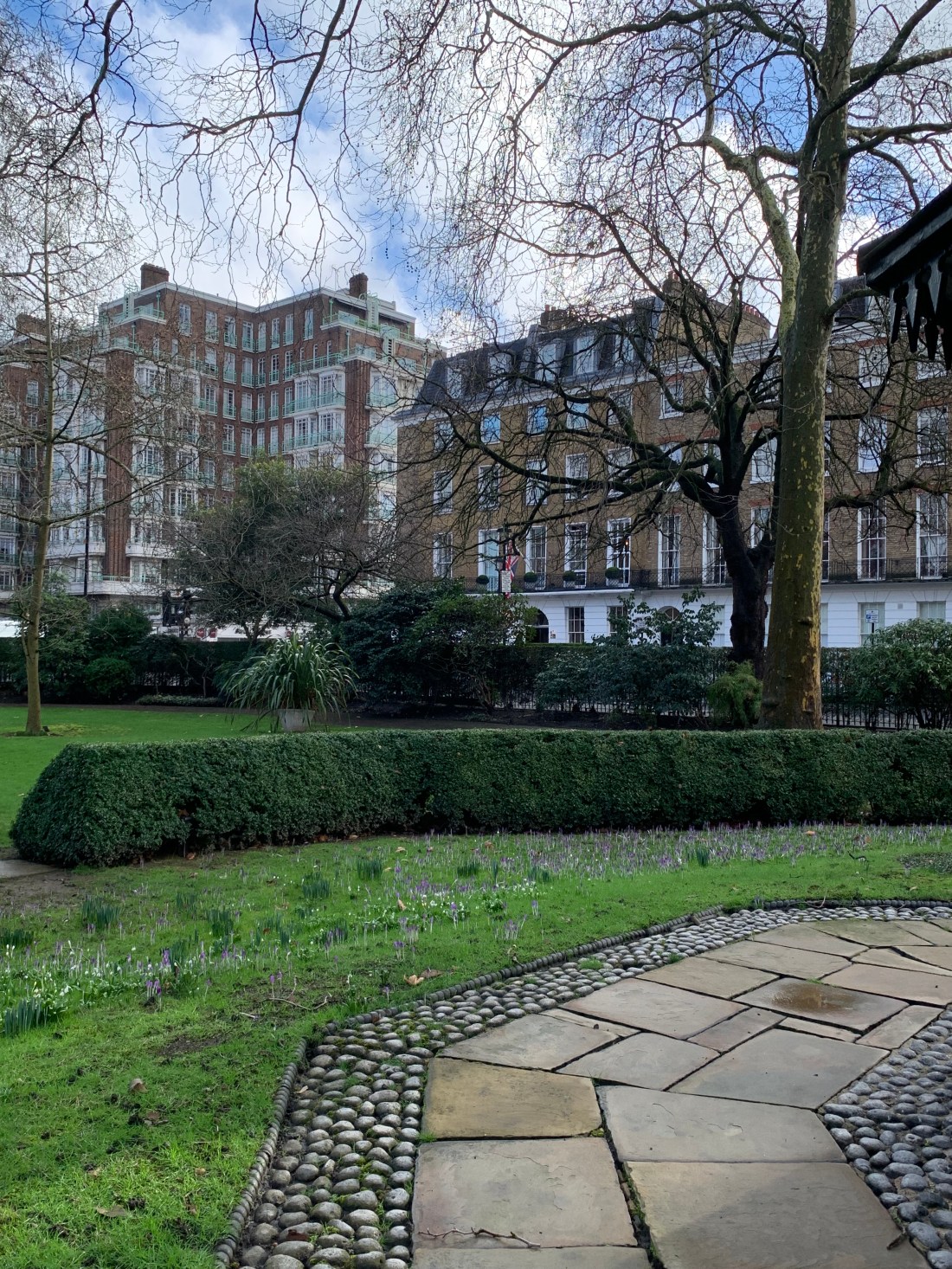
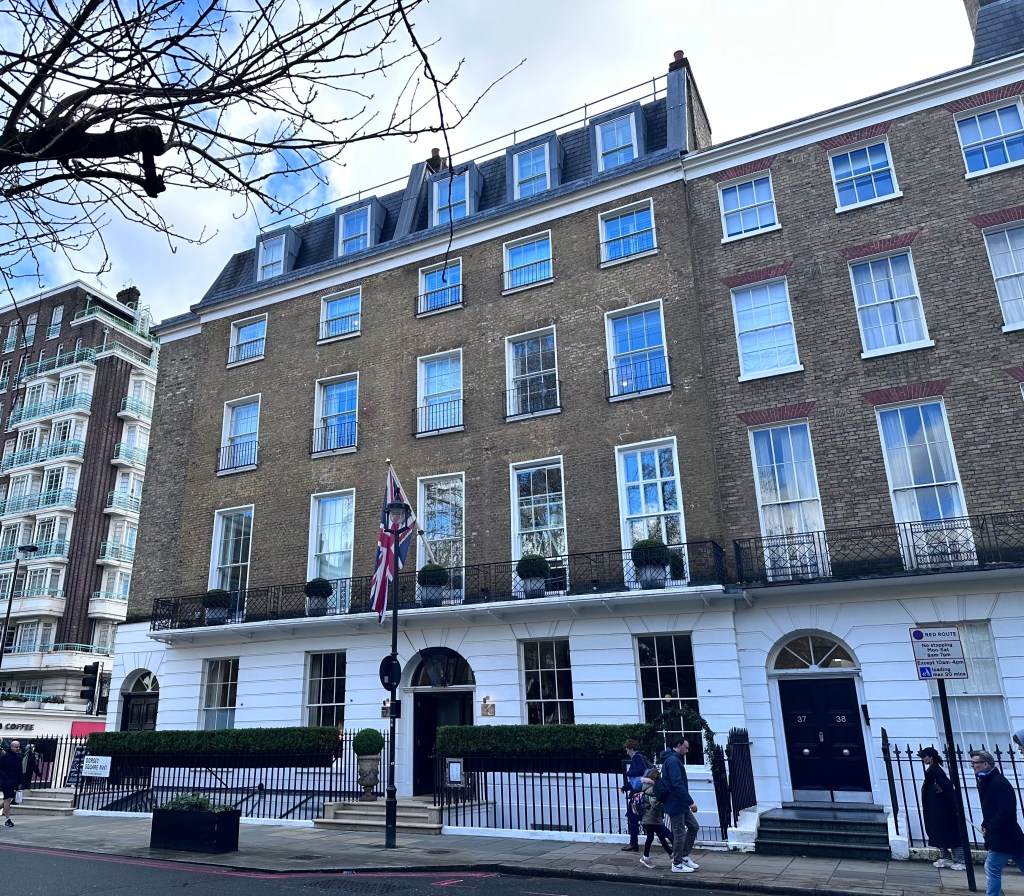
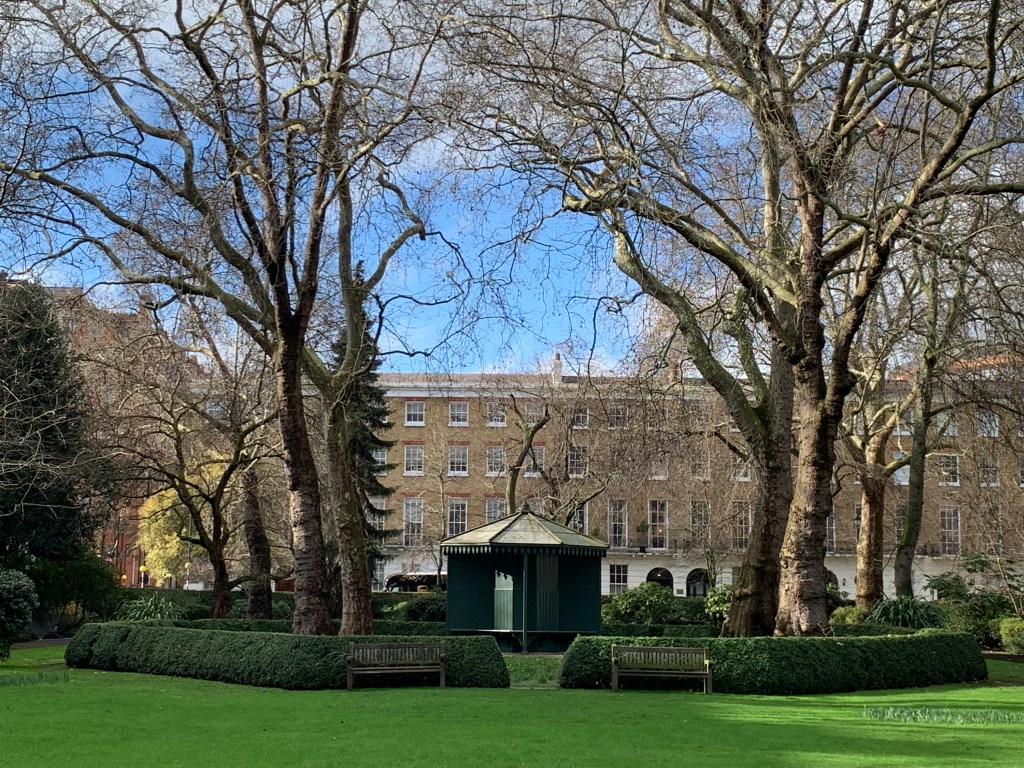
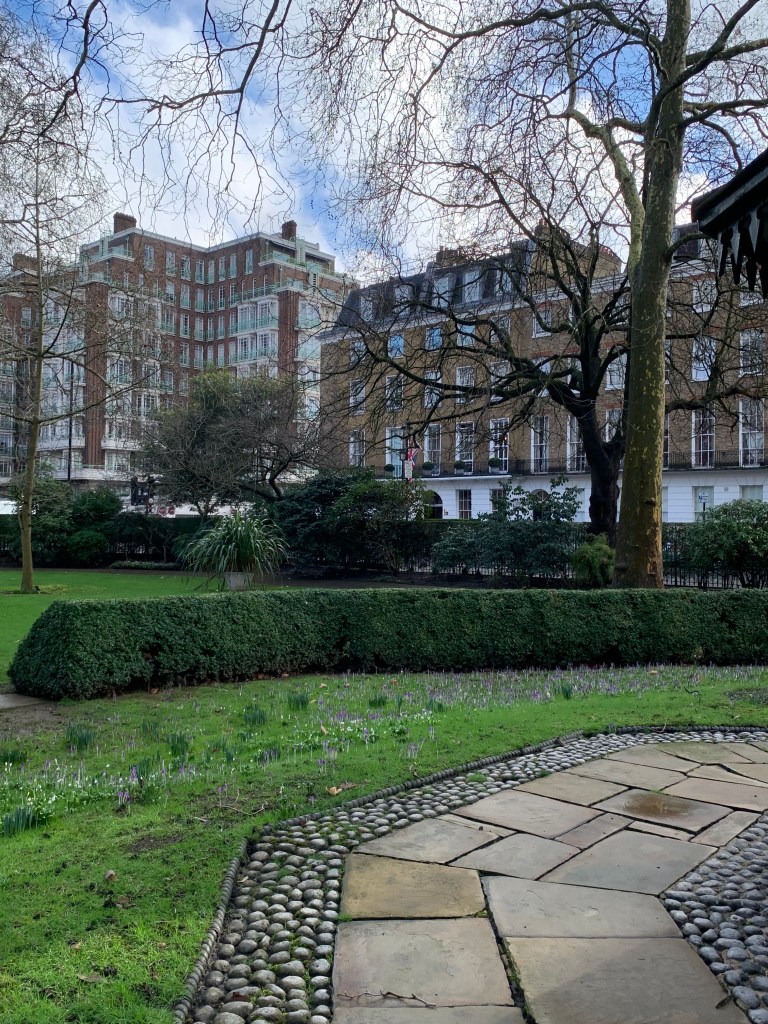
We thought we knew Marylebone pretty well, as we spent a lot of time exploring the neighborhood last year, but we’re pretty sure we had not previously come across the hotel or even the lovely residential square (the hotel’s namesake) that it sits on. With that said, even if we had walked by, it would be easy to miss the hotel. It is housed in an attractive Regency building that blends in with the townhouses that surround the square. Only a small sign at the doorway identifies the hotel.


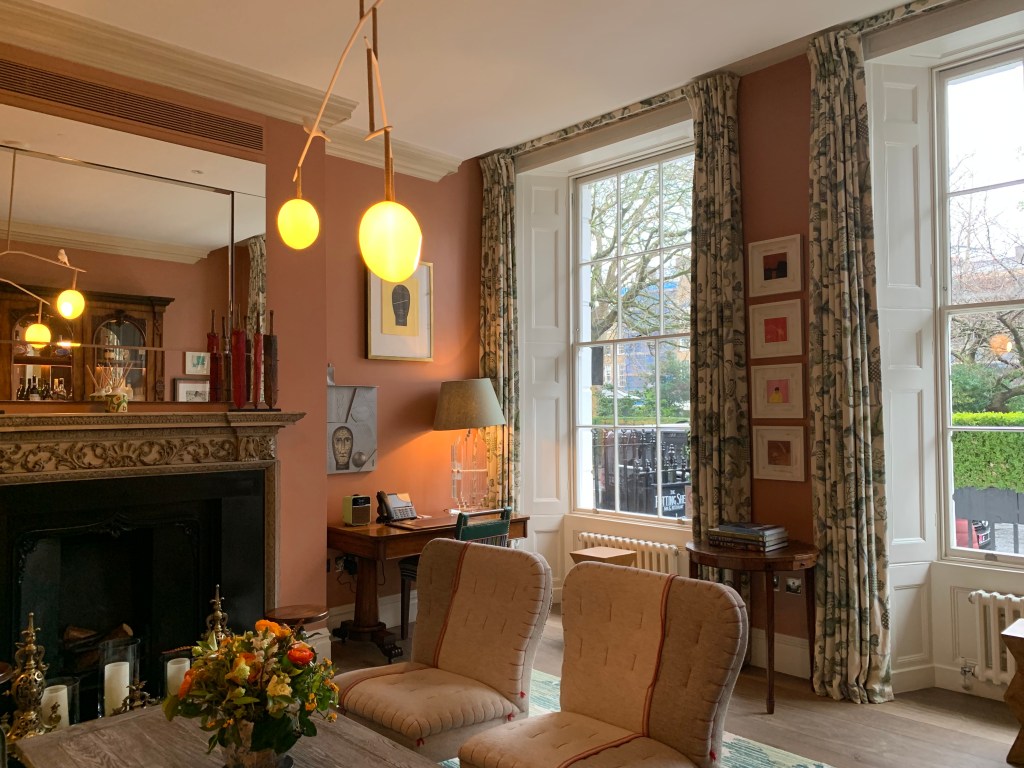
Dorset Square is understated and petite — a definite contrast to the grandeur of Raffles, but they both feel sumptuous, just in quite different ways. We arrived early in the afternoon, so our room wasn’t quite ready. We were invited, however, to linger in the drawing room, which featured a fireplace and honesty bar, or to visit the hotel’s restaurant, The Potting Shed, which the staff member at reception took us down to see.

The hotel’s design felt similar to Crosby Street, even though the properties are quite different. The Firmdale website says the 11 hotels encompass “modern English style, exceptional personalised service and an unrivaled attention to detail.” Our first impressions of Dorset Square reinforced this mission.

I’ll also say the aeshetic of the hotel — while not something I would probably want to use in the interior design of our own home — just makes me happy. Dorset Square (the square itself), is now a private garden but was originally a cricket ground, and the hotel plays on the cricket and garden themes throughout. Coming to London in January from Minnesota where winter was in full force, we were happy to see all the references to trees, flowers and sporting of the outdoor type.


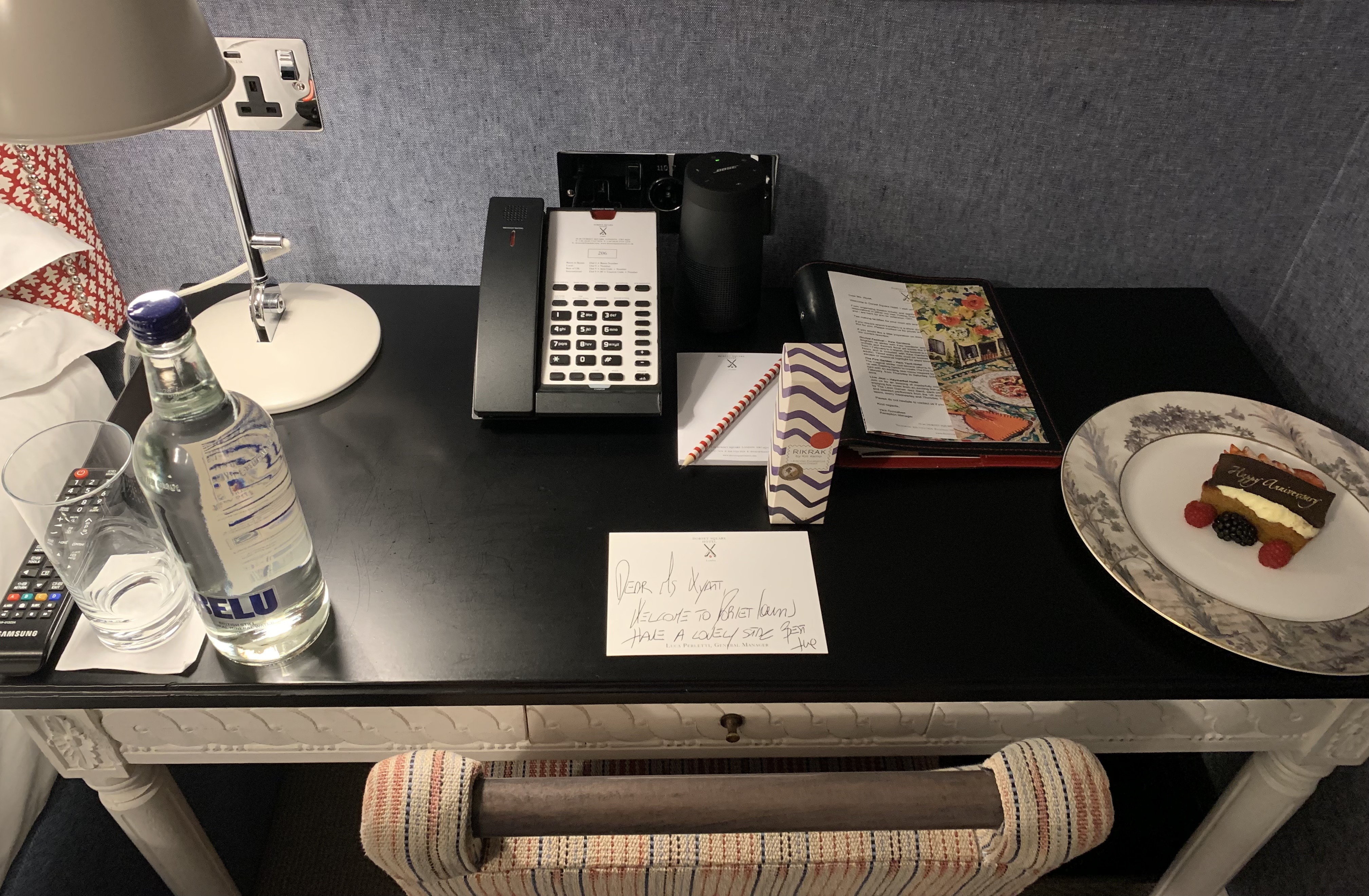
While it would have been tempting to sit down and relax as preparations for our room were completed, London called, so we left our bags and headed out. By the time we returned, it was evening, and the housekeeping staff was doing turndown services. We found bottled water at each bedside, a small bottle of RikRak pillow spray (which smelled amazing) and tube of hand cream, a welcome note and a piece of cake.

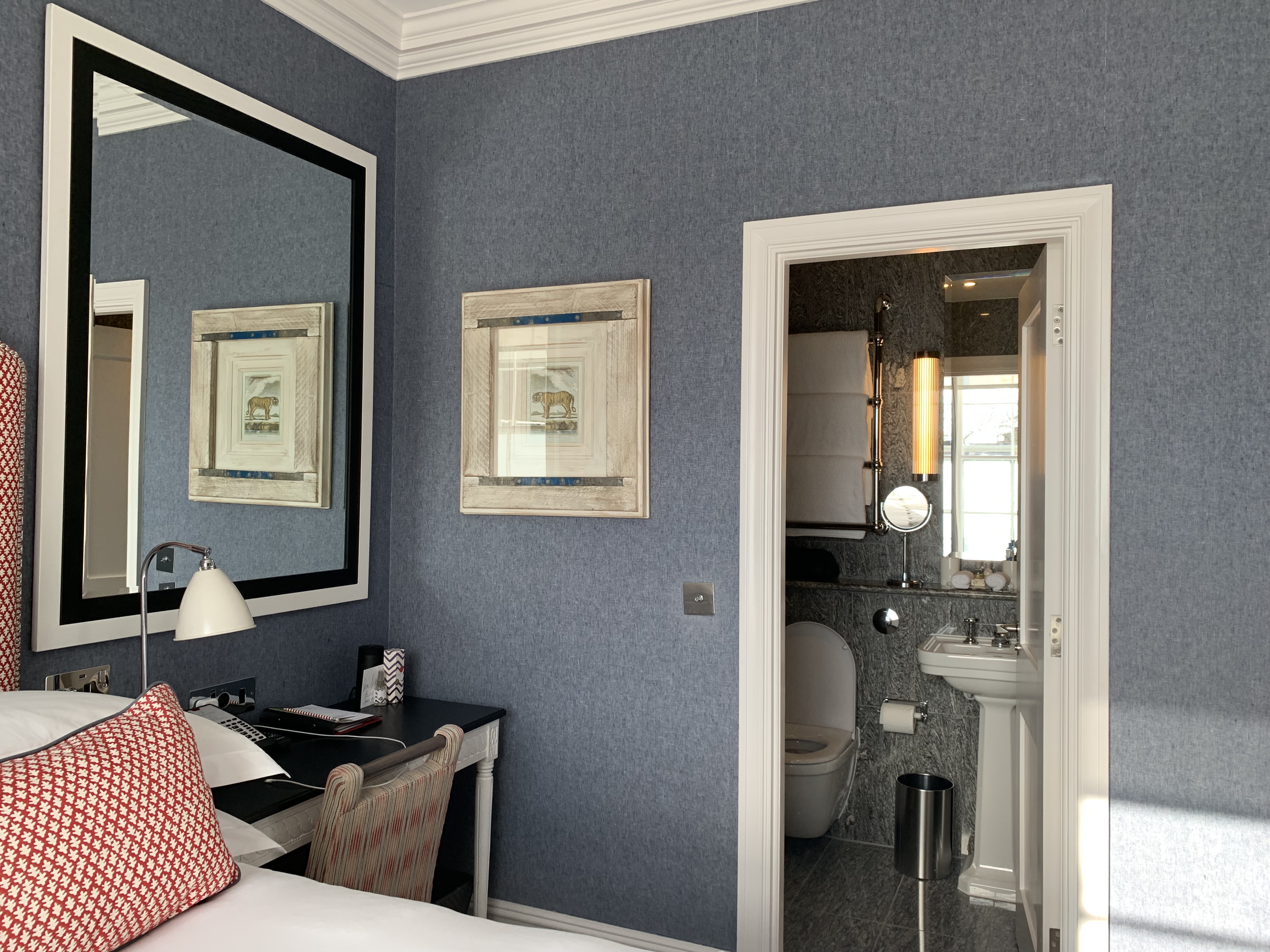
Our room was on the smaller side, but it had everything we needed; the same could be said for the bathroom, which was floor to ceiling marble and felt luxurious despite its size. The bed — the primary feature of the room — was tall and fluffy and oh-so comfortable.

The combination of patterns, textures and colors in the room was a feast for the eyes, and, as we remembered at the Crosby Street, everything was impeccably maintained — not a scratch or nick to be found, even in the closet, which was painted a high-gloss white. We wouldn’t be surprised if touch-ups are done after every guest.

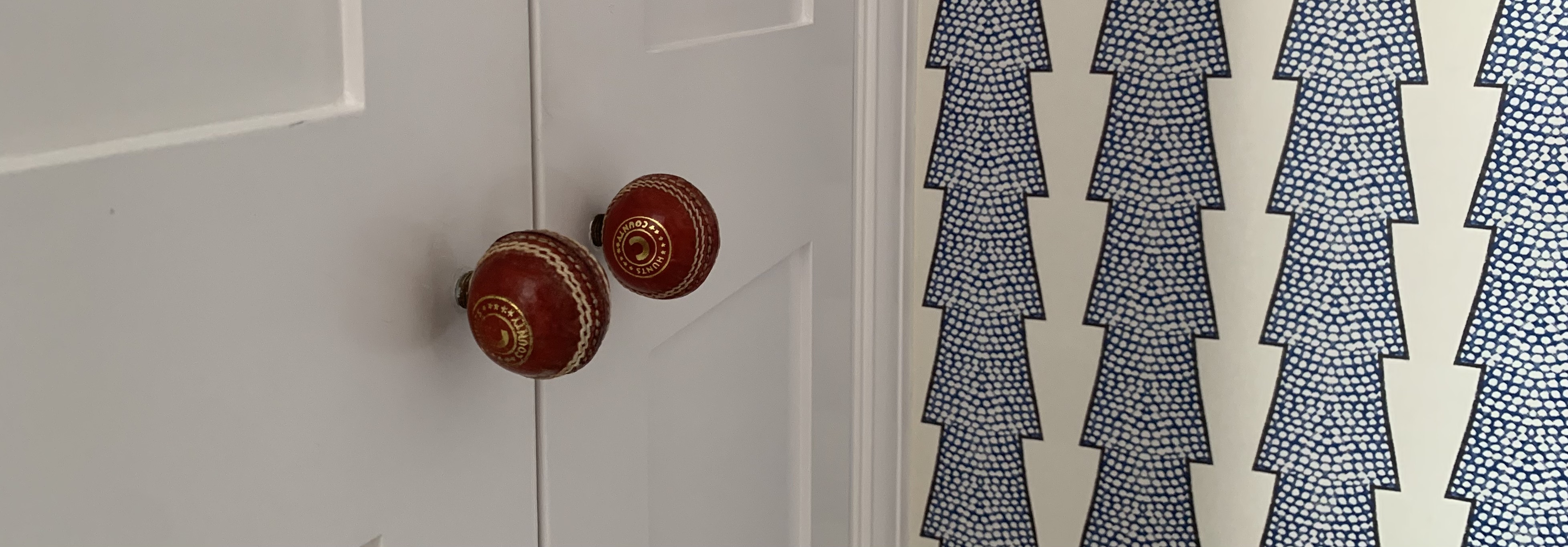
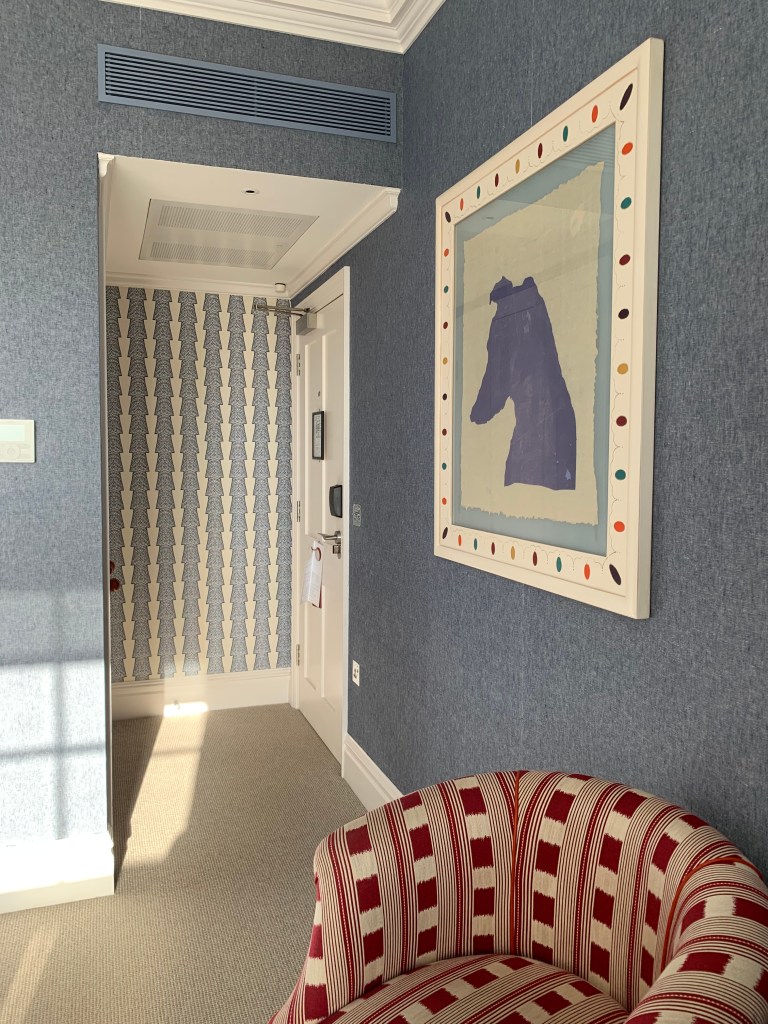
I particularly loved the large painting of a dog in silouette, but the room had lots of smaller details to enjoy as well, including the knobs on the closet door, the selection of drinks and snacks in the minibar, and the colorful canvas bag we were invited to take with us.

My only small complaint was that our window had frosted squares on the bottom half that impeded our view. We could see that our room looked out to some mechanicals for the building, so we understood the purpose of the frosting, but it made me feel a little claustrophobic when we were in the room during the day. If we were to return, we’d book a room with a view of Dorset Square.


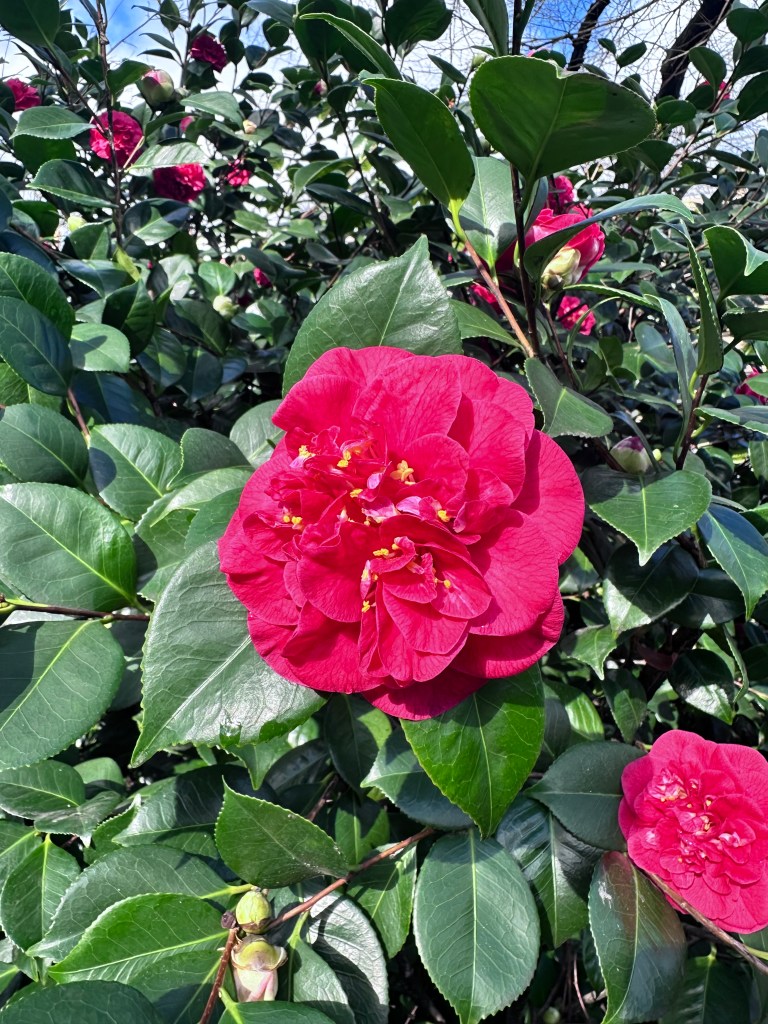
I loved feeling, for a few days, like I was a resident of a stylish townhouse in Marylebone. The hotel gave us a key to visit the private square, and we met the gardeners who had recently been hired to look after the square. It was beautiful, and we couldn’t get enough of the blooming bushes and bulbs. We also discovered (or rediscovered) Marylebone Station, which is both a tube stop and an overground station serving destinations to the northwest operated by Chiltern Railways. The station is as charming as the hotel and is now my favorite in London. I also appreciated the low-key but completely competent service at the hotel. We felt like we were in the good hands of staff members who authentically cared about their guests.

Back to HOTELLING home

Amsterdam North, The Netherlands, Sir Adam Hotel


The Dylan has, of late, been our home base in Amsterdam – and we know we’ll return there because we love it – but as we get to know Amsterdam better, we thought we should branch out and try something new. It’s always fun to explore different parts of a city.


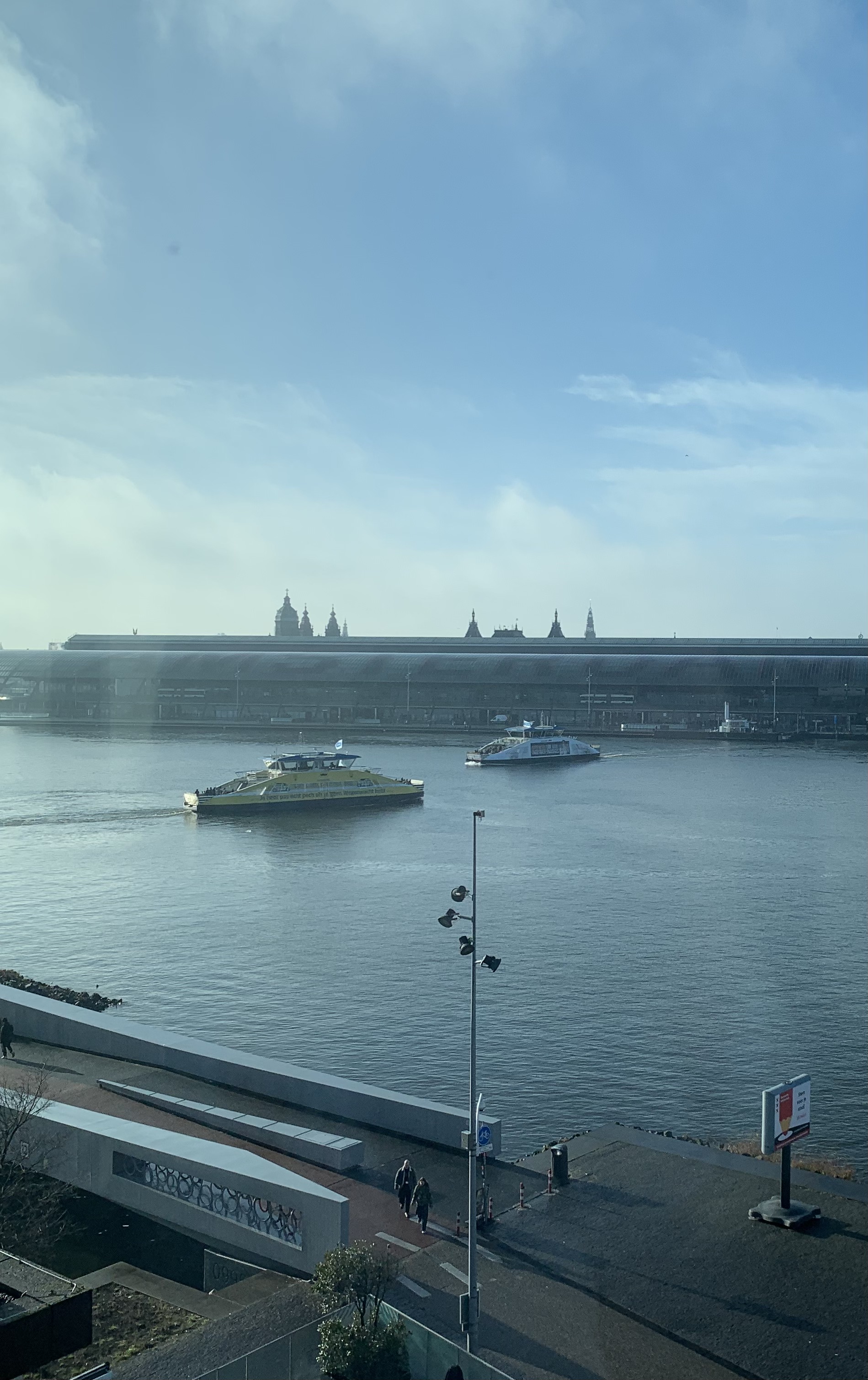
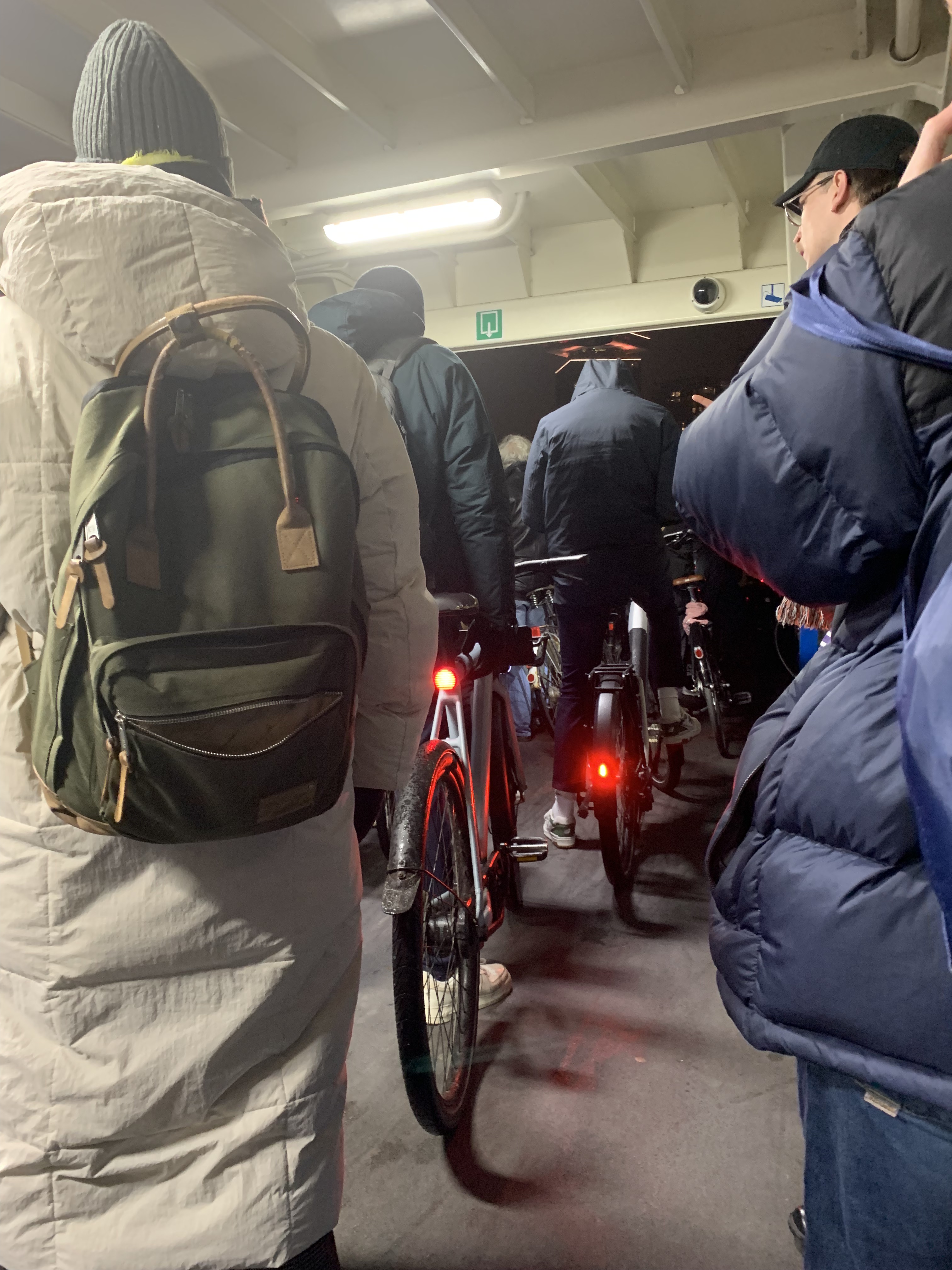
It was both amazingly convenient – running every 10 minutes or so 24 hours a day – and free. The ferries (two are typically running at any given time) shuttle thousands of pedestrians, bicycles, and other people-powered vehicles across the river each day on a ride that takes only a few minutes. Most of the passengers looked like locals. We loved studying their ferry-riding tactics and even picked up a tip or two for ourselves.

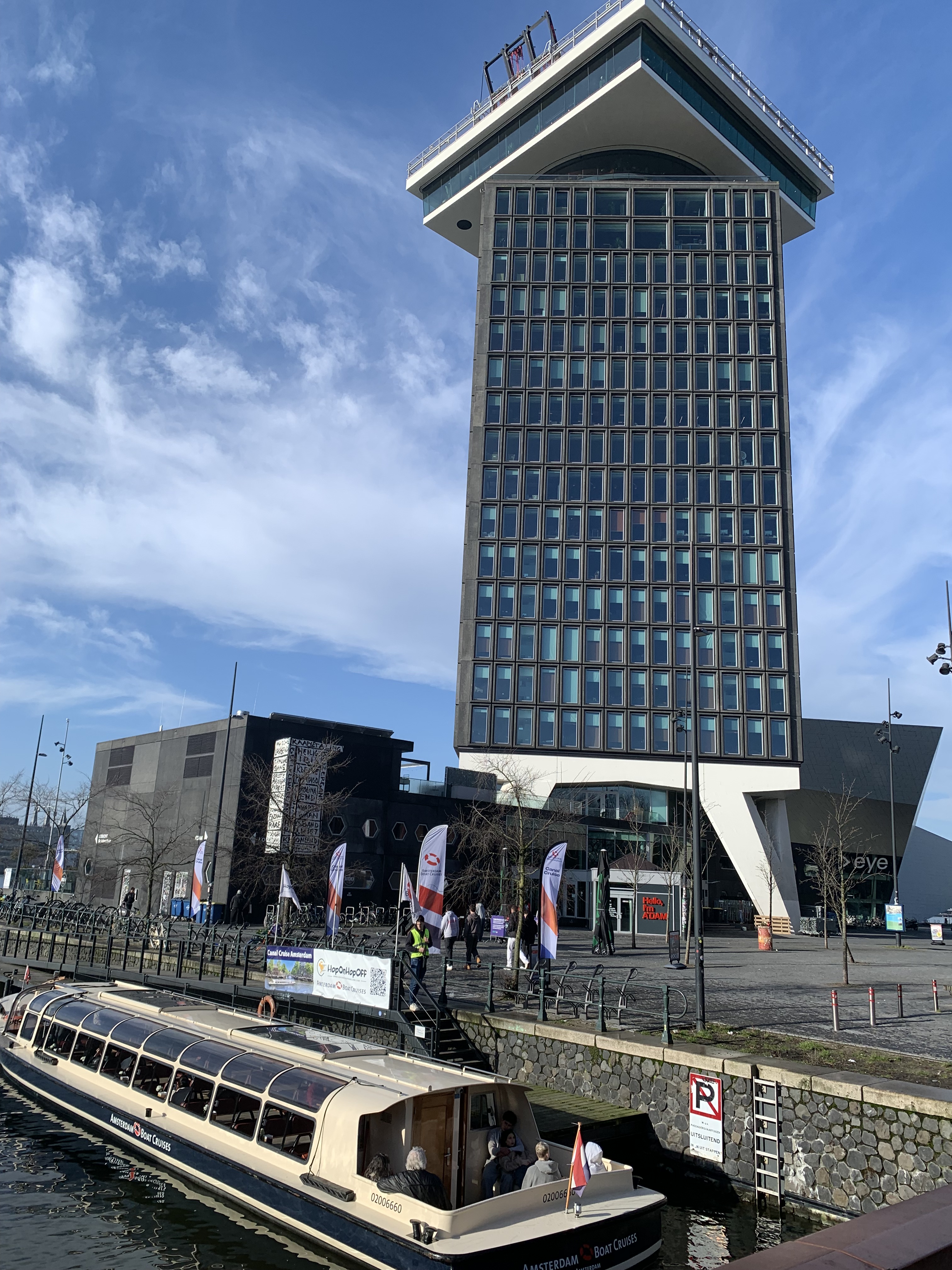
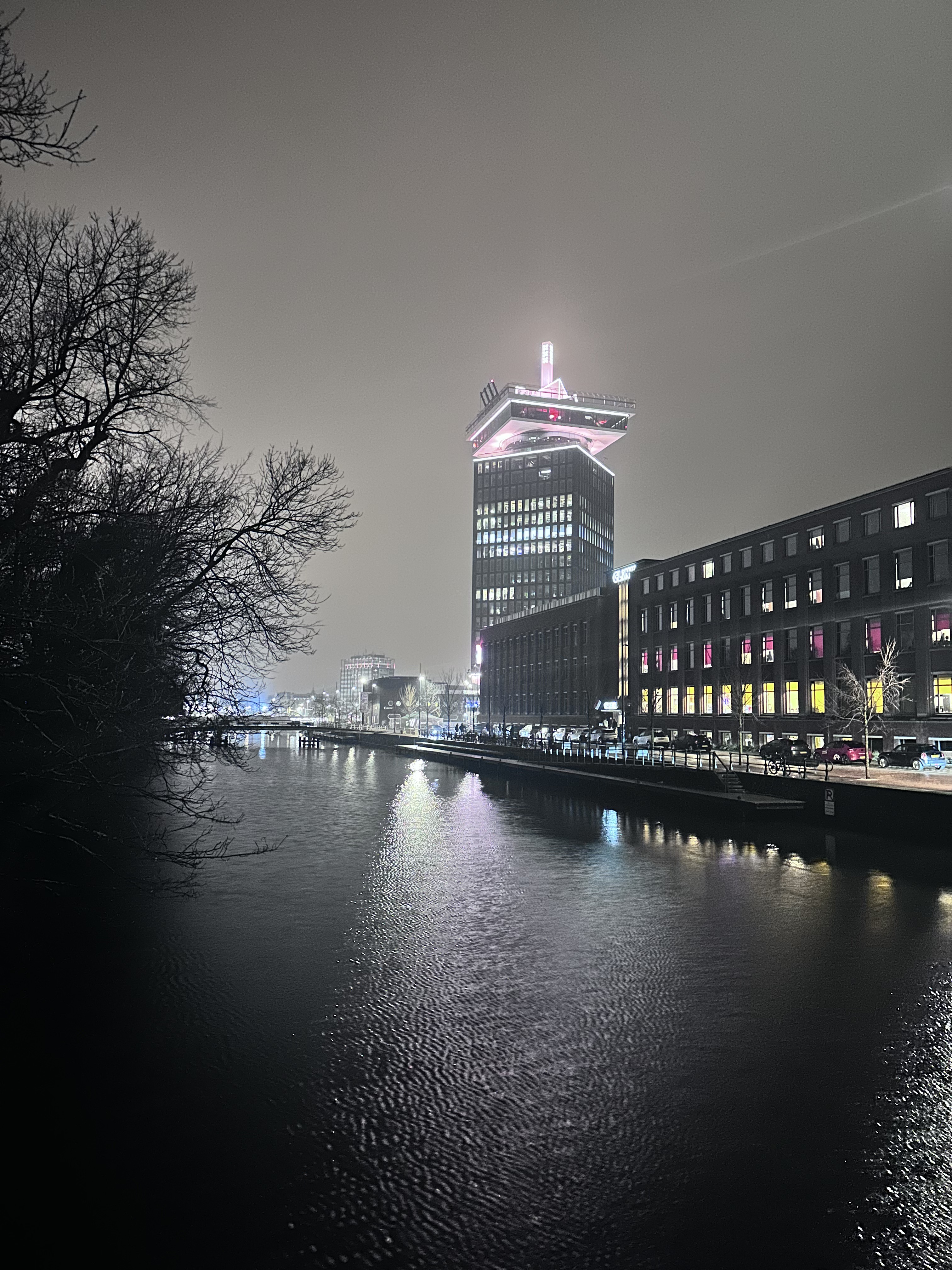
First, the building is a tower – 100 meters tall – so it’s a landmark on the banks of the IJ in what is a relatively low-slung city. It was designed in 1966 and originally called Toren Overhoeks (tower across the river). We have a love for concrete buildings, and this one is interesting because the tower is placed diagonally in relation to the substructure and the tower’s roof ornamentation.

A’DAM Tower – day and night

After Shell sold the building to the municipality of Amsterdam and after a significant redesign and renovation, the tower re-opened in 2016 as A’DAM Tower; it is now home to Sir Adam; a handful of restaurants, bars, and nightclubs; an observation deck, featuring the “highest swing in Europe;” and the offices of music and creative companies, including Sony Music. The tower has a distinct personality, for sure.


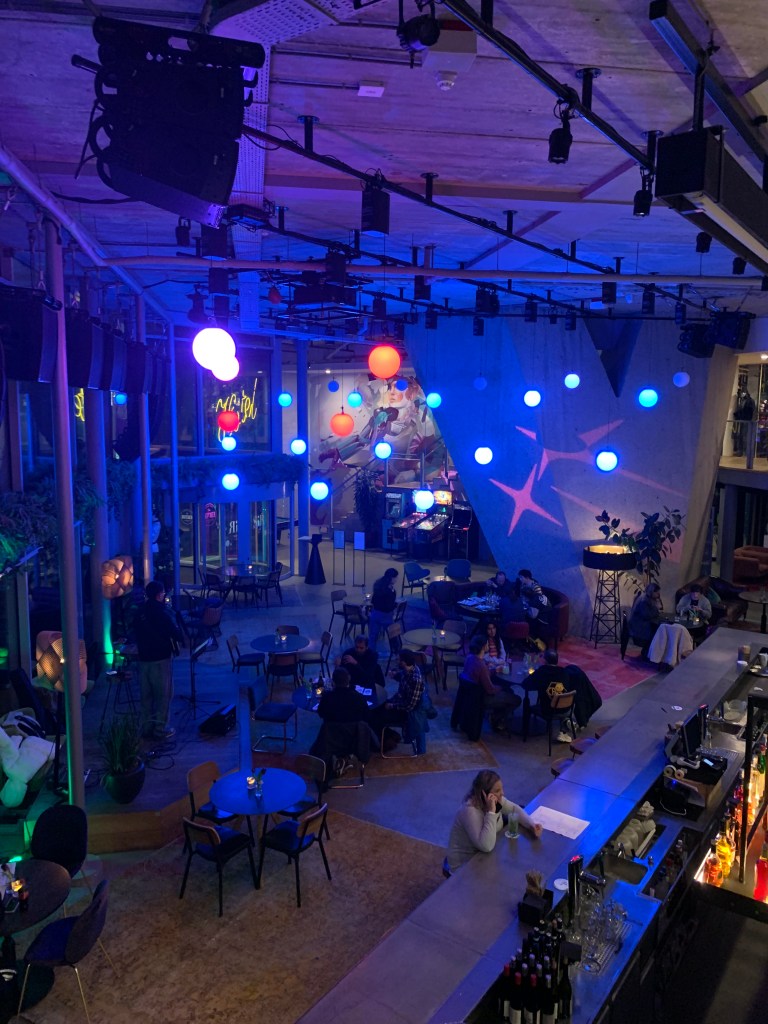
The hotel definitely caters to the younger crowd and strives to offer an experience, not just a hotel stay. For example, accessing the elevators requires a somewhat complicated interaction with a monitor that asks where we’re going (different than just swiping a room key). Once we figured that out, we were instructed to get in a particular elevator, which turned out to be the “karaoke elevator” (each one has a theme). When we arrived on our floor, we exited to a foyer and hallways painted black with very low mood lighting that made it somewhat difficult to navigate to our very sunlit room. What a contrast; our pupils had to make a quick adjustment. People were definitely partying all around us — from our room, we could see the entry an underground nightclub on the hotel’s plaza, which had lines to get in until the early morning hours – but we never felt too out of place or too old. Everyone at the hotel seemed happy to see us, even if we did look like their parents.


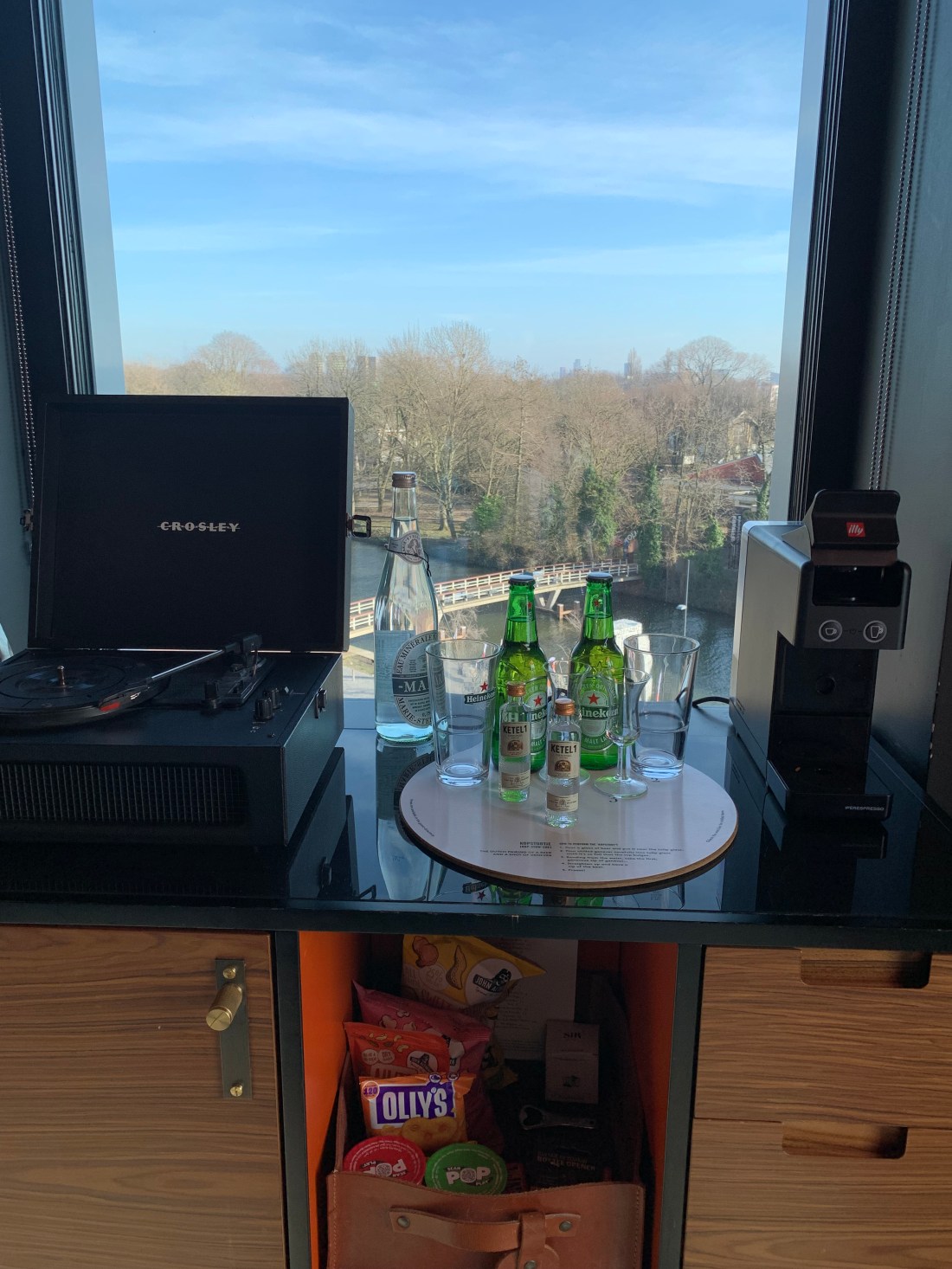
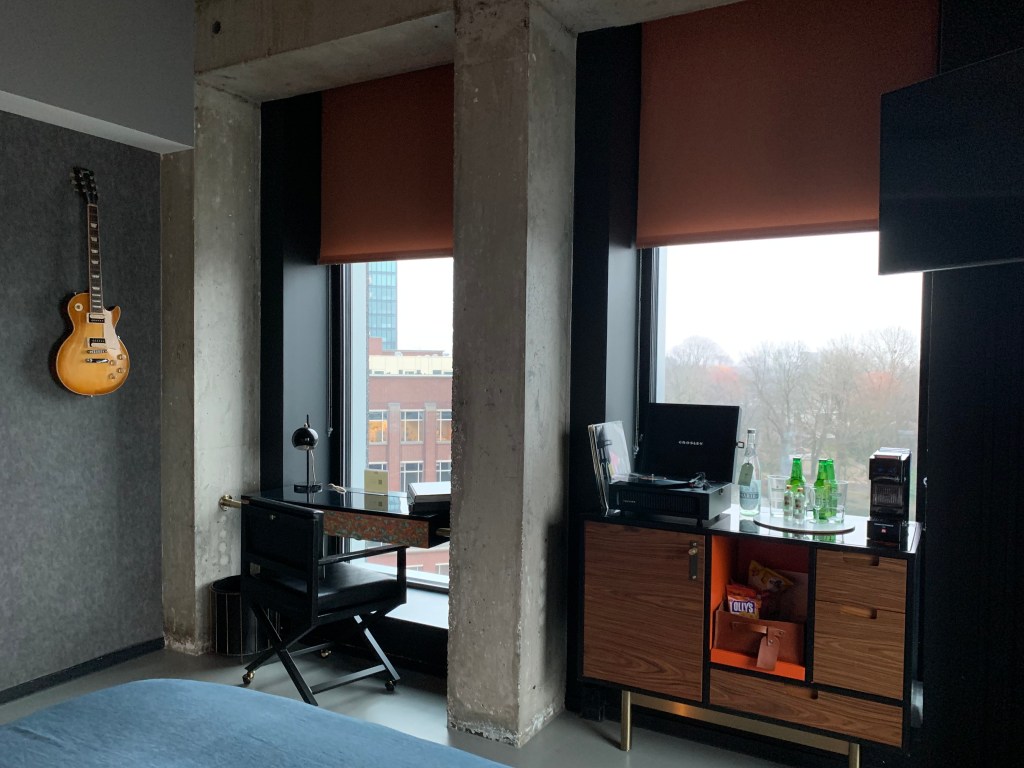
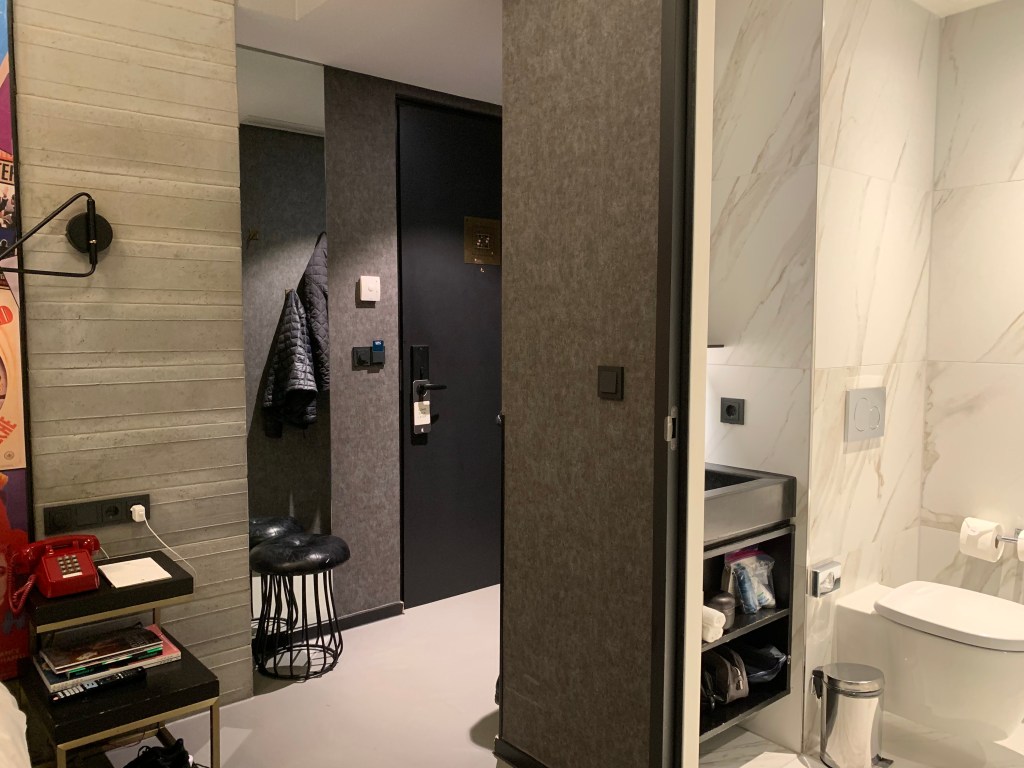
The room was fun with an aesthetic that I might call “rock n’ roll chic.” On the wall hung a guitar; and alongside the mini bar, which featured the ingredients and instructions for a kopstoot, was a turntable with a handful of albums.

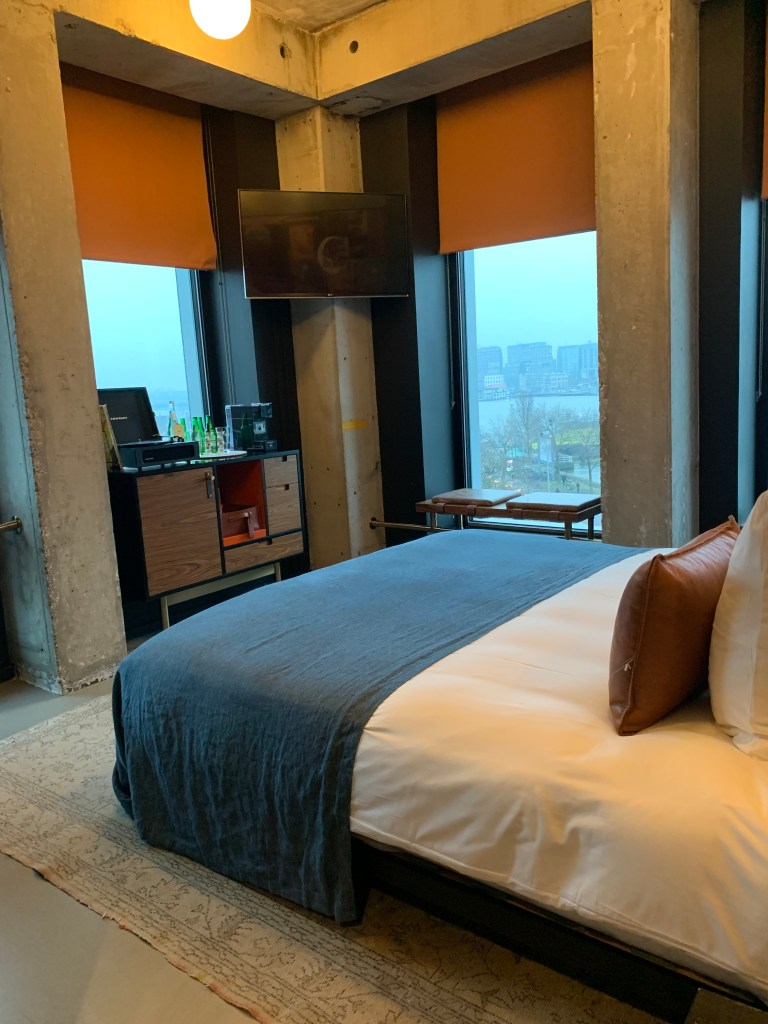
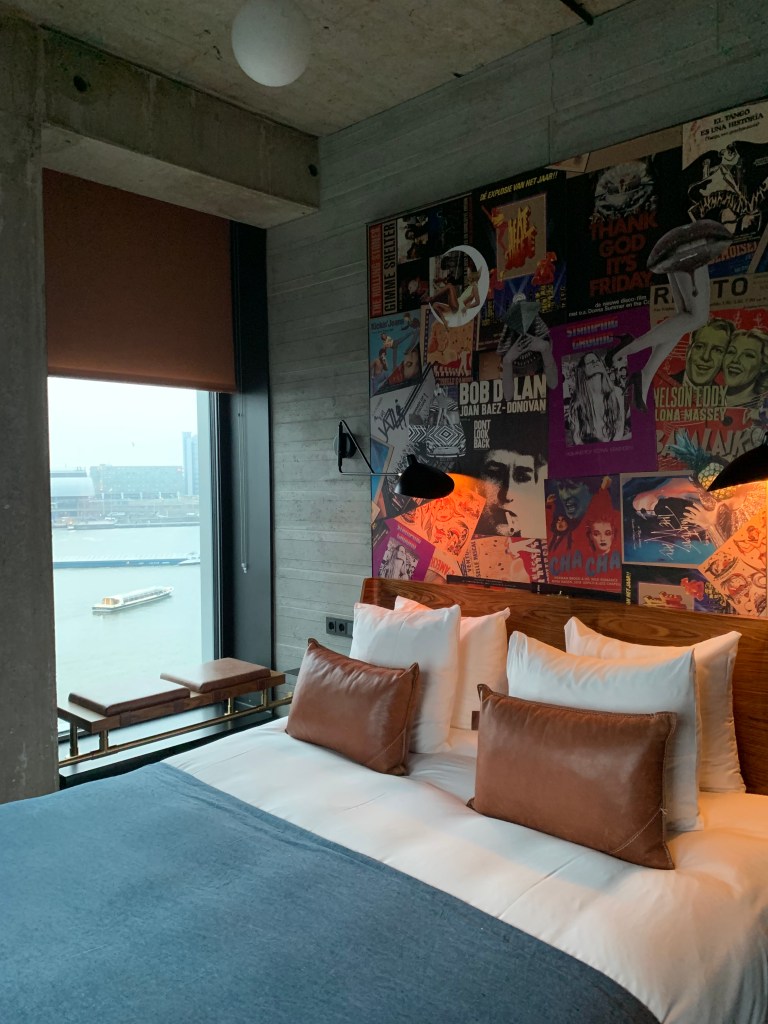
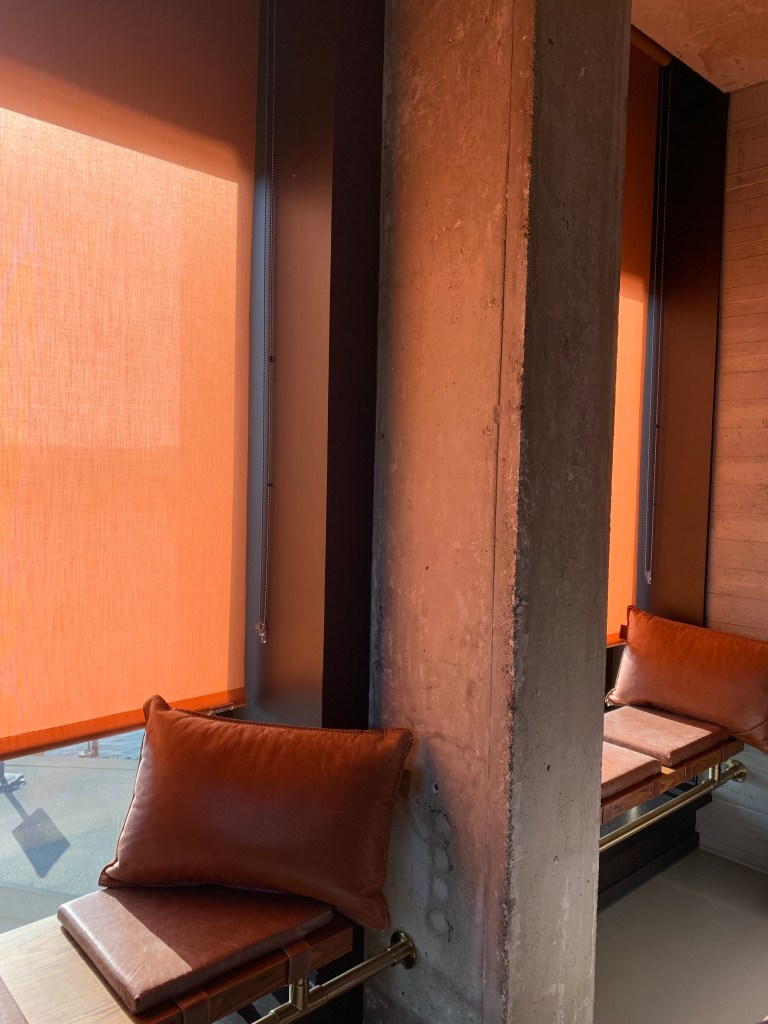
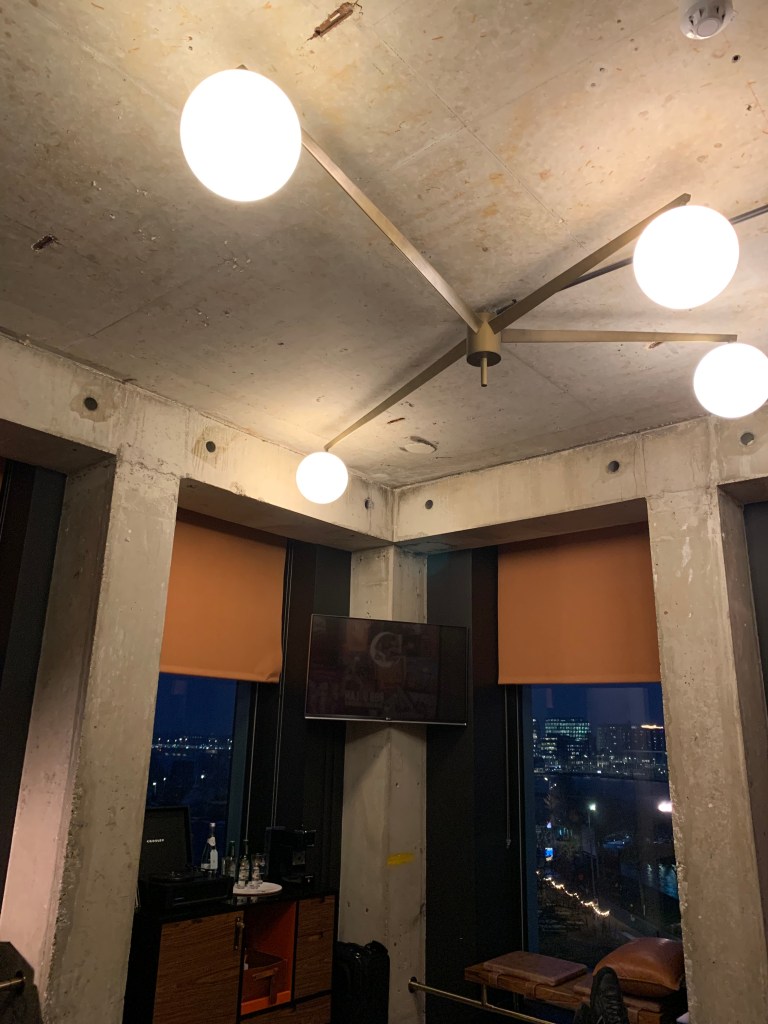
The highlight of the room was definitely the windows, which extended fully across two walls. We had a great view of the river and of Amsterdam Noord, and I loved sitting in the window seats and watching the never-ending (truly never-ending) activity down below.
As you well remember, I spent a lot of time offering ideas for what I would do if I ran the hotel. Inside the rooms, it was clear that the housekeeping staff were paying attention to the things people notice: smoothing the bedding, making sure the shower is sparkling, dusting the furniture surfaces. But our room – I’m guessing all rooms – could use some attention to detail. Dust had built up inside the electrical outlets, and the soap and lotion dispensers at the bathroom sink needed a good wipe down near the pumps. The painted trim along the floor and the doors were black, and anything black shows every nick and dent; sending a maintenance team around to regularly engage in deep cleaning and paint touch-ups would take the guest experience to the next level.

It’s quite possible that many guests don’t care about these details, but we’ve seen them done so well at other properties – we had just come from two in London: the Raffles OWO and Dorset Square (entry coming soon) – that it’s hard not to notice.


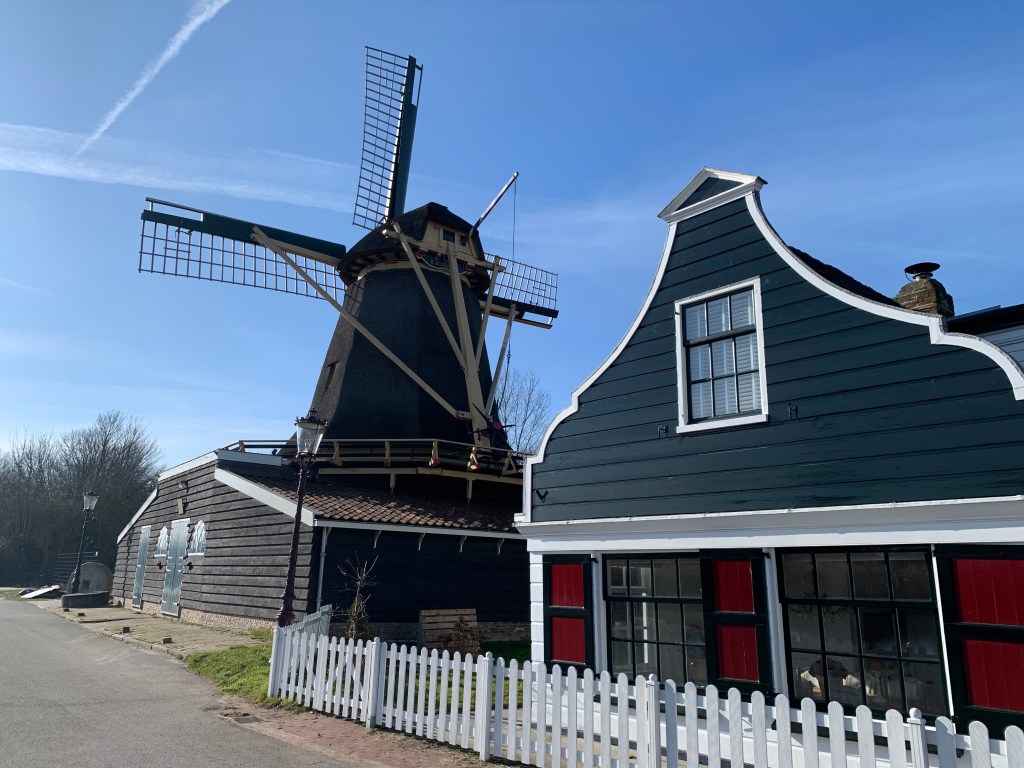
I am. It was fun to see the creative reuse of the Toren Overhoeks, and it was equally fun to experience a new part of a city we are getting to know better. Amsterdam Noord is worth spending some time in. We had dinner at three places we likely wouldn’t have found if we hadn’t been staying across the river from central Amsterdam, and we had a great walk through Noorderpark on our final morning after getting coffee and breakfast at a local place full of Amsterdammers; we even stumbled on the chalkmill d’Admiraal, the last remaining wind-powered chalk and trass mill in the world.


  • Sir Adam Hotel, Amsterdam Noord
  • 4-night stay: Feb. 5-9, 2026
  • Sir Corner City View, #405

Back to HOTELLING home

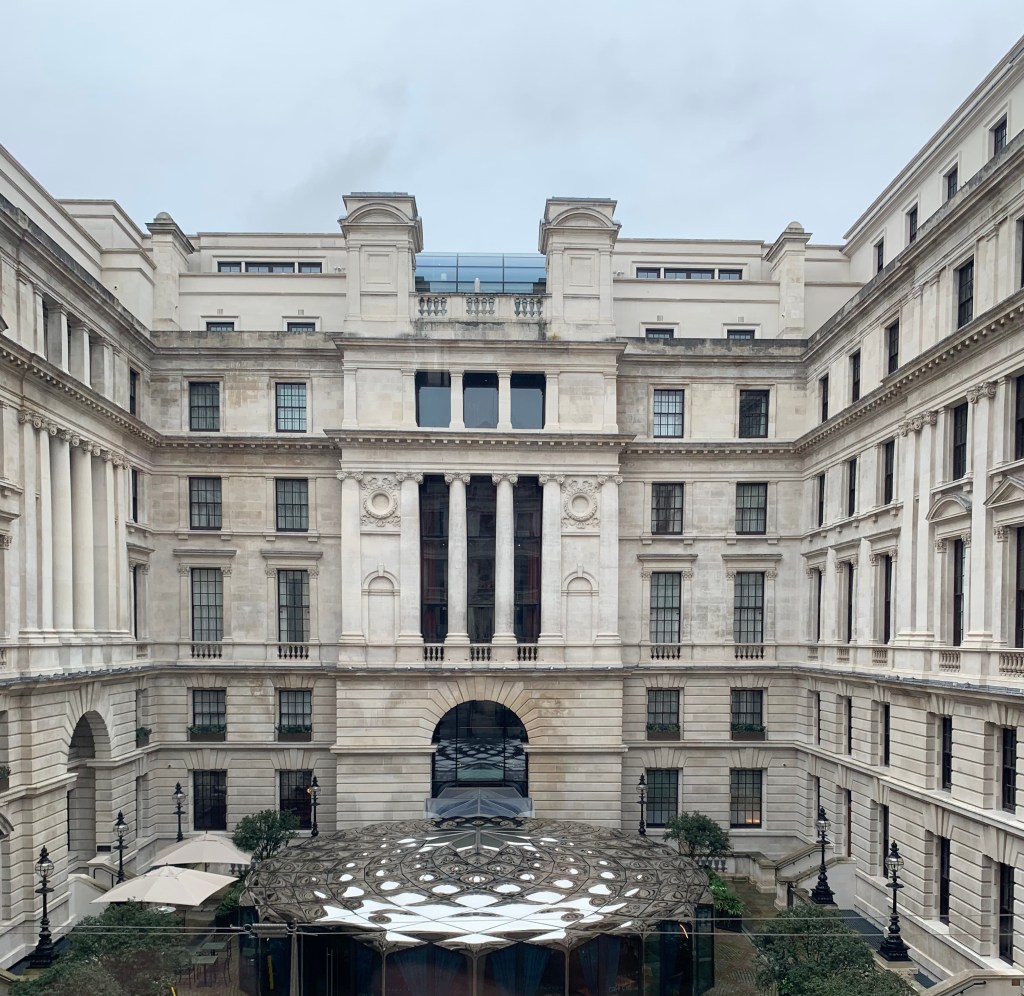
Whitehall, London, UK ~ Raffles London at the OWO

We’re excited to welcome our first guest contributors to hotelling.org. This entry is a collaboration with two friends who invited us to join them at the Raffles in London; thanks to them for sharing their insights on the Raffles experience!

This trip was definitely a ‘treat yourself’ moment. We were coming off a couple of months with family in Serbia, transitioning back home and looking for a few days of luxury travel along the way.

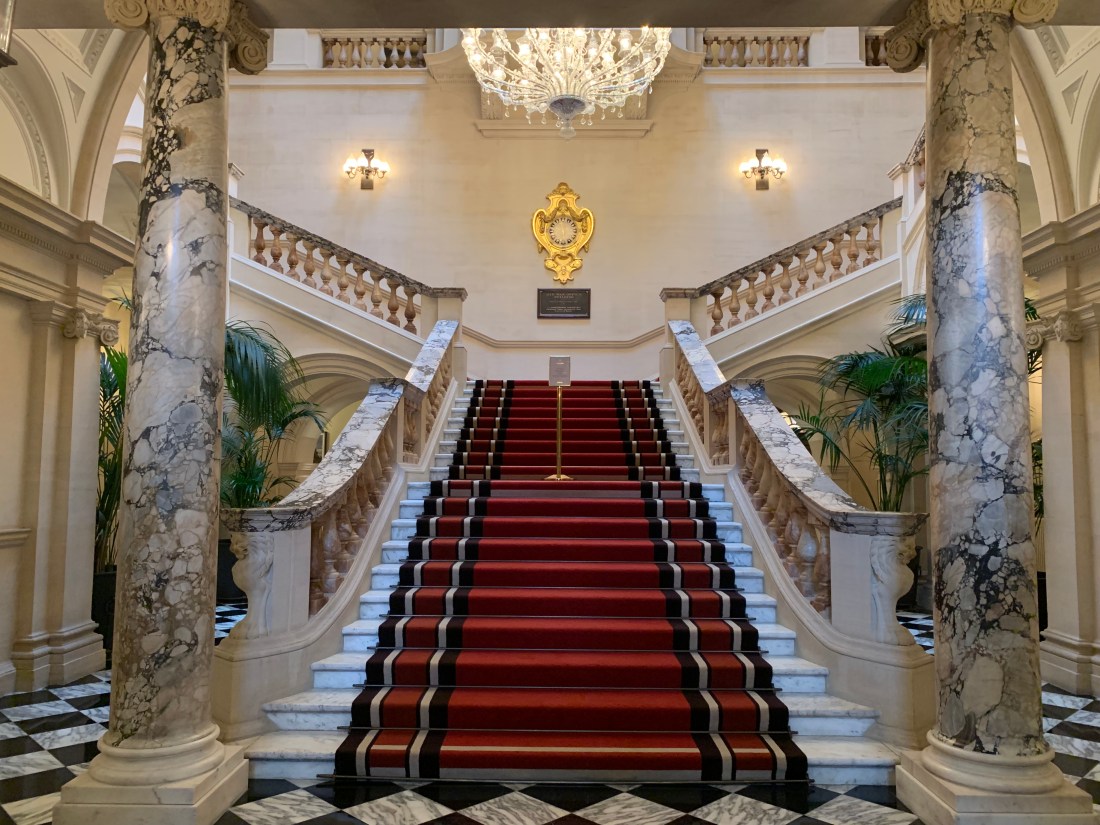
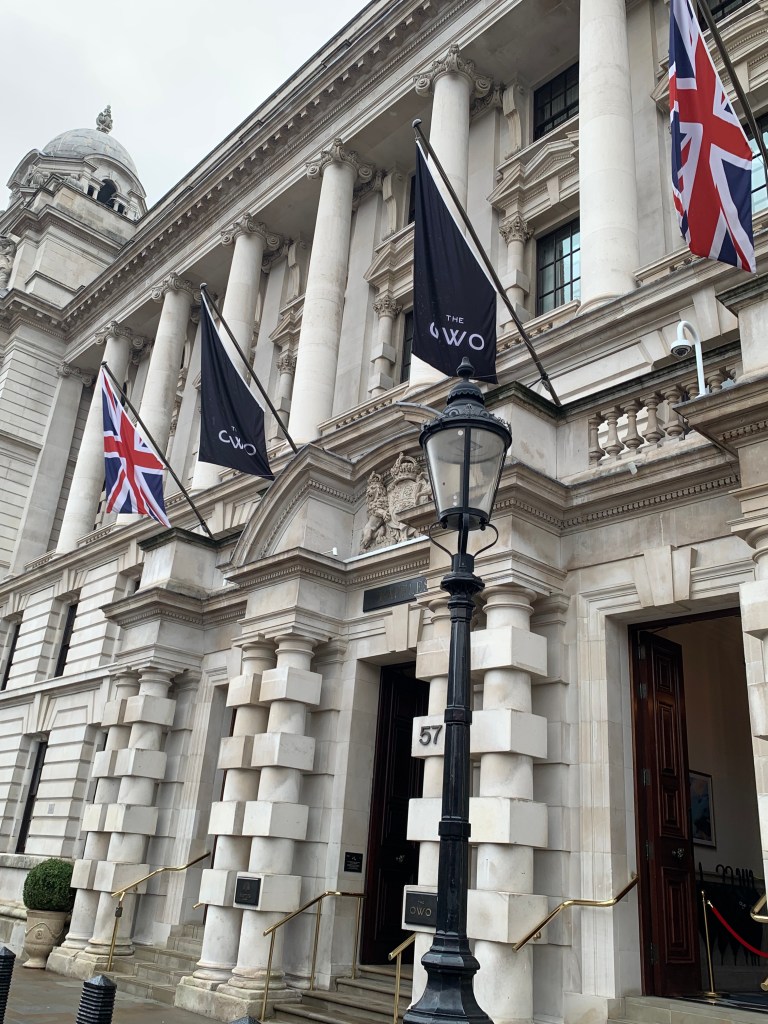
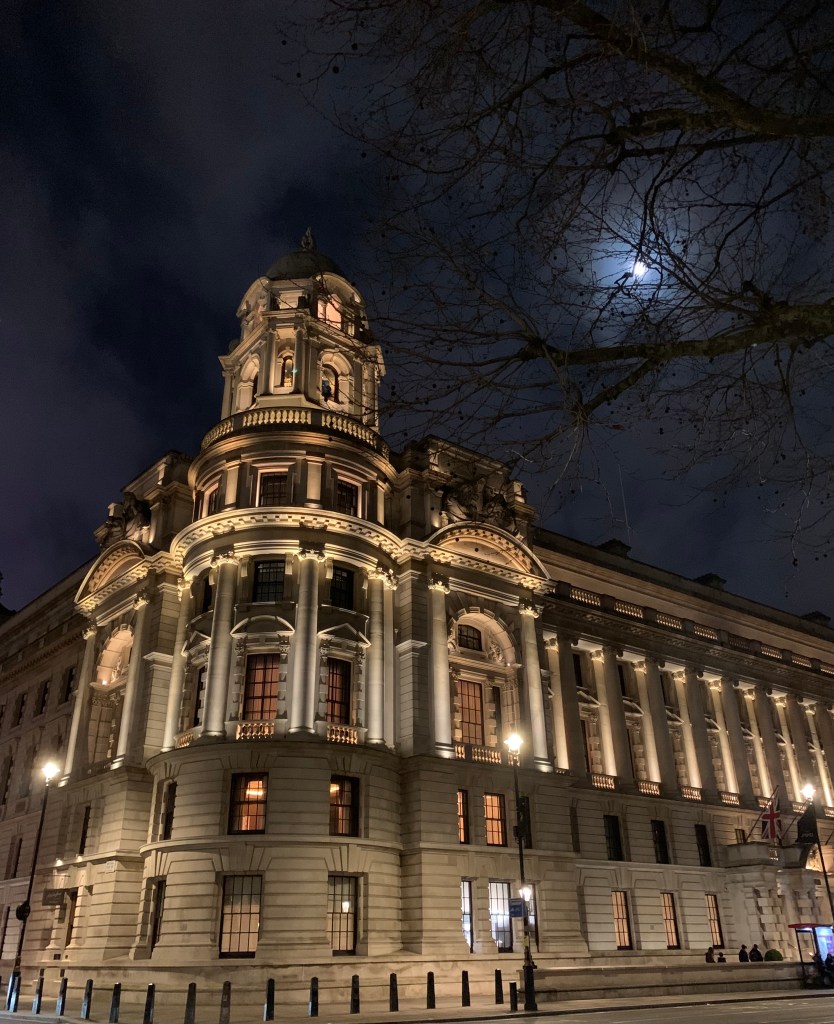
We were intrigued by the history of the OWO, which formerly served as the headquarters of the British War Office and is right on Whitehall among the iconic buildings of England. The hotel also has a knock-out spa – part of the ‘treat yourself’ scheme.

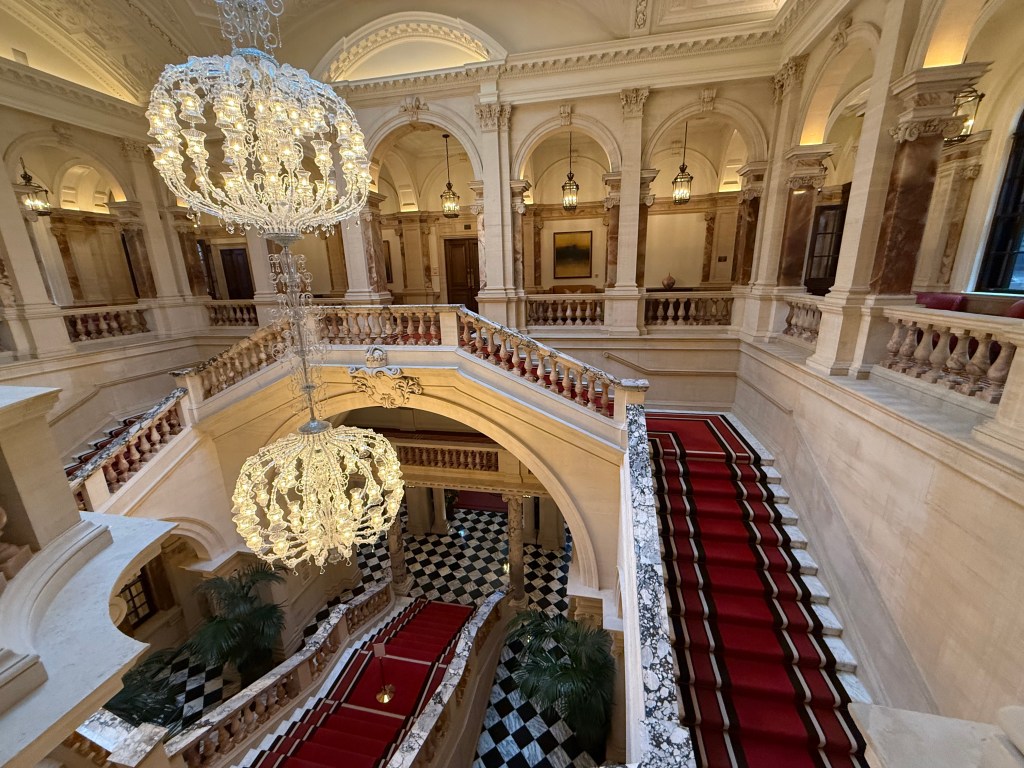
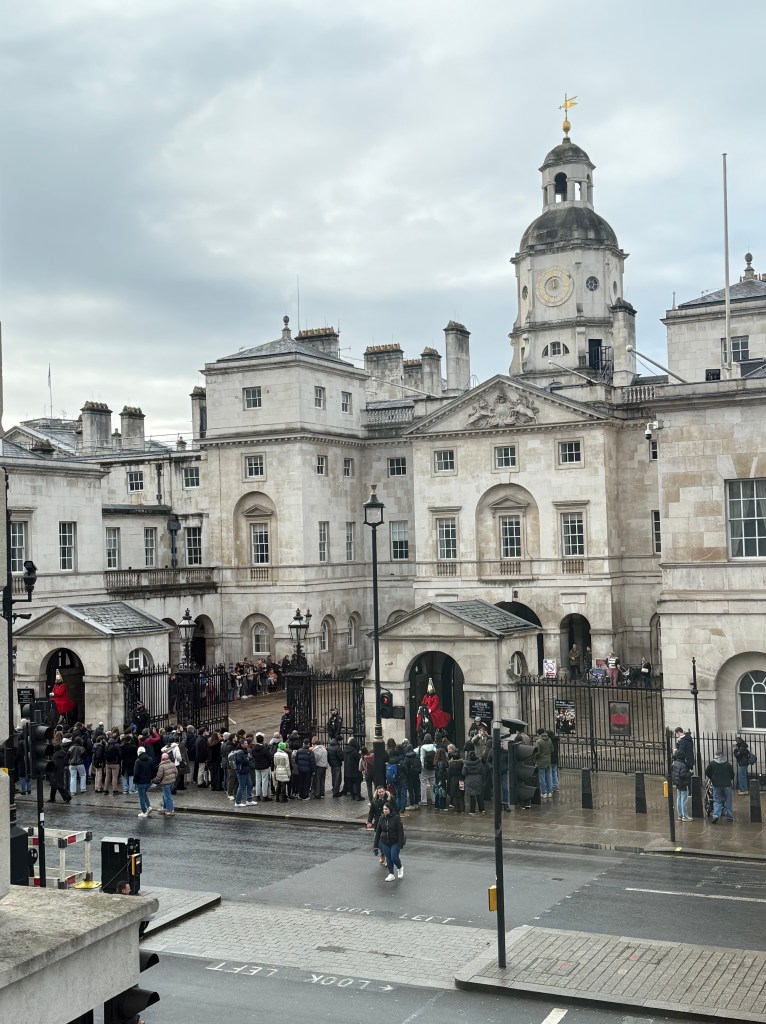
The entry to the building is directly across from the Royal Horseguards with tourists all around, so it really is right in the center of London’s power. The porter invited us in, asked if we were staying, and then whisked us off to reception, which was tucked away in the back of the ground floor. We didn’t have a moment to pause and take in the massive entry and grand staircase. In the reception room, we were seated at a desk and offered champagne, while another staff member took our luggage. With the exception of the champagne, it felt a little like meeting with a banker. The staffer from reception then escorted us to our room with an introduction to the ground floor bars and restaurants along the way. Our bags arrived separately. It was all well executed but felt a little choreographed, like a ride at an amusement park.

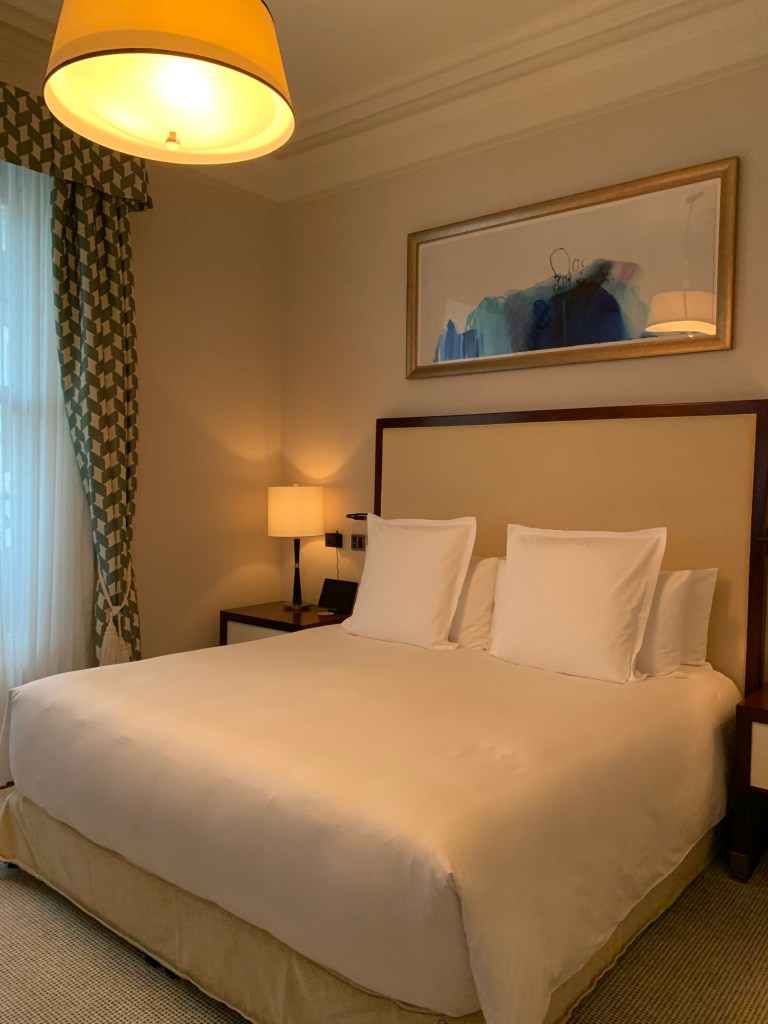
We knew our choice was the right one when we made it to our room. Prior to our arrival, we received a preferences form, which included everything from pillow choices and preferred temperatures to the kind of refreshments we enjoy and the time we prefer turndown services. Someone clearly read the survey. Our pine needle pillows were waiting on the bed, the room temperature was perfect, and we had wine, fruit and chocolate waiting for us.

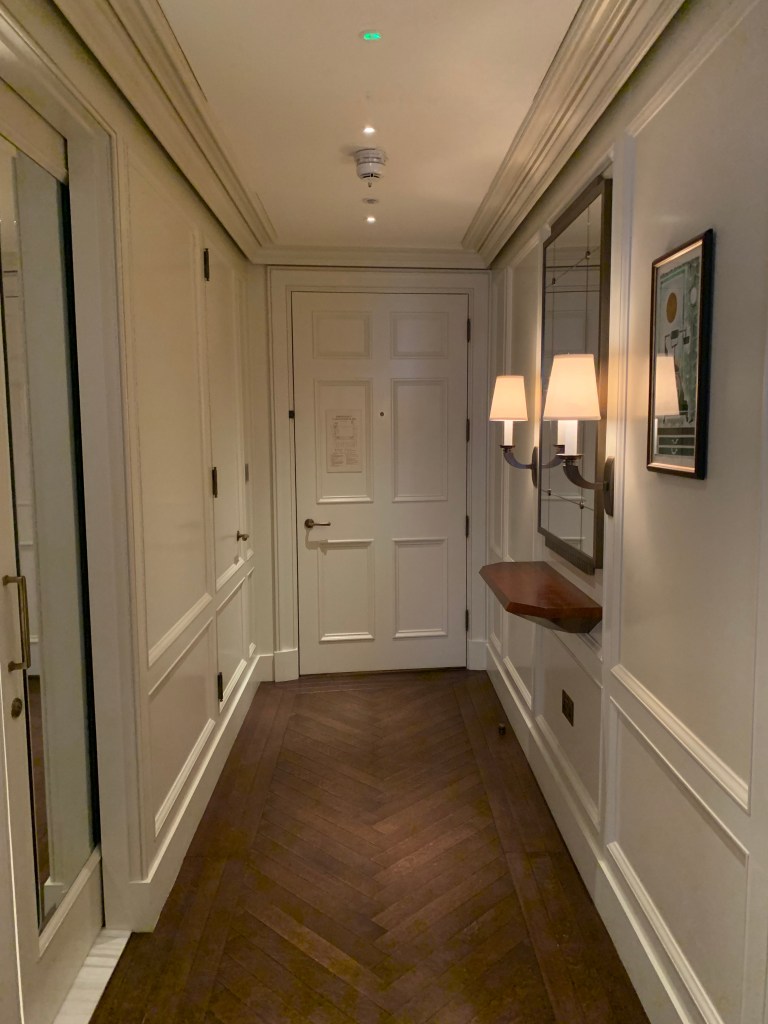
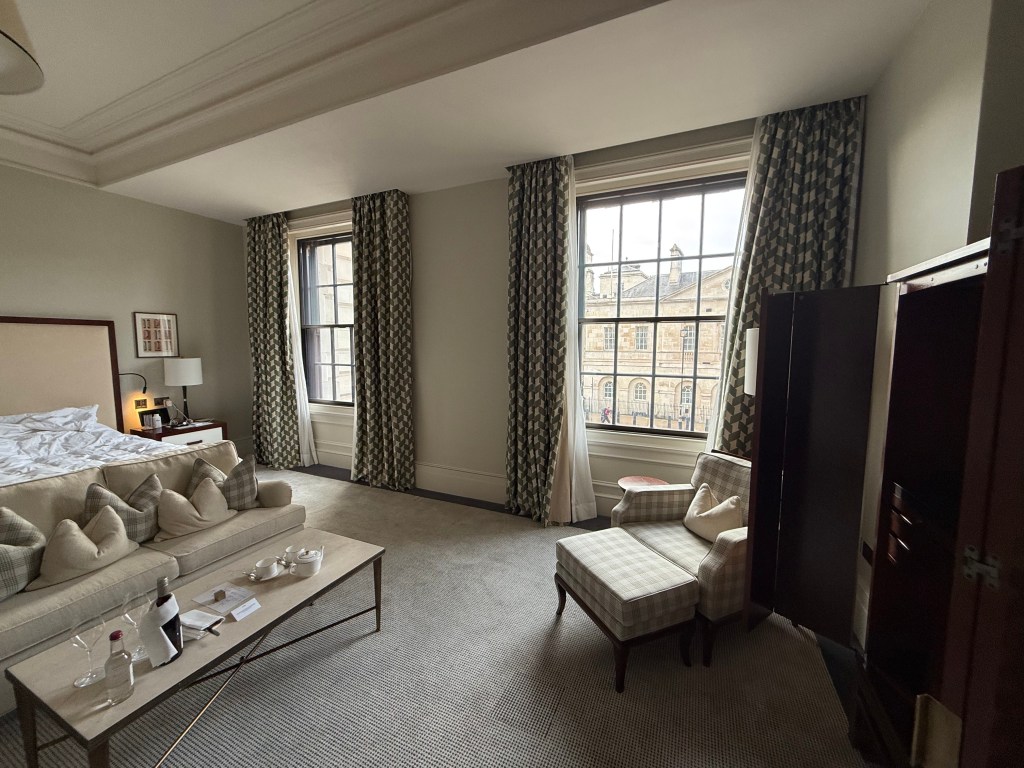
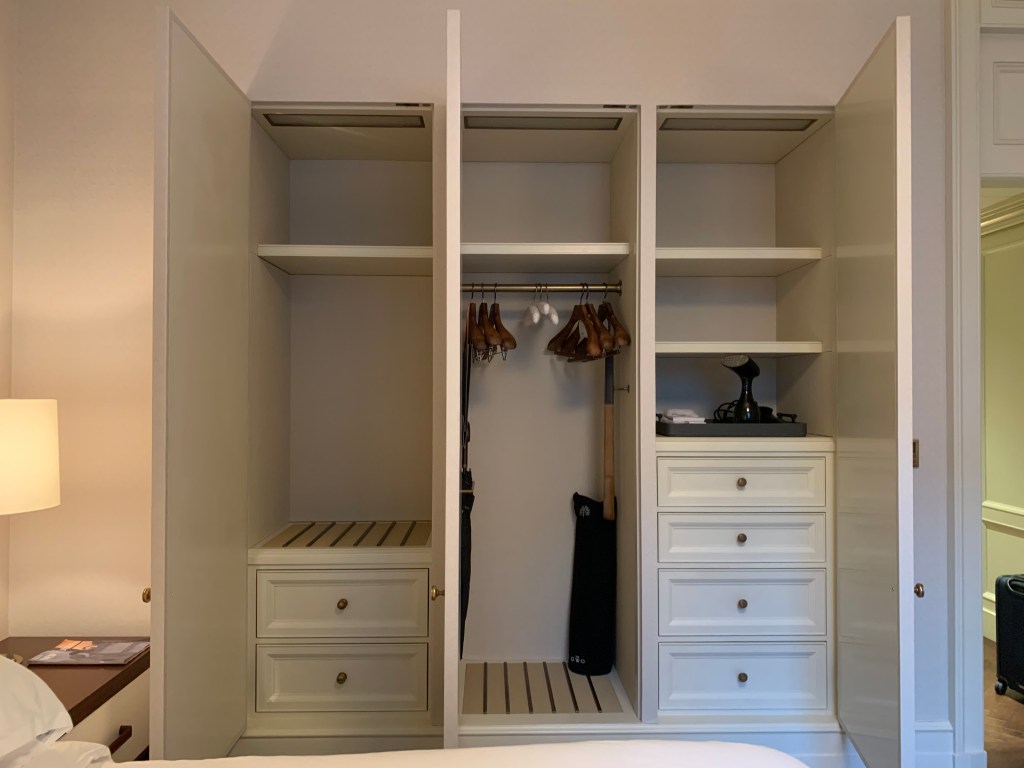
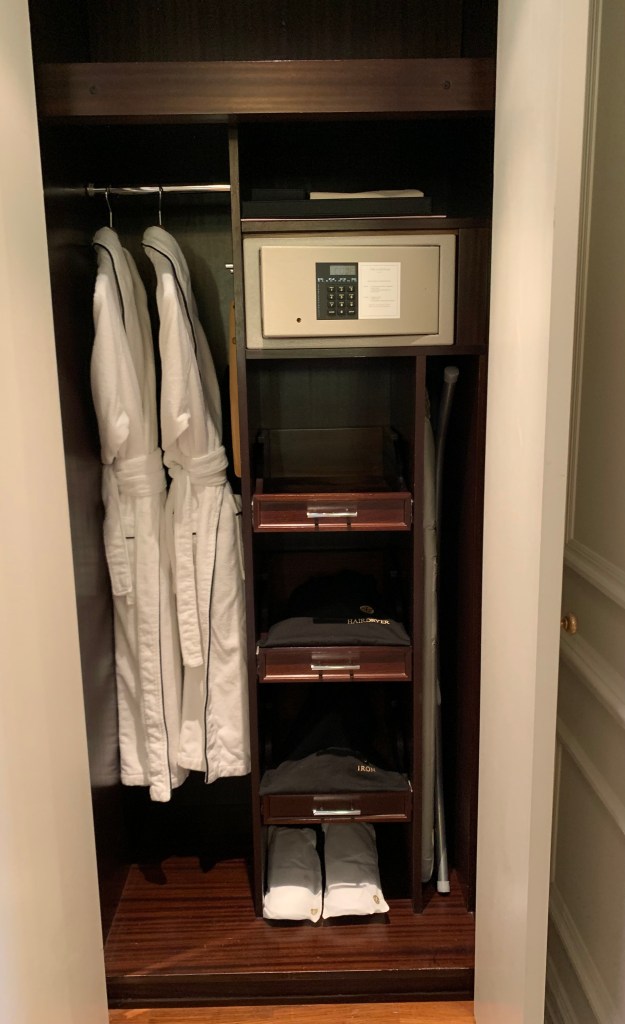
Our room looked directly onto Whitehall with two big windows, a king-size bed and a roomy seating area with a couch and coffee table. The entrance foyer with what looked like original parquet floors was a highlight; it served as a kind of dressing area (and perfect place to do yoga) and adjoined an entire wall of closets (stocked with a yoga mat, a steamer, slippers, luxurious wooden and padded hangers and a – very useful – shoeshine cloth to wipe off the London rain).

The marble bathroom was stunning with a separate deep tub, a big shower, dual sinks with a TV in the mirror, and a Toto washlet toilet. The bathtub was not only deep but long, and the edges were perfect for resting a glass of champagne, a candle or a book. The Toto toilet was always “on guard” with its lid programmed to open automatically each time we approached, followed by the swish of a bowl-freshening cycle of water. That got a little comical, particularly if we were on our way to the shower or just popping into the bathroom to get our robes from the hook, but other toilet functions, including the heated seat set to turn on in the early morning, were quite lovely.

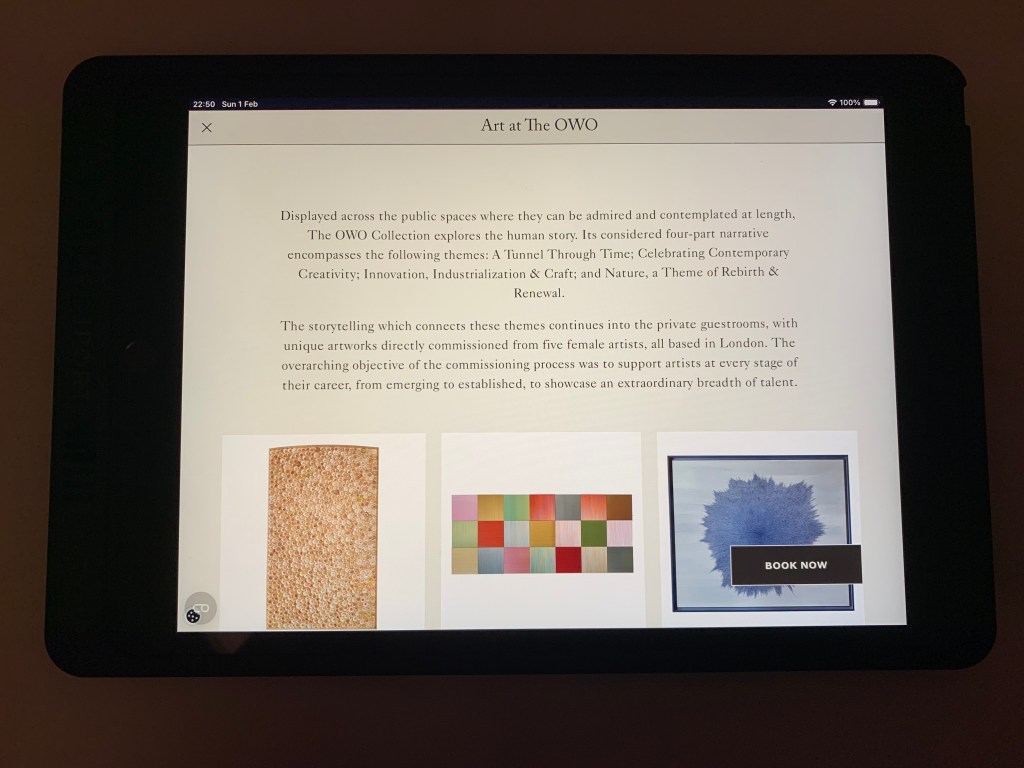
We’ve previously stayed in rooms that have smart technology, but they’re often not that intuitive and not worth spending the time trying to decipher. In this room, however, the iPad controls were easy to understand and allowed us to do anything we wanted – from turning on and off the TV and controlling the drapes, to calling for housekeeping or ordering room service. We could even access an exhibition catalog of the art that fills the hotel. One caveat: We managed to accidentally turn on the “do not disturb light” via the iPad; you two did the same thing. This must have sent a mixed signal to housekeeping that we wanted our room serviced but also didn’t want to be disturbed.

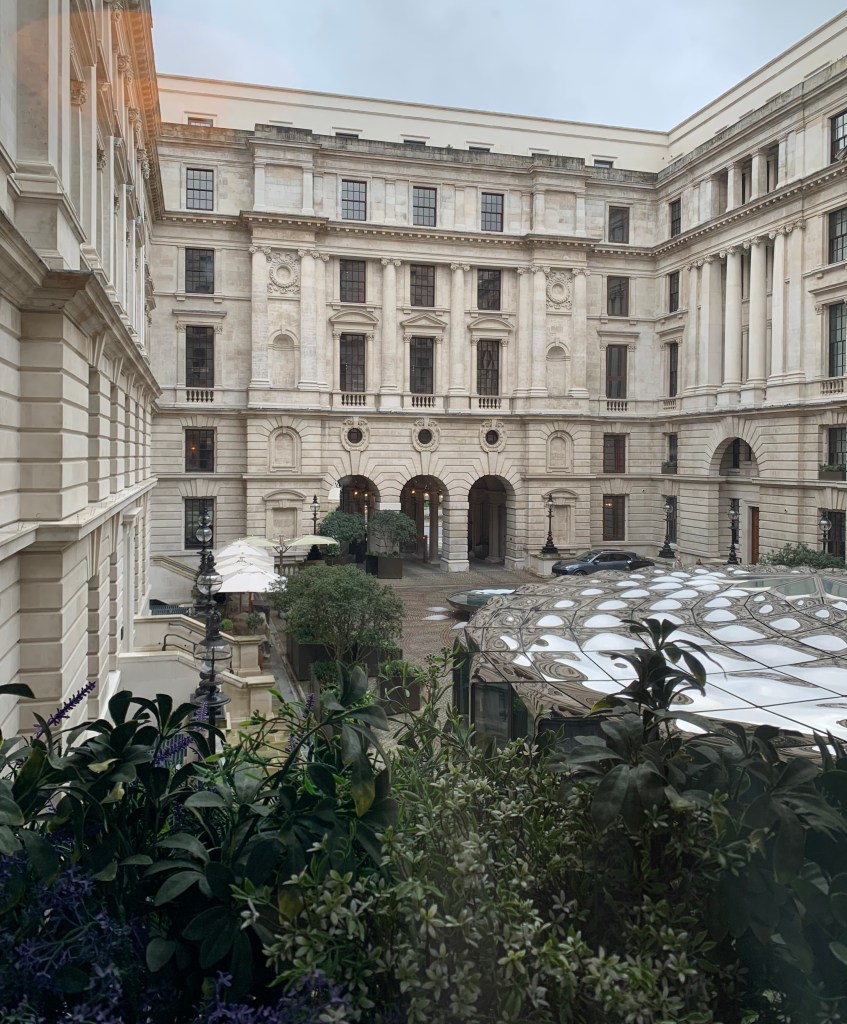
When you arrived the day after we did, it was fun to see your room as well (this second room is the one in many of the pictures). It was a little more petite and looked out to the courtyard, but it had all of the same features.

As we spent more time at Raffles – and as we learned to navigate both the building and the hotel’s culture, our first impressions changed. The hotel was classy but not snobby, and we never felt uncomfortable or out of place. Almost everyone we encountered was warm and friendly, and we had fun chatting with the porters as we came and went.

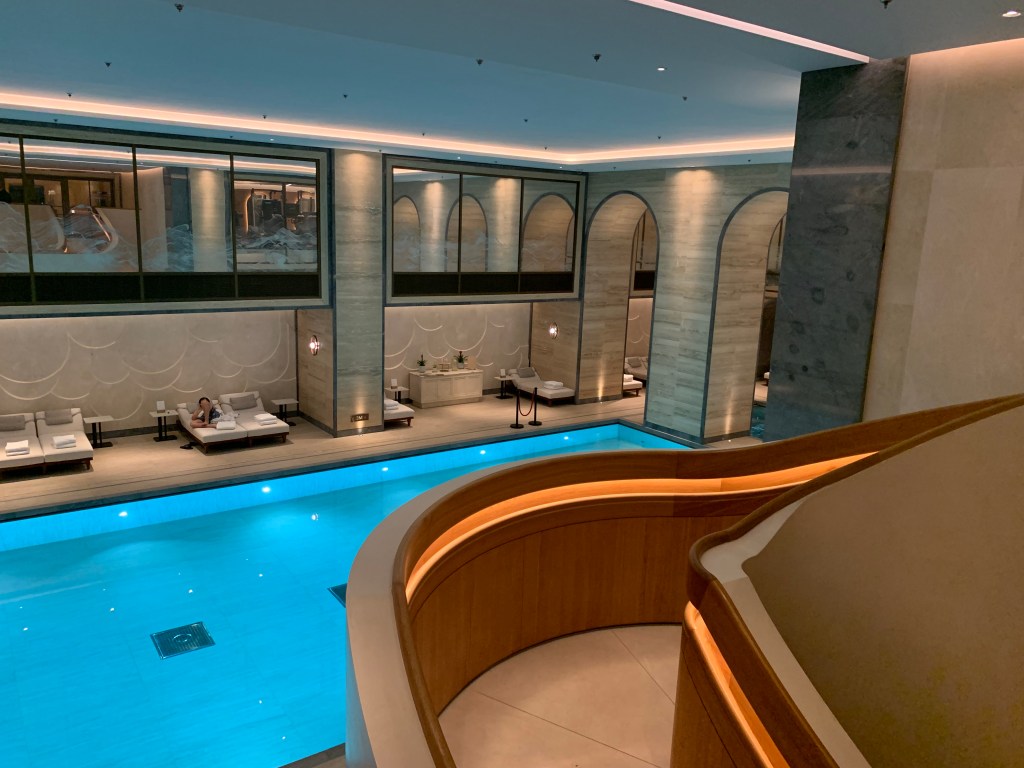
The Guerlain Royal Spa and Guerlain L’Atelier were our first stops. One of us had a haircut and his first-ever manicure, accompanied by a whiskey pour, while the other had a ‘slimming massage,’ which consisted of being kneaded and buttered with lovely Guerlain honey in one of the many treatment rooms – all labelled with the code names of famous English female spies.  Following our treatments, we visited the pool area – a gorgeous set of pools, a steam room, a sauna, and showers, all five stories underground.

Later in the night, we visited the Spy Bar – located in the tunnels under the hotel in Room 007. To get to the spy bar, which was behind a door only marked with the room number, we had to be escorted down by a hotel butler. Once inside we found half of a James Bond car hanging above the bar and a scene full of young, beautiful, rich, and boisterous patrons.

We also visited the Guards Bar to sample the London version of the famous Singapore Sling, which Raffles invented at its Singapore property in 1915. The London Sling was perfectly fine, but it doesn’t stand up to the original.

During our final evening, we joined the two of you in the Poppy Room, the guest lounge. The room, once part of the exterior facade of the building, is five stories high and filled with an amazing glass mobile of abstract poppy flowers, a tribute to war heroes from WWI.

The person who led the tour was incredibly knowledgeable about the history of the building, thanks, he said, to all he learned from the hotel’s in-house historian. The day we toured, two of the hotel’s historic suites happened to be unoccupied, so we got to visit both the Churchill Suite and the Haldane Suite (only £30,000/night) where we were able to sit at Churchill’s desk. We also learned why the hallways in the building are so wide; even though the building was one of the first to have internal telephone lines, young boys would cycle through the building delivering messages. And who wouldn’t love the story of the mosaic floor and the gift each War Office staff member received upon retirement: a set of cufflinks made from a piece of the floor.


Raffles acquired the building from the British government in 2016 and invested £1.5 billion and eight years into the restoration and conversion to a hotel.  The property truly feels like a monument to the empire and to all of the important work that happened in the building over 110 years. 

Absolutely! And what would be even better is returning as a resident of one of the building’s 85 private homes. We probably need two – one for us, and one for you.

  • Raffles London at the OWO
  • 3-night stay: January 30 – February 1, 2026 (first couple) and January 31 – February 2 (second couple)
  • Junior Suite #124 and Deluxe Room #108

~the things the four of us did together on our two overlapping days in London~

Excursions:

Eating and Drinking:

Back to HOTELLING home

Marylebone, London, UK ~ The Langham

For a stretch of about 15 years, we visited London regularly, and we loved trying hotels in neighborhoods across the city. But our last visit was in 2018, and we had a lot of catching up to do. We know Kensington and Chelsea well and were tempted to return to a new hotel on familiar grounds (The Chelsea Townhouse was top of the list). We also, however, love Marylebone, which is near The Regent’s Park and close to so many of the things we love in the city.

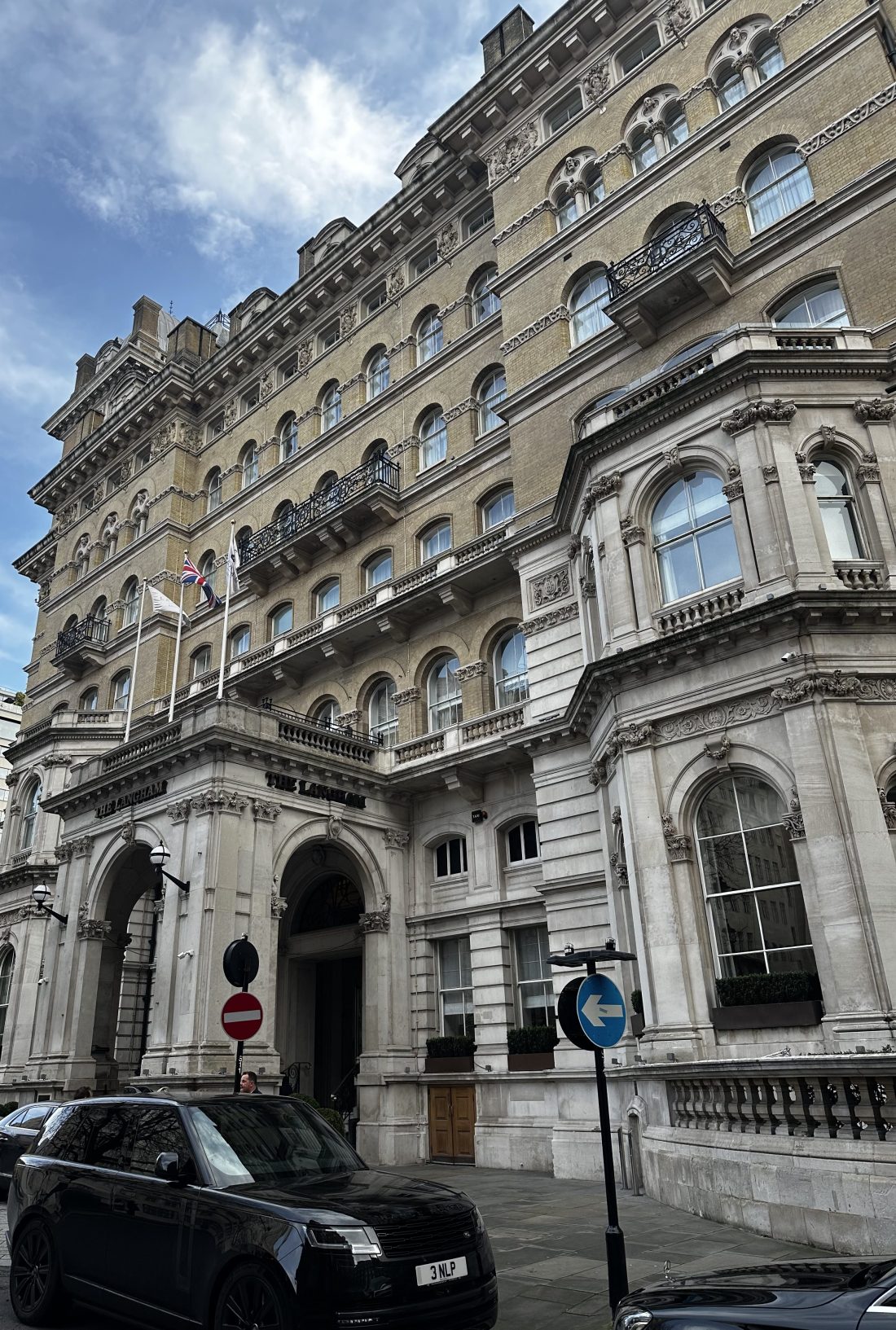
In the very southeast corner of Marylebone, right across the street from the BBC’s Broadcasting House, sits one of London’s first luxury hotels: The Langham. After our terrific experience at The Langham Chicago, we decided to test the Langham brand, booking eight nights at the property where it all began: The Langham London.


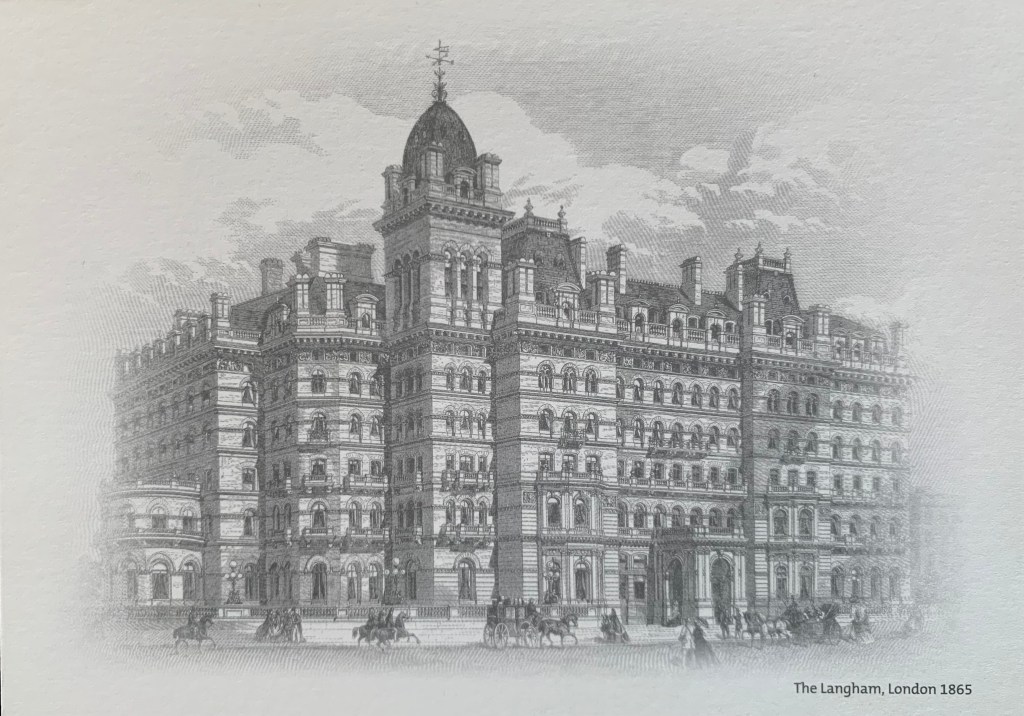
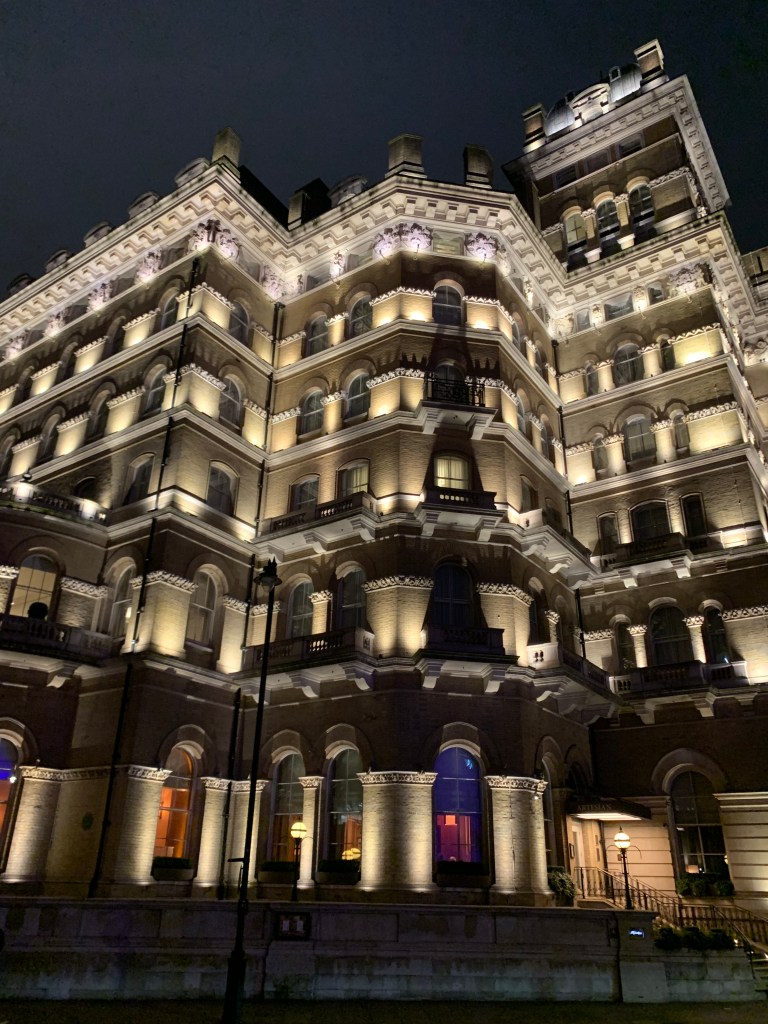
We arrived at Heathrow just after 7 in the morning, and our taxi was pulling up to The Langham by 8:15. The building is described by British Listed Buildings as “heavy Italianate style with some late Medieval details, French pavilion roofs and an east wing with a corner tower.” Put simply, it’s a building to behold – certainly at 8 in the morning, but, as we would later learn, even more beautiful at night.

The hotel’s interior is no less dramatic. The central lobby with shining marble floors and pillars supporting a tall ceiling is surrounded by a more intimate seating area with a fireplace; a room off to the side with a fabulous chandelier that houses the registration desk; and the Palm Court restaurant, which is reportedly where the tradition of British afternoon tea began. Because we arrived so early, our room wasn’t ready, but the staff member at reception got us checked in and then escorted us up to The Langham Club where we were invited to have a cappuccino and linger until our room was ready. We knew if we sat too long, jet lag would be the demise of our day, so after getting properly caffeinated, we headed out for a walk. On our way back out of the hotel – and feeling slightly less foggy – we took note of other beautiful common spaces, including the landings on each floor, each of which had artwork worth spending a little time with.


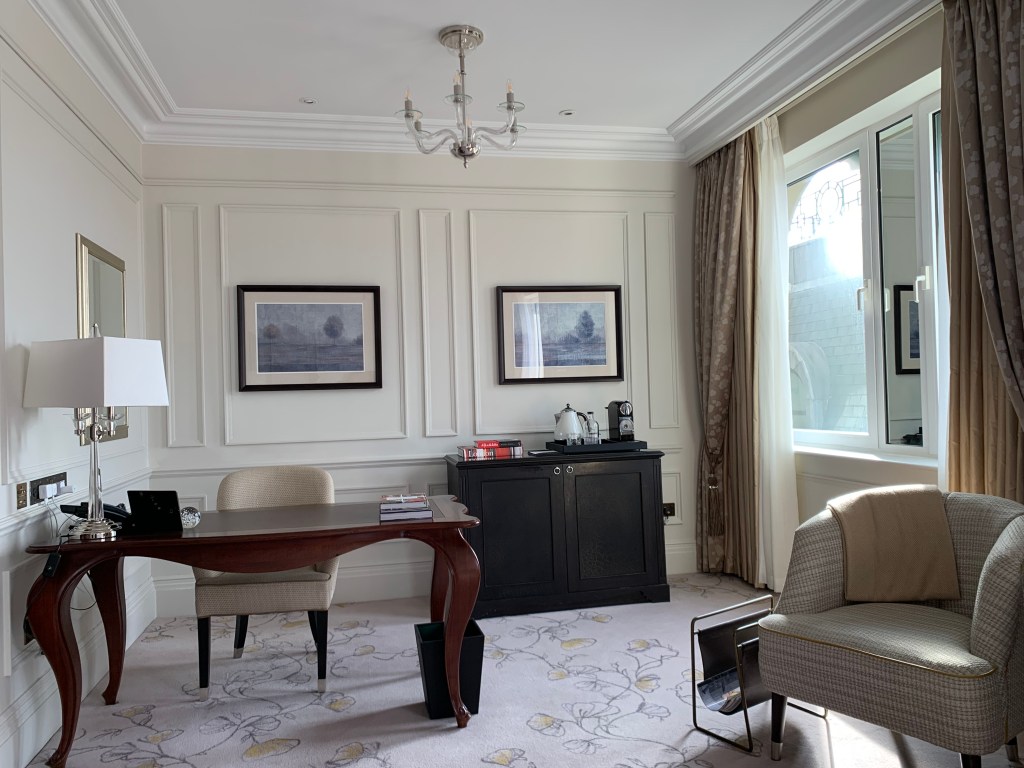
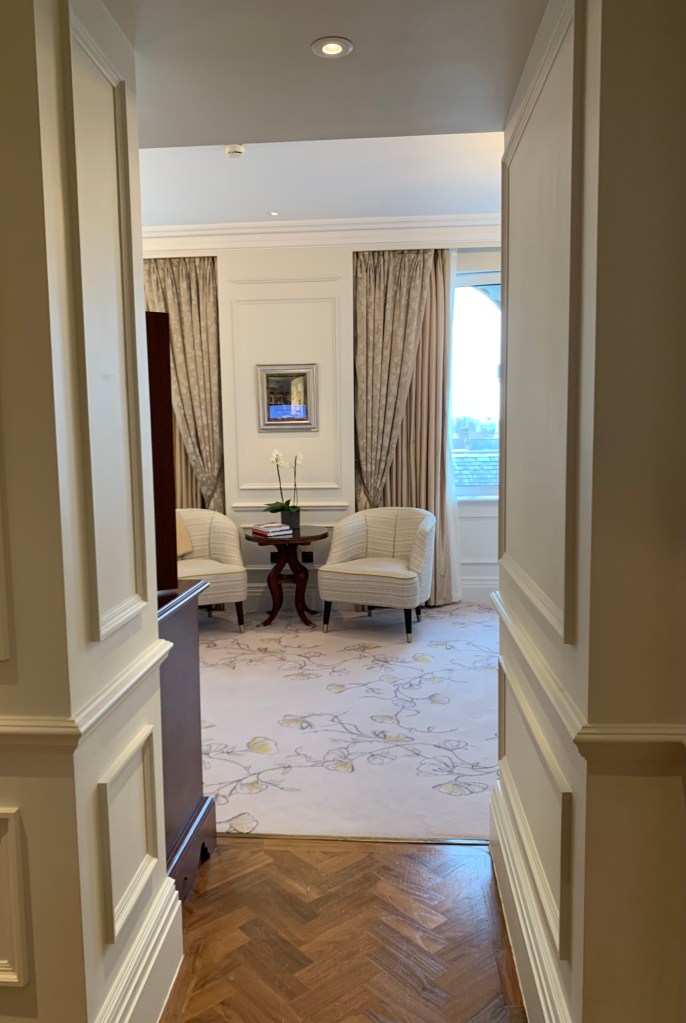
Within 45 minutes, we received word that our room was ready, so we returned to the club to pick up our key. We entered our room on the 4th floor to find sun streaming in through two large windows. A parquet-floored entry foyer with two closets to the left and the bathroom to the right led into a large room with a king-sized bed, a seating area, a coffee bar and an ample work space with a desk that faced into the room. While our tastes tend toward the modern, we had to admit that the traditional room was lovely. Books about London, a live orchid, paintings that looked to be more than simple prints, and a framed picture of the hotel’s chefs in 1907 along with a glass paperweight on the desk gave the room a distinct personality. As we were settling in, a bowl of fruit and box of chocolates arrived (the fruit would be resupplied throughout our stay).

The elegant bathroom included a deep tub, a separate water closet and a shower with some of the most amazing water pressure we’ve experienced in a hotel. Langham’s signature color is pink, and the color appears throughout the hotel, but the effect is not overly feminine. The delicate pink is balanced by dark woods and marbles, both of which featured in the bathroom. We loved the hotel’s bath products with their ginger flower signature scent, and the bamboo shoot on the vanity brought life to the space.

We used and appreciated all of the room’s amenities. From the multiple choices of china for our coffee to the fluffy Frette robes with slippers properly sized for each of us (the first time the small-footed of us had slippers that fit), we felt pampered. We loved that we could open the windows to sleep with fresh air coming in, and the storage allowed us to tuck all of our personal belongings out of sight.


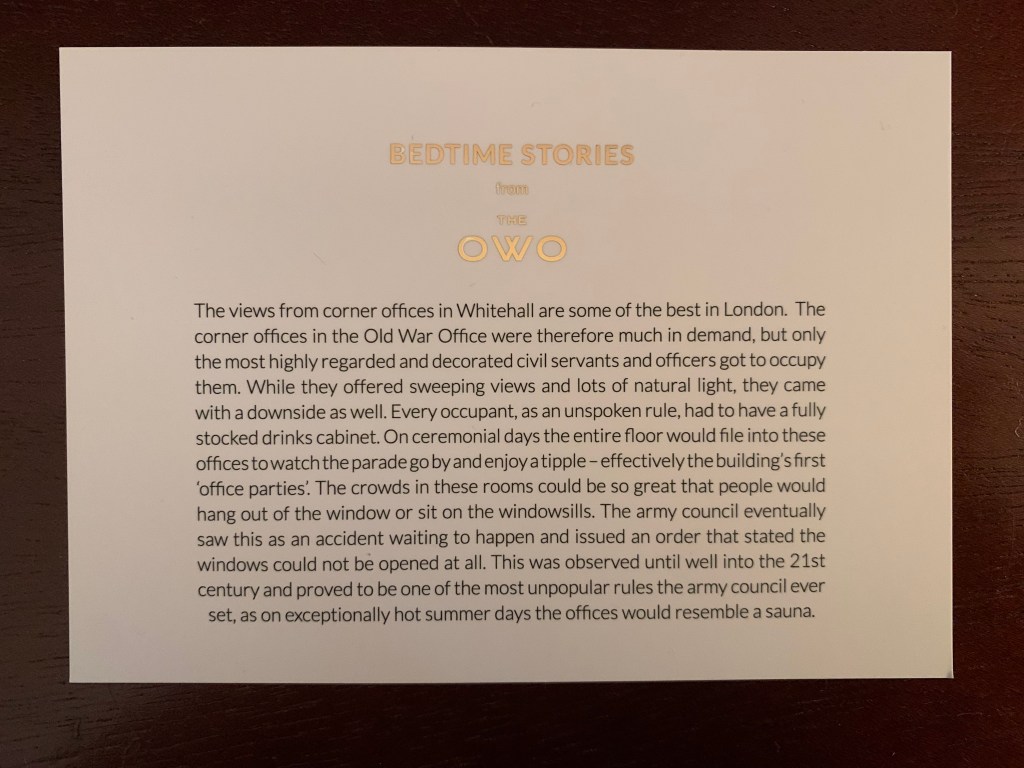
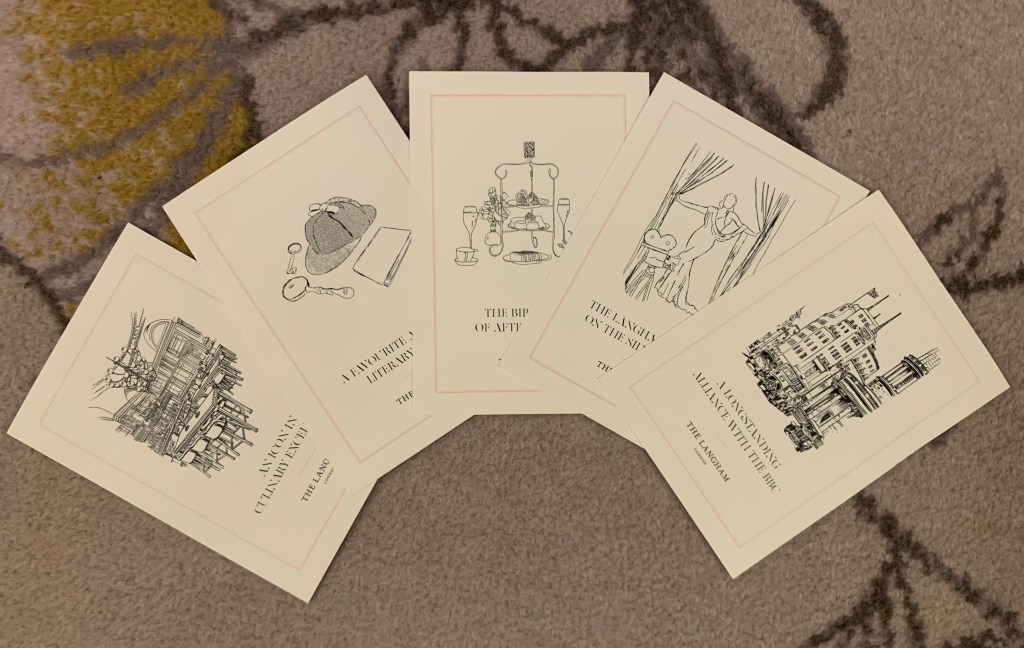
A hotel itself is just part of the experience, and we have come to appreciate top-notch service when we encounter it. The Langham’s service felt flawless to us, and everyone we encountered was a pro. Our room was serviced multiple times during the day, but we were never interrupted. We had breakfast each morning in the hotel, and by the time we returned, the housekeepers had come and gone. Turn-down service was done when we left for dinner, whatever time that was. One of our favorite nightly rituals became anticipating the linen postcard with a story about The Langham that was left on our pillow each evening. We learned, among other things, about The Langham’s longstanding alliance with the BBC, about Langham appearances on the silver screen, and about the literary icons who frequented The Langham.

During our stay, the concierge team secured last-minute reservations at Trishna, a lauded (and quite small) neighborhood restaurant; porters held umbrellas over our heads as we got into taxis, and staff in the club learned our coffee preferences after the first day.


One of the best things about London is its eating and drinking establishments; it really is an embarrassment of riches. And some of those riches are right in The Langham. The room we chose included access to The Langham Club. When we booked the room, we thought the club might be a convenient place to get a cup of coffee before heading out on the day’s adventures. We’ll admit that we didn’t have high expectations. That perception was misplaced. The club – open throughout the day with a changing menu of food and drinks – became our living room. The promise of a coffee gets us out of bed each morning, and the coffee was delicious. Of course, the pastries, salmon and caviar, and eggs cooked to order didn’t hurt. In the club, we could also connect with a staff member who offered concierge-level services, and when we popped in during the evening, champagne flowed liberally.

During our stay, we also patronized the hotel’s pub – The Wigmore – twice; we had a drink in the Palm Court one evening and breakfast one morning; and we also visited the hotel’s bar, Artesian, and had a lovely conversation with our Polish server who talked to us about drinking Zubrowka vodka as a young person. (We’ll admit that we’ve had our fair share of this particular vodka, which we discovered at our neighborhood Russian restaurant). Each of our experiences at the hotel was well worth using as one of our limited London eating and drinking opportunities.


The Langham London

If you’re a regular reader of our blog, you’ll know that we tend to choose smaller, independent properties when we travel, and we certainly aren’t loyalists to any brand. But we both must admit that our two experiences at The Langham have made us think about where we might visit next because it has a Langham hotel. Can two wonderful experiences become three?

The Langham Chicago

We don’t imagine we’ll ever become exclusive to a particular hotel brand, but it’s fun to see how a brand can be expressed in different places. The Chicago and London Langham hotels are two very different properties, but they share things that we appreciate and that we would seek out. Stay tuned for where we next discover a Langham hotel.


  • The Langham London
  • 8-night stay: February 21 – March 1, 2025
  • Executive Club Room, #405

Back to HOTELLING home

Milan, Italy ~ Senato Hotel Milano

In a fashionable and sophisticated city like Milan, the experience of searching for a hotel is an embarrassment of riches. Beyond international chains like the Mandarin Oriental and Four Seasons, Milan hosts dozens of smaller independent hotels that, in our exploration, looked promising. In the end – and following the advice of Condé Nast and its “best boutique hotel” designation – we chose Senato Hotel Milano.

Senato Hotel is the former home of the Ranza family, who converted their neo-classical residence on Via Senato into a hotel and now operate the 43-room property. We arrived via taxi from Milan’s central train station and stepped from the almost-always bustling street (Via Senato is one of the roads that rings central Milan) into a tranquil lobby that adjoins the central courtyard, the expanse of which is covered by a shallow reflecting pool. Because we were quite early and our room wasn’t ready, we settled into the garden space of the café for a cappuccino and the “salad everyone loves” (we loved it too) before checking into our room. On our way back to the registration desk, we paused to admire the tillandsia collection, which is tended by Milan-based gardener-landscape duo Bonanomi Benatti.

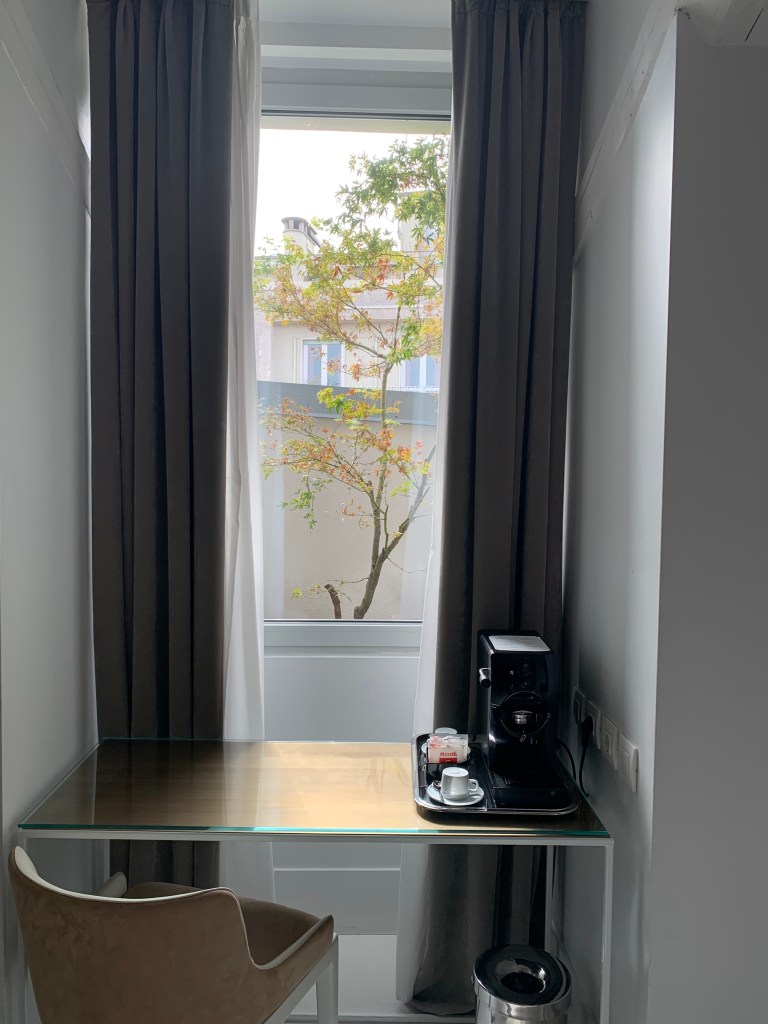
As we exited the elevator on the top floor, we were greeted by a skylit corridor with angled roof beams and only one other room besides ours. We felt a little like we had been given a passkey to a secret attic chamber. Our room at the end of the hall – the Senato Junior Suite –  was really three rooms: a living space with daybed, desk, coffee and tea bar, and large closets; a bedroom with a big terrace, and a beautiful Carrara marble bathroom with a separate water closet.

In our suite, the white floors, walls, and beamed ceilings served as a neutral and cheery palette to highlight the custom-designed furnishings made by Milanese craftspeople and well-chosen lighting and accessories. The room felt clean and uncluttered, and we appreciated that every surface wasn’t covered with something. This allowed the architectural elements of the room to shine, and we loved that the structure of the building was incorporated into the room’s design. (Side note: On this holiday, we had an unplanned overnight in Amsterdam, and were able to stay in one of our very favorite hotels, The Dylan. The room at The Dylan was also on the hotel’s top floor and featured attic-like ceiling lines with exposed beams. Both Senato and The Dylan do a fabulous job of capitalizing on a building’s architecture.)

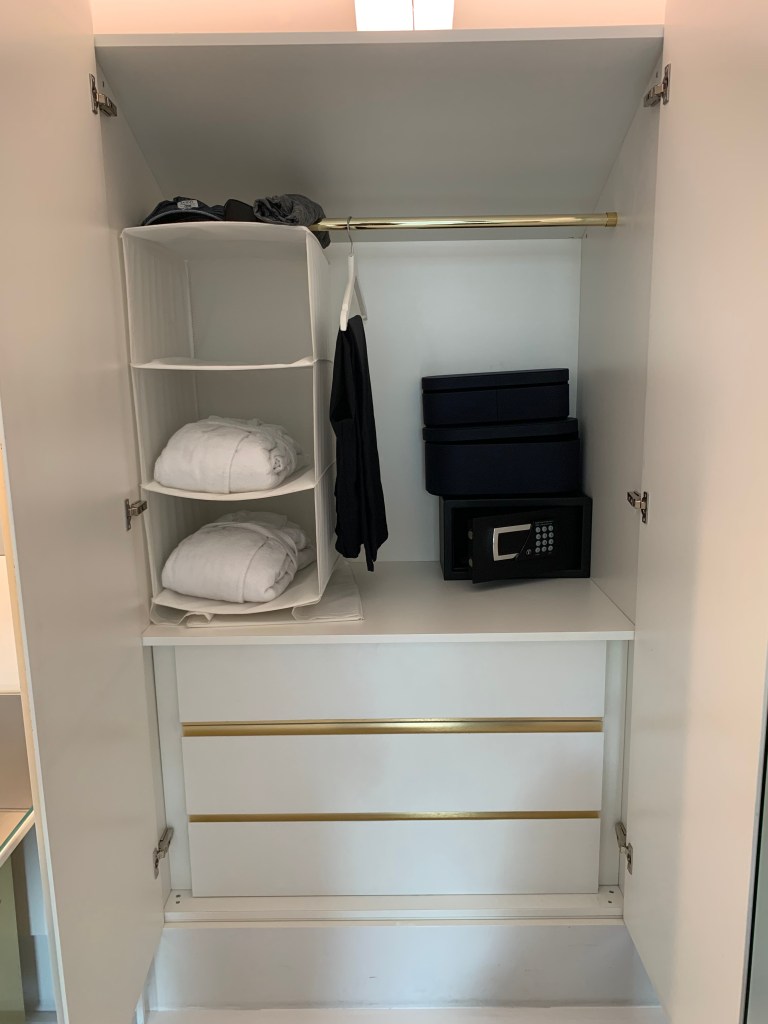
When we’re staying somewhere for more than one night, we like to unpack and stow away our luggage, which is never more than two carry-ons and a backpack. The large closets in our suite featured drawers, shelves, and hanging space that allowed us to put our clothes and our bags behind closed doors. In the bathroom, a long vanity with two sinks provided room for both of us, and we appreciated the separate water closet with toilet, bidet, and free-standing sink. The bedroom – also simple but beautiful – was oriented toward the terrace and the courtyard; we loved sleeping with the doors open and couldn’t hear any of the activity down below.

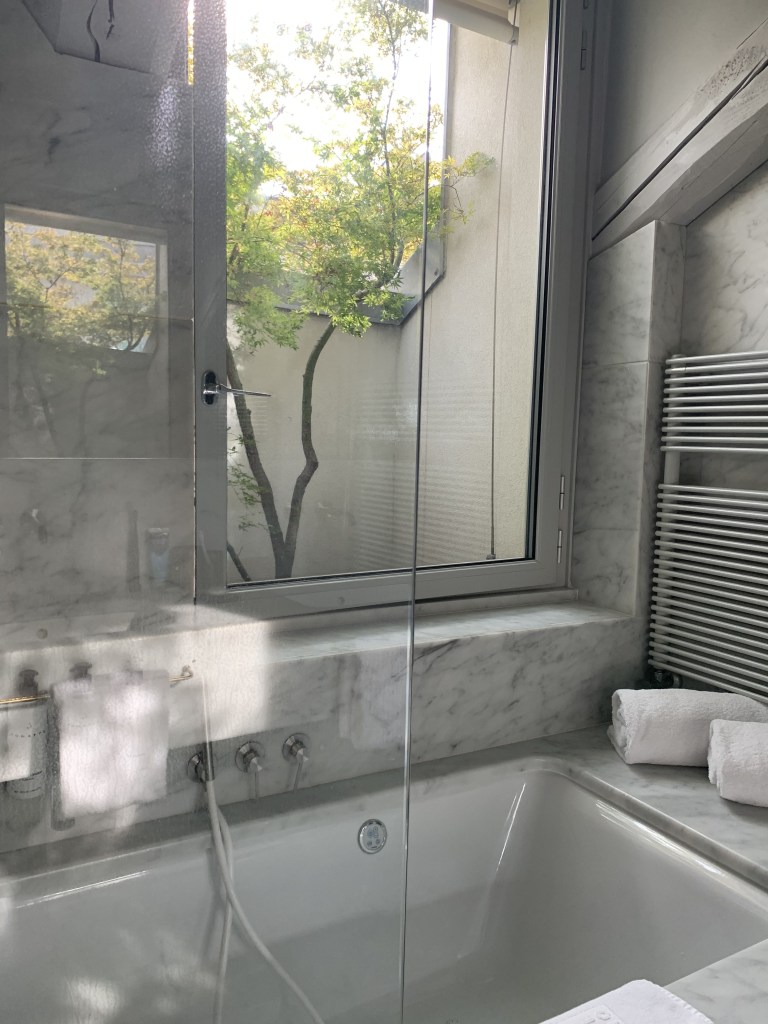
Our room featured two dormer windows oriented toward Via Senato: one in the living room and the second adjoining the jacuzzi tub and shower. The particular location of the windows in relationship to the rest of the building was the topic of some debate because we couldn’t see them from the street, but we eventually concluded, based on the footprint of the 5th floor, that they were likely set back from the rest of the building. Both of these windows were encased in short walls, and a lovely little tree – perhaps a maple or plumb – was planted outside each one.

When we were at the hotel in early October, the trees were just beginning to change color for autumn. Taking a bath or shower in a rooftop room with a view out to a live tree made our suite feel like a sanctuary. We will note that neither these windows facing the street nor the glass doors to the terrace afforded any kind of panoramic view, but that didn’t bother us; after all, a view is what the terrace of the Duomo is for!

Our second favorite feature of the Senato suite was a marble sculpture that served as a speaker for playing music from our iPhones. The OVO amplifier worked so well that we were tempted to bring one home, and the hotel shop sells them, but carrying home something made of Carrara seemed a little weightier than what we had in mind.

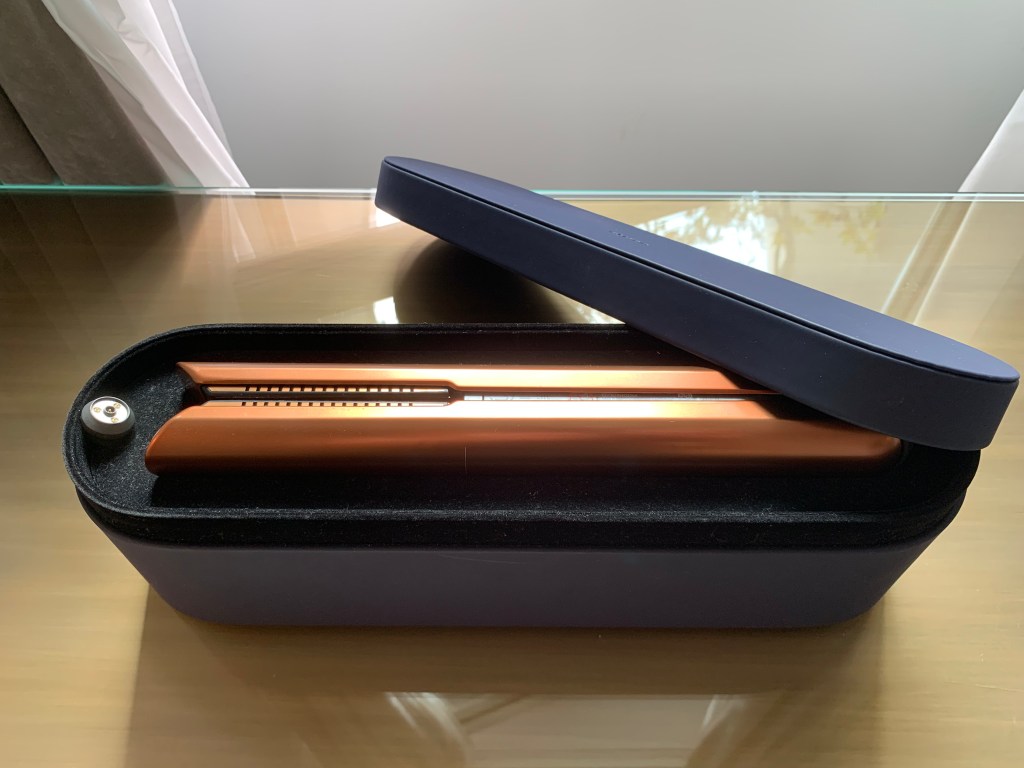
Following the theme of design and function, we both loved the espresso machine that allowed for a customized espresso shot. And for one of us, the Dyson hair dryer and hair straightener – the equipment our hair stylist uses – felt luxurious and came in very handy on the days it rained.  

We arrived in Milan after a short stay in Como at a vacation apartment that we found on the Plum Guide. While that experience was worth trying, we looked forward to checking into a hotel, and we were hopeful that our experience at Senato would match our expectations. It did; we loved everything about Senato. From the central location that provided easy access to all of Milan’s charm to the understated calm of our top floor oasis, everything worked. The Ranza family can certainly count us among its fans, and we can’t wait to return to get to know the hotel and Milan a little better.

Back to HOTELLING home

Paris, France ~ Maison Souquet

This stay in Paris, our first in 15 years, came after spending four days in Lyon in the modern, light, and airy Villa Maïa. For Paris, where we had four more days, we wanted something that would match the mood of the city and of Montmarte, the neighborhood we would call our home base. Searching for the right hotel in Paris can be overwhelming – there are just so very many choices – but Maison Souquet kept appearing on our go-to lists, so we decided to give it a go. When we made our booking, only two “De Luxe” rooms were available for all four nights, and the team at Maison Souquet sent pictures and helpfully described the features of both: peaceful courtyard view or street view of Paris rooftops; a small balcony four floors up or windows on the first floor; shower or deep bath. They also promised to let us know if a larger junior suite became available for the duration of our visit. With Paris Fashion Week just ending and the World Cup Rugby Championships arriving in the city along with us, we were glad to secure a room.

Maison Souquet is steps from the Blanche metro station down one of the streets that run south from the Moulin Rouge. It’s officially in the 9th arrondissement, right at the bottom of Montmarte. As a former brothel (the hotel is named after its madame) the hotel’s exterior is unassuming, and the two red lights outside the front door were the landmarks we used to find it the first time and on all of our returns. Immediately upon entering on our initial arrival, we felt as if we had entered a secret sanctuary in plain sight of the hustle and bustle – and quite honestly, the tourist spectacle – just outside. The hotel’s sumptuous design embraced us: low lights, dark hues with voluptuous textiles on the furniture and the walls, a candle burning with the hotel’s signature scent, and a warm welcome from two members of the Maison Souquet team. It was so different from our typical tastes, but oh-so beautiful.

As one staff member attended to our registration details, another gave us an introduction to the hotel, walking us through the multiple rooms on the ground floor that the brothel’s “guests” would visit: the reception to meet Madame Souquet, the inner salon (now the hotel’s beautiful bar) to meet the women of the brothel, and the parlor where men could have a pre-departure refreshment. We also got a description of the basement spa, which is available for private use by guests, and an offer to use the lovely backgammon and chess sets displayed on a shelf in the salon. By the time we were done with our tour, our luggage had been delivered to our room, and we were escorted up.

Upon advice of the hotel team, we had chosen the Marguerite room on the fourth floor, a room with Chinese-inspired design. (All of the rooms are named for women who purportedly worked at the brothel and have designs inspired by locations touched by the French empire). Like the common areas on the first floor, our room was decadently beautiful. It was small – not much room for more than a bed and a few beside tables – but the deep red and gold textiles with shiny black lacquer accents created a coziness that made the size feel just right.

The balcony overlooked the buildings across rue de Bruxelles and brought in the sunshine during the day. Even though the room was petite, we found a place for all of our things and even managed to stow our luggage away in the spacious closet. Our first night in the Maison Souquet brought heavy rain overnight, which we could hear and smell through the open window, and a fantastic sleep with dreams of Paris from days gone by.

On our way to coffee on our first full day in Paris, we learned that the hotel had just received a cancellation for a junior suite, and we were offered the upgrade. We had settled into the Marguerite but thought it would be fun to stay in a second room and also enjoy a little more space for our next three nights. La Païva, on the third floor, gave us more breathing room with a chaise lounge and coffee table, a separate toilet room, and two windows that, this time, looked out to the courtyard. The yellow and black textiles and upholstery were an homage to the Far East, and we especially loved the portrait of the goddess-like woman above the chaise.

Pulling off design like this is not easy. For it to work, it has to be impeccable. No scratches, no stains, no smudges (on the many glass surfaces we encountered in both rooms), nothing crooked or wobbly or drippy. And Maison Souquet did pull it off, in every respect but one. In both rooms, a glaze finish on the black tile floor had begun to peel; at first, we thought the uneven surface was by design, but then we noticed the flakes and knew it wasn’t purposeful. But this won’t last. On our last night during turndown service, the hotel left a feedback card and we made a note – the only suggestion amidst our effusive comments. On our flight home, we received an email from the hotel’s general manager who thanked us for the compliments and noted that the floors are scheduled for repair the next month.

Each night at Maison Souquet, we enjoyed fabulous cocktails in the bar. At the beginning of the week, the scene was quiet and relaxed with hotel guests. By the time Thursday and Friday arrived, we were joined by patrons from around Paris, many of whom looked like they had come directly from one of the Paris Fashion Week shows (from the runways of those shows). In every experience, the bartenders were attentive and generous with advice about their favorite drinks and nibbles. We were just visitors from a Midwestern American city, but we always felt like VIPs. 

This feeling was amplified by the time we spent in the hotel’s spa – just the two of us because we had reserved it all for ourselves. For each night of our stay, we were invited to spend an hour of “privatized” time in the spa. At the designated time, a Maison Souquet staff member picked us up in our room and delivered us downstairs where a ten-meter pool and hammam (steam room) awaited. As the staff member was leaving, she pointed to fresh glasses of water, fluffy towels, the post-spa shower, and a phone on the bench, which she said she would ring five minutes before she would pop down to pick us up. Let’s just say, if every spa experience were like this one, we might never get out to explore the cities on our trips.

Both of our stays in France during this holiday – in Lyon and Paris – were characterized by truly exceptional service. To a person –in email and in-person communications – every exchange we had with the team at Maison Souquet was top-notch. The staff was knowledgeable and helpful but also friendly and never stuffy. They seemed genuinely happy to see us, whether it was during our arrival, on a stop in the middle of the day, or at an early-morning check-out. After our visit, we had a few email exchanges with the hotel manager who had reached out after we left our feedback card. He said he had shared our praises with the team. We hope they all know what good work they do.

  • Maison Souquet, Paris, France, 9th arrondissement bordering Montmarte
  • 4-night stay: October 10-14, 2023
  • De Luxe Room (Marguerite) and Junior Suite (La Païva II)

Back to HOTELLING home