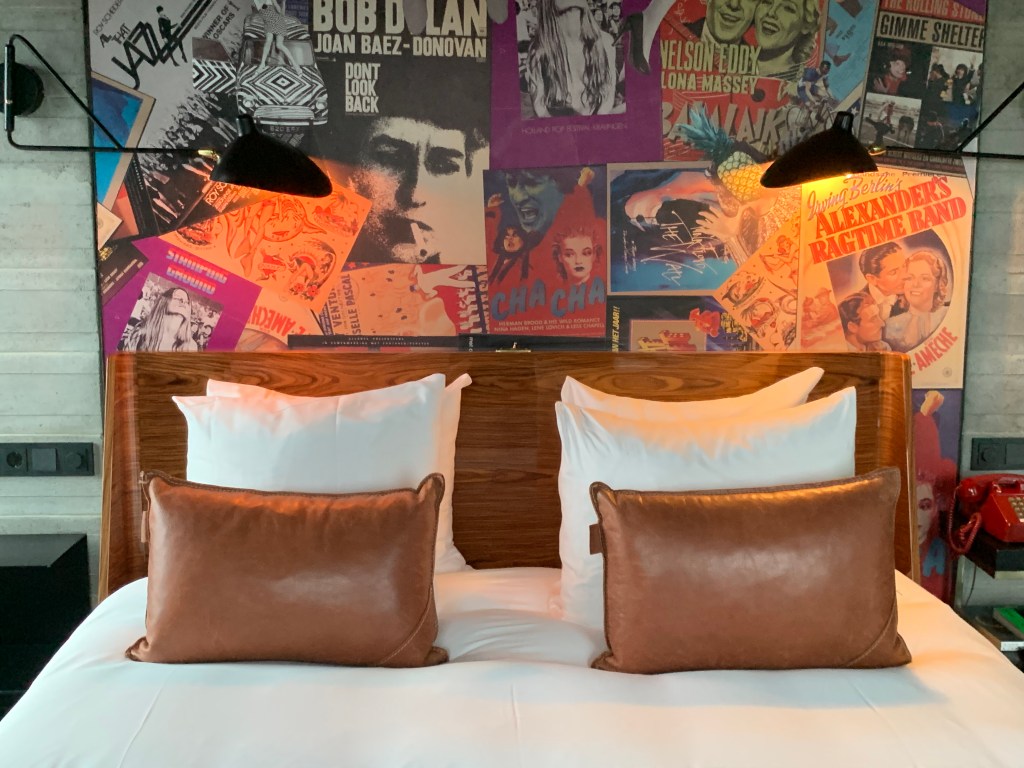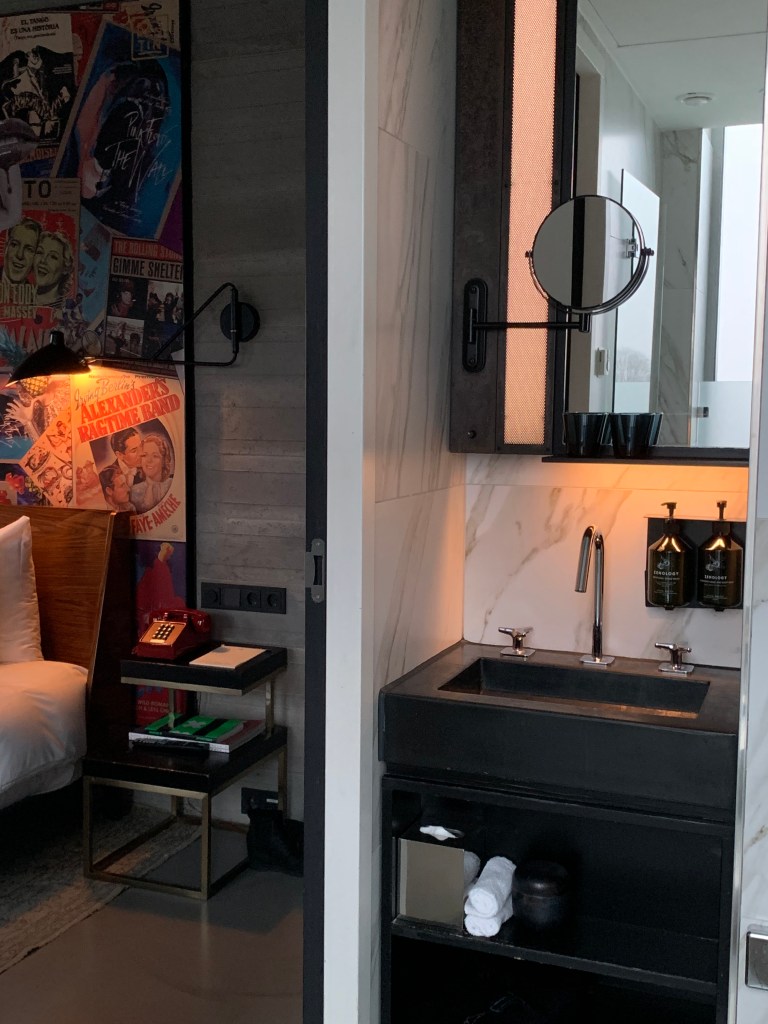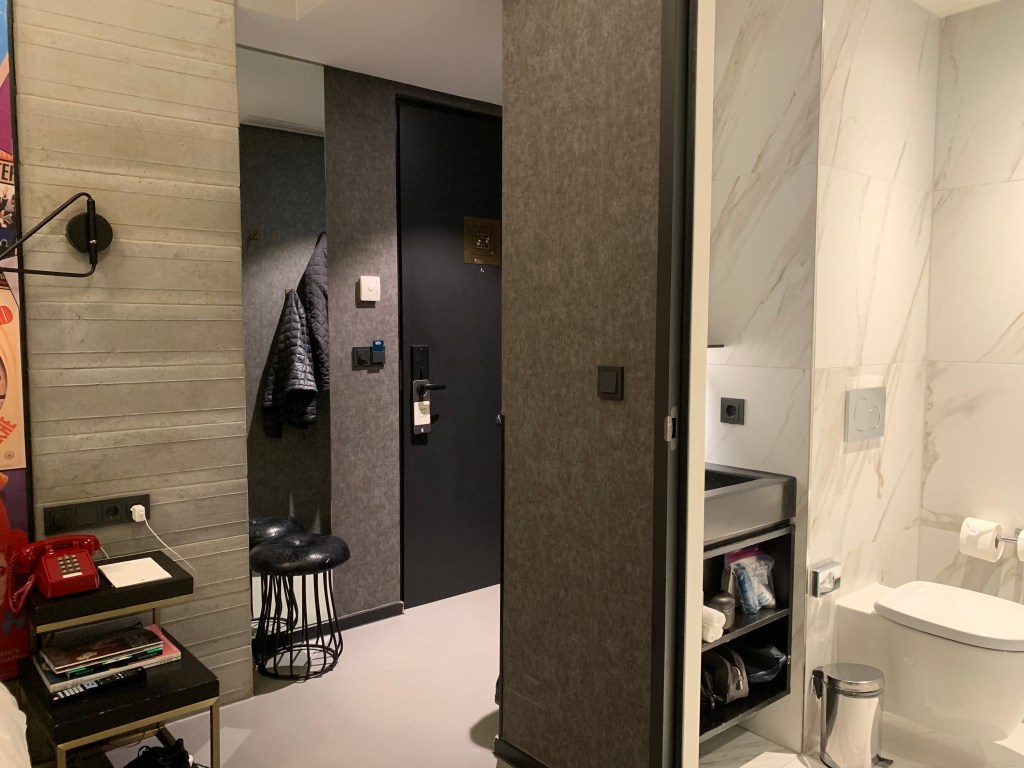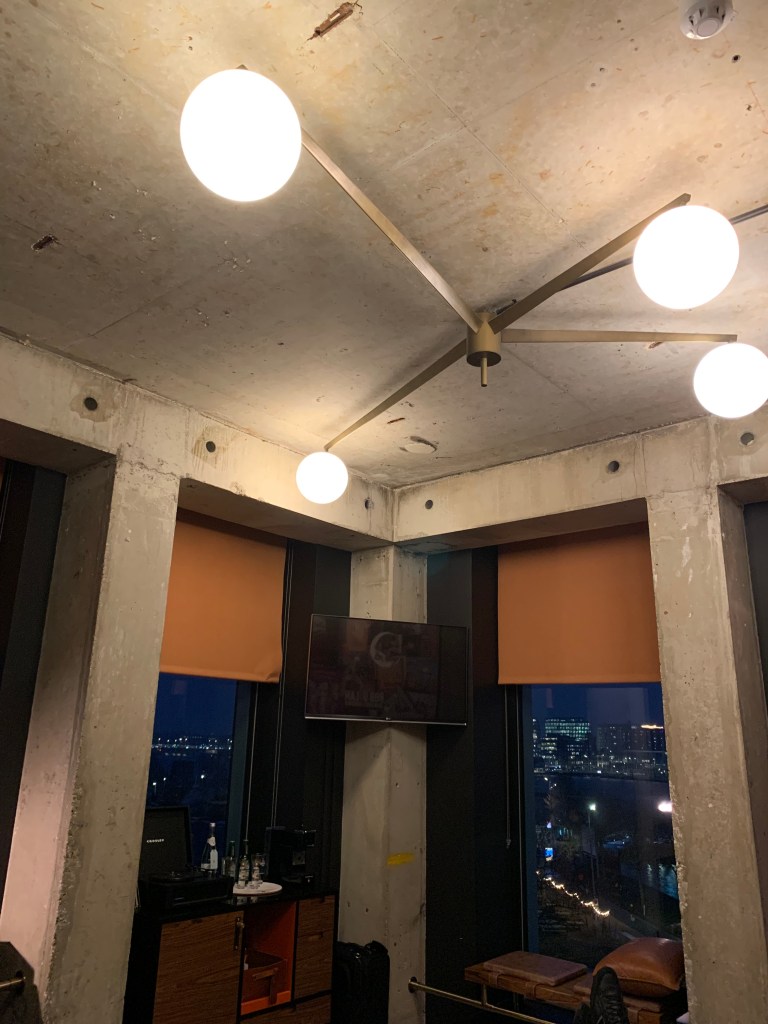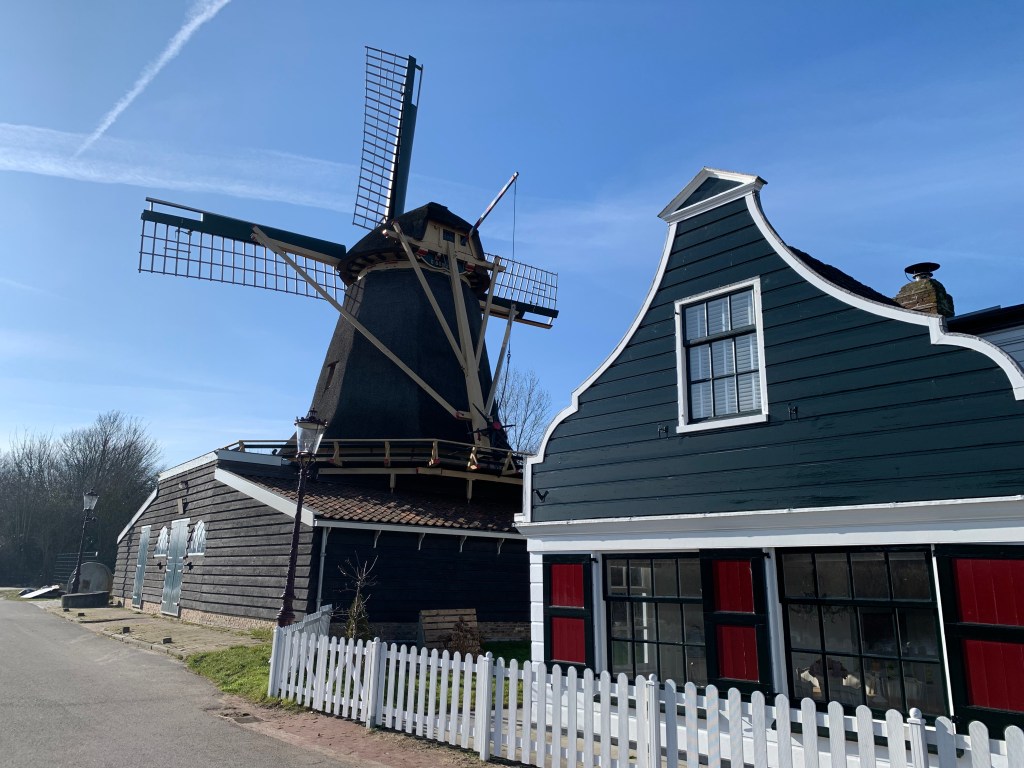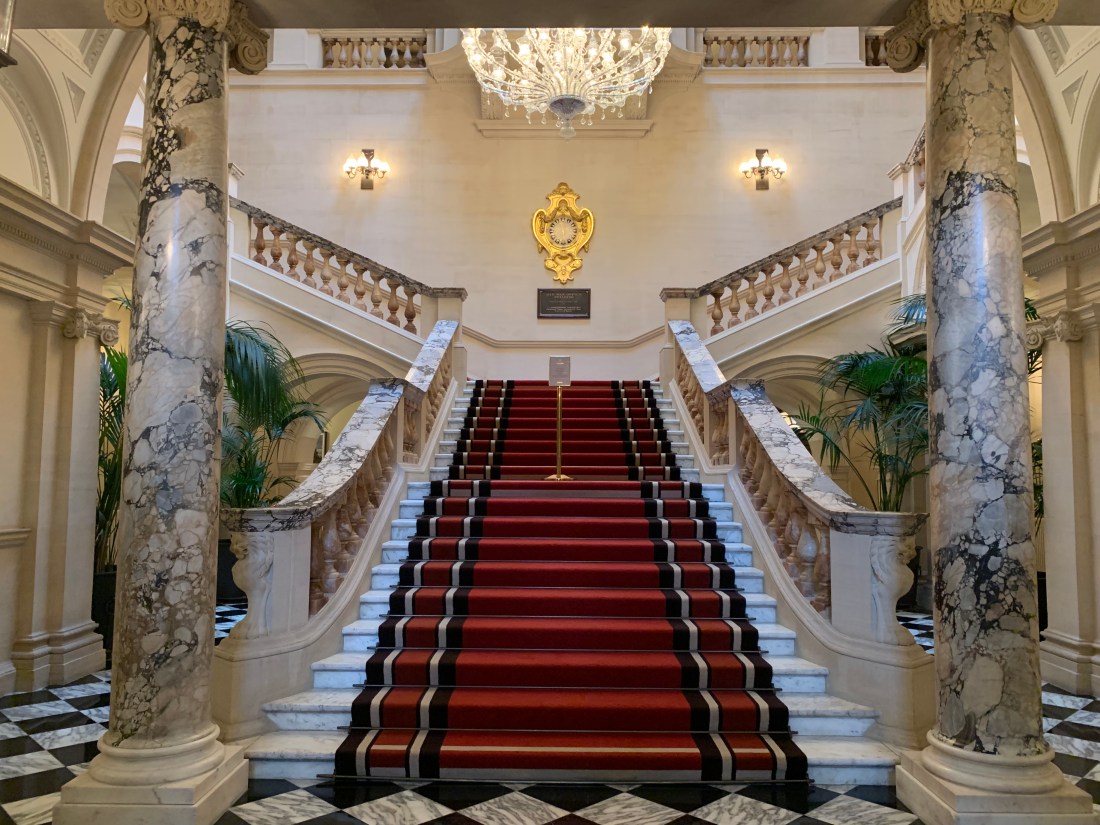
Milwaukee, Wisconsin, USA ~ The Pfister Hotel


We have wanted to see Milwaukee for quite some time (we booked a trip several years ago and had to cancel) and we wanted to take the Amtrak, which departs from Union Station right across the street from our house. Thanksgiving seemed like a good time to travel by train.


If we don’t have a specific property in mind, we typically check a handful of sources to develop a short-list and then narrow down from there. Milwaukee isn’t a big enough destination to be covered on its own in most of our go-to sources, but just Googling “best hotels in Milwaukee” turned up a number of guides that we could then use to triangulate recommendations. We also typically check booking.com to see a property’s overall score and any trends with reviews; we did that for Milwauikee (even though we recommend — once a decision is made — to book directly with the hotel).

For this search, we pretty quickly arrived at a list of three hotels that met our criteria of (1) being centrally located, (2) having an on-site restaurant/bar (in case we couldn’t find a good option on Thanksgiving) and, (3) quite simply, looking interesting.


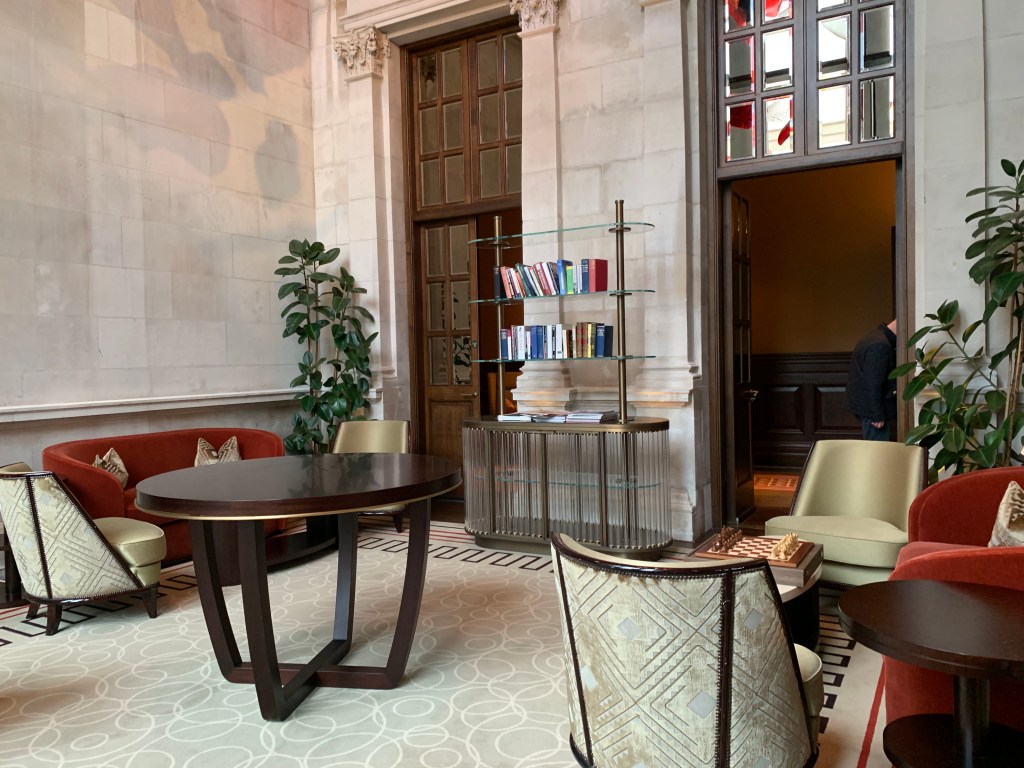
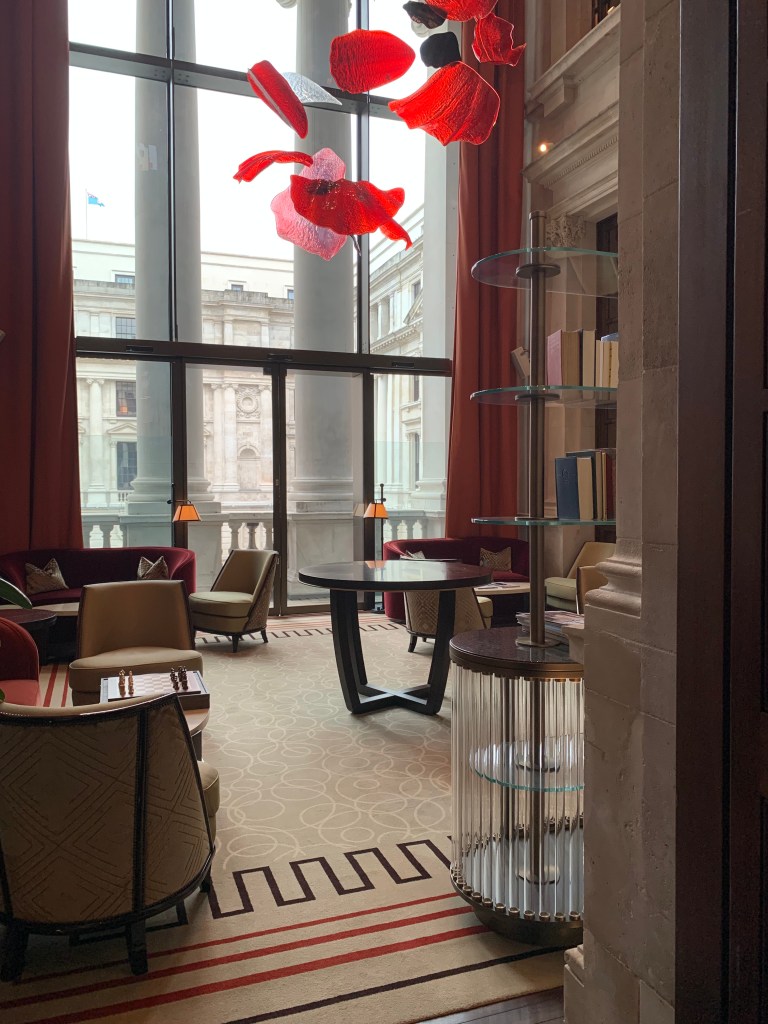
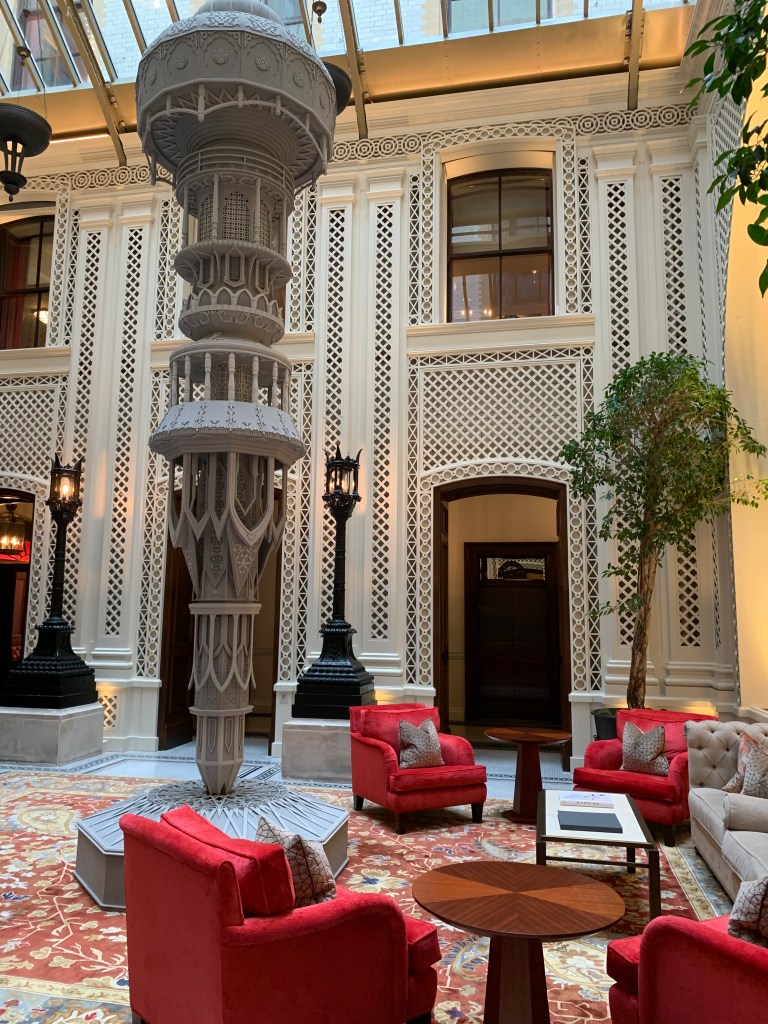
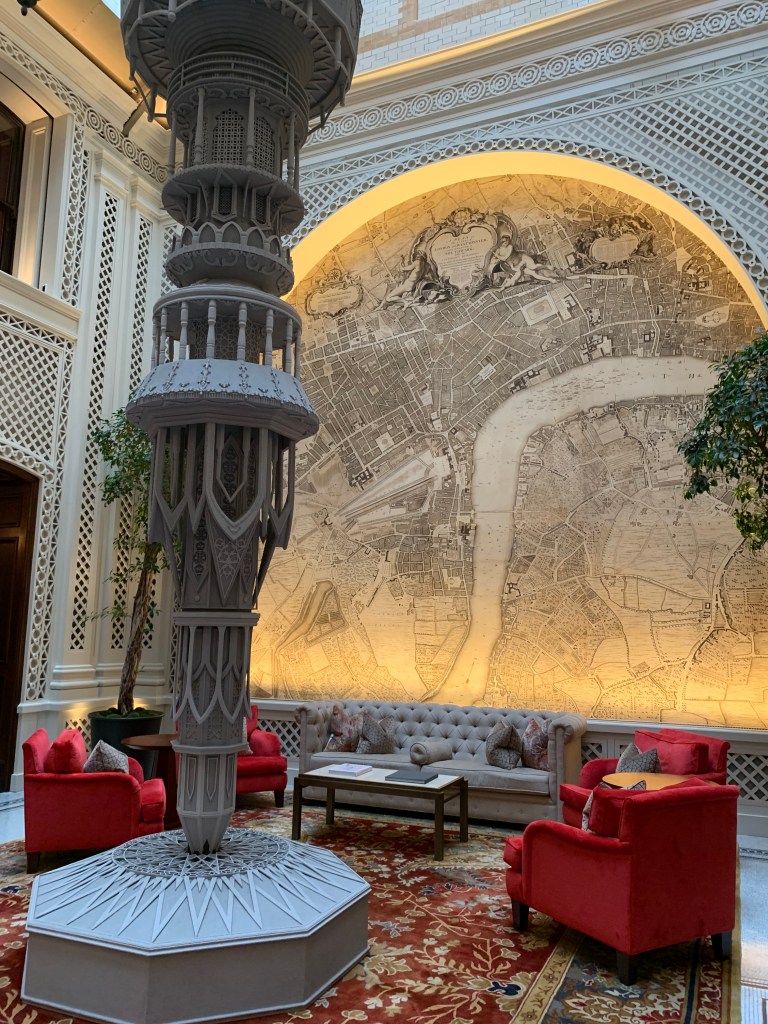
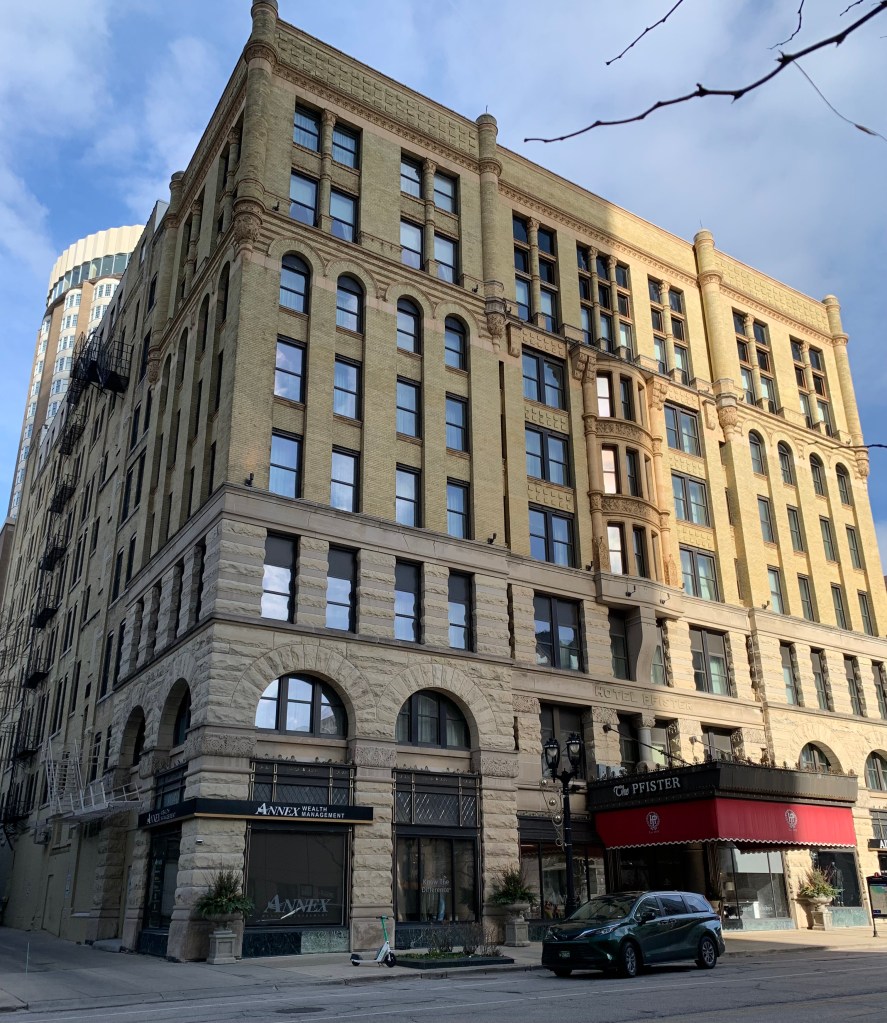
The Pfister is Milwaukee’s historic “grand” hotel — it opened in 1893 — and, based on our research, it looked like a hub of activity for tourists and residents alike. We live a few blocks away from St. Paul’s classic, historic hotel — The St. Paul Hotel — and it always does a great job of celebrating the holidays. We imagined the same would be true for The Pfister. We weren’t wrong.

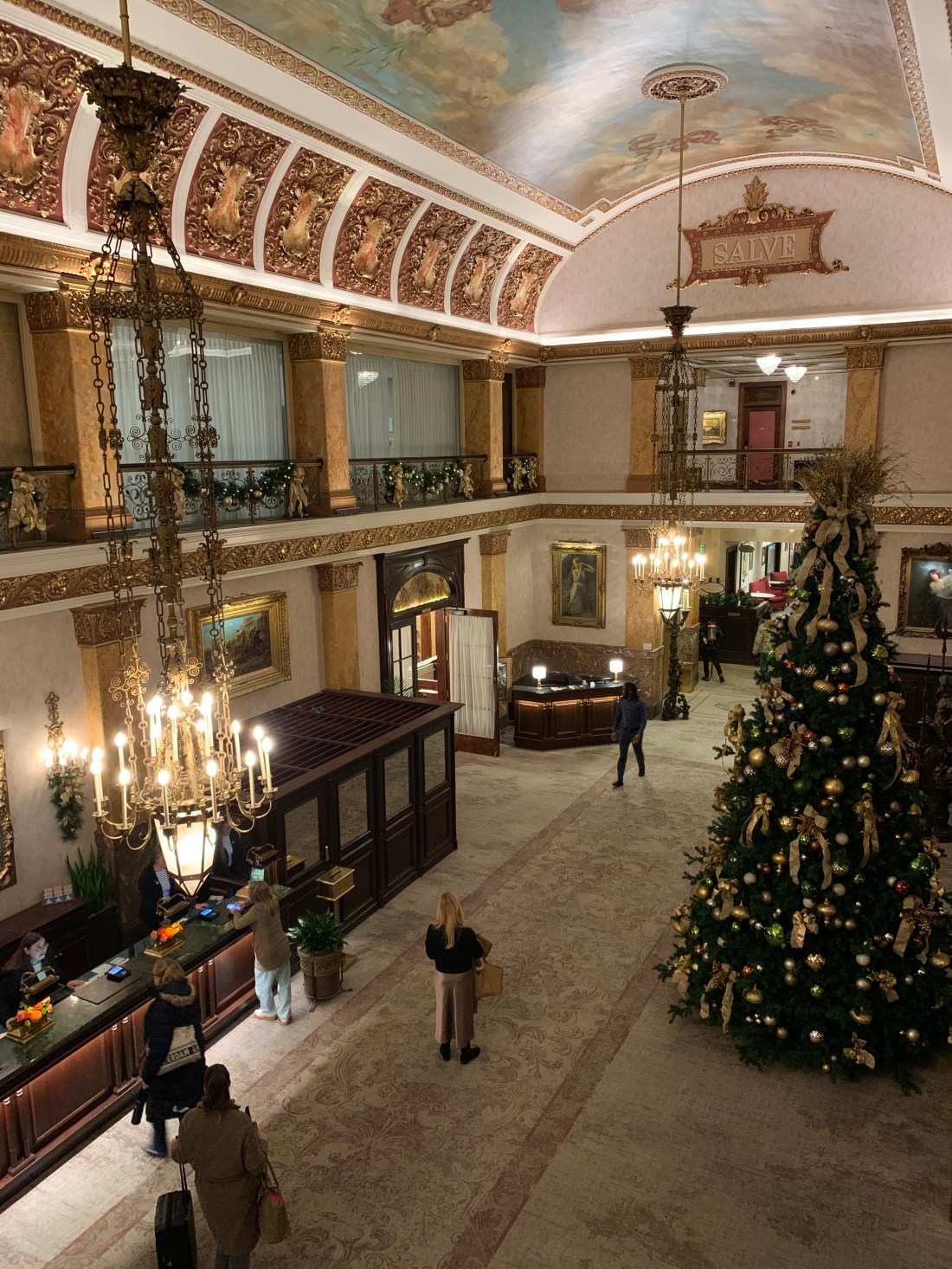
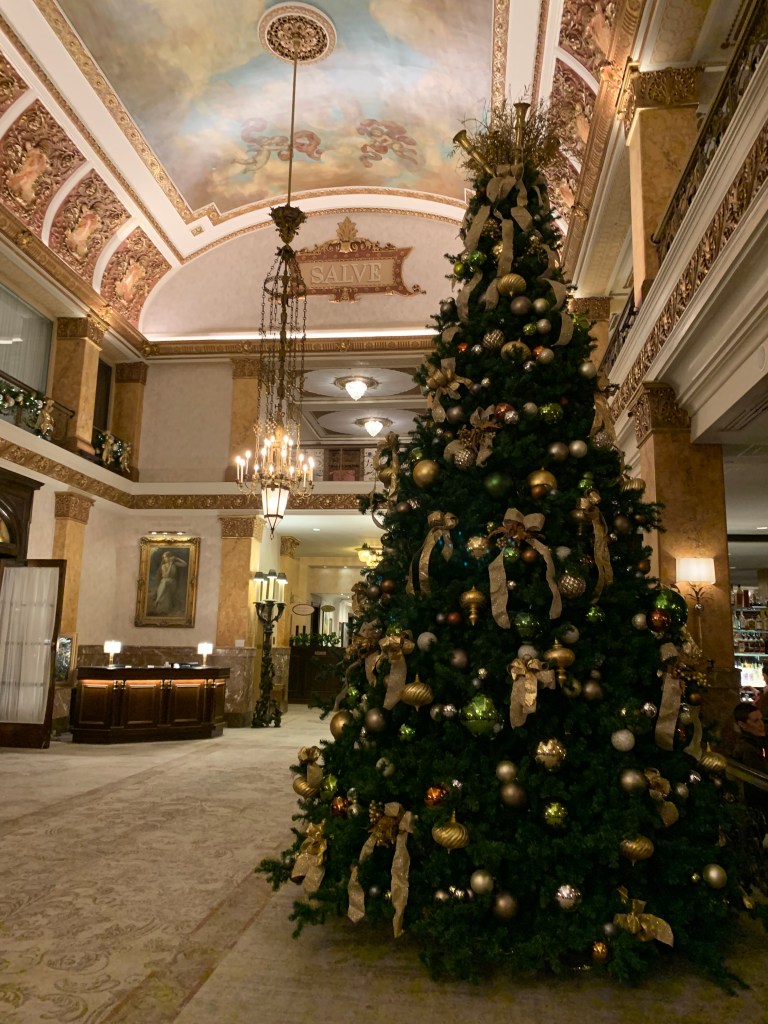
We arrived at The Pfister on a snowy Thanksgiving evening to find the lobby packed: folks heading to dinner at the hotel’s steak house, others enjoying a drink in the lobby bar, and some seemingly there just for the scene. As we checked in, staffers were putting the finishing touches on the lobby Christmas tree, which was a popular site for photos during our two-night stay. We also saw lots of preparation for traditional breakfasts with Santa that started the day after Thanksgiving.


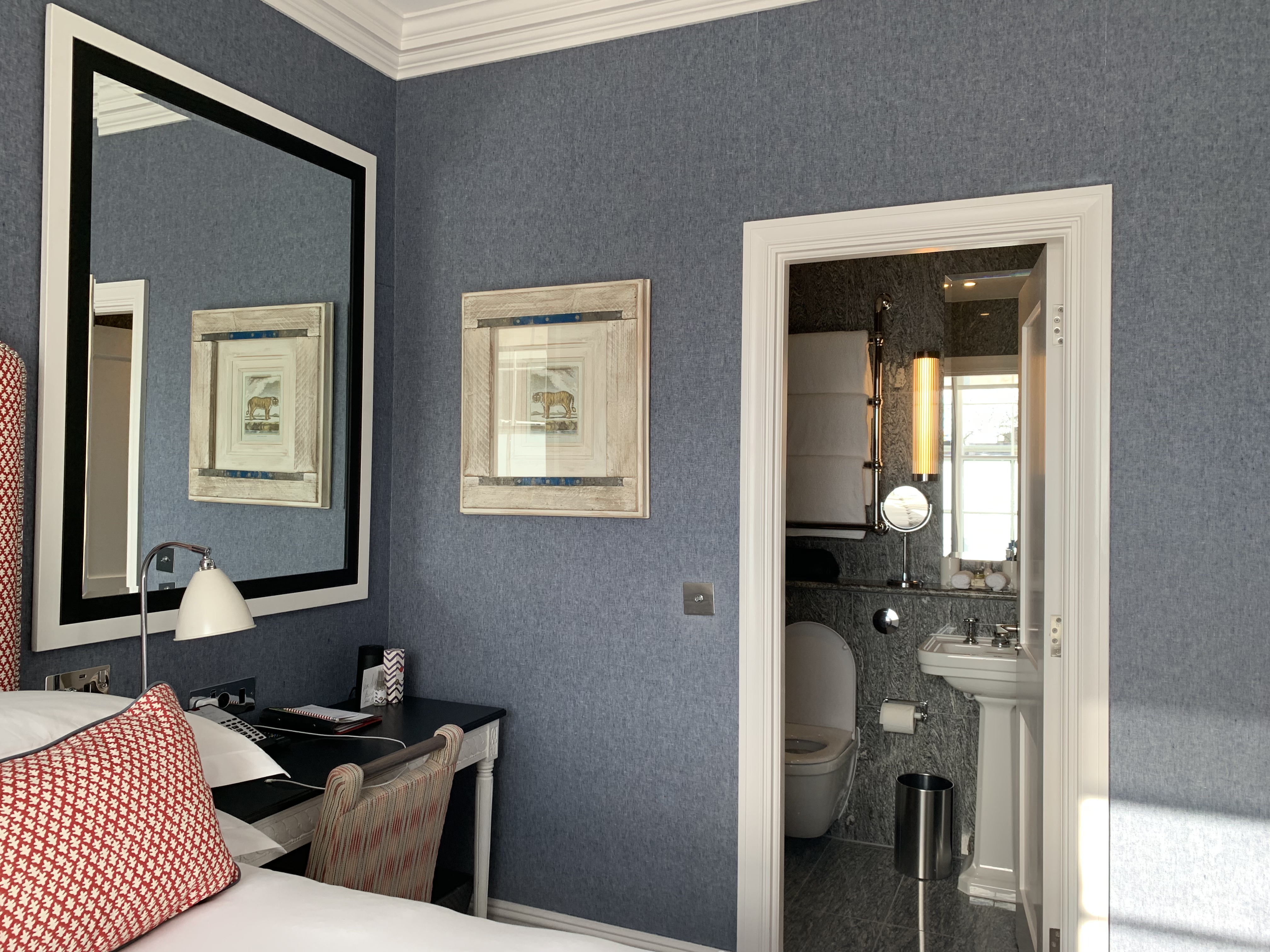
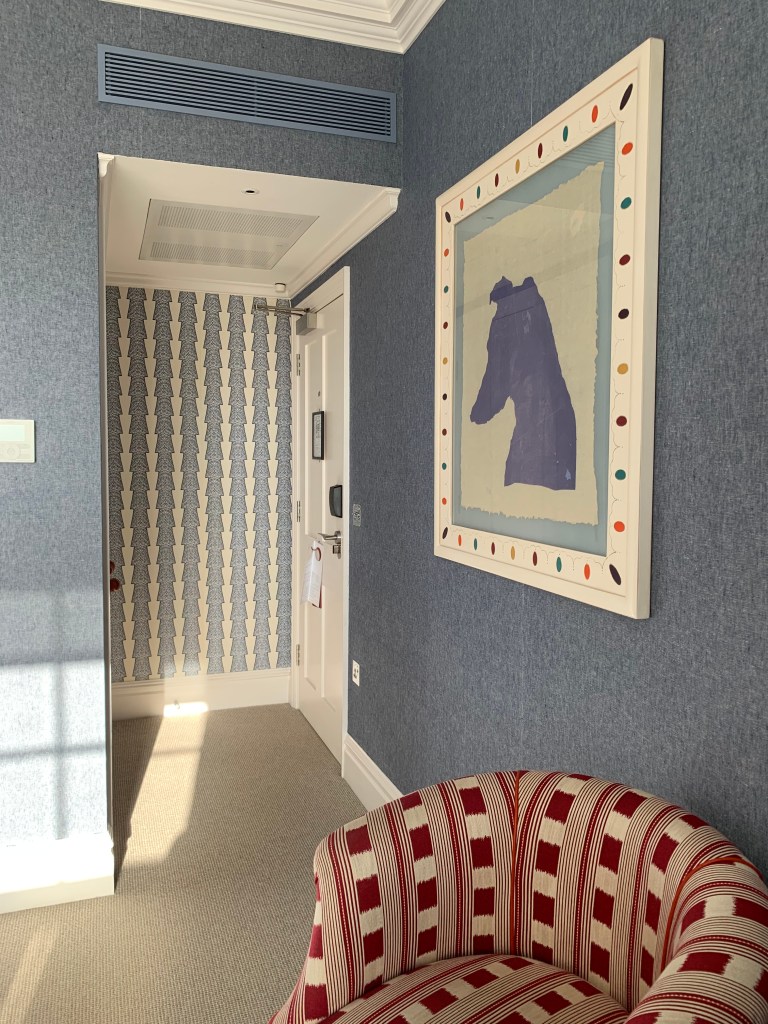
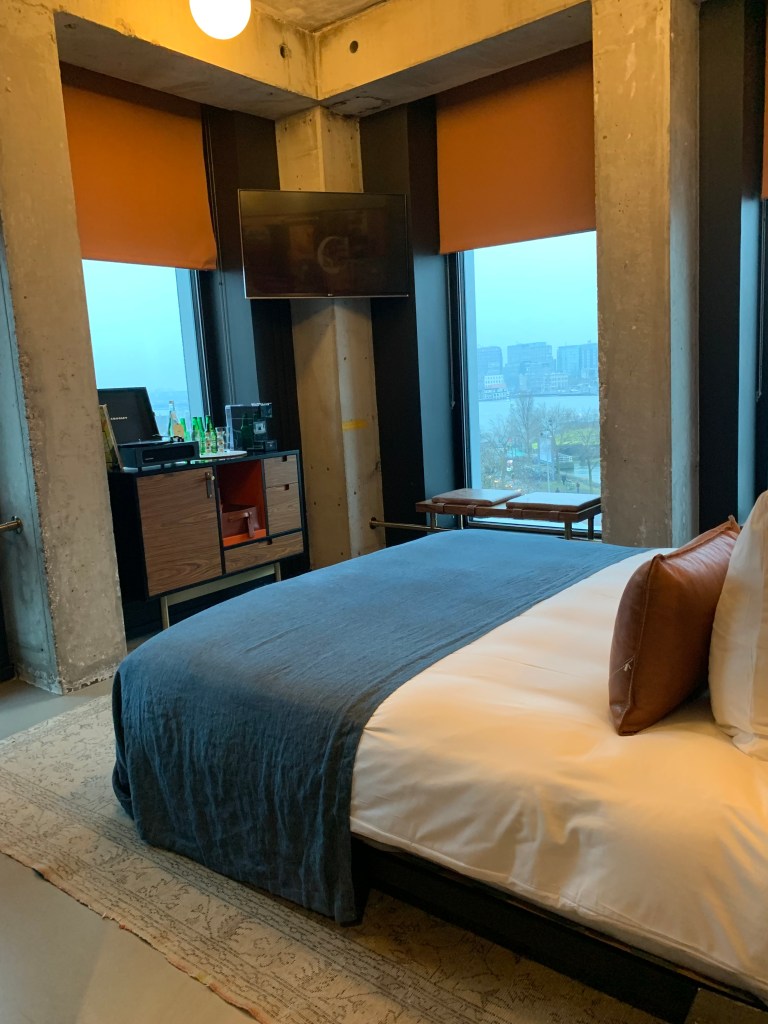
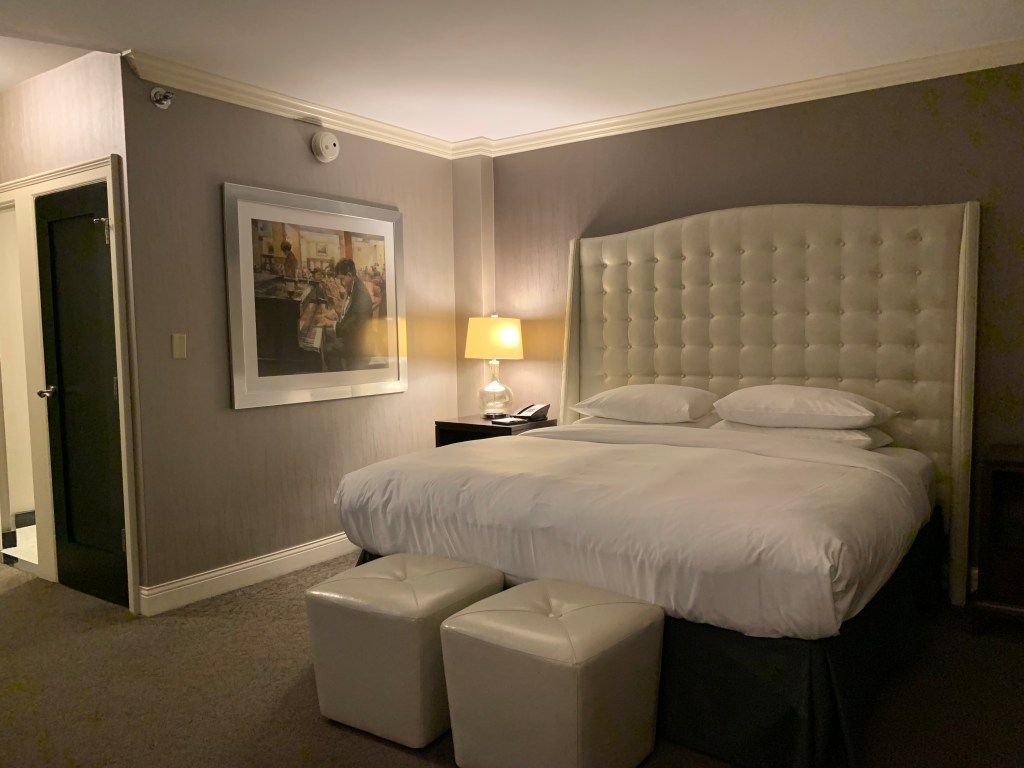
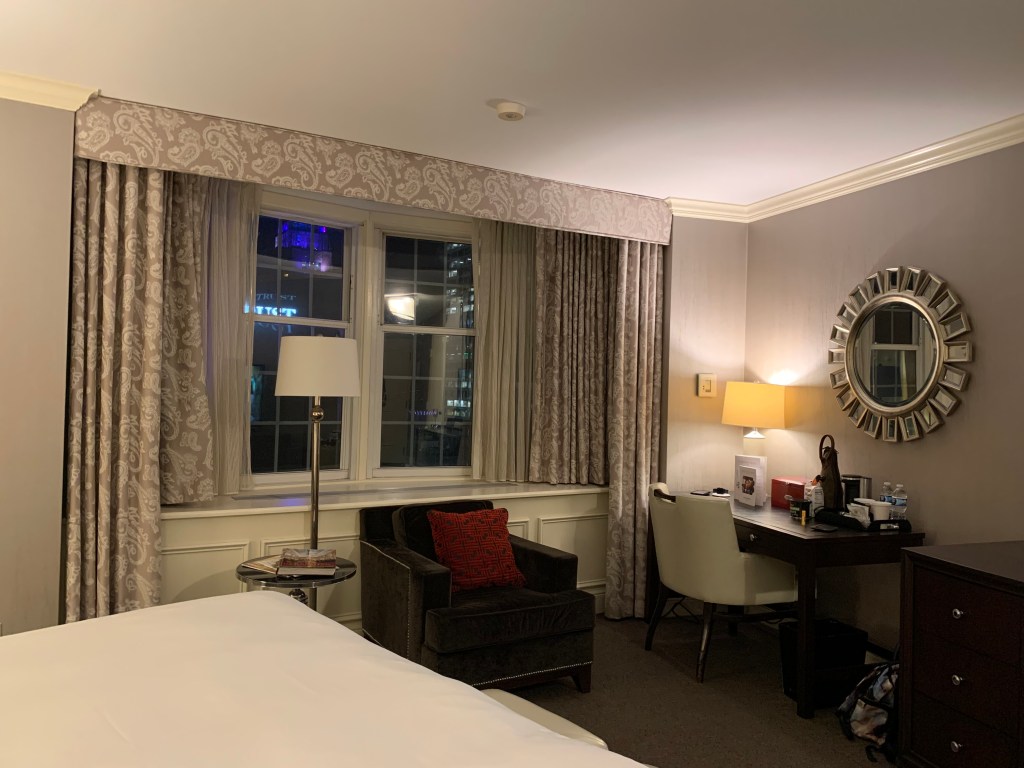
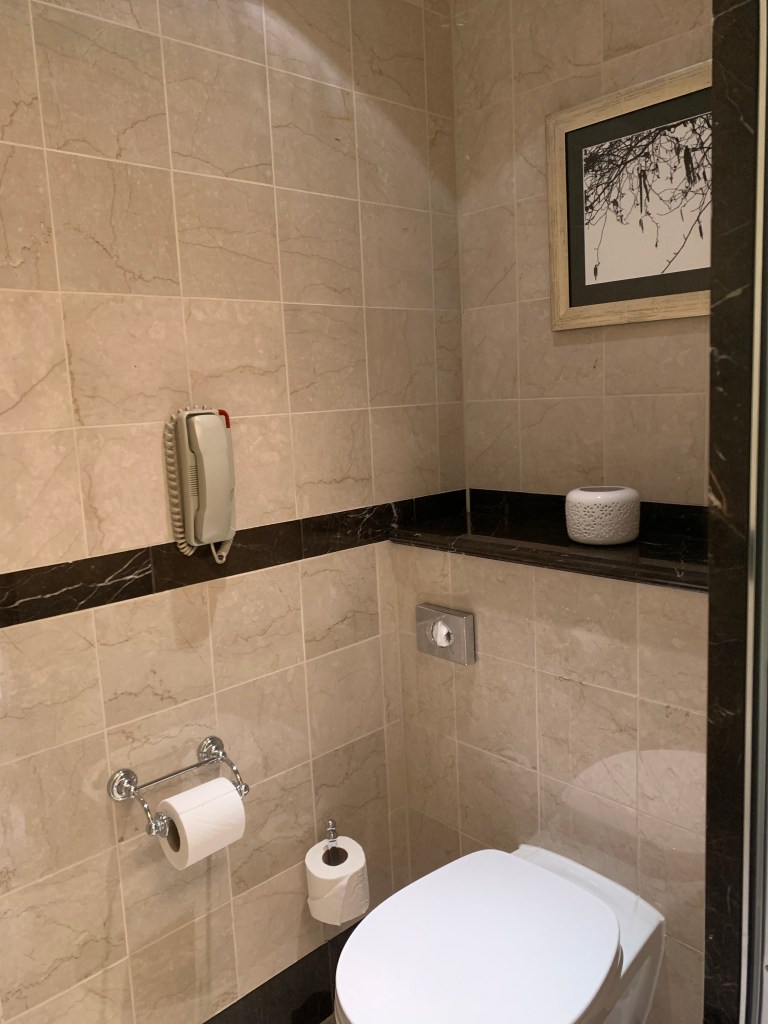
Our “premier king” room — in the tower (aka the round 1960s wing) — was perfectly comfortable. We technically had a view of Lake Michigan, but it was tucked behind other downtown buildings. One cool thing about the Pfister is its commitment to the arts. Not only does it house the largest Victorian art collection of any hotel in the world, the hotel also hosts an artist-in-residence program, and our room featured a print from one of the artists. We imagine that each guest room features a piece from a past artist-in-residence.

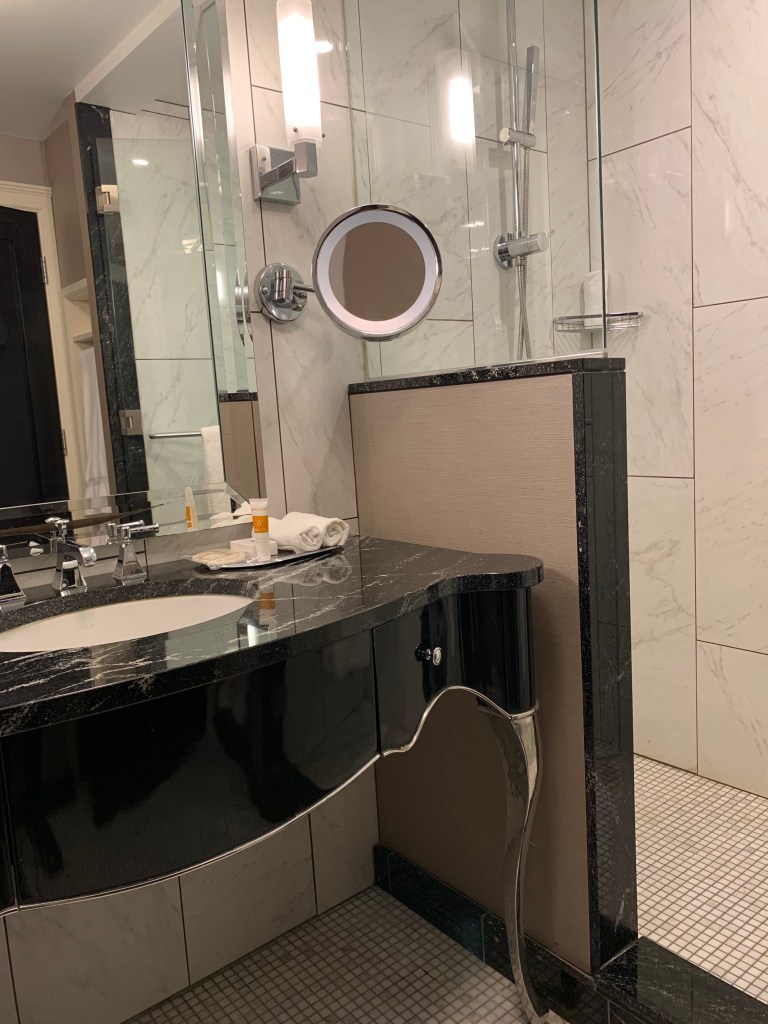
What else to say about the room? Its classic interior design aligned with the rest of the hotel, and everything seemed well-maintained. (A lovely person we met at a gallery during our stay noted that the hotel was in the process of renovating rooms; we think ours had been through a recent renovation.)

If we were to visit again, we might book a room in the original 1893 buildling. The historic side of the hotel is beautiful, and while the rooms might be smaller, we imagine they likely better align with the overall aesthetic of the hotel. (Our room in the round tower felt a little at odds with the hotel’s design.)


I think, at this point, we can confidently say we’re in the clear, but the Bedbug Song can never hurt. You sing it at all hotels, even the fanciest, and the tradition has served us well.

“Bed bug, bed bug, leave me alone. Stay out of my bag; stay out of my home….”


How about two things?

First, the liveliness of the place. In addition to holiday events, the hotel hosted an Irish step dancing competition during our stay. Let’s just say, those dancers brought a lot of life — and a lot of luggage — to the hotel.

Second, the art collection was fun to see. We took time to wander the hallways and common areas, and it was like a visit to a museum. Milwaukee has a great art scene, which we didn’t expect, and The Pfister helps contribute to that.


We had only one full day in the city, but we made the most of it and ran out of time before we ran out of things to do. We would definitely return — maybe in the summer when we could more fully explore the area around Lake Michigan, the Riverwalk, and the Third Ward.


The ride down was great. It was Thanksgiving day, so we had a car practically to ourselves. The route is beautiful, and sipped a Bloody Mary while watching the scenery sweep past. On the way back, the train was fully booked, and we had to scramble to find seats, which weren’t together. The Borealis — the train between St. Paul and Chicago — doesn’t do reserved seats like the Empire Builder –the longer route — does. My guess is that lots of Borealis riders would be happy to pay a little more to get a reserved seat. We definitely would.

Even though the return trip started a little rocky, we arrived back in St. Paul to a snowy holiday evening with the European Christmas Market at the depot in full swing. It was pretty magical and awesome to get off the train and walk right across the street to our home.


Back to HOTELLING home

Marylebone, London, UK ~ The Langham

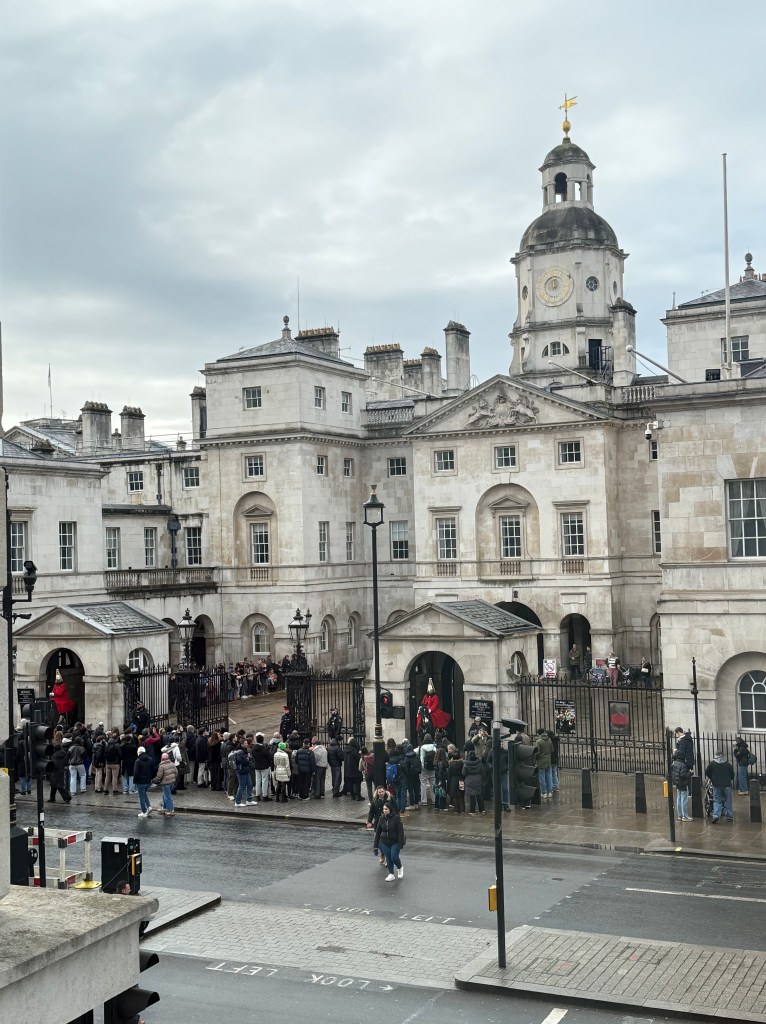
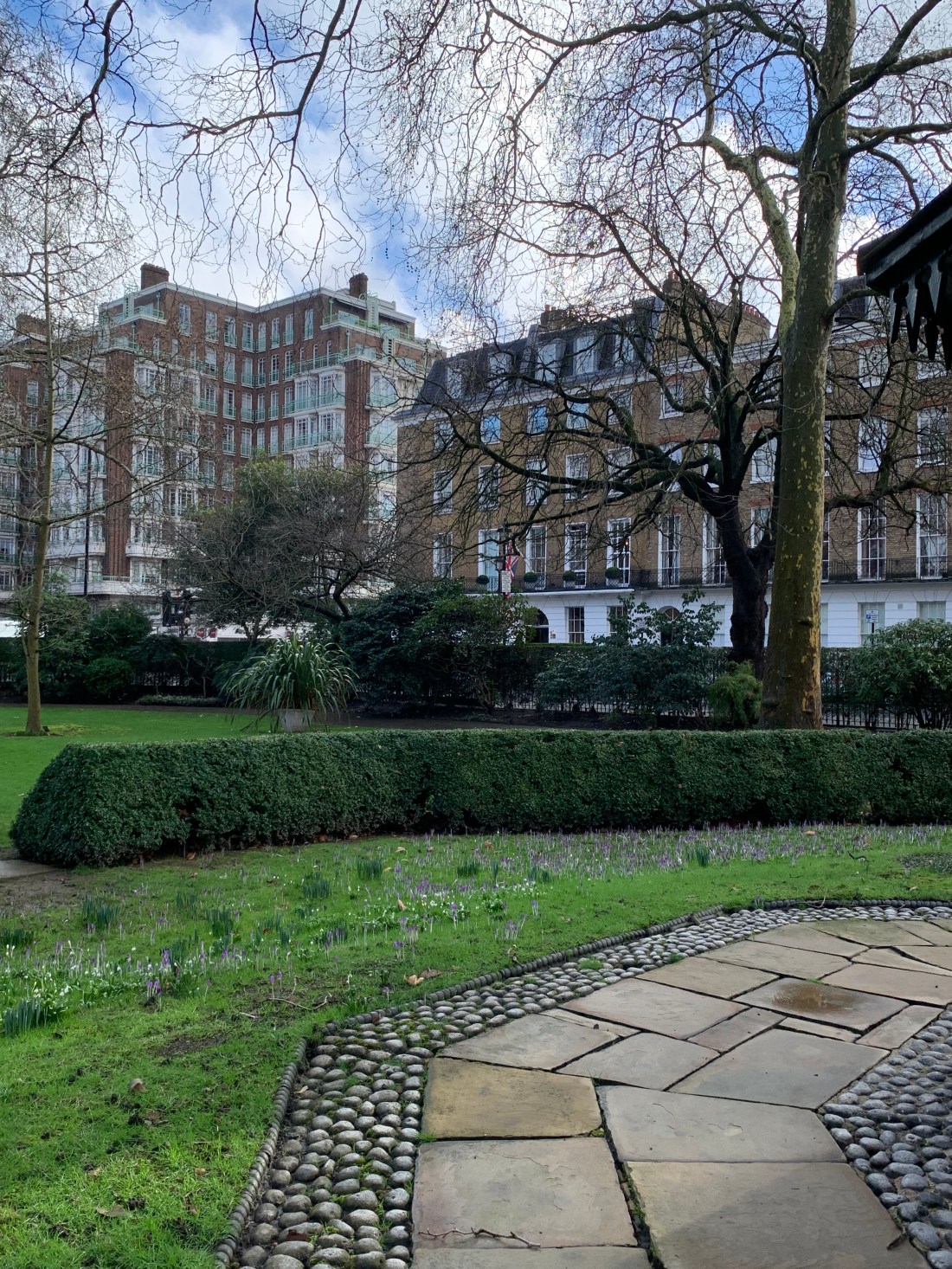
For a stretch of about 15 years, we visited London regularly, and we loved trying hotels in neighborhoods across the city. But our last visit was in 2018, and we had a lot of catching up to do. We know Kensington and Chelsea well and were tempted to return to a new hotel on familiar grounds (The Chelsea Townhouse was top of the list). We also, however, love Marylebone, which is near The Regent’s Park and close to so many of the things we love in the city.
In the very southeast corner of Marylebone, right across the street from the BBC’s Broadcasting House, sits one of London’s first luxury hotels: The Langham. After our terrific experience at The Langham Chicago, we decided to test the Langham brand, booking eight nights at the property where it all began: The Langham London.


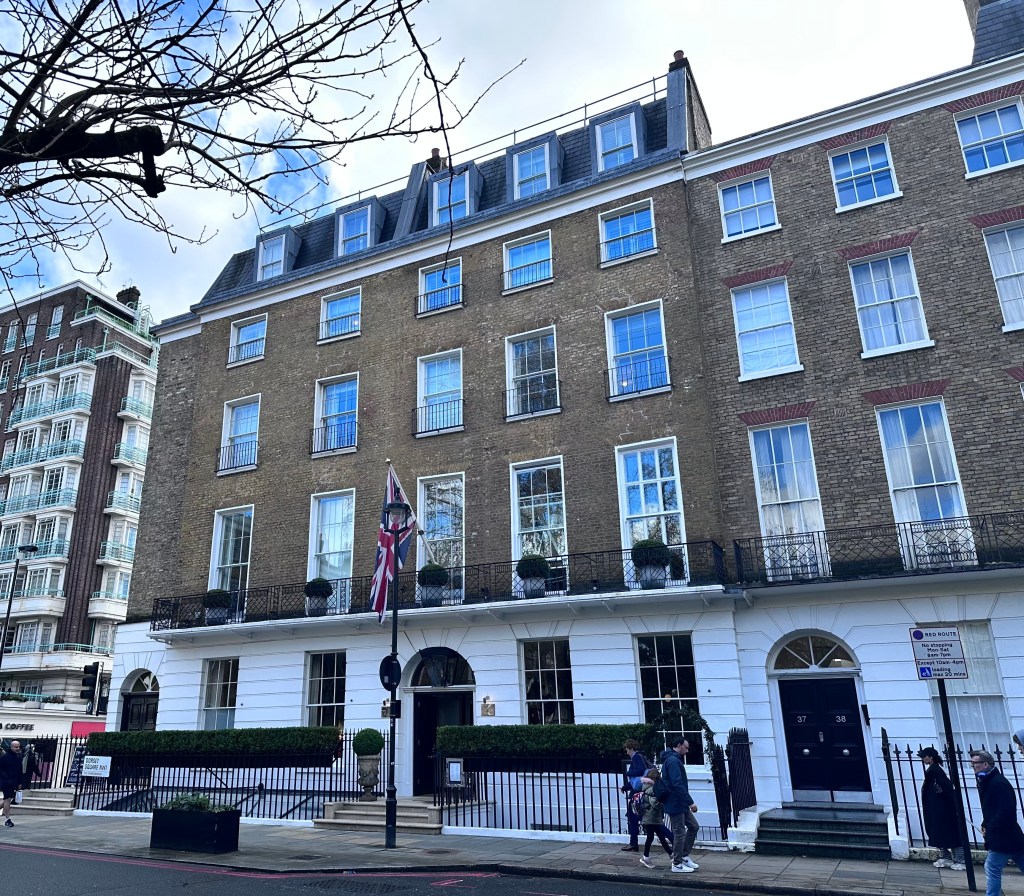
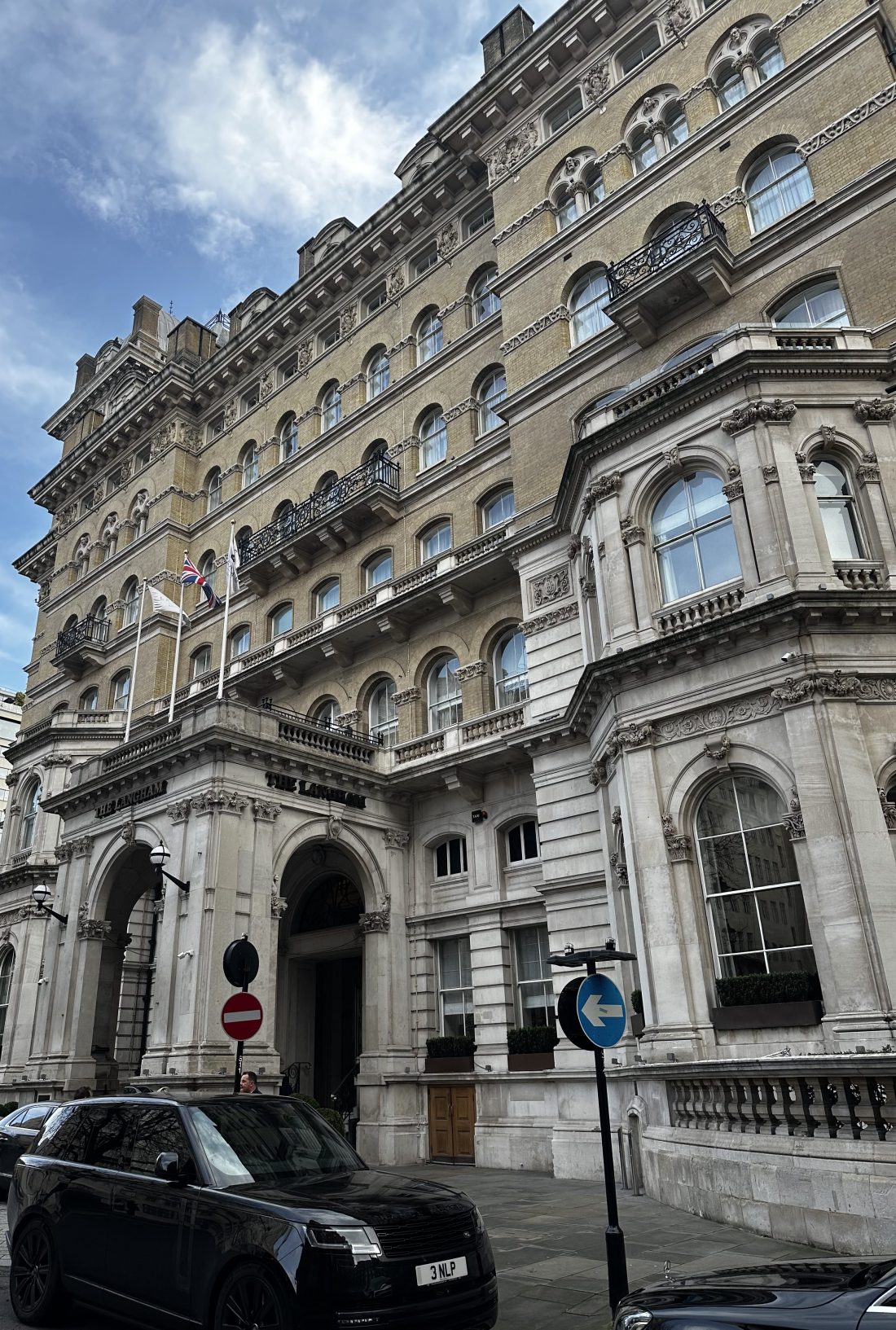
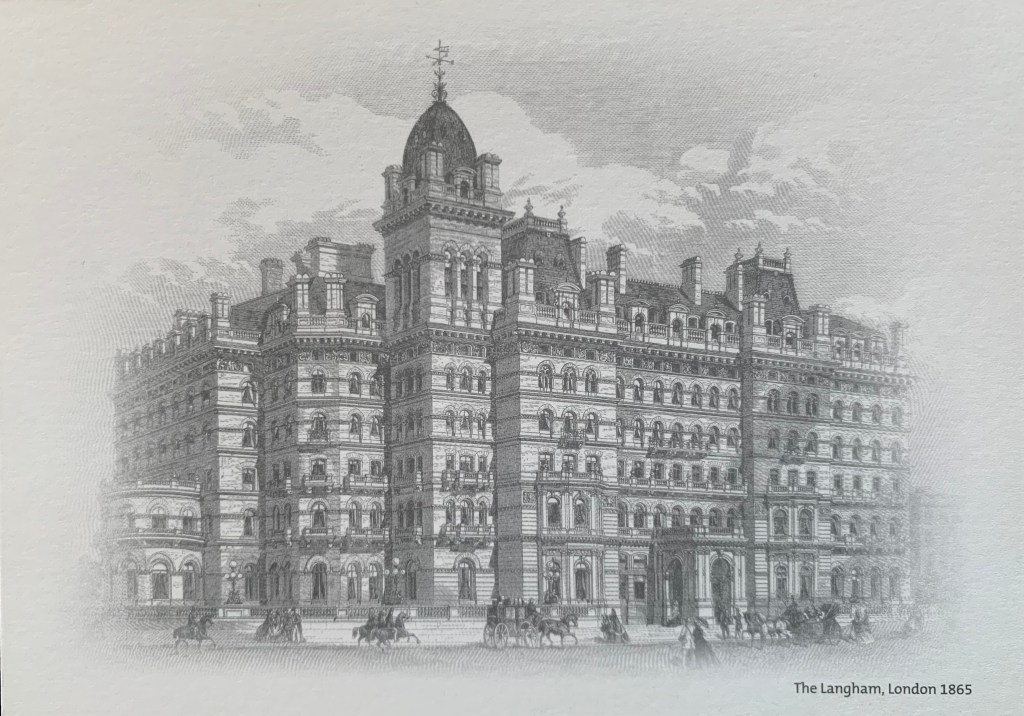
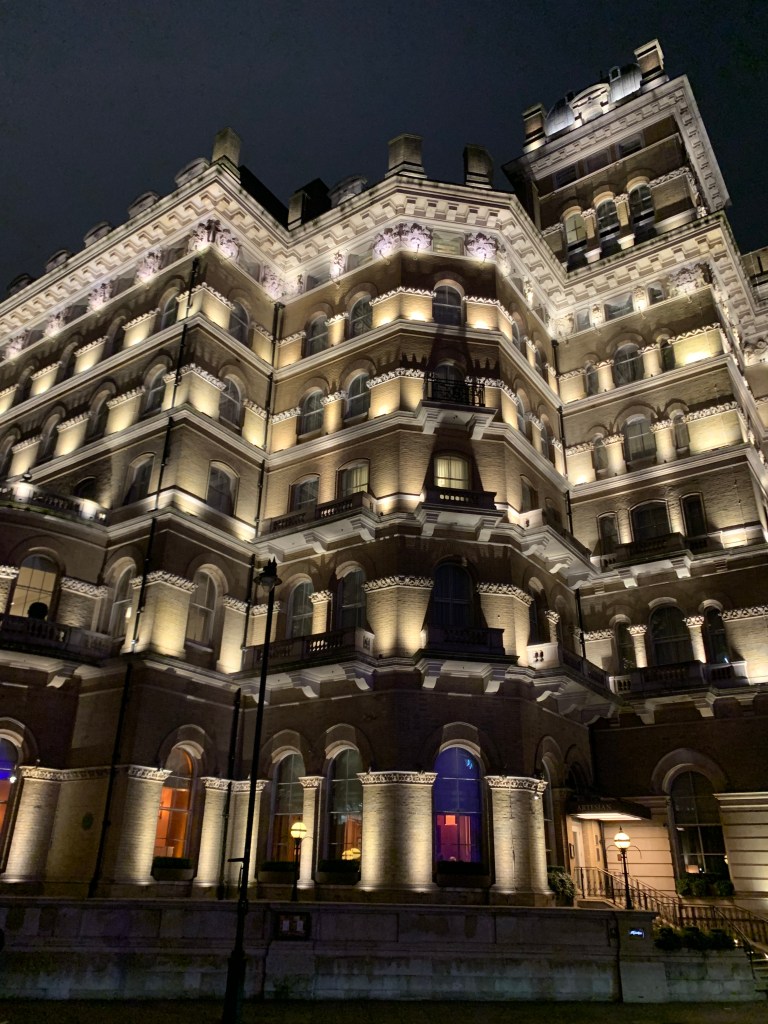
We arrived at Heathrow just after 7 in the morning, and our taxi was pulling up to The Langham by 8:15. The building is described by British Listed Buildings as “heavy Italianate style with some late Medieval details, French pavilion roofs and an east wing with a corner tower.” Put simply, it’s a building to behold – certainly at 8 in the morning, but, as we would later learn, even more beautiful at night.

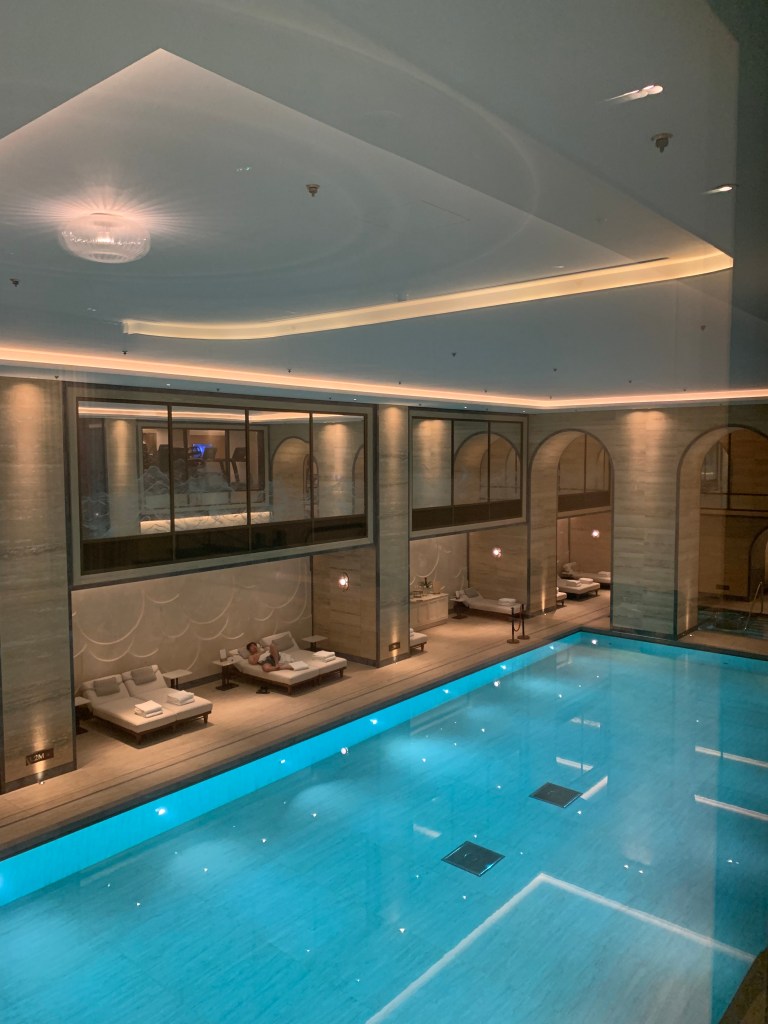
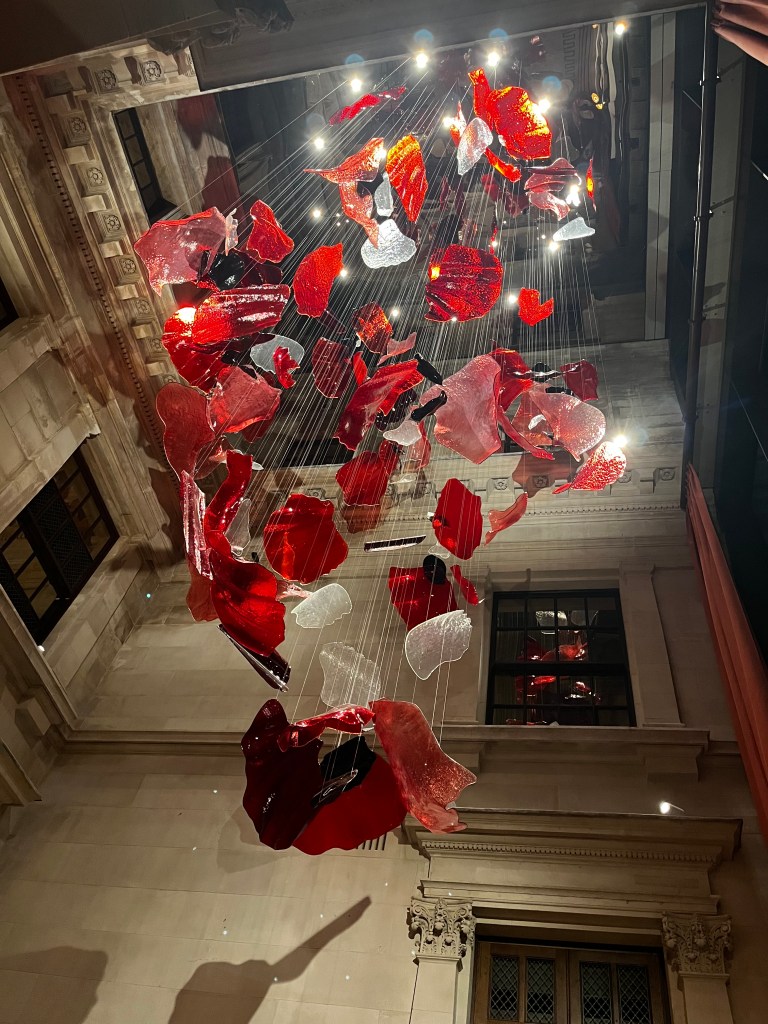
The hotel’s interior is no less dramatic. The central lobby with shining marble floors and pillars supporting a tall ceiling is surrounded by a more intimate seating area with a fireplace; a room off to the side with a fabulous chandelier that houses the registration desk; and the Palm Court restaurant, which is reportedly where the tradition of British afternoon tea began. Because we arrived so early, our room wasn’t ready, but the staff member at reception got us checked in and then escorted us up to The Langham Club where we were invited to have a cappuccino and linger until our room was ready. We knew if we sat too long, jet lag would be the demise of our day, so after getting properly caffeinated, we headed out for a walk. On our way back out of the hotel – and feeling slightly less foggy – we took note of other beautiful common spaces, including the landings on each floor, each of which had artwork worth spending a little time with.

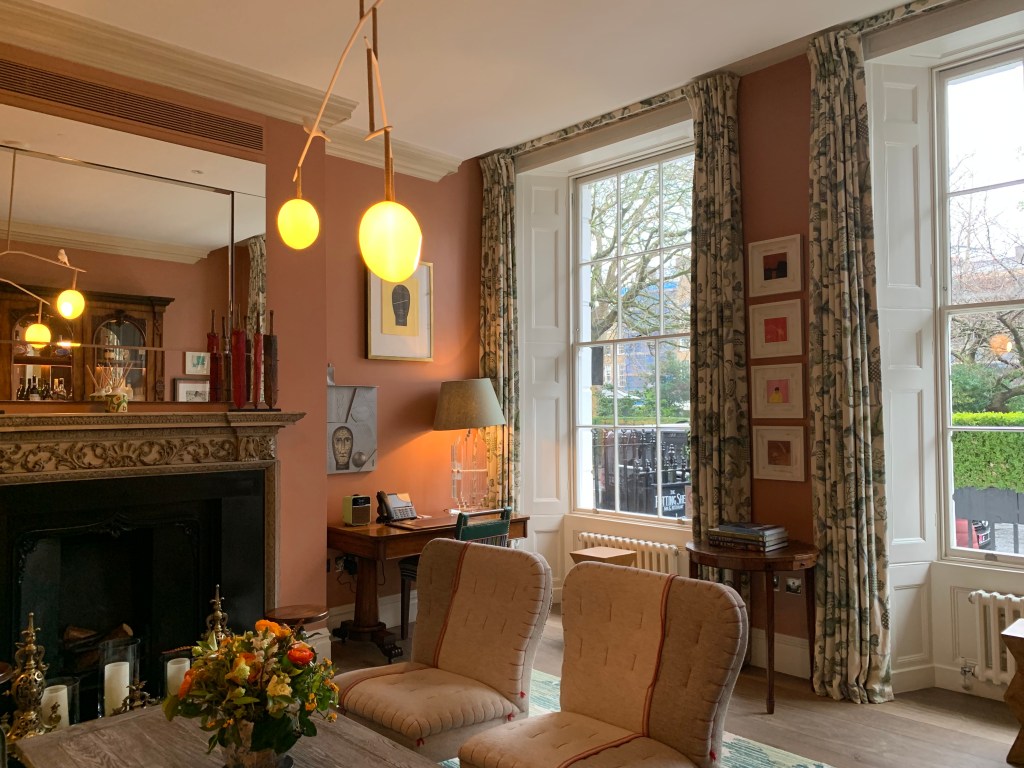
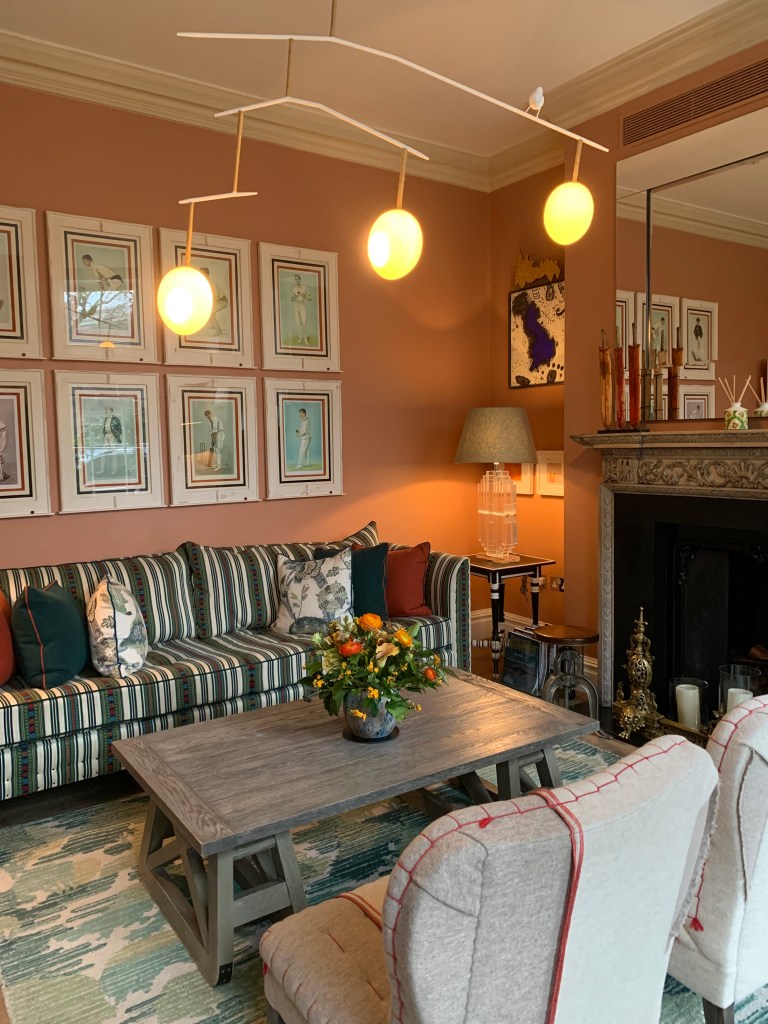
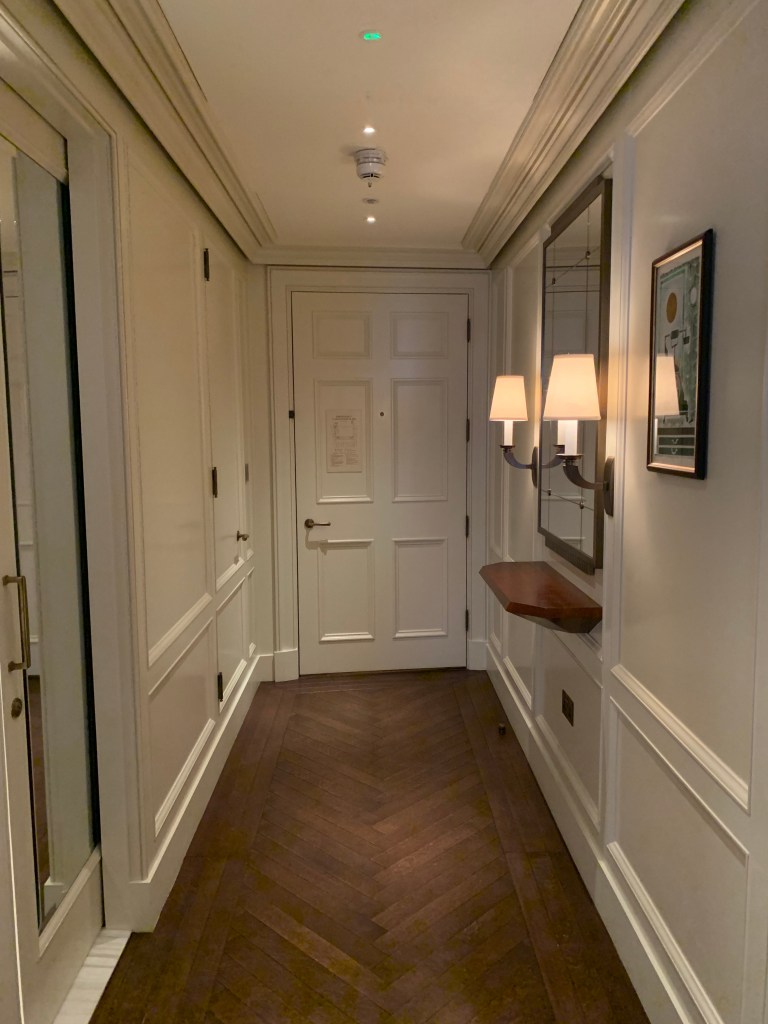
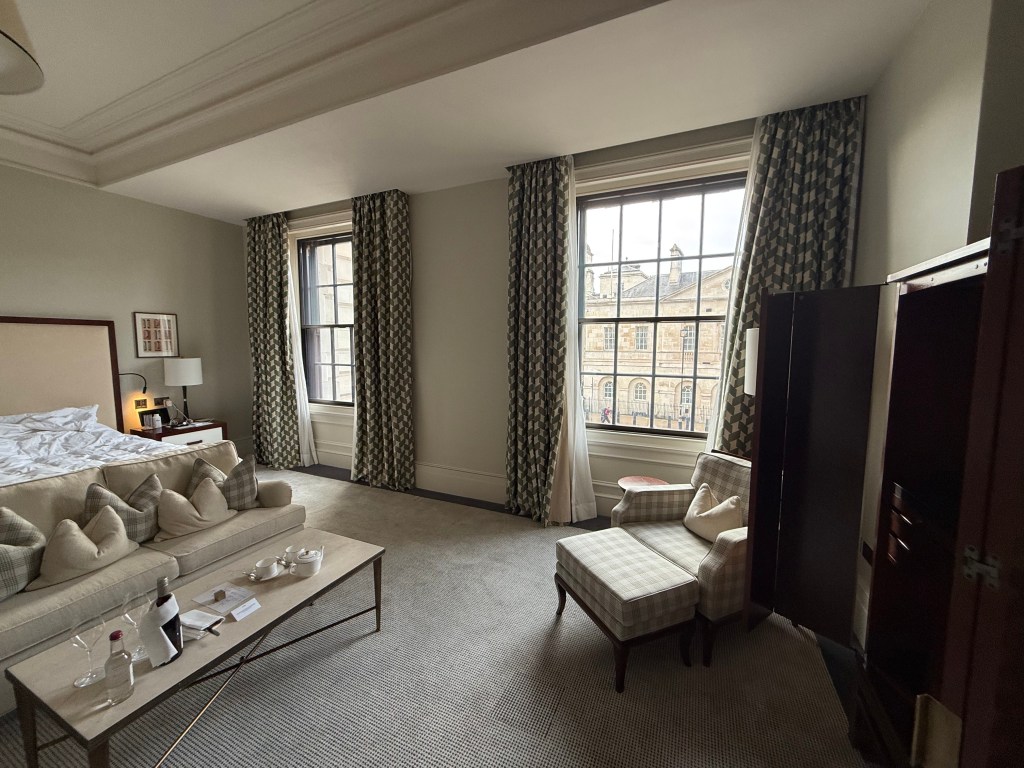
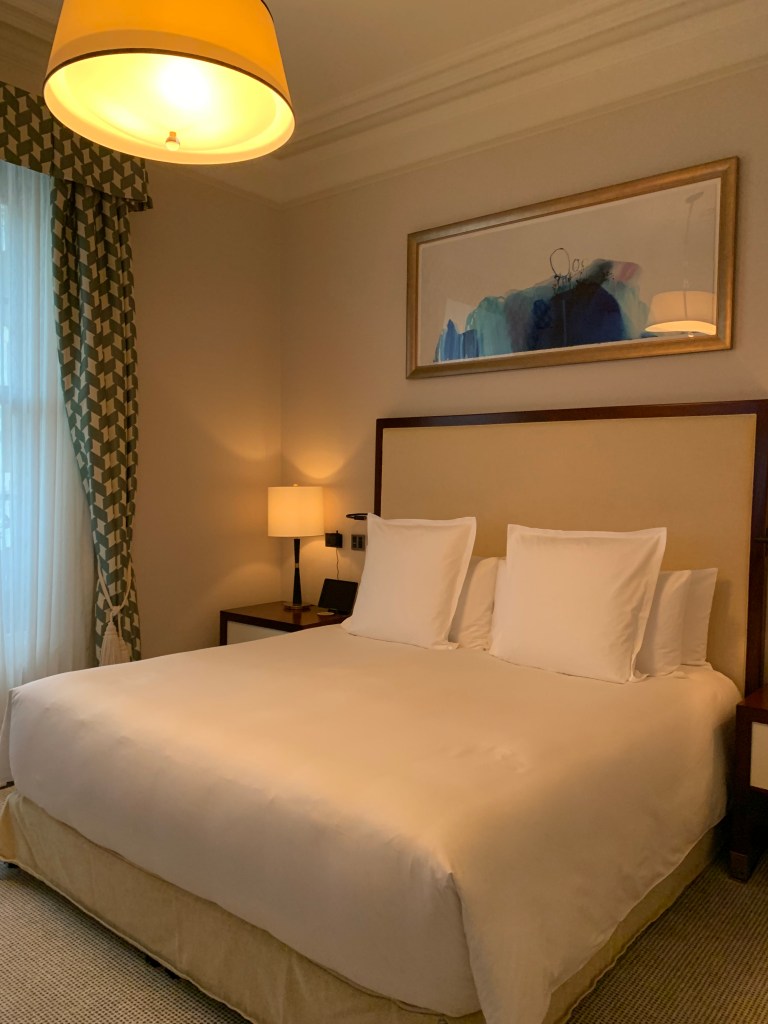
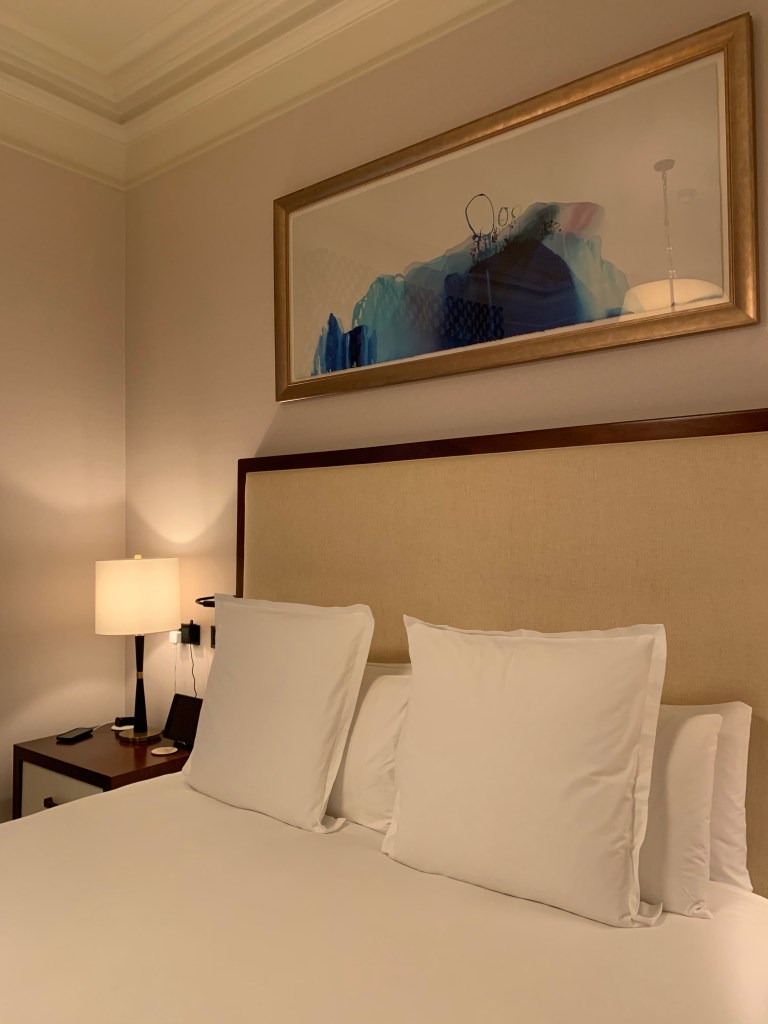
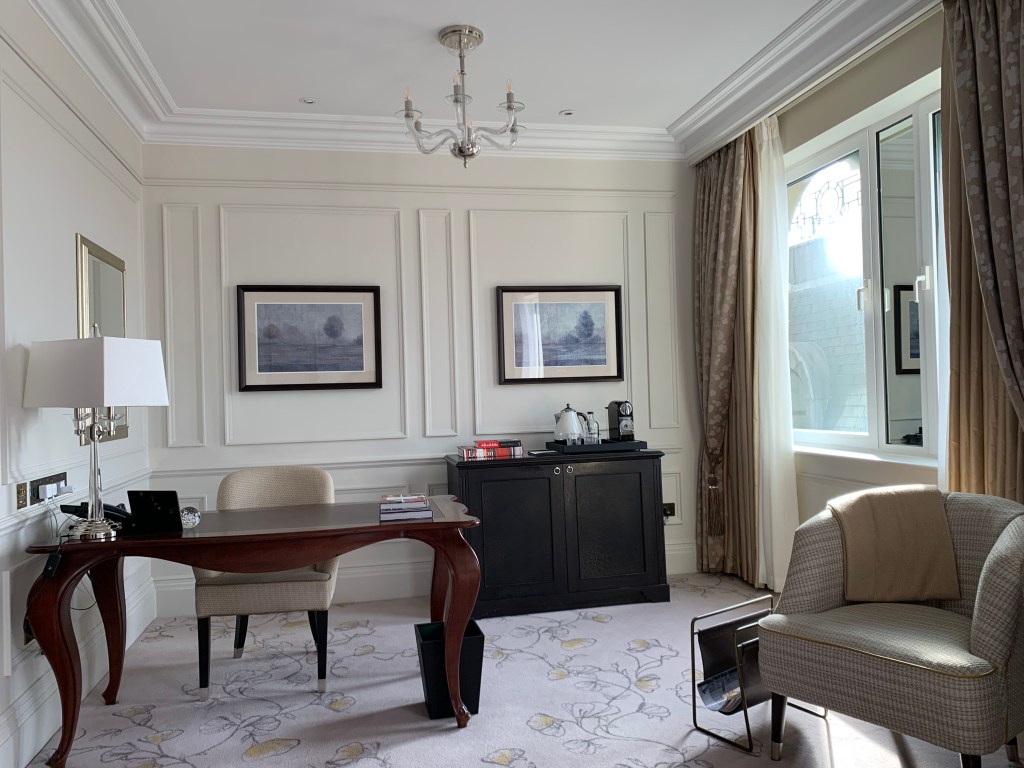
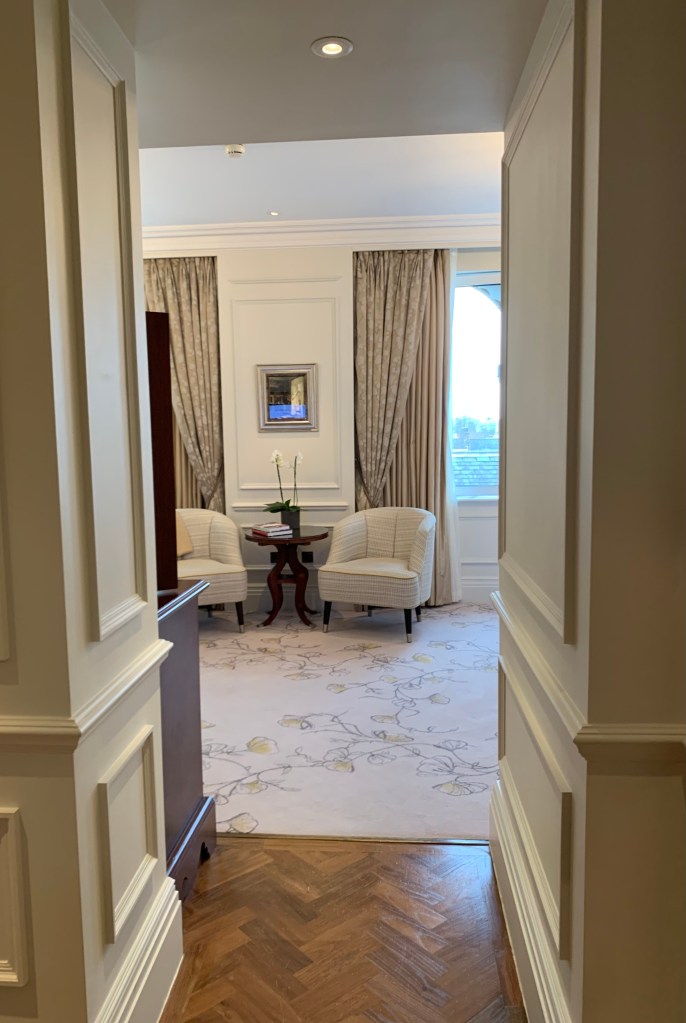
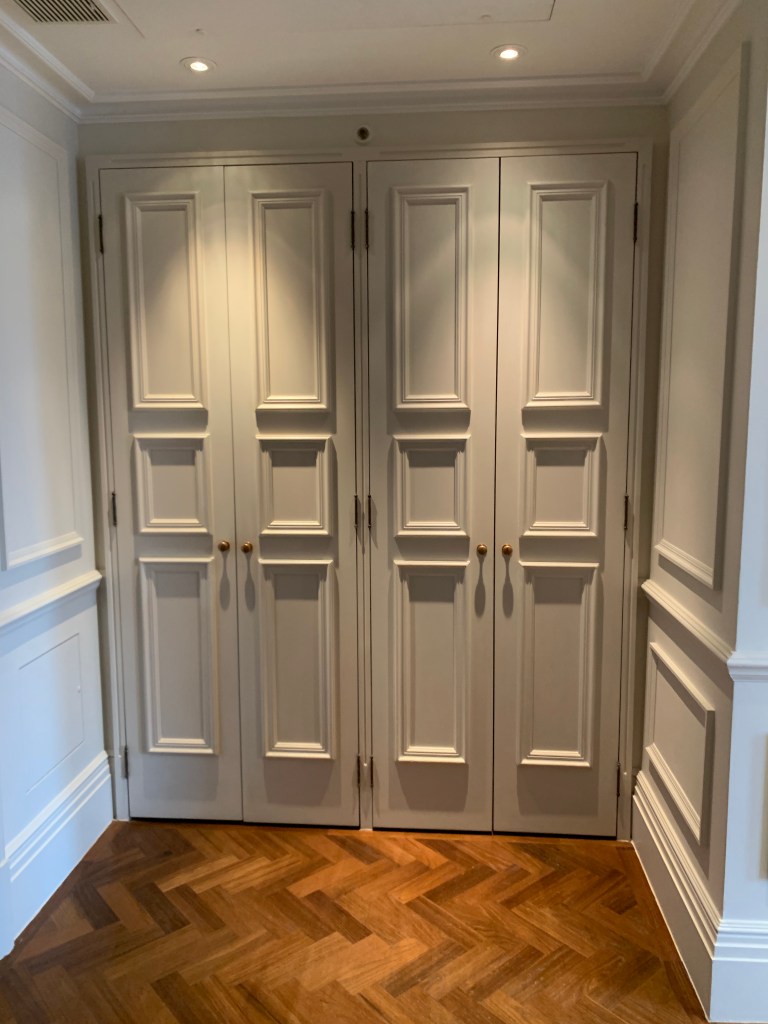
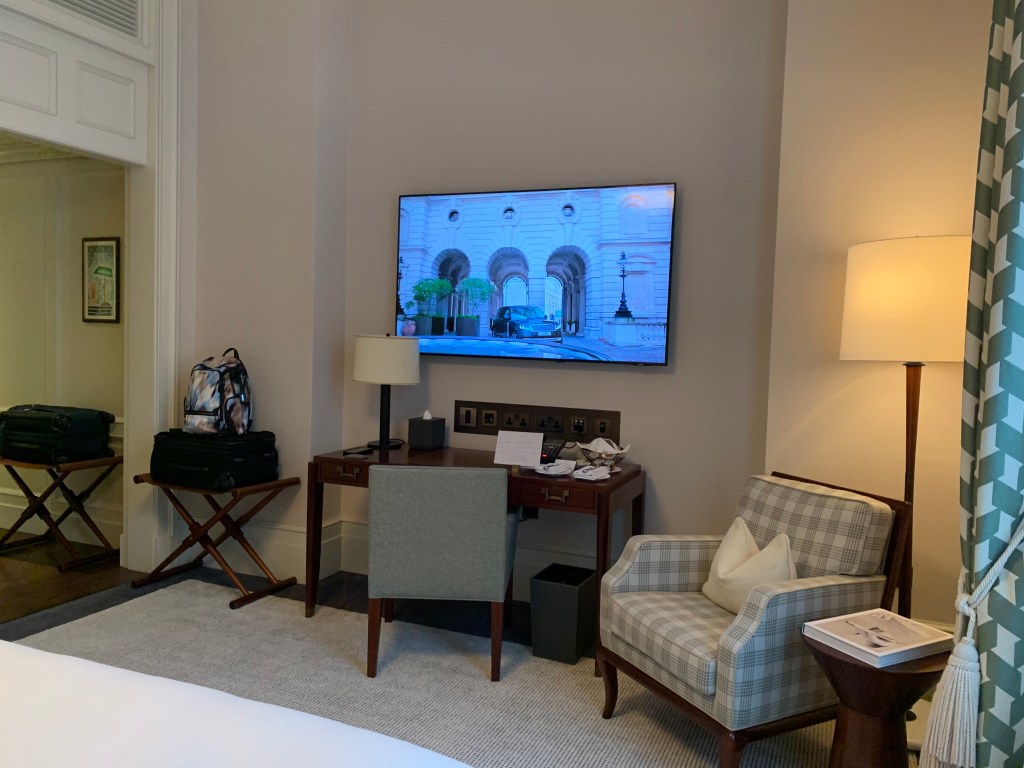
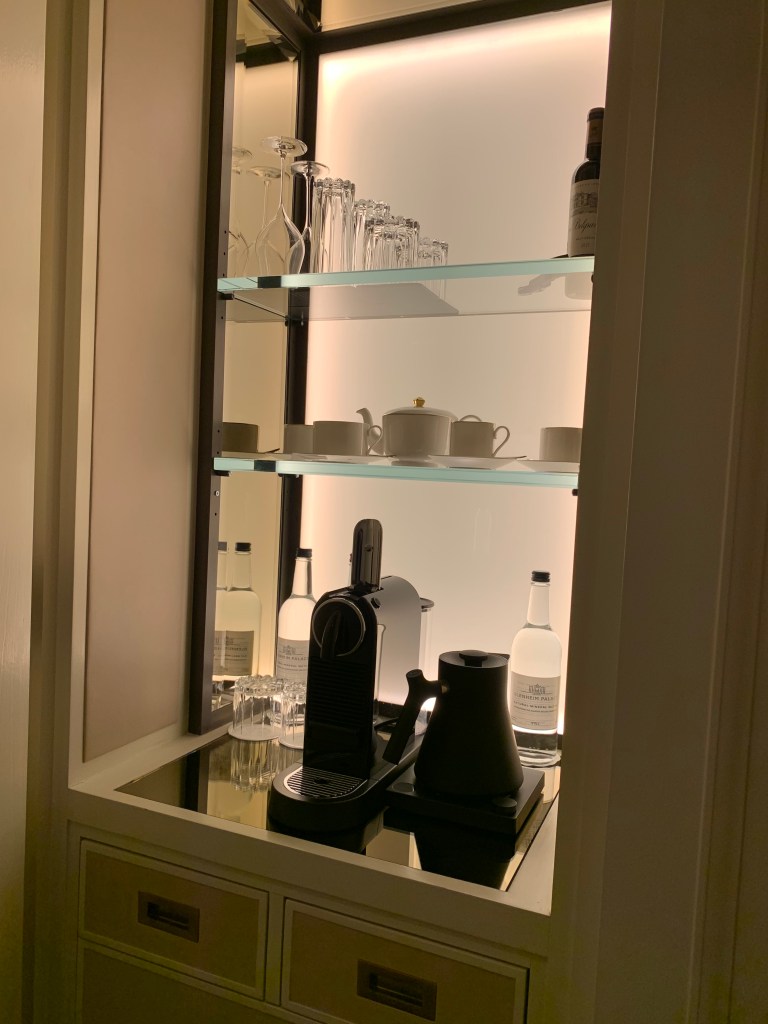
Within 45 minutes, we received word that our room was ready, so we returned to the club to pick up our key. We entered our room on the 4th floor to find sun streaming in through two large windows. A parquet-floored entry foyer with two closets to the left and the bathroom to the right led into a large room with a king-sized bed, a seating area, a coffee bar and an ample work space with a desk that faced into the room. While our tastes tend toward the modern, we had to admit that the traditional room was lovely. Books about London, a live orchid, paintings that looked to be more than simple prints, and a framed picture of the hotel’s chefs in 1907 along with a glass paperweight on the desk gave the room a distinct personality. As we were settling in, a bowl of fruit and box of chocolates arrived (the fruit would be resupplied throughout our stay).

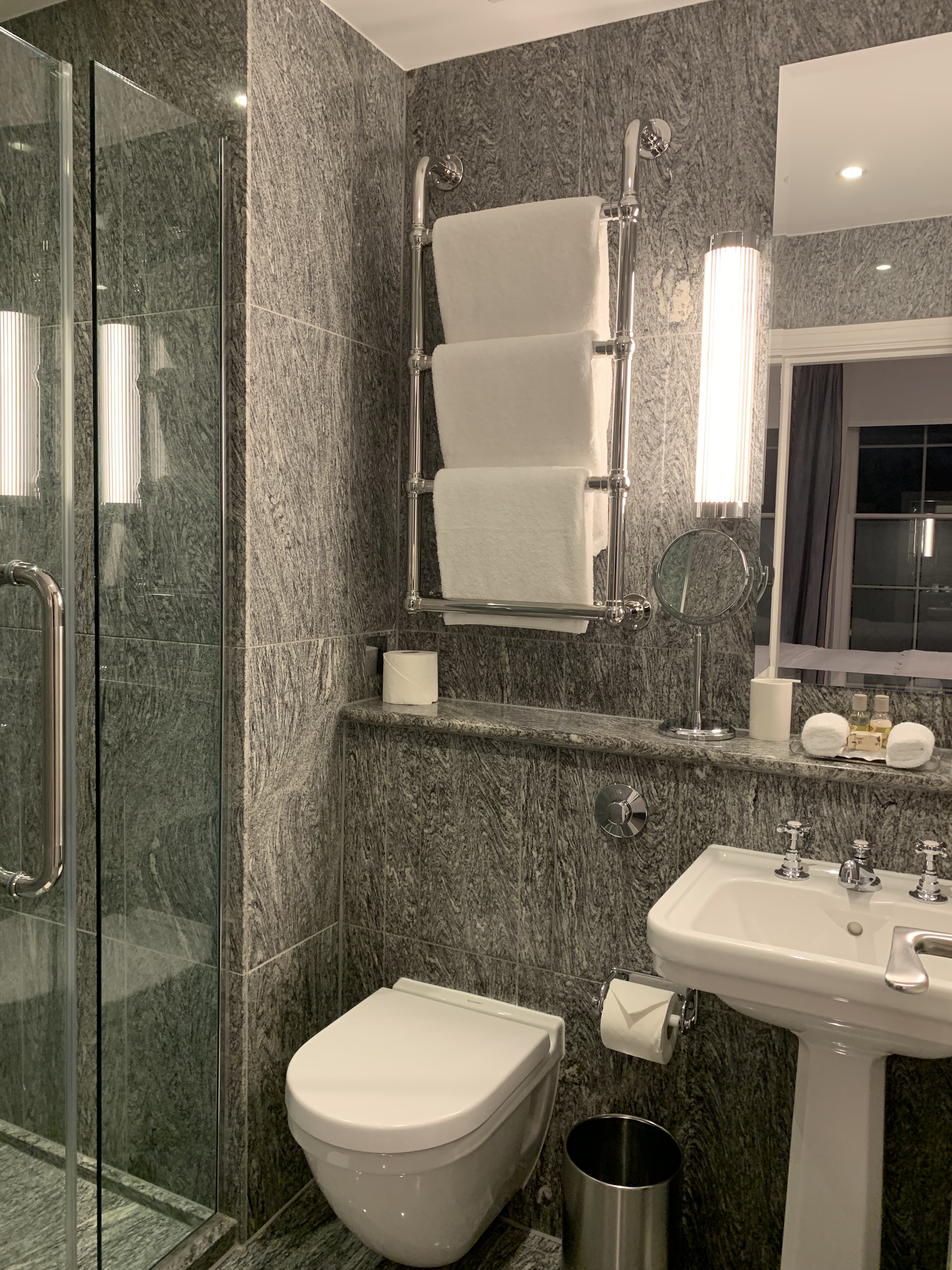
The elegant bathroom included a deep tub, a separate water closet and a shower with some of the most amazing water pressure we’ve experienced in a hotel. Langham’s signature color is pink, and the color appears throughout the hotel, but the effect is not overly feminine. The delicate pink is balanced by dark woods and marbles, both of which featured in the bathroom. We loved the hotel’s bath products with their ginger flower signature scent, and the bamboo shoot on the vanity brought life to the space.

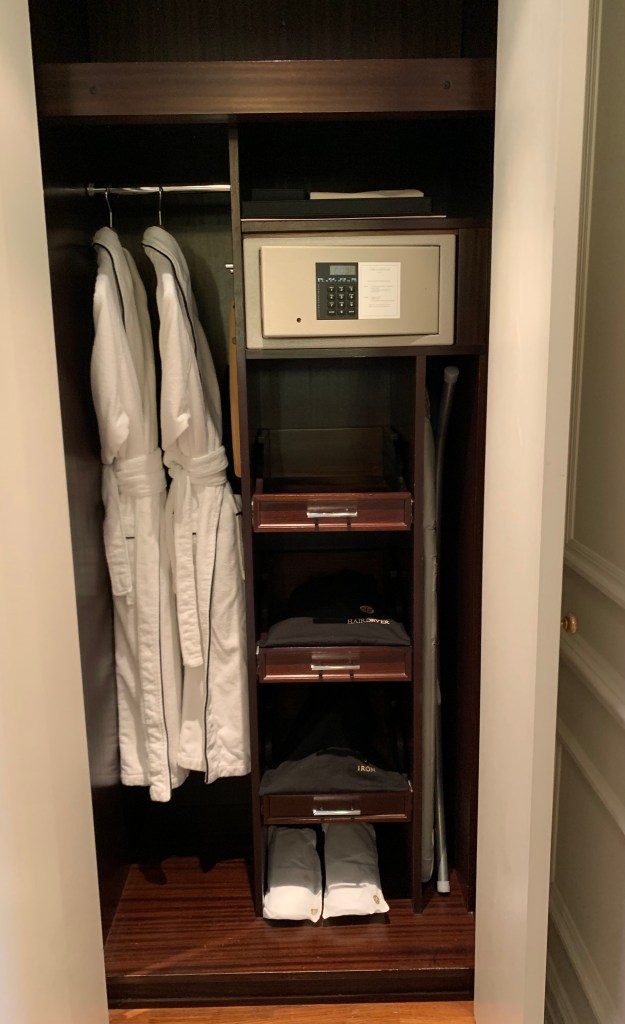
We used and appreciated all of the room’s amenities. From the multiple choices of china for our coffee to the fluffy Frette robes with slippers properly sized for each of us (the first time the small-footed of us had slippers that fit), we felt pampered. We loved that we could open the windows to sleep with fresh air coming in, and the storage allowed us to tuck all of our personal belongings out of sight.


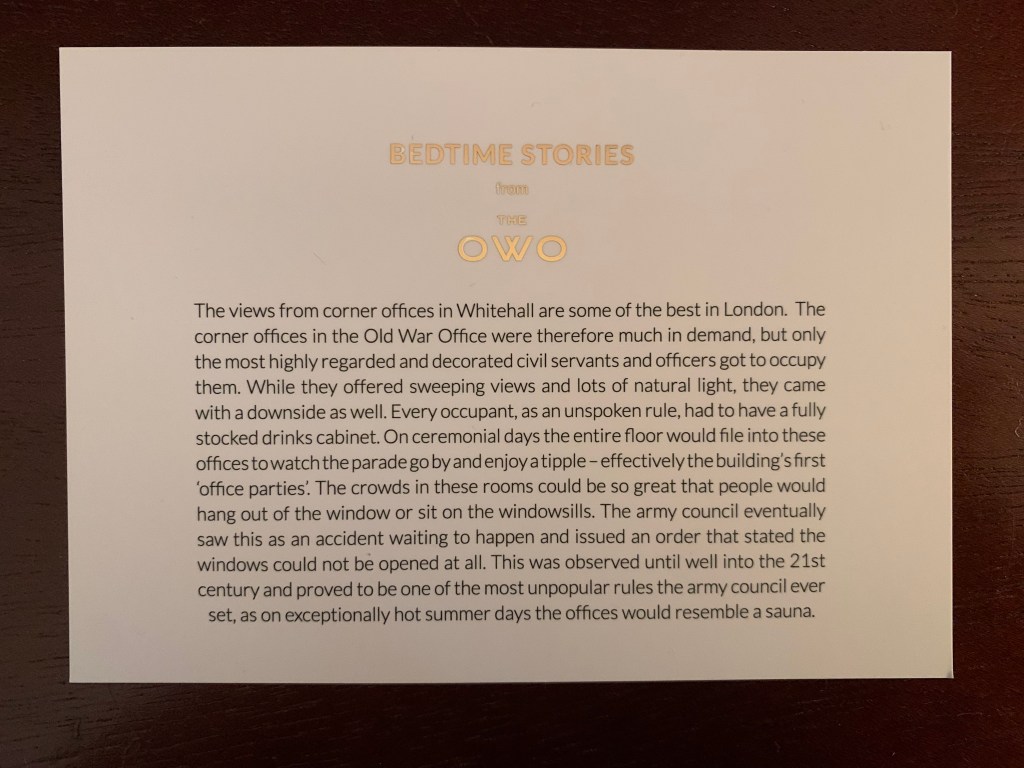
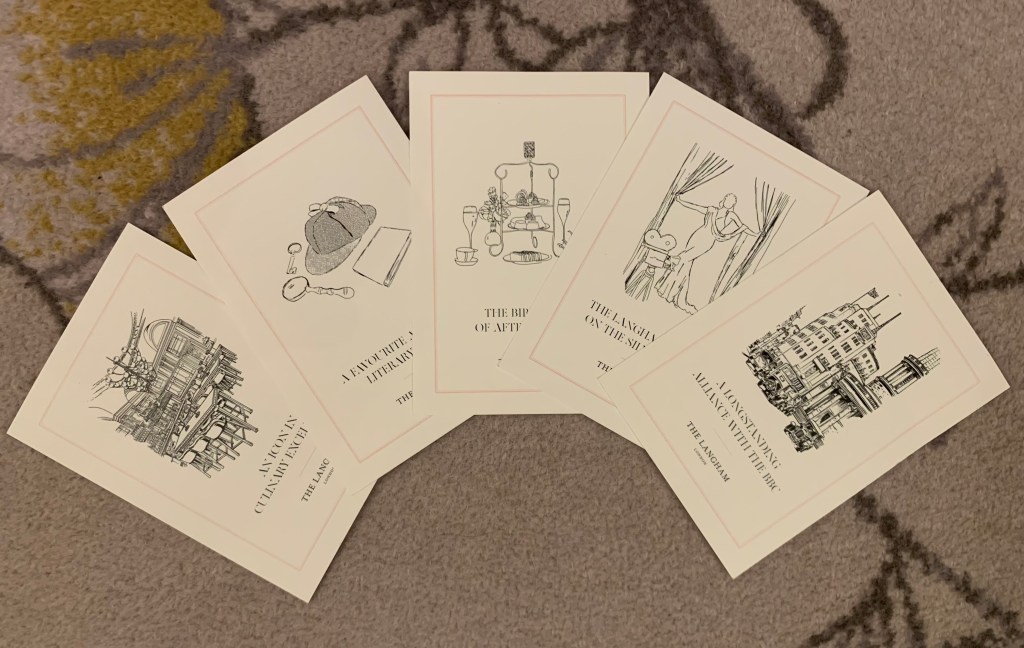
A hotel itself is just part of the experience, and we have come to appreciate top-notch service when we encounter it. The Langham’s service felt flawless to us, and everyone we encountered was a pro. Our room was serviced multiple times during the day, but we were never interrupted. We had breakfast each morning in the hotel, and by the time we returned, the housekeepers had come and gone. Turn-down service was done when we left for dinner, whatever time that was. One of our favorite nightly rituals became anticipating the linen postcard with a story about The Langham that was left on our pillow each evening. We learned, among other things, about The Langham’s longstanding alliance with the BBC, about Langham appearances on the silver screen, and about the literary icons who frequented The Langham.

During our stay, the concierge team secured last-minute reservations at Trishna, a lauded (and quite small) neighborhood restaurant; porters held umbrellas over our heads as we got into taxis, and staff in the club learned our coffee preferences after the first day.


One of the best things about London is its eating and drinking establishments; it really is an embarrassment of riches. And some of those riches are right in The Langham. The room we chose included access to The Langham Club. When we booked the room, we thought the club might be a convenient place to get a cup of coffee before heading out on the day’s adventures. We’ll admit that we didn’t have high expectations. That perception was misplaced. The club – open throughout the day with a changing menu of food and drinks – became our living room. The promise of a coffee gets us out of bed each morning, and the coffee was delicious. Of course, the pastries, salmon and caviar, and eggs cooked to order didn’t hurt. In the club, we could also connect with a staff member who offered concierge-level services, and when we popped in during the evening, champagne flowed liberally.

During our stay, we also patronized the hotel’s pub – The Wigmore – twice; we had a drink in the Palm Court one evening and breakfast one morning; and we also visited the hotel’s bar, Artesian, and had a lovely conversation with our Polish server who talked to us about drinking Zubrowka vodka as a young person. (We’ll admit that we’ve had our fair share of this particular vodka, which we discovered at our neighborhood Russian restaurant). Each of our experiences at the hotel was well worth using as one of our limited London eating and drinking opportunities.


The Langham London

If you’re a regular reader of our blog, you’ll know that we tend to choose smaller, independent properties when we travel, and we certainly aren’t loyalists to any brand. But we both must admit that our two experiences at The Langham have made us think about where we might visit next because it has a Langham hotel. Can two wonderful experiences become three?

The Langham Chicago

We don’t imagine we’ll ever become exclusive to a particular hotel brand, but it’s fun to see how a brand can be expressed in different places. The Chicago and London Langham hotels are two very different properties, but they share things that we appreciate and that we would seek out. Stay tuned for where we next discover a Langham hotel.


  • The Langham London
  • 8-night stay: February 21 – March 1, 2025
  • Executive Club Room, #405

Back to HOTELLING home

Milan, Italy ~ Senato Hotel Milano

In a fashionable and sophisticated city like Milan, the experience of searching for a hotel is an embarrassment of riches. Beyond international chains like the Mandarin Oriental and Four Seasons, Milan hosts dozens of smaller independent hotels that, in our exploration, looked promising. In the end – and following the advice of Condé Nast and its “best boutique hotel” designation – we chose Senato Hotel Milano.

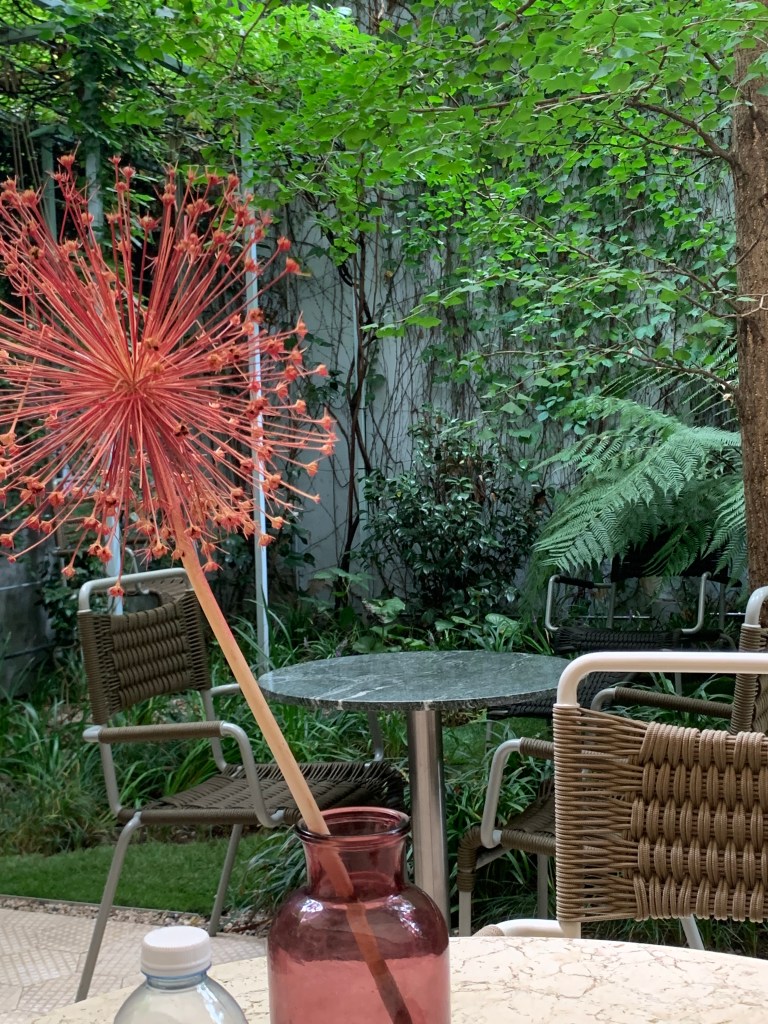
Senato Hotel is the former home of the Ranza family, who converted their neo-classical residence on Via Senato into a hotel and now operate the 43-room property. We arrived via taxi from Milan’s central train station and stepped from the almost-always bustling street (Via Senato is one of the roads that rings central Milan) into a tranquil lobby that adjoins the central courtyard, the expanse of which is covered by a shallow reflecting pool. Because we were quite early and our room wasn’t ready, we settled into the garden space of the café for a cappuccino and the “salad everyone loves” (we loved it too) before checking into our room. On our way back to the registration desk, we paused to admire the tillandsia collection, which is tended by Milan-based gardener-landscape duo Bonanomi Benatti.

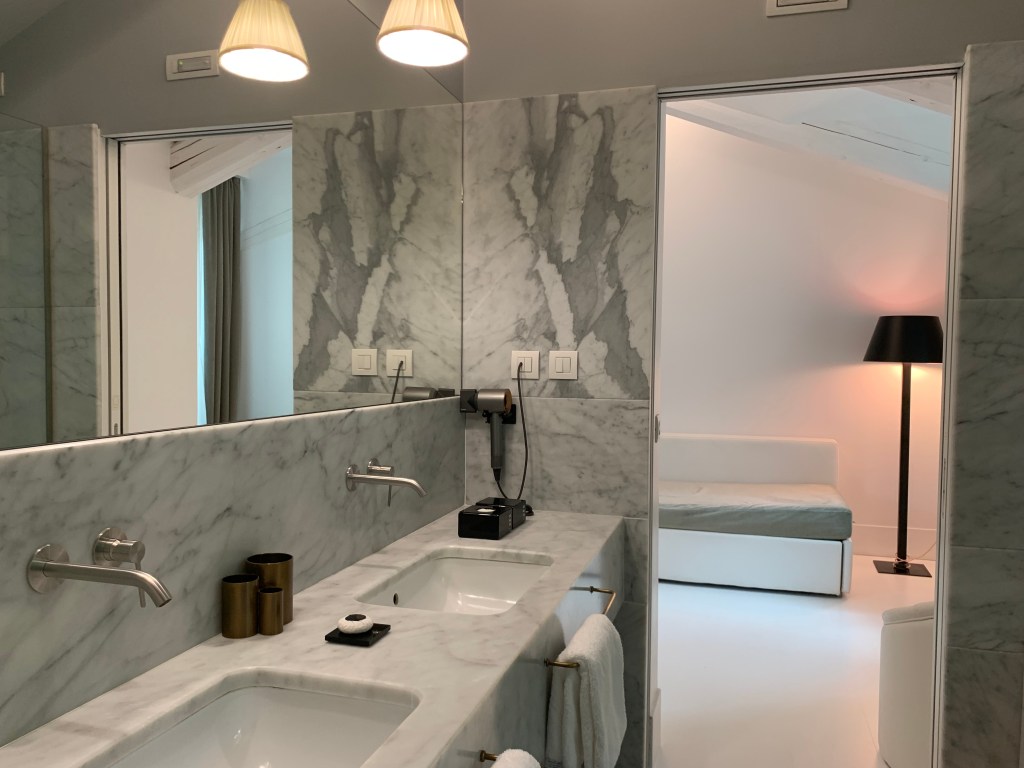
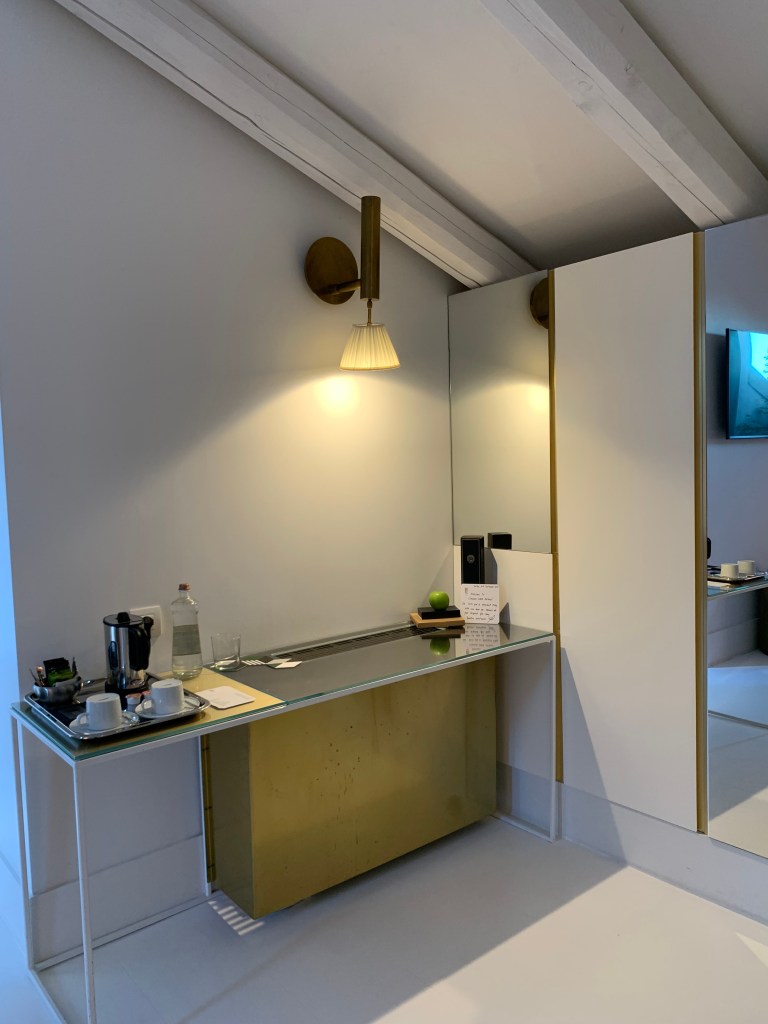
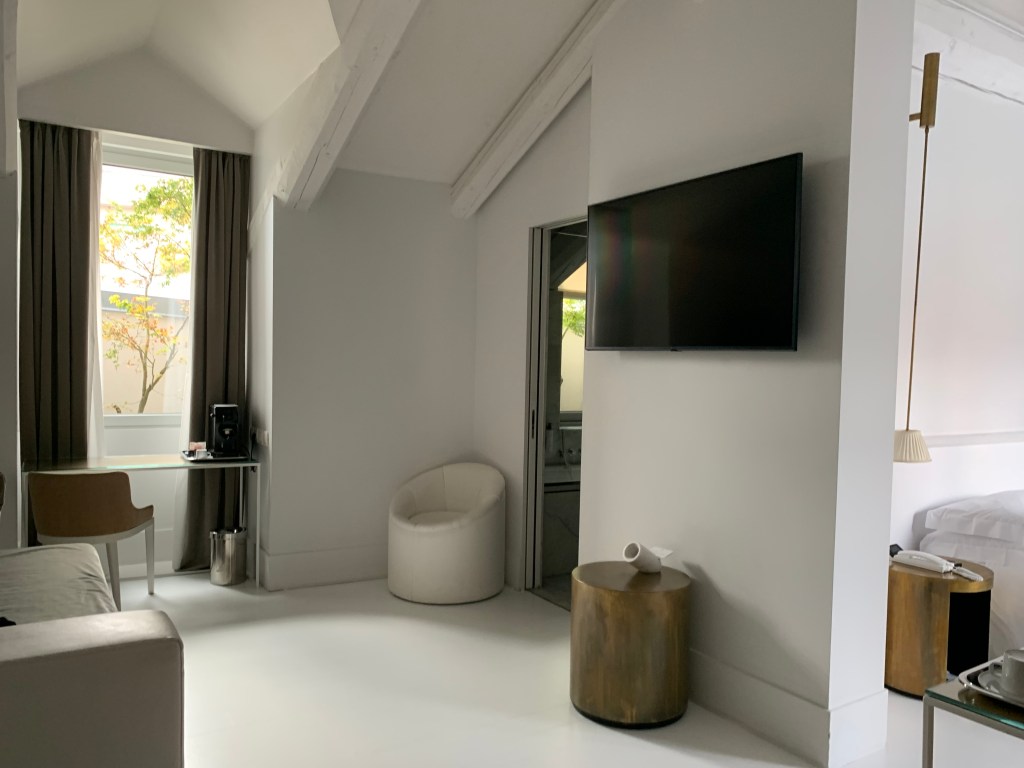
As we exited the elevator on the top floor, we were greeted by a skylit corridor with angled roof beams and only one other room besides ours. We felt a little like we had been given a passkey to a secret attic chamber. Our room at the end of the hall – the Senato Junior Suite –  was really three rooms: a living space with daybed, desk, coffee and tea bar, and large closets; a bedroom with a big terrace, and a beautiful Carrara marble bathroom with a separate water closet.

In our suite, the white floors, walls, and beamed ceilings served as a neutral and cheery palette to highlight the custom-designed furnishings made by Milanese craftspeople and well-chosen lighting and accessories. The room felt clean and uncluttered, and we appreciated that every surface wasn’t covered with something. This allowed the architectural elements of the room to shine, and we loved that the structure of the building was incorporated into the room’s design. (Side note: On this holiday, we had an unplanned overnight in Amsterdam, and were able to stay in one of our very favorite hotels, The Dylan. The room at The Dylan was also on the hotel’s top floor and featured attic-like ceiling lines with exposed beams. Both Senato and The Dylan do a fabulous job of capitalizing on a building’s architecture.)

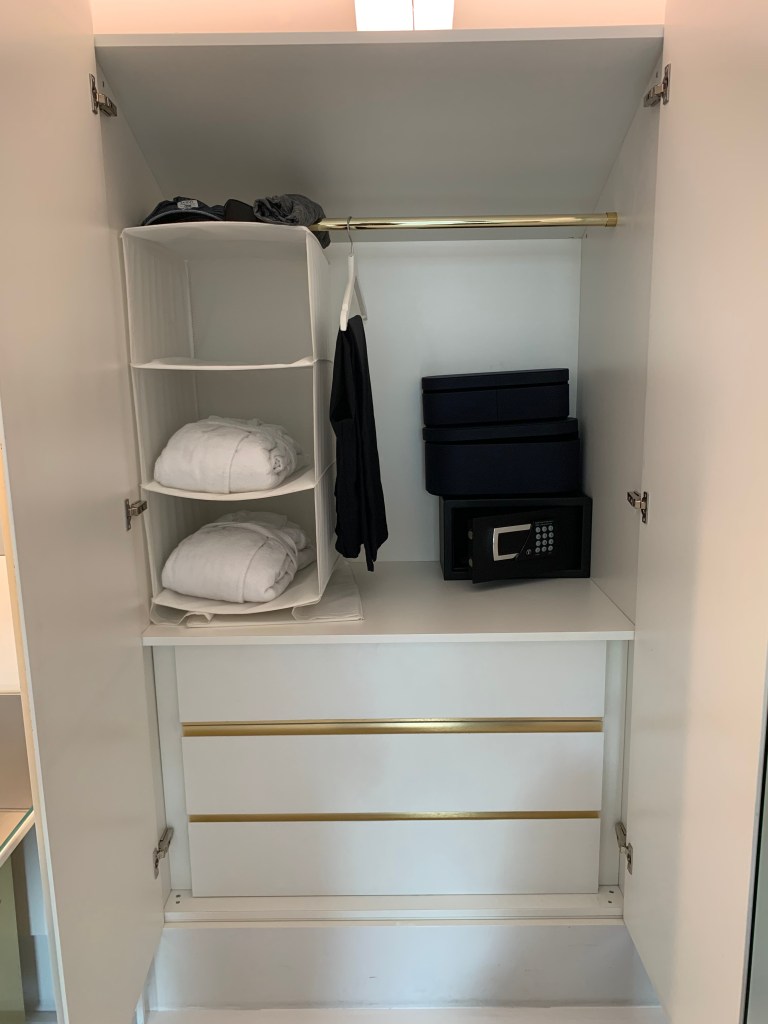
When we’re staying somewhere for more than one night, we like to unpack and stow away our luggage, which is never more than two carry-ons and a backpack. The large closets in our suite featured drawers, shelves, and hanging space that allowed us to put our clothes and our bags behind closed doors. In the bathroom, a long vanity with two sinks provided room for both of us, and we appreciated the separate water closet with toilet, bidet, and free-standing sink. The bedroom – also simple but beautiful – was oriented toward the terrace and the courtyard; we loved sleeping with the doors open and couldn’t hear any of the activity down below.

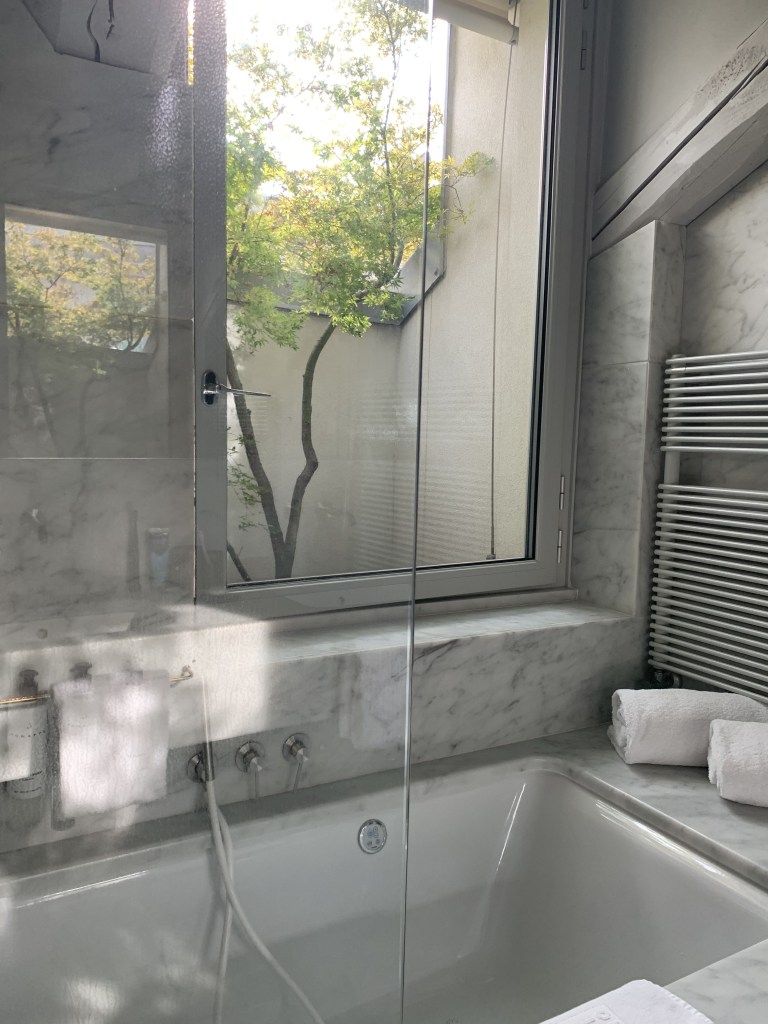
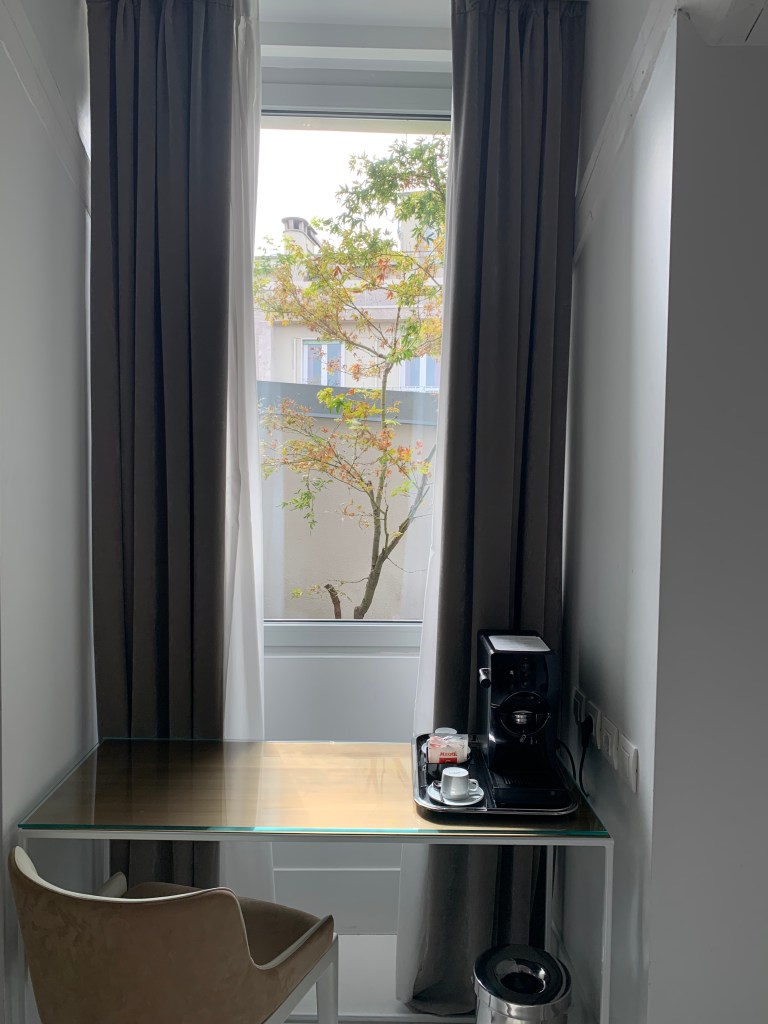
Our room featured two dormer windows oriented toward Via Senato: one in the living room and the second adjoining the jacuzzi tub and shower. The particular location of the windows in relationship to the rest of the building was the topic of some debate because we couldn’t see them from the street, but we eventually concluded, based on the footprint of the 5th floor, that they were likely set back from the rest of the building. Both of these windows were encased in short walls, and a lovely little tree – perhaps a maple or plumb – was planted outside each one.

When we were at the hotel in early October, the trees were just beginning to change color for autumn. Taking a bath or shower in a rooftop room with a view out to a live tree made our suite feel like a sanctuary. We will note that neither these windows facing the street nor the glass doors to the terrace afforded any kind of panoramic view, but that didn’t bother us; after all, a view is what the terrace of the Duomo is for!

Our second favorite feature of the Senato suite was a marble sculpture that served as a speaker for playing music from our iPhones. The OVO amplifier worked so well that we were tempted to bring one home, and the hotel shop sells them, but carrying home something made of Carrara seemed a little weightier than what we had in mind.

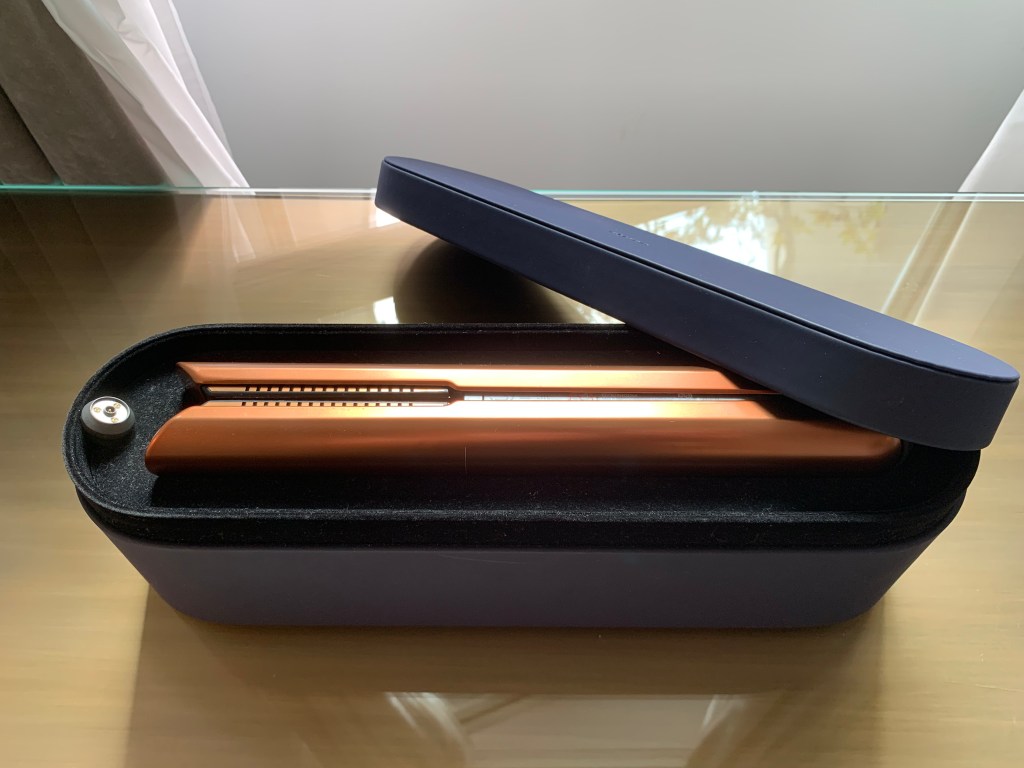
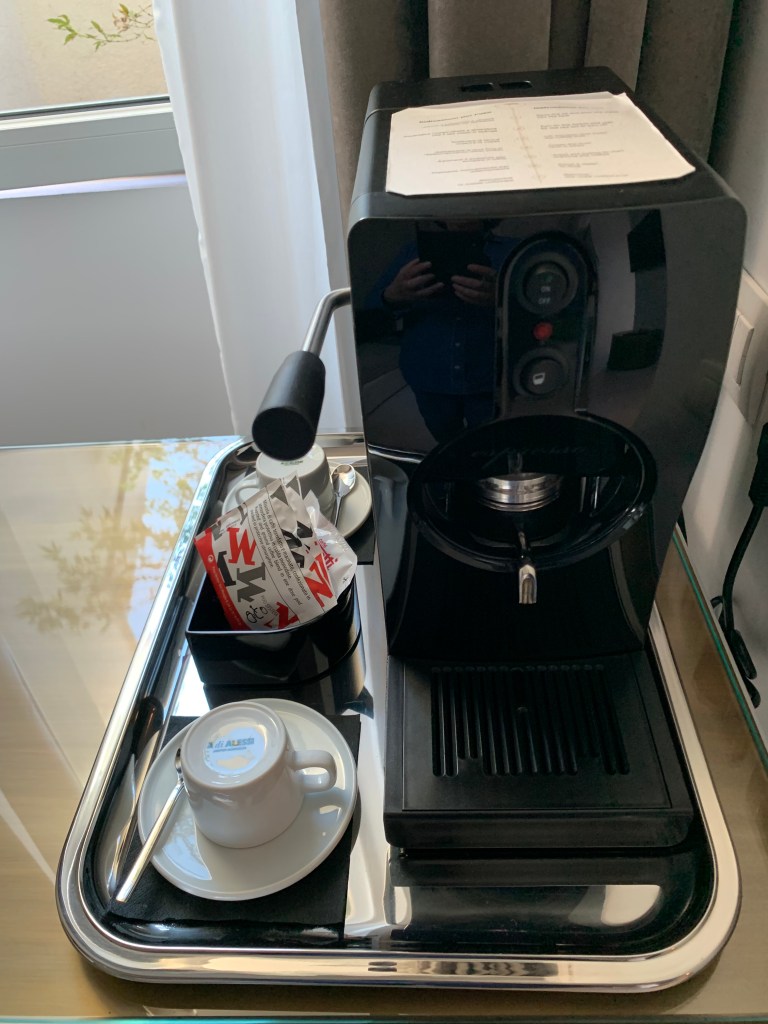
Following the theme of design and function, we both loved the espresso machine that allowed for a customized espresso shot. And for one of us, the Dyson hair dryer and hair straightener – the equipment our hair stylist uses – felt luxurious and came in very handy on the days it rained.  

We arrived in Milan after a short stay in Como at a vacation apartment that we found on the Plum Guide. While that experience was worth trying, we looked forward to checking into a hotel, and we were hopeful that our experience at Senato would match our expectations. It did; we loved everything about Senato. From the central location that provided easy access to all of Milan’s charm to the understated calm of our top floor oasis, everything worked. The Ranza family can certainly count us among its fans, and we can’t wait to return to get to know the hotel and Milan a little better.

Back to HOTELLING home