Marylebone, London, UK ~ Dorset Square Hotel


The Raffles was amazing — and we would have happily stayed there forever — but we also love London’s neighborhoods and have been wanting to return to Bethnal Green in East London and a hotel with fond memories for us: Town Hall Hotel. But when it came time to make the booking at the Town Hall, it wasn’t available; we figured this was our sign to try something new.


London has so many wonderful hotels; it really is an abundance of riches, and it can be hard to make a choice. Rather than looking to our go-to sources, we started with the idea of visiting a property connected with the hotel that gave us the original idea for our blog: the Crosby Street Hotel in New York. We don’t have a full entry for the Crosby Street because hoteling.org didn’t exist yet, but we chose a picture of the hotel for the featured image on hotelling’s home page, and we mention it in our “Past stays and reminiscences” entry where we note the hotel is one of our top 3 (it was on our list of favorites for a long time).

Crosby Street is a Firmdale hotel, one of (now) three in the U.S. The Firmdale brand is the brainchild of Ken and Kit Kemp, whose company includes 11 hotels. The very first property the Kemps opened is — you guessed it — Dorset Square. Since staying at Crosby Street, we have wanted to try another Firmdale hotel, and we thought it would be fun to check out the original.


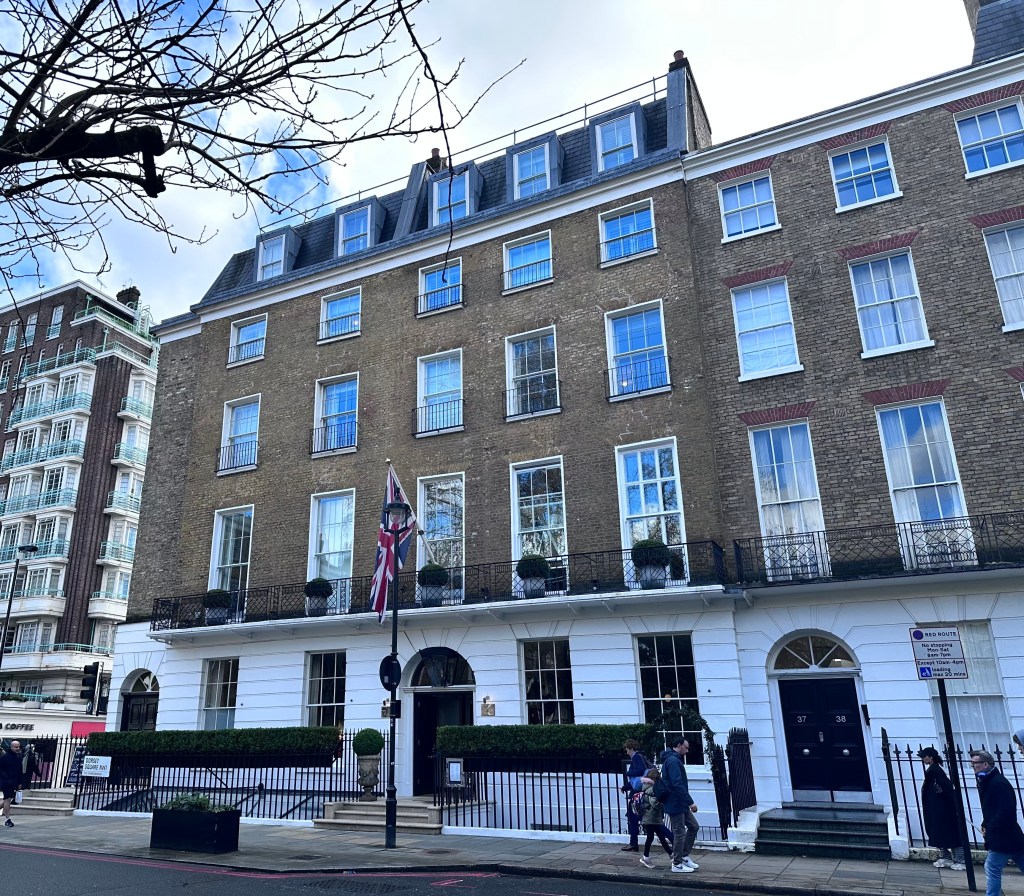
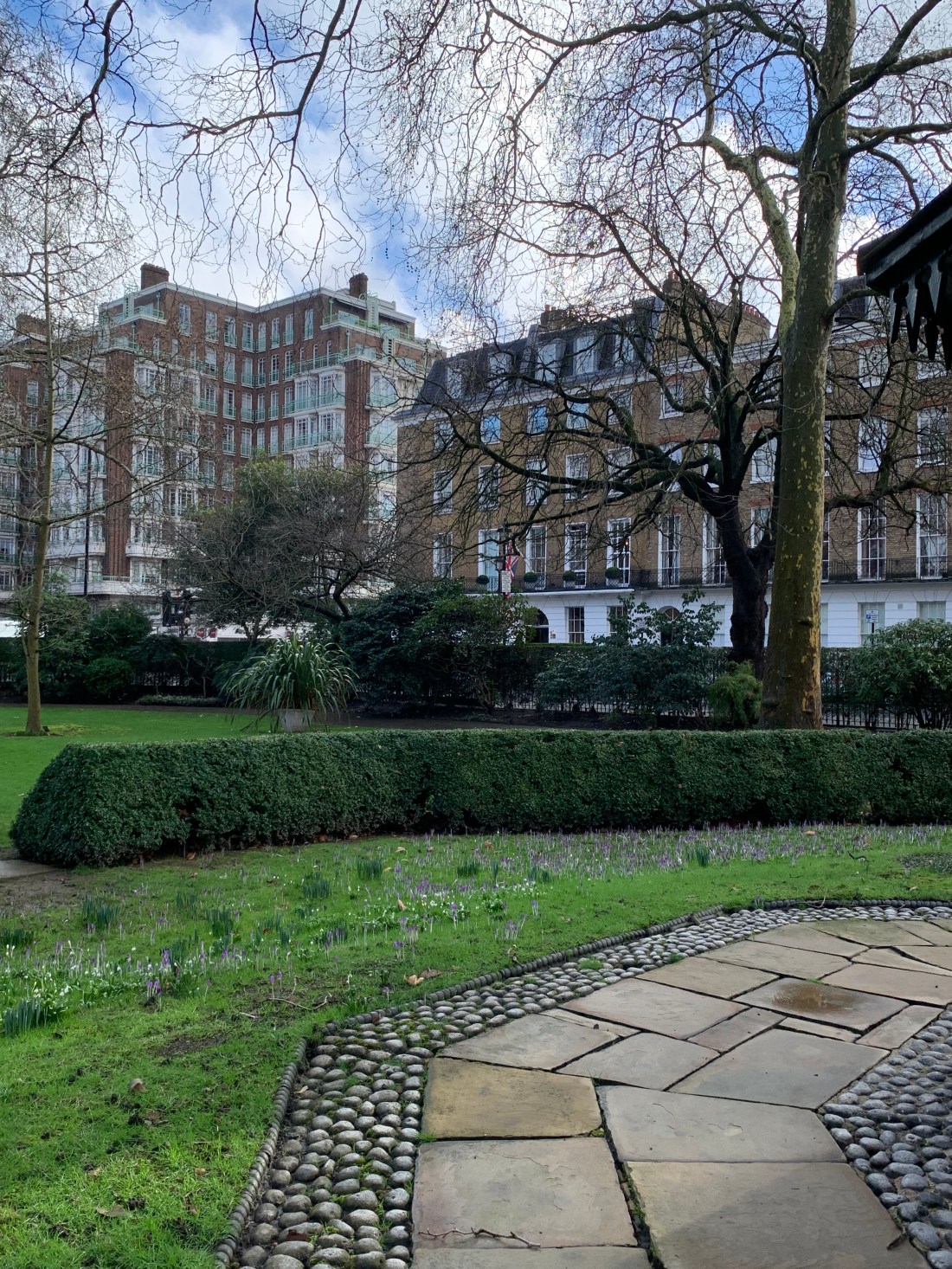
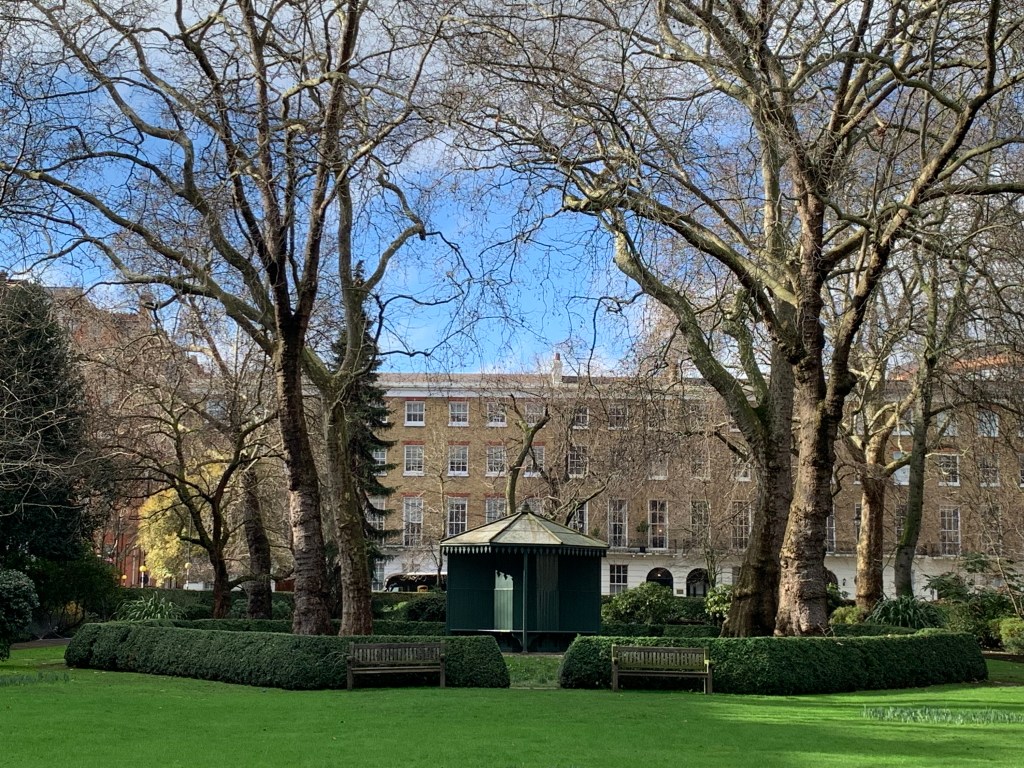
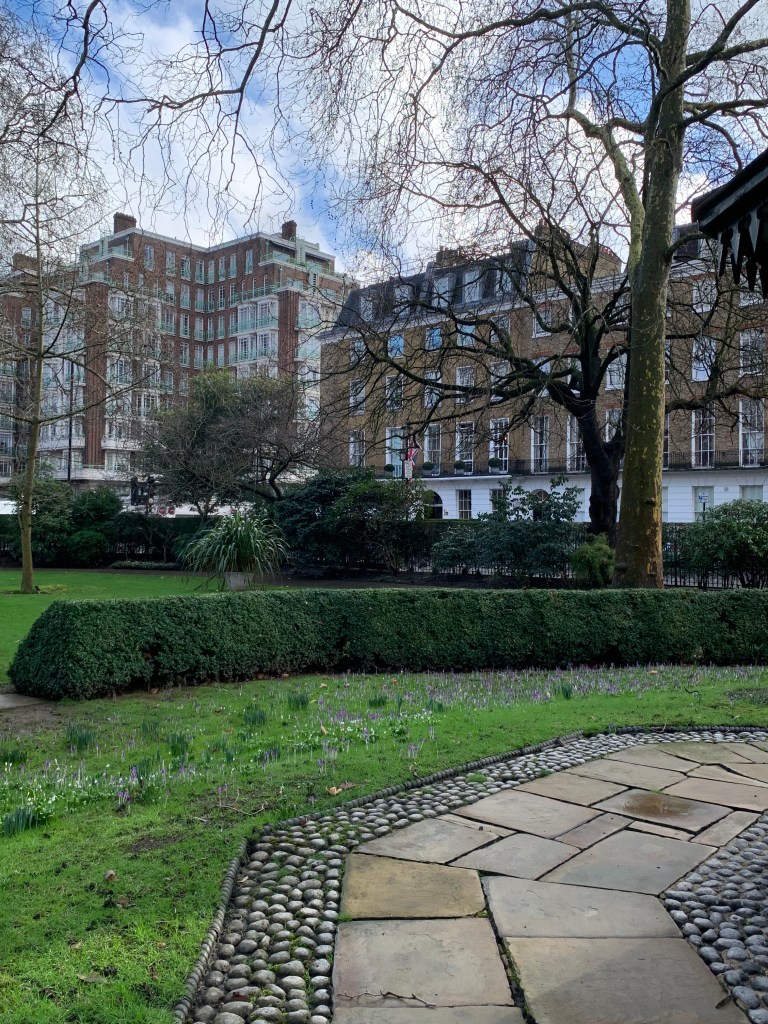
We thought we knew Marylebone pretty well, as we spent a lot of time exploring the neighborhood last year, but we’re pretty sure we had not previously come across the hotel or even the lovely residential square (the hotel’s namesake) that it sits on. With that said, even if we had walked by, it would be easy to miss the hotel. It is housed in an attractive Regency building that blends in with the townhouses that surround the square. Only a small sign at the doorway identifies the hotel.


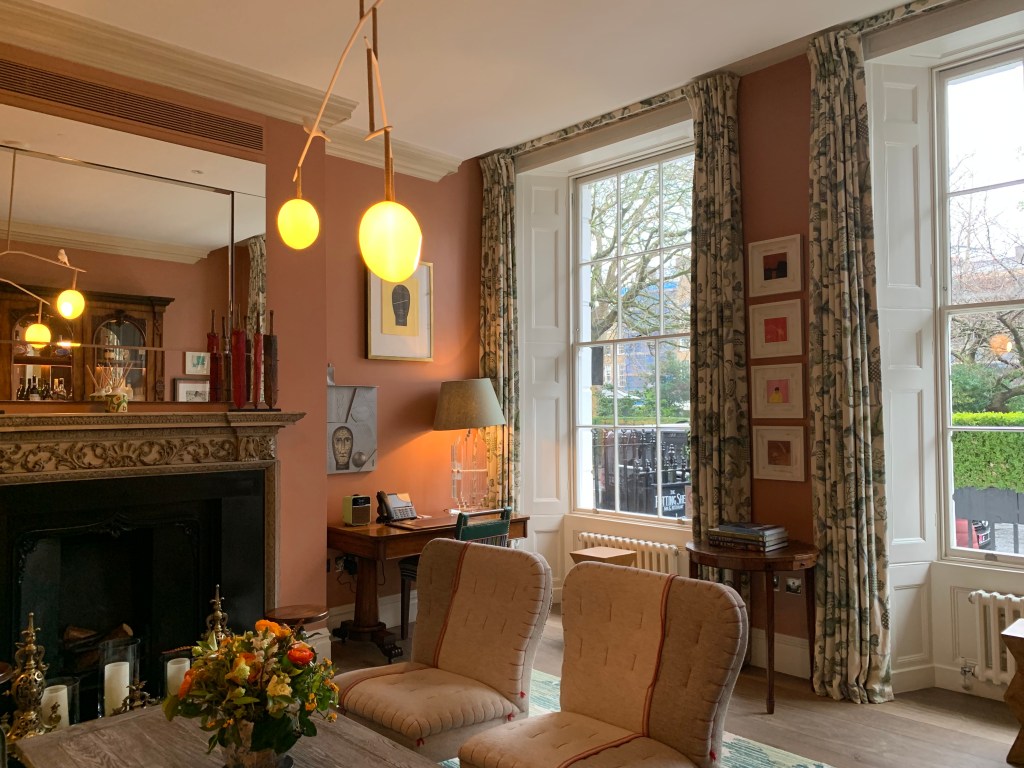
Dorset Square is understated and petite — a definite contrast to the grandeur of Raffles, but they both feel sumptuous, just in quite different ways. We arrived early in the afternoon, so our room wasn’t quite ready. We were invited, however, to linger in the drawing room, which featured a fireplace and honesty bar, or to visit the hotel’s restaurant, The Potting Shed, which the staff member at reception took us down to see.
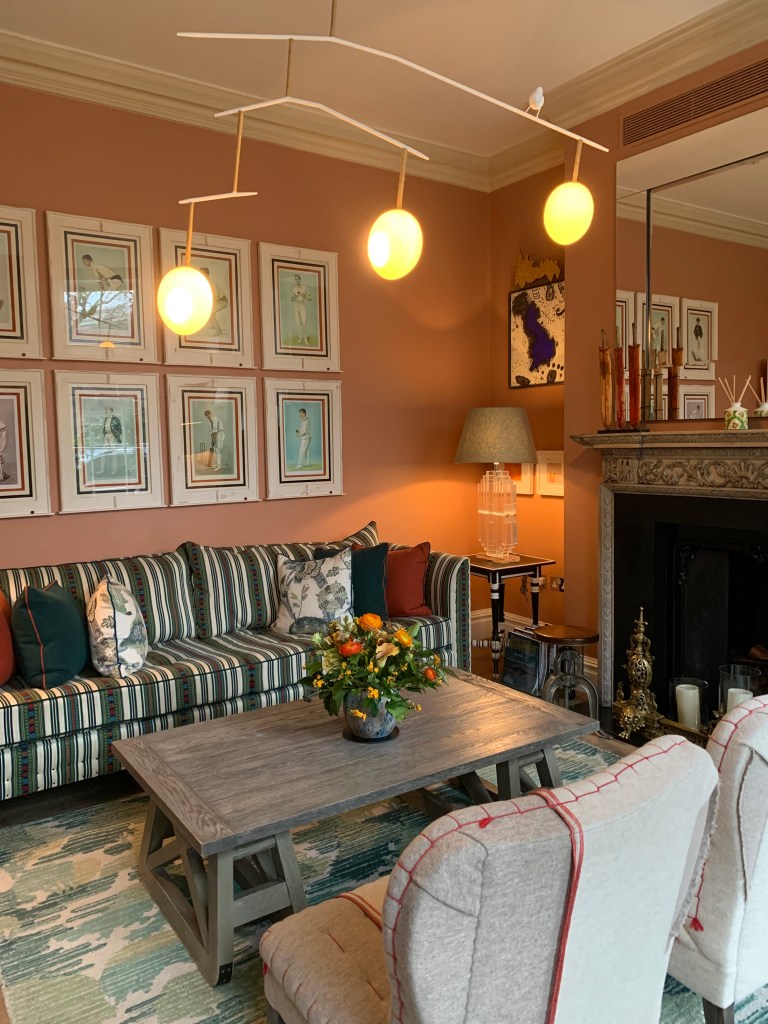
The hotel’s design felt similar to Crosby Street, even though the properties are quite different. The Firmdale website says the 11 hotels encompass “modern English style, exceptional personalised service and an unrivaled attention to detail.” Our first impressions of Dorset Square reinforced this mission.

I’ll also say the aeshetic of the hotel — while not something I would probably want to use in the interior design of our own home — just makes me happy. Dorset Square (the square itself), is now a private garden but was originally a cricket ground, and the hotel plays on the cricket and garden themes throughout. Coming to London in January from Minnesota where winter was in full force, we were happy to see all the references to trees, flowers and sporting of the outdoor type.


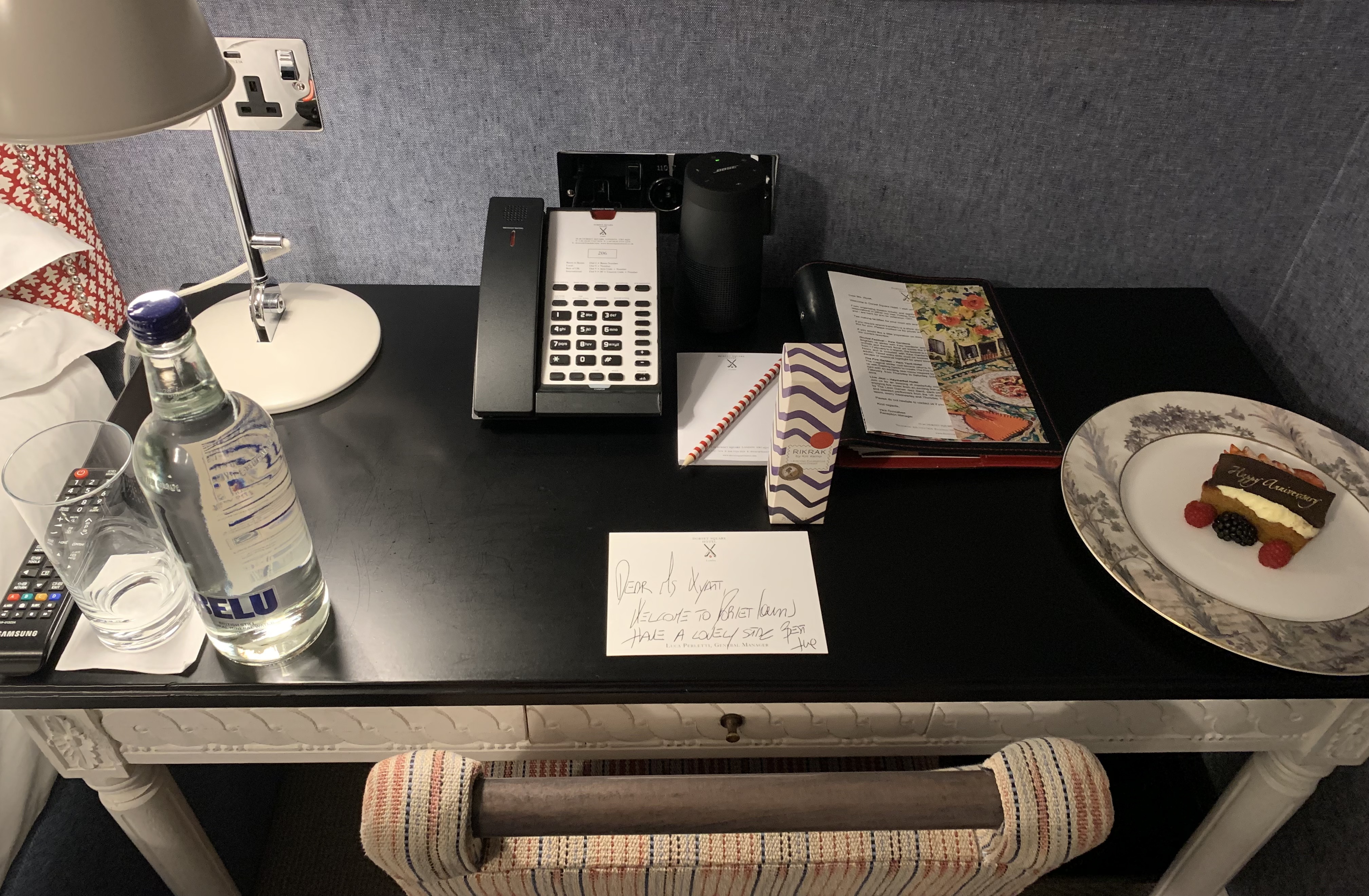
While it would have been tempting to sit down and relax as preparations for our room were completed, London called, so we left our bags and headed out. By the time we returned, it was evening, and the housekeeping staff was doing turndown services. We found bottled water at each bedside, a small bottle of RikRak pillow spray (which smelled amazing) and tube of hand cream, a welcome note and a piece of cake.

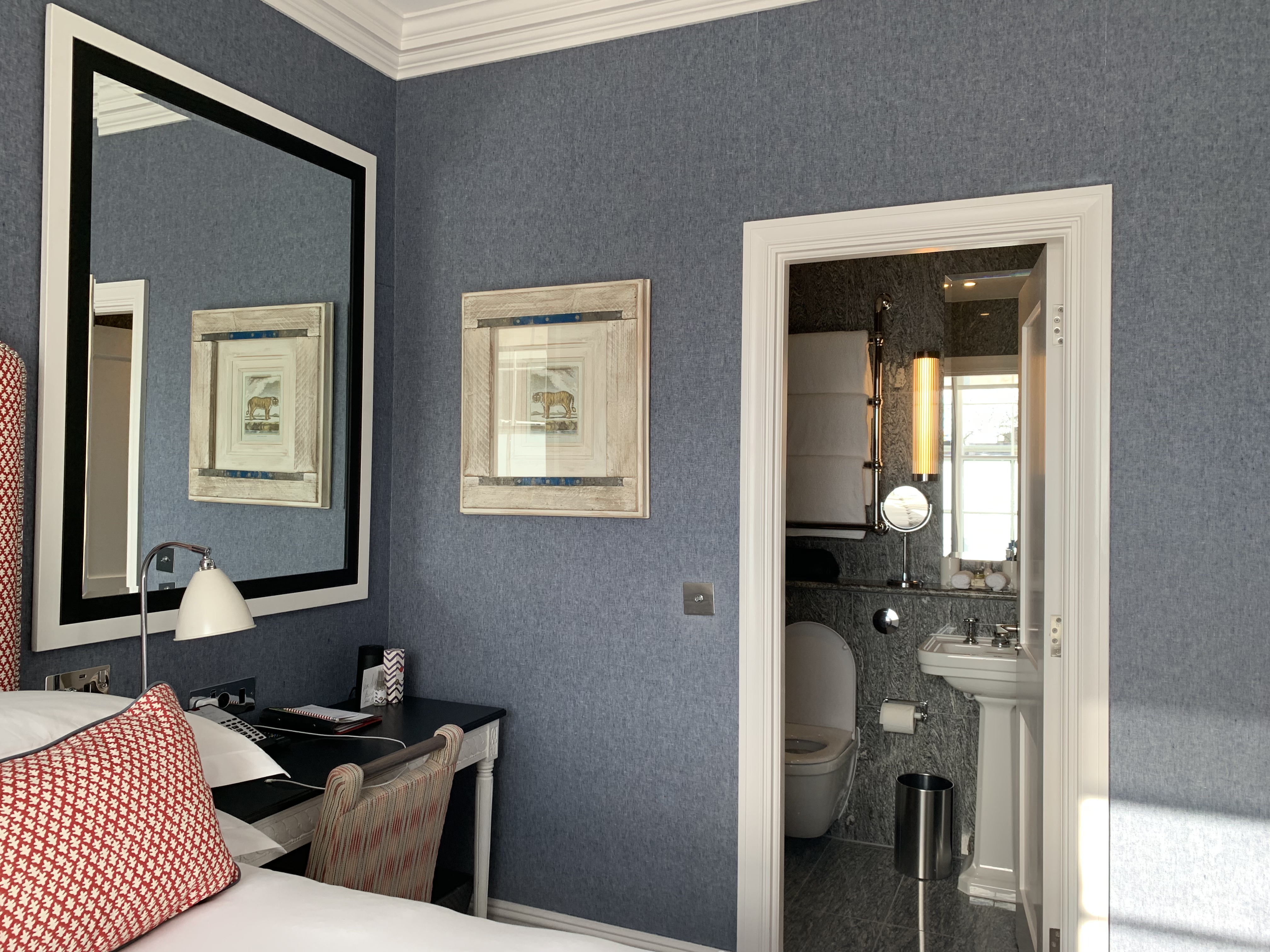
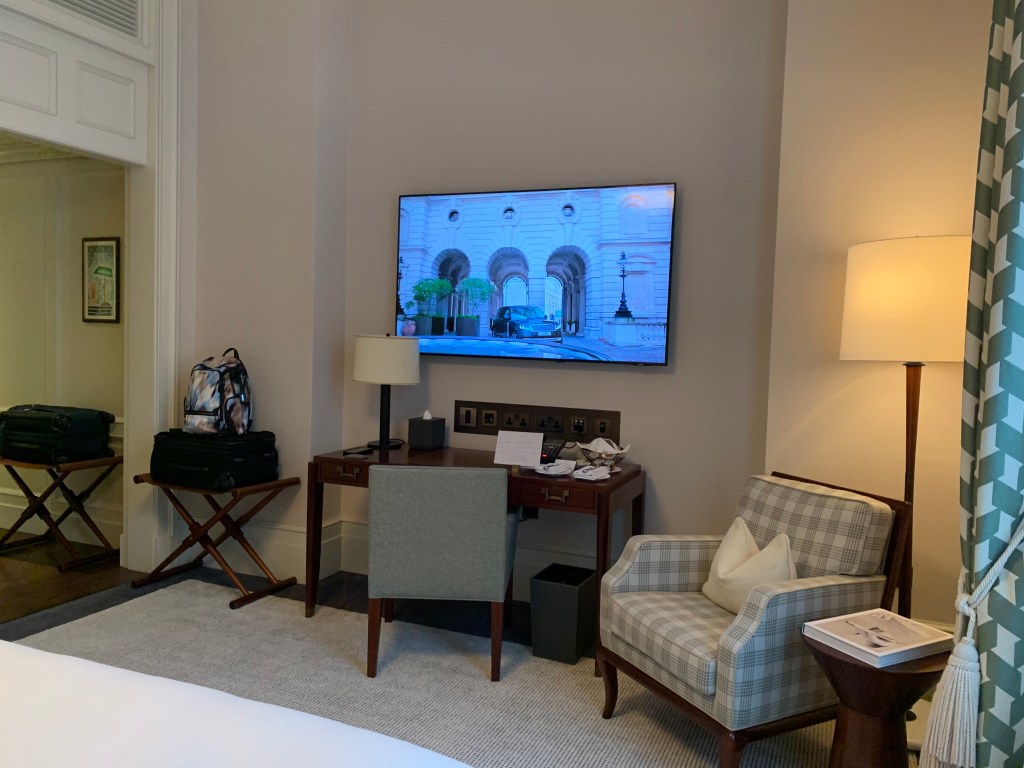
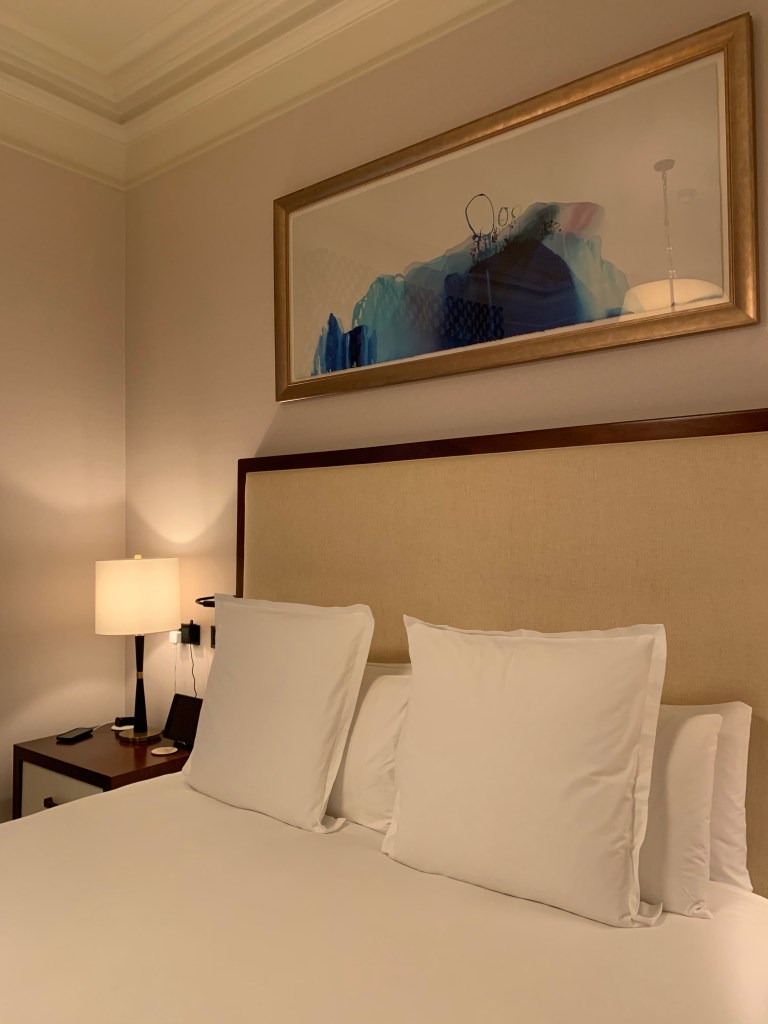
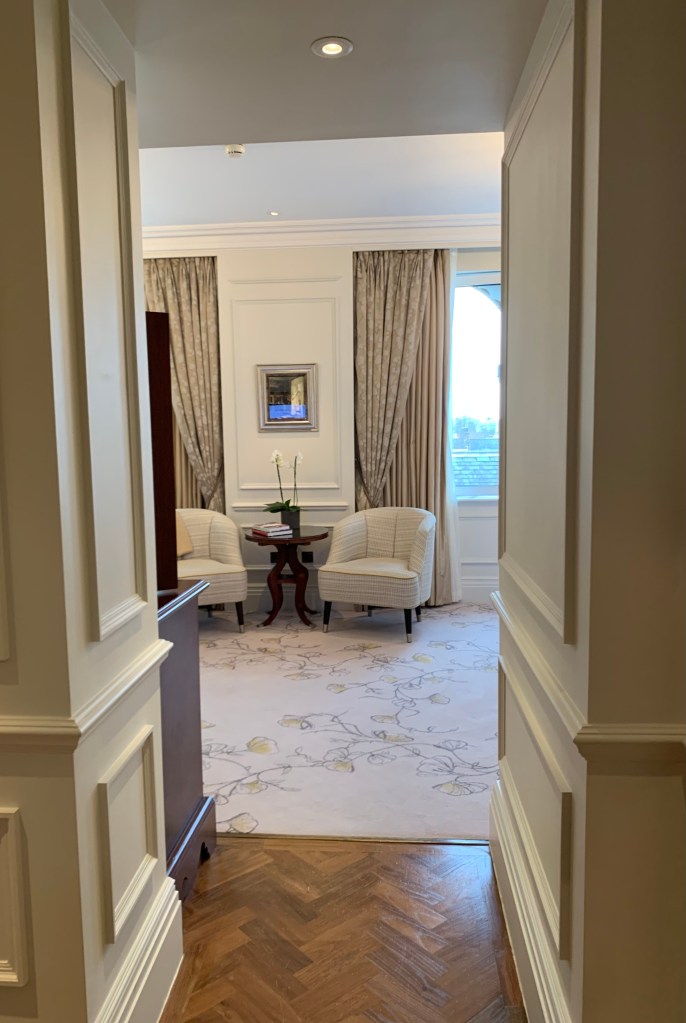
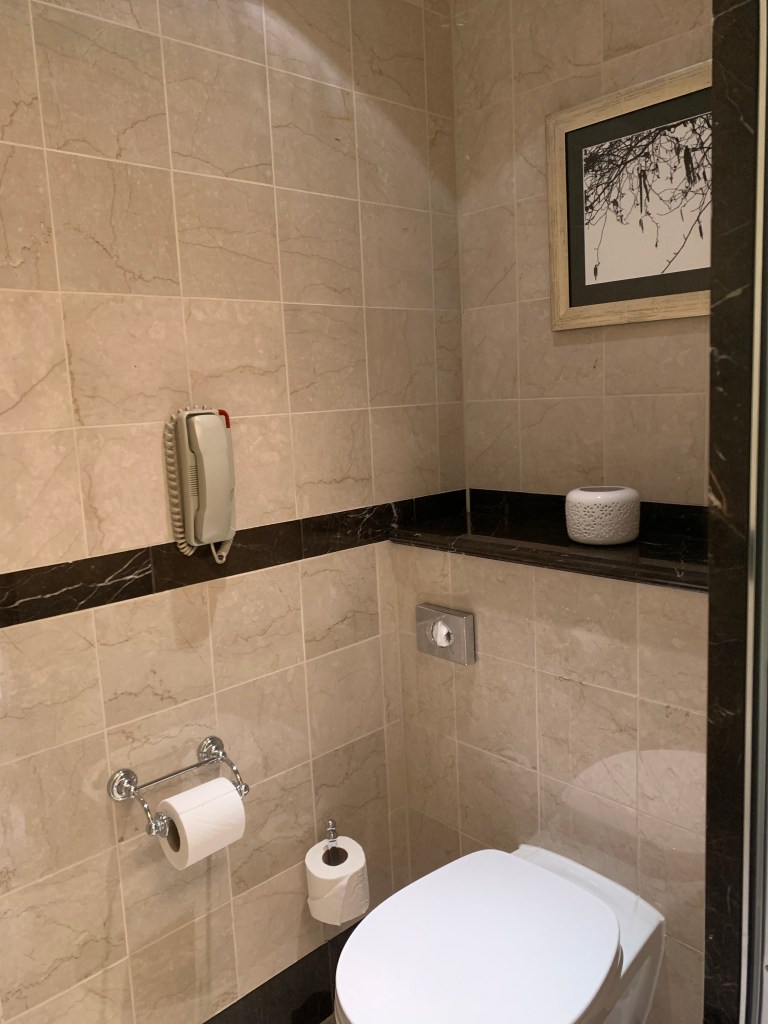
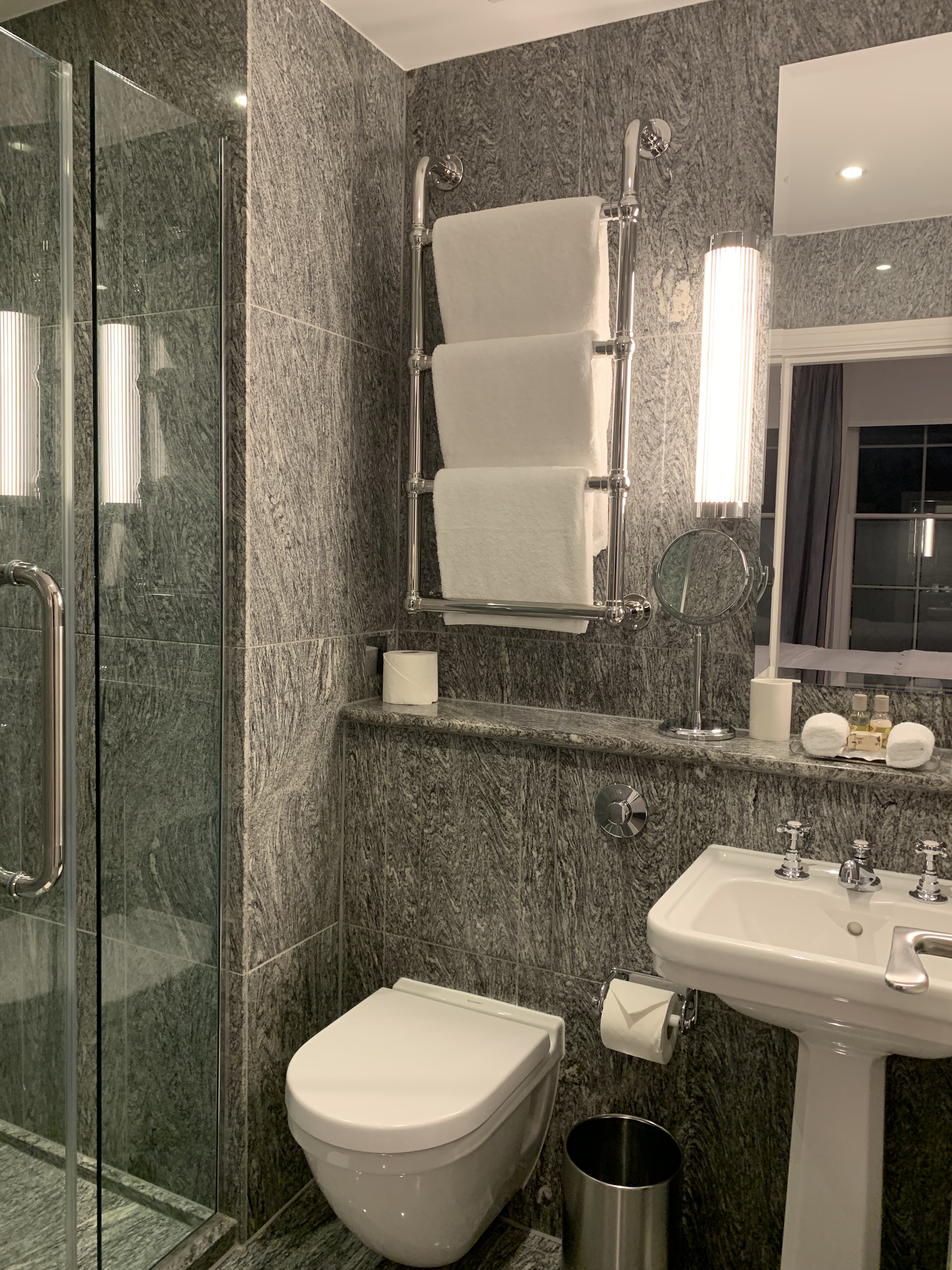
Our room was on the smaller side, but it had everything we needed; the same could be said for the bathroom, which was floor to ceiling marble and felt luxurious despite its size. The bed — the primary feature of the room — was tall and fluffy and oh-so comfortable.
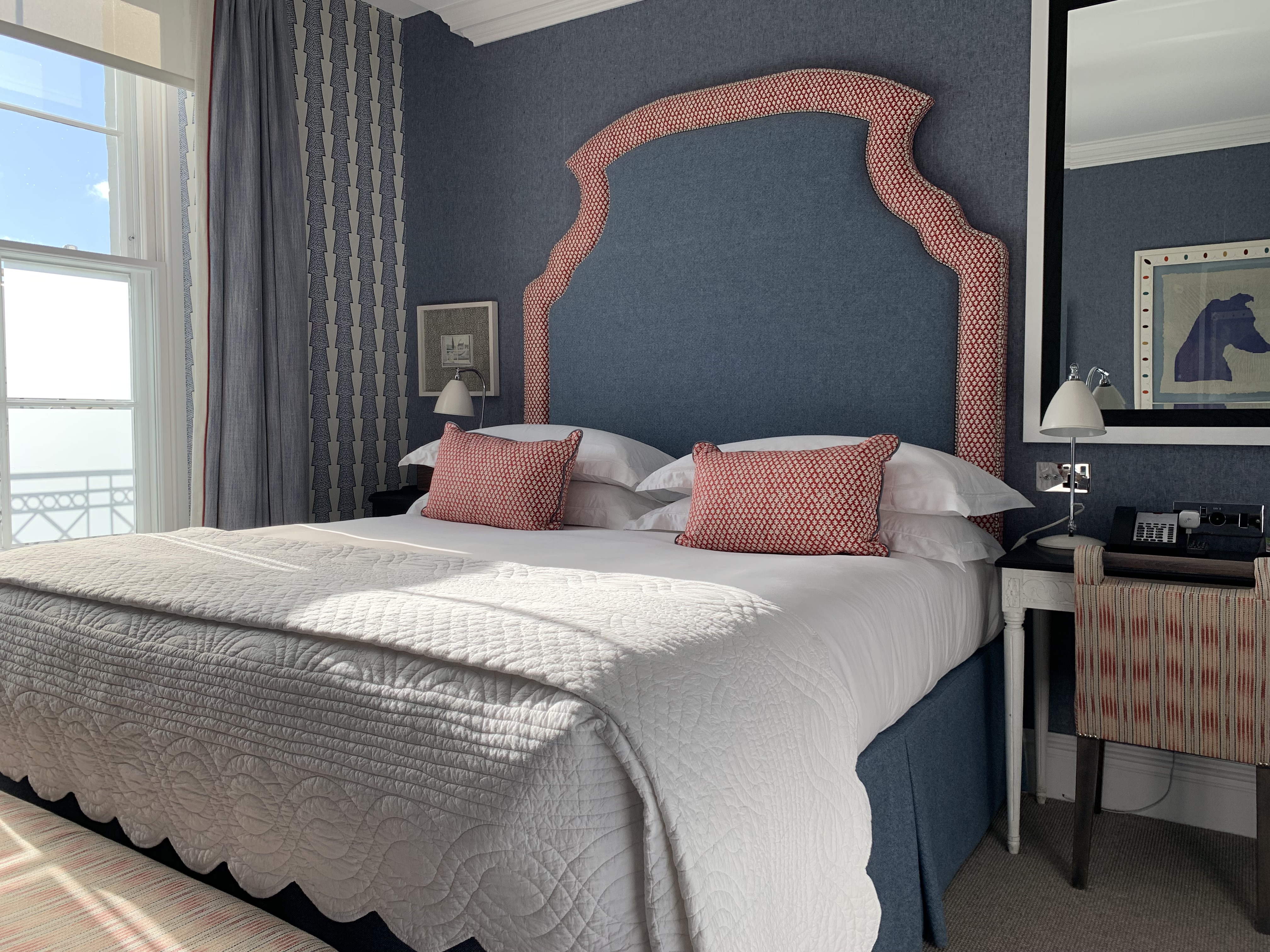
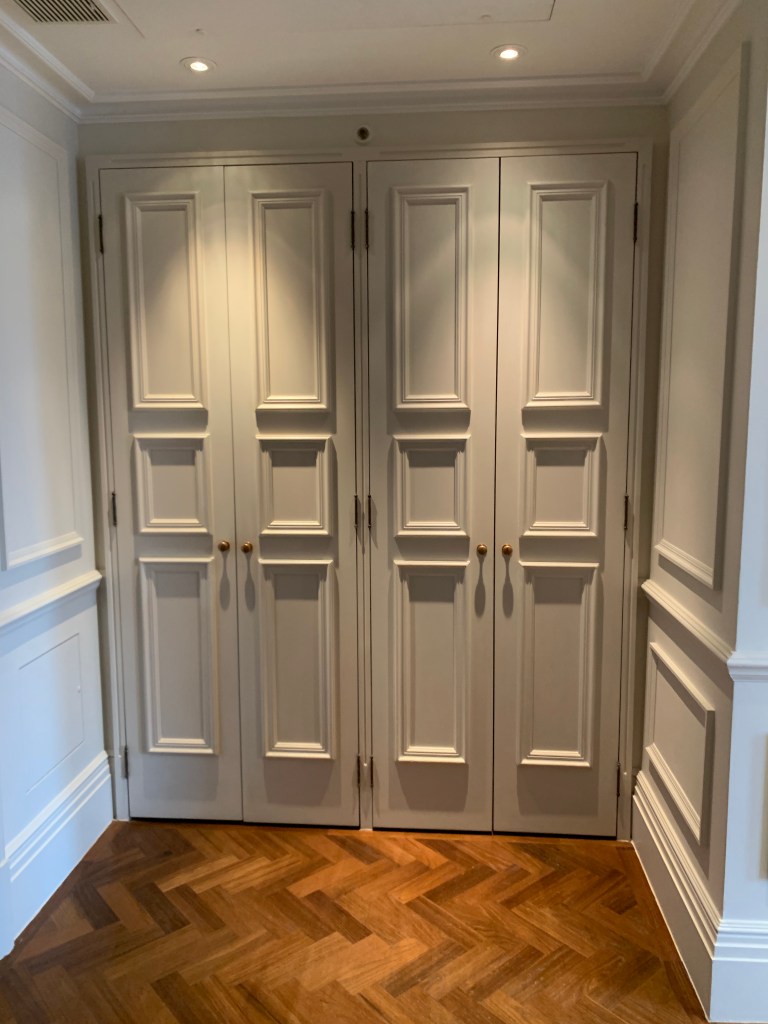
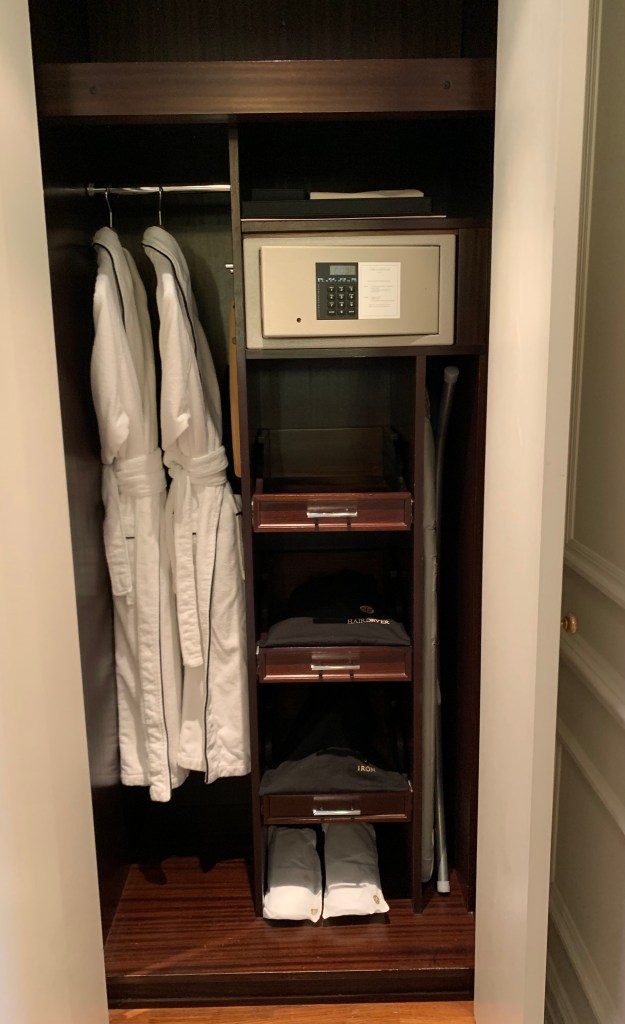
The combination of patterns, textures and colors in the room was a feast for the eyes, and, as we remembered at the Crosby Street, everything was impeccably maintained — not a scratch or nick to be found, even in the closet, which was painted a high-gloss white. We wouldn’t be surprised if touch-ups are done after every guest.
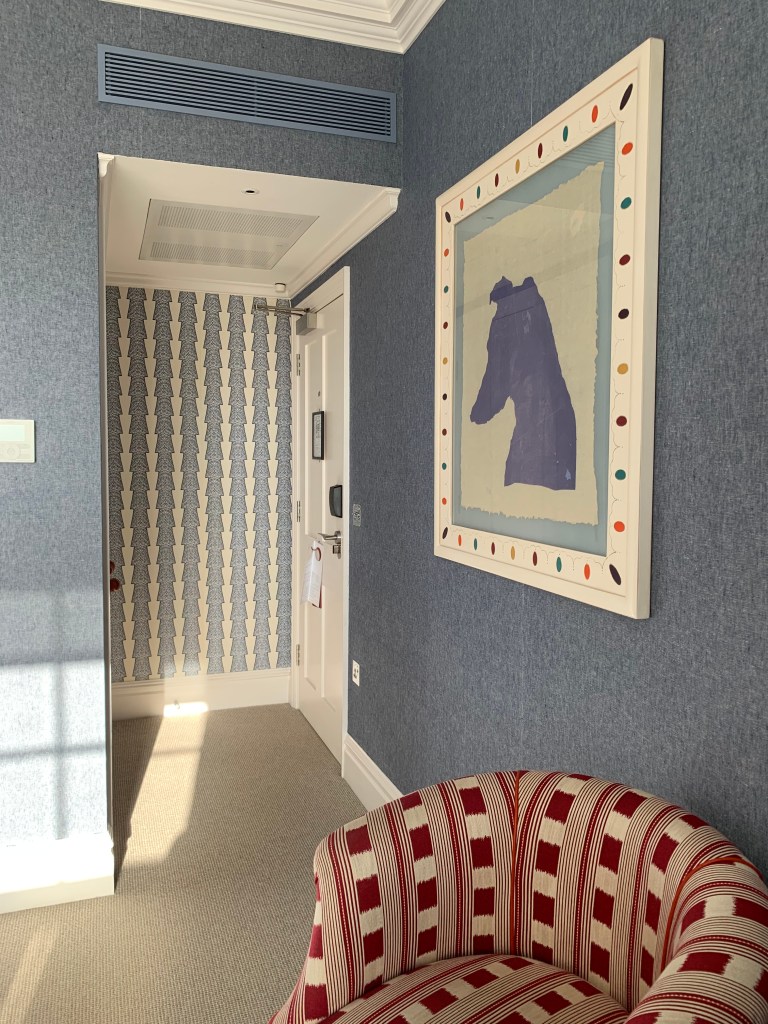
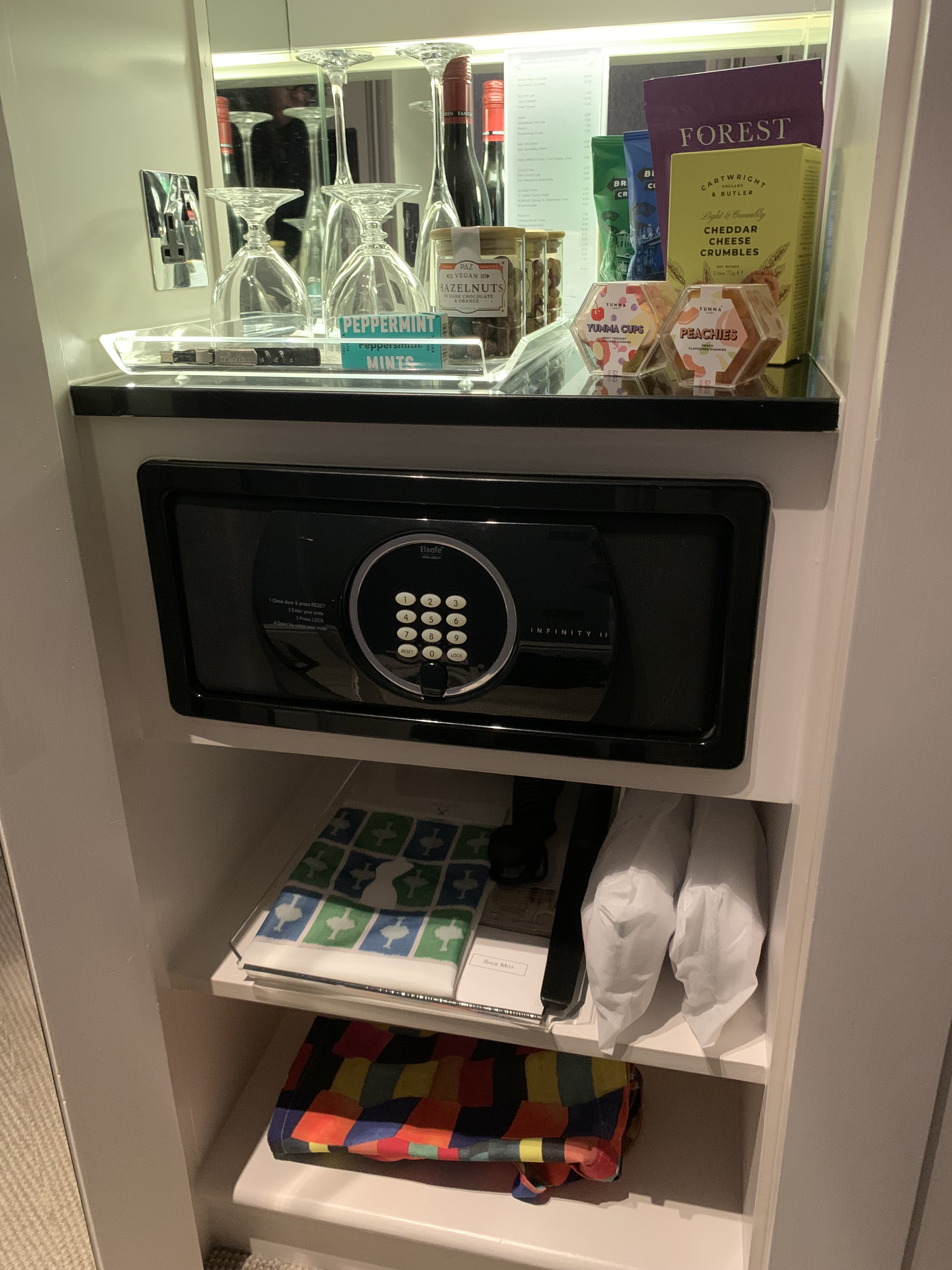
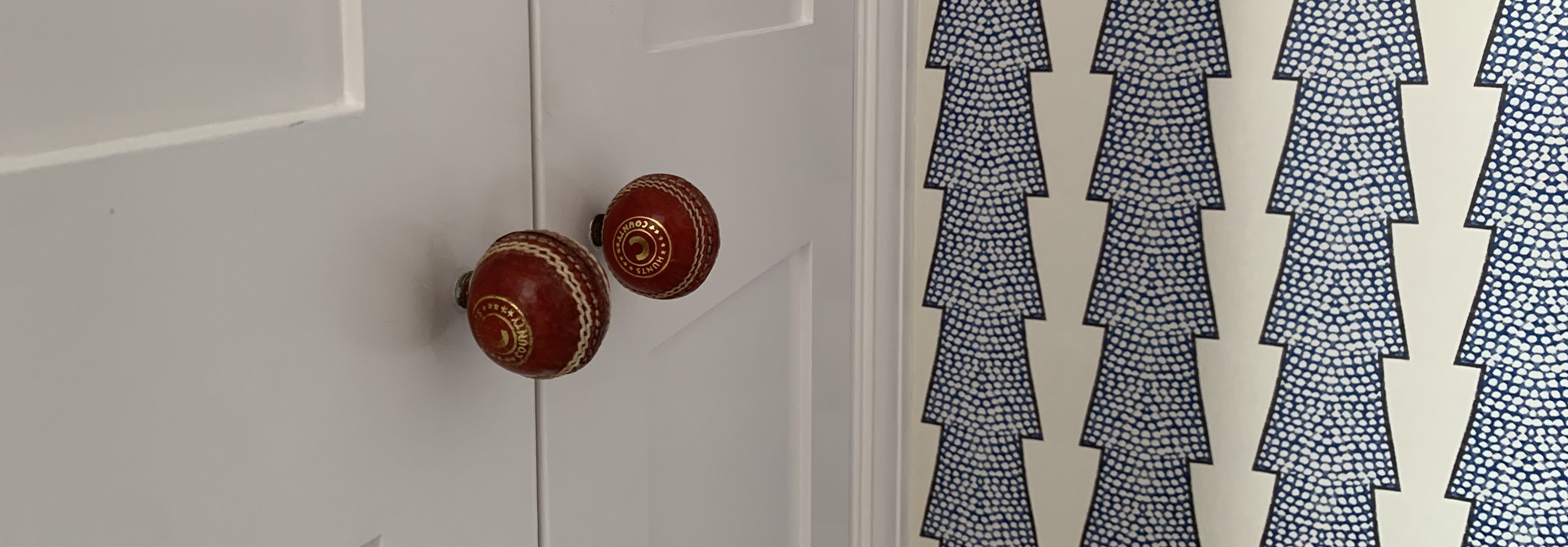
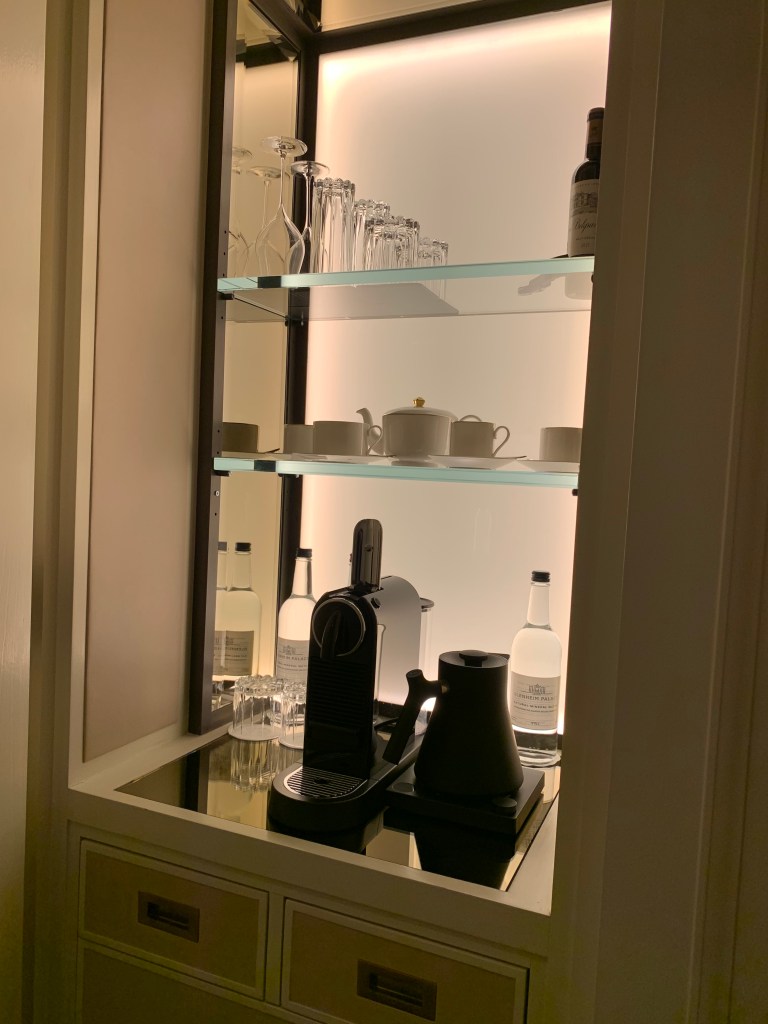
I particularly loved the large painting of a dog in silouette, but the room had lots of smaller details to enjoy as well, including the knobs on the closet door, the selection of drinks and snacks in the minibar, and the colorful canvas bag we were invited to take with us.

My only small complaint was that our window had frosted squares on the bottom half that impeded our view. We could see that our room looked out to some mechanicals for the building, so we understood the purpose of the frosting, but it made me feel a little claustrophobic when we were in the room during the day. If we were to return, we’d book a room with a view of Dorset Square.


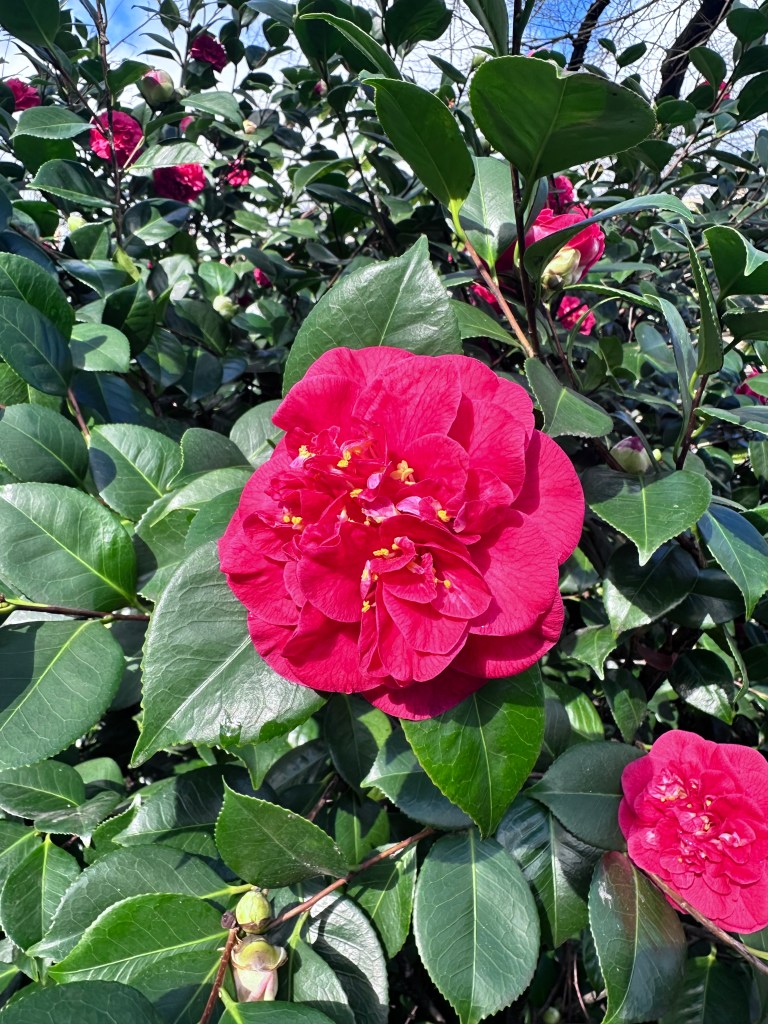
I loved feeling, for a few days, like I was a resident of a stylish townhouse in Marylebone. The hotel gave us a key to visit the private square, and we met the gardeners who had recently been hired to look after the square. It was beautiful, and we couldn’t get enough of the blooming bushes and bulbs. We also discovered (or rediscovered) Marylebone Station, which is both a tube stop and an overground station serving destinations to the northwest operated by Chiltern Railways. The station is as charming as the hotel and is now my favorite in London. I also appreciated the low-key but completely competent service at the hotel. We felt like we were in the good hands of staff members who authentically cared about their guests.
Back to HOTELLING home

Whitehall, London, UK ~ Raffles London at the OWO

We’re excited to welcome our first guest contributors to hotelling.org. This entry is a collaboration with two friends who invited us to join them at the Raffles in London; thanks to them for sharing their insights on the Raffles experience!

This trip was definitely a ‘treat yourself’ moment. We were coming off a couple of months with family in Serbia, transitioning back home and looking for a few days of luxury travel along the way.

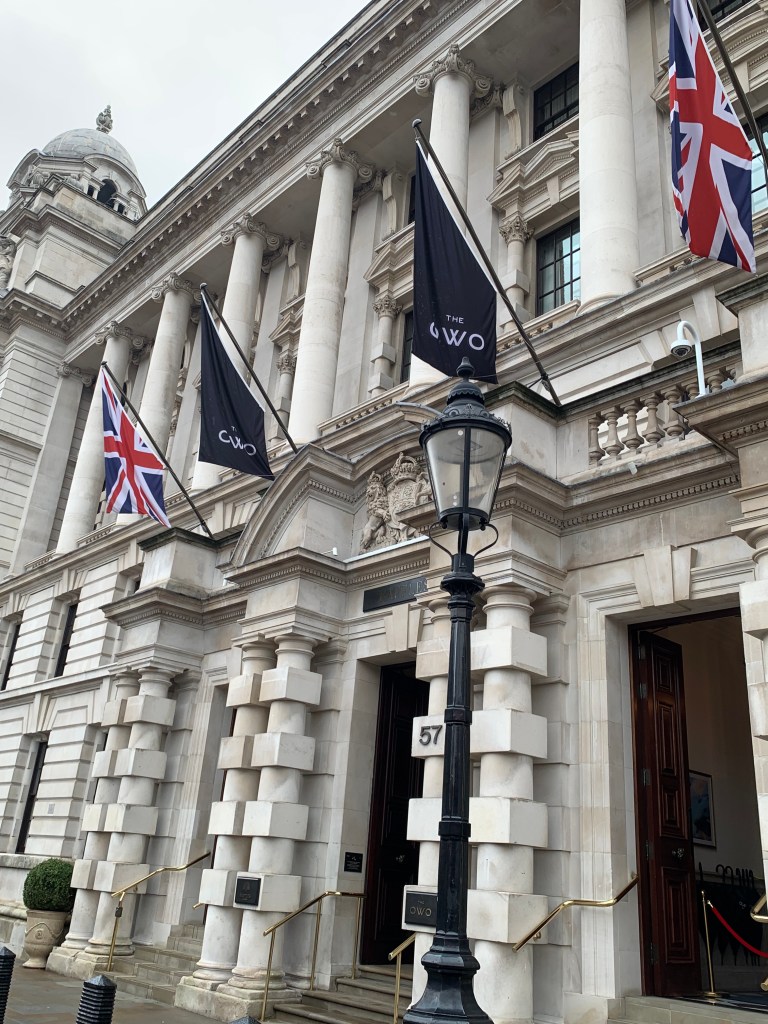
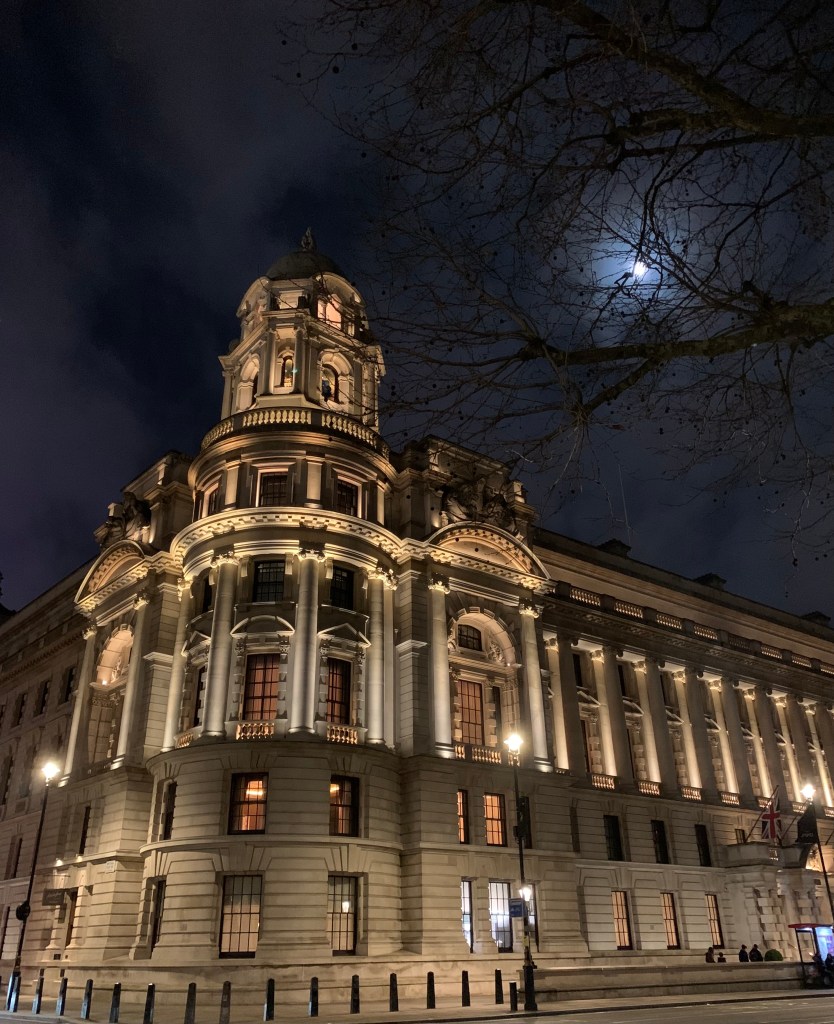
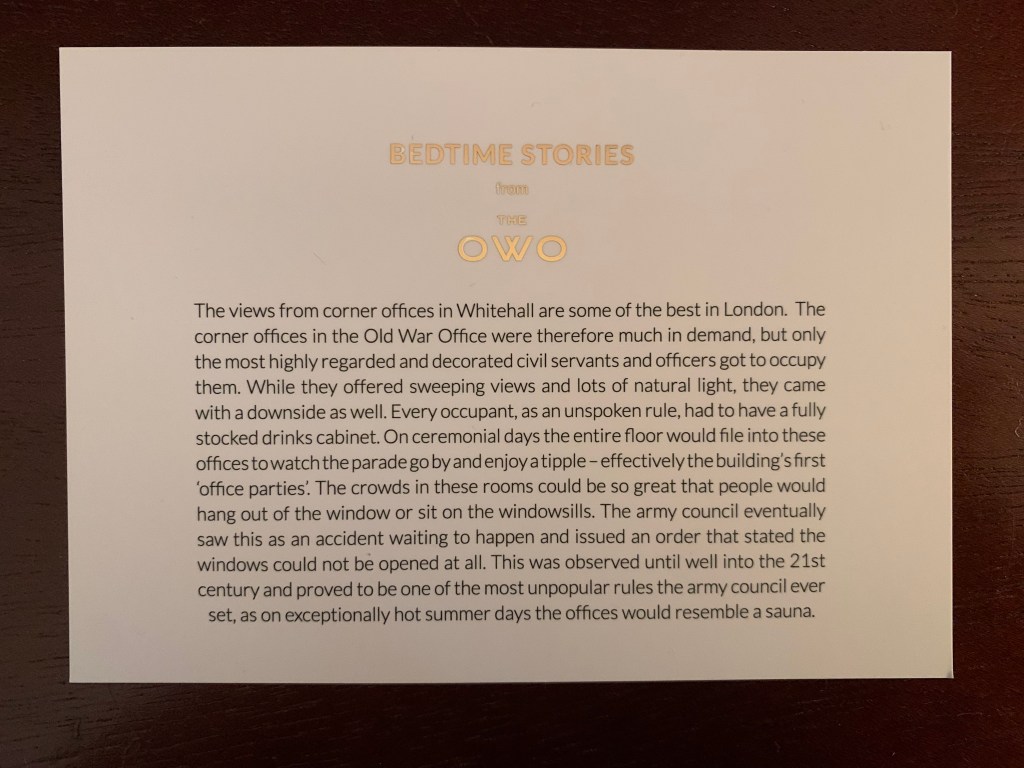
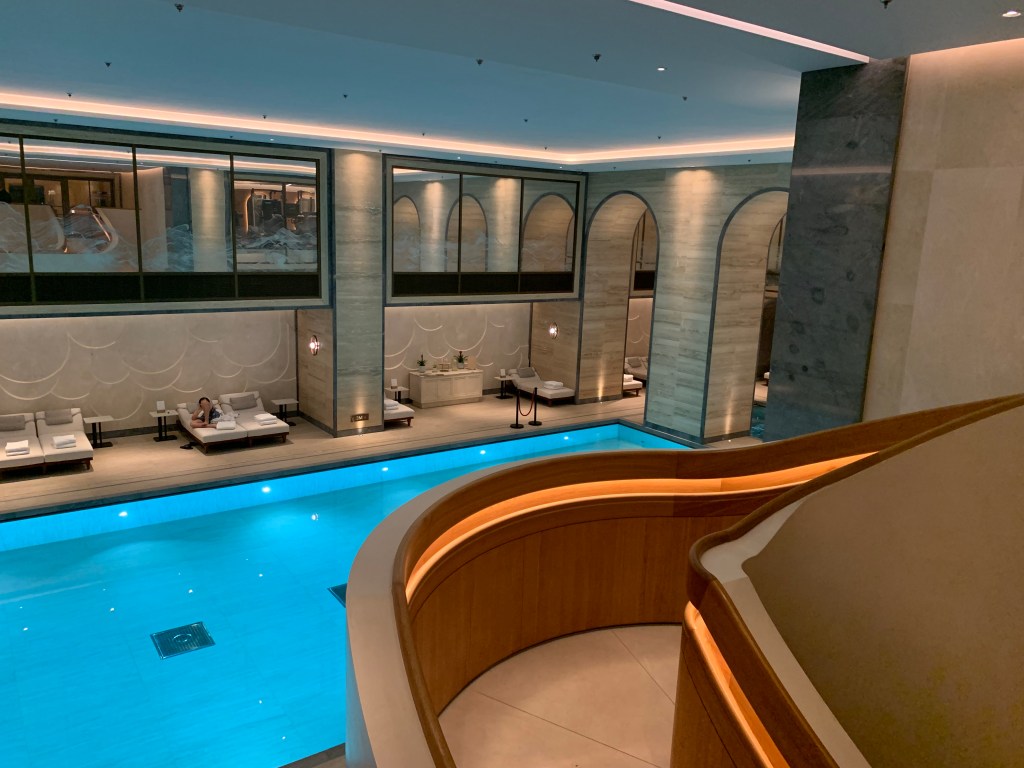
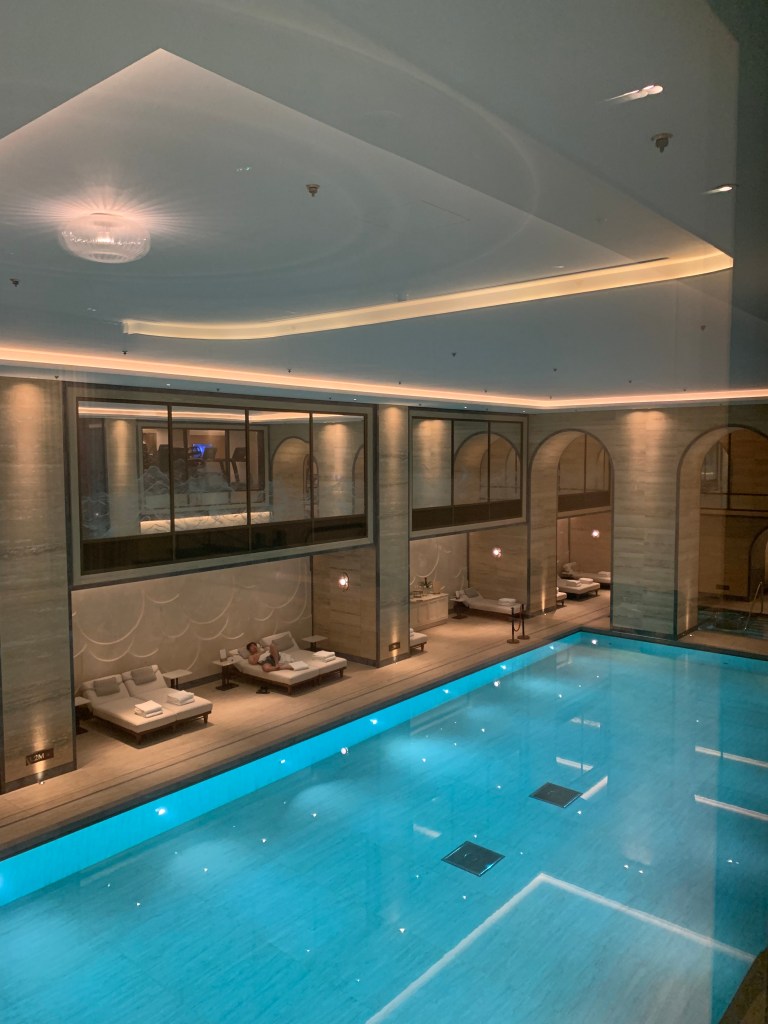
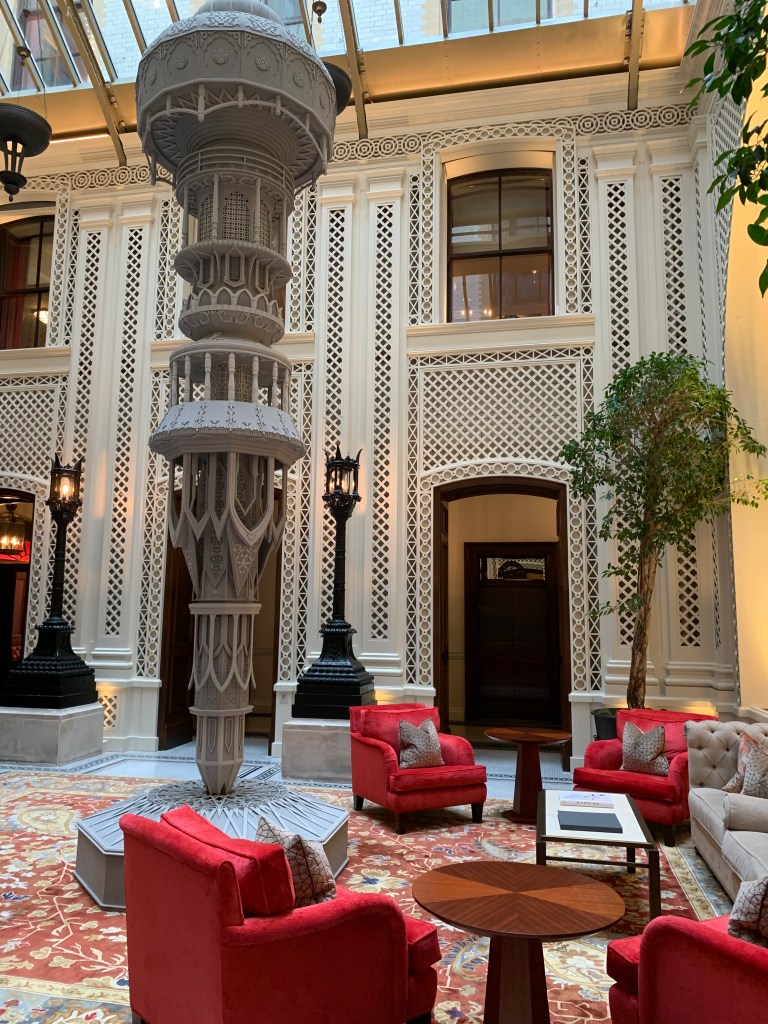
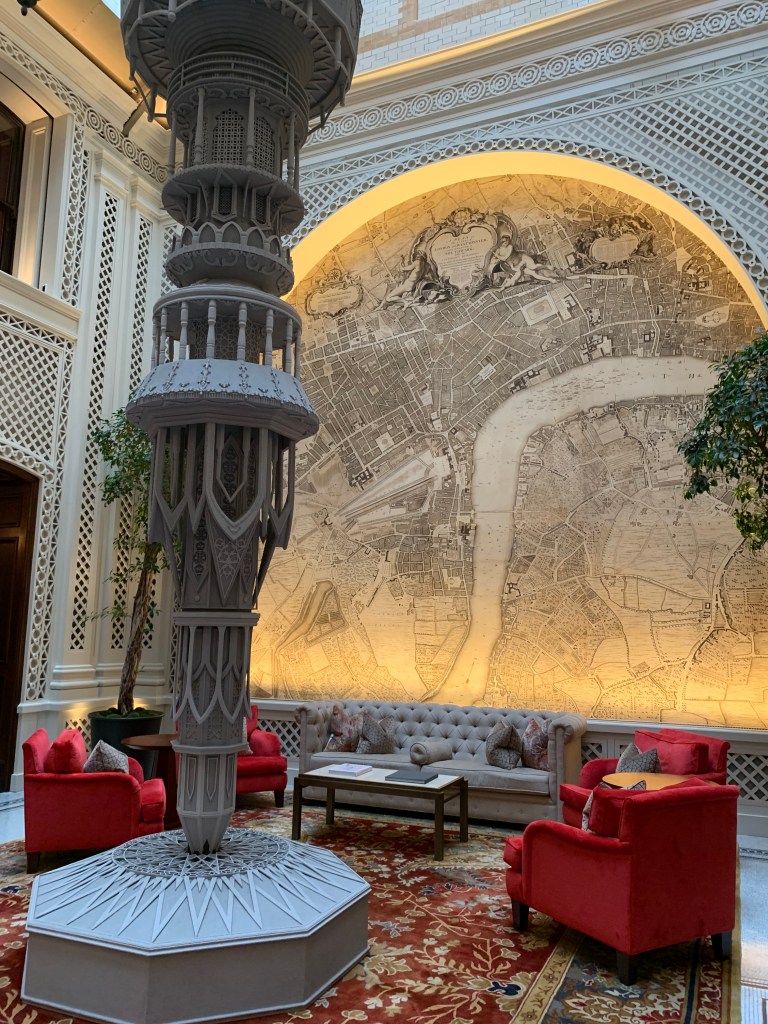
We were intrigued by the history of the OWO, which formerly served as the headquarters of the British War Office and is right on Whitehall among the iconic buildings of England. The hotel also has a knock-out spa – part of the ‘treat yourself’ scheme.

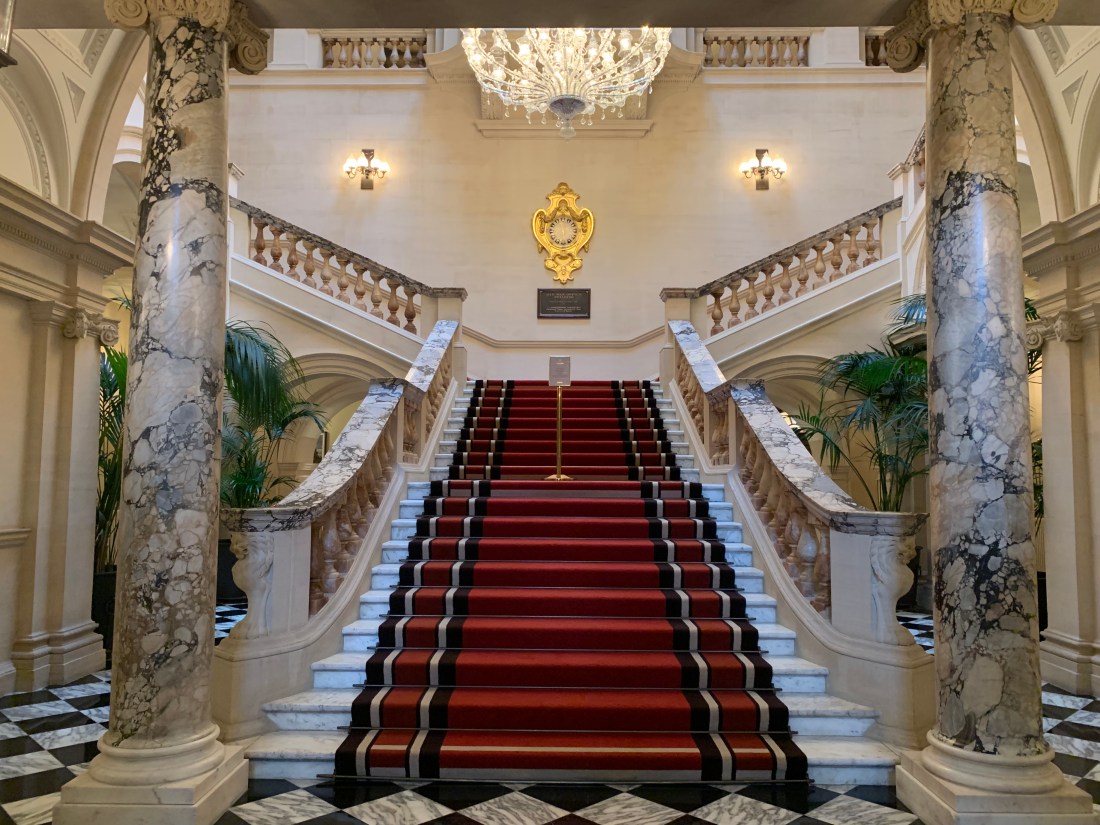
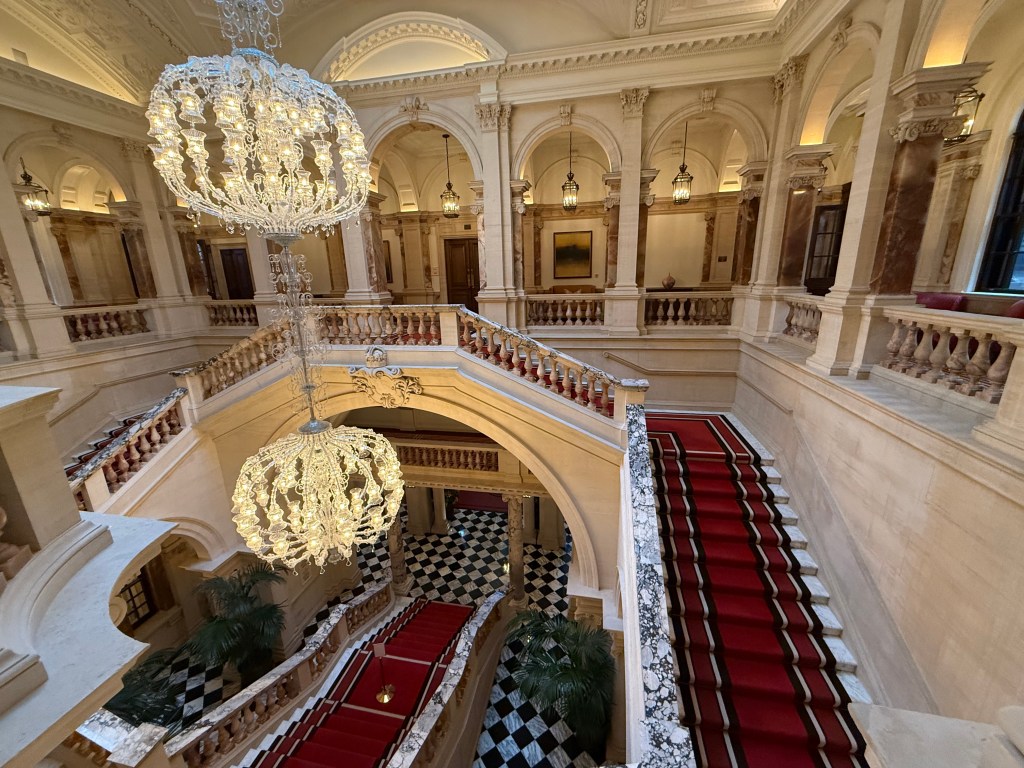
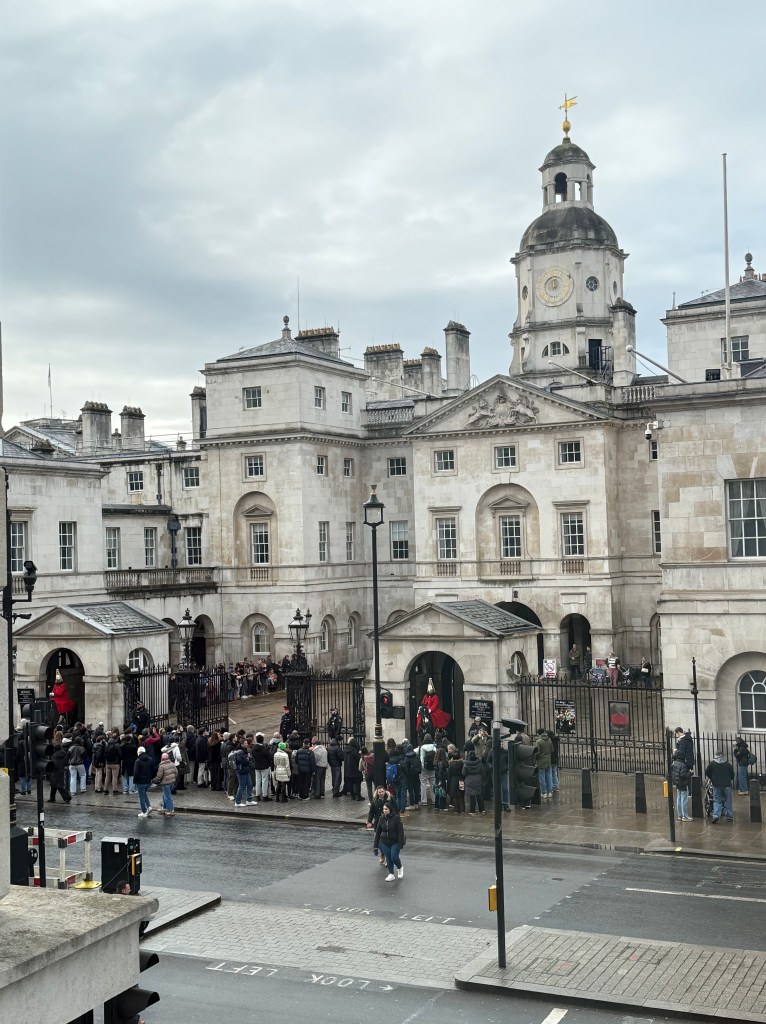
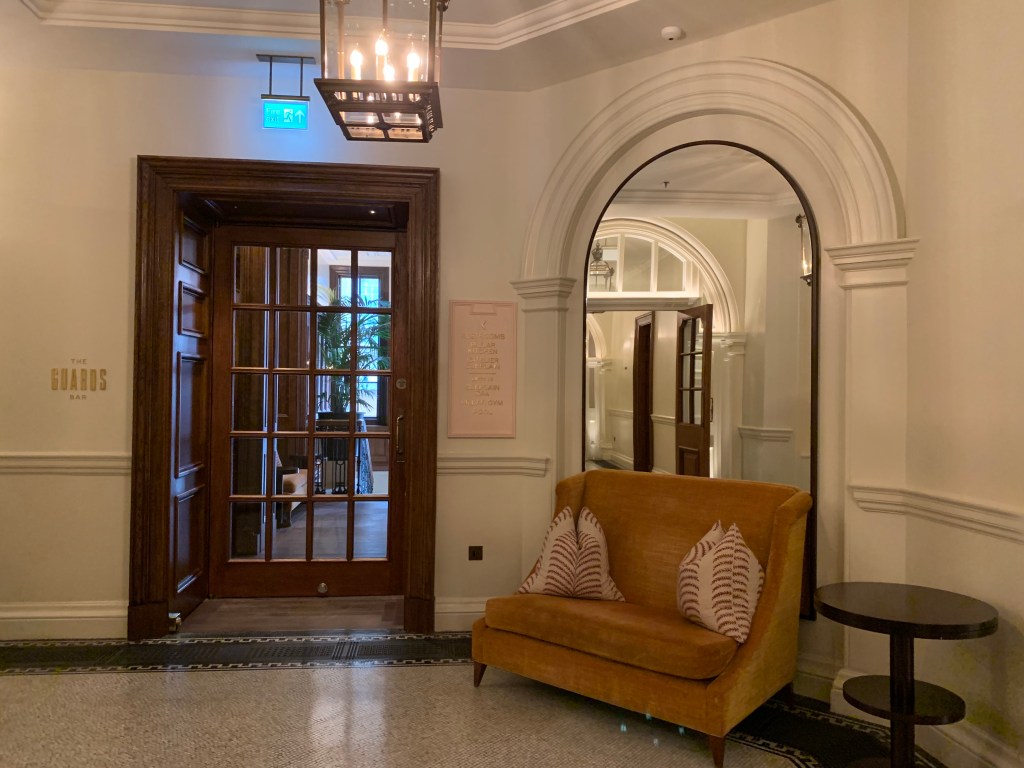
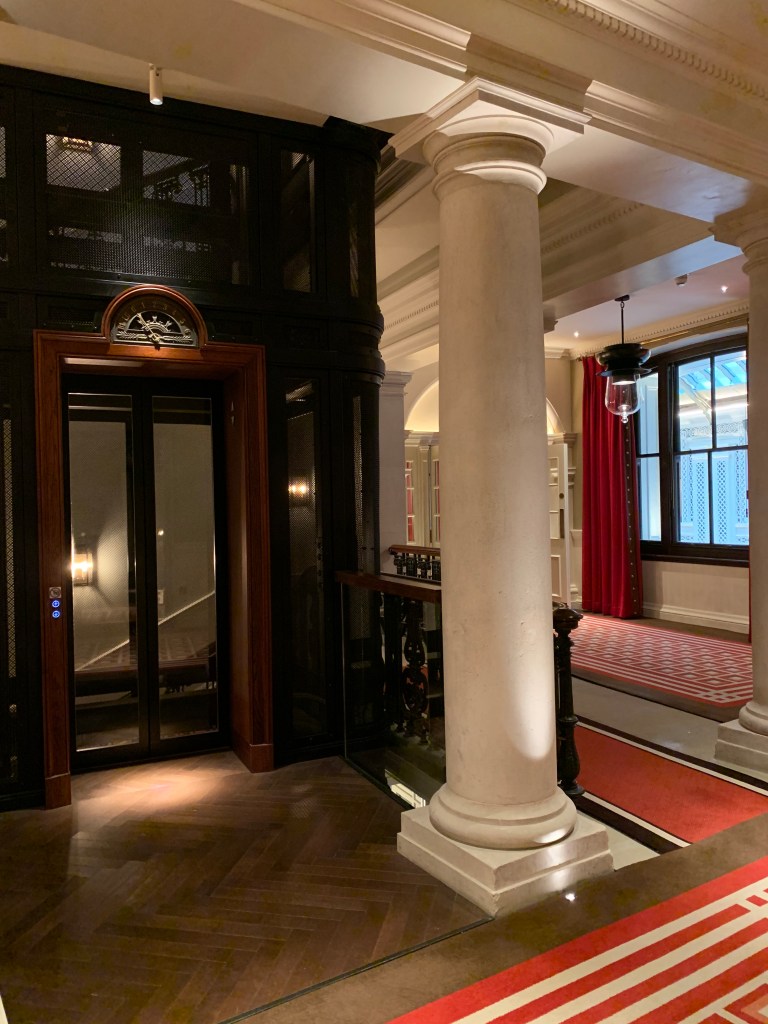
The entry to the building is directly across from the Royal Horseguards with tourists all around, so it really is right in the center of London’s power. The porter invited us in, asked if we were staying, and then whisked us off to reception, which was tucked away in the back of the ground floor. We didn’t have a moment to pause and take in the massive entry and grand staircase. In the reception room, we were seated at a desk and offered champagne, while another staff member took our luggage. With the exception of the champagne, it felt a little like meeting with a banker. The staffer from reception then escorted us to our room with an introduction to the ground floor bars and restaurants along the way. Our bags arrived separately. It was all well executed but felt a little choreographed, like a ride at an amusement park.

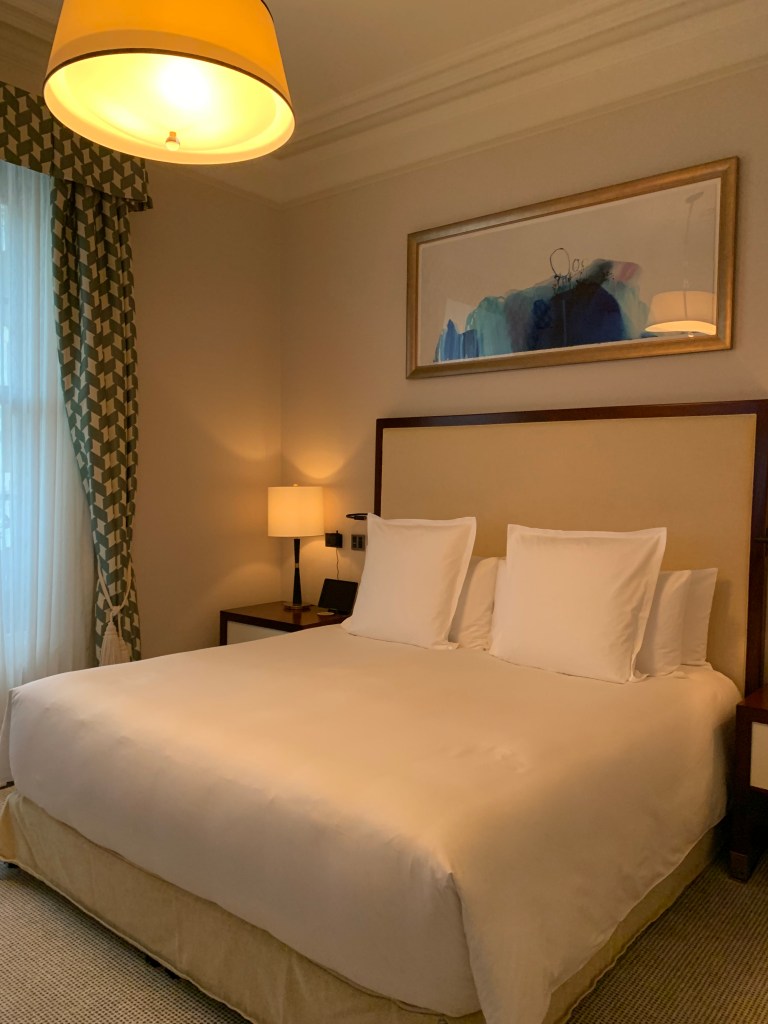
We knew our choice was the right one when we made it to our room. Prior to our arrival, we received a preferences form, which included everything from pillow choices and preferred temperatures to the kind of refreshments we enjoy and the time we prefer turndown services. Someone clearly read the survey. Our pine needle pillows were waiting on the bed, the room temperature was perfect, and we had wine, fruit and chocolate waiting for us.

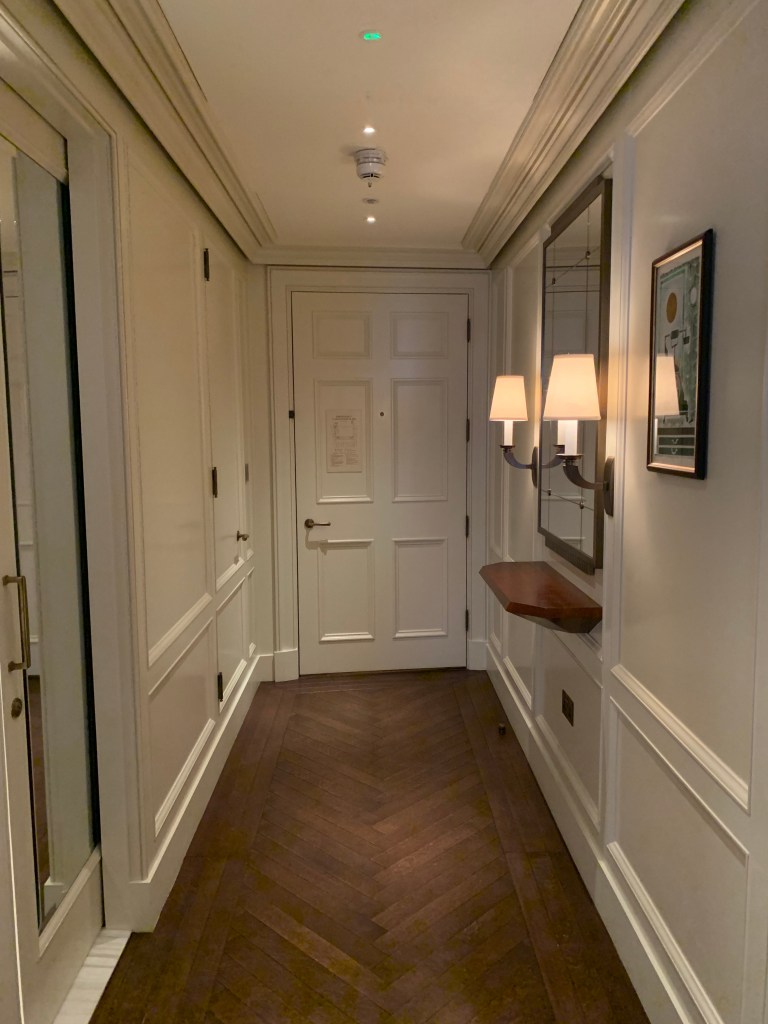
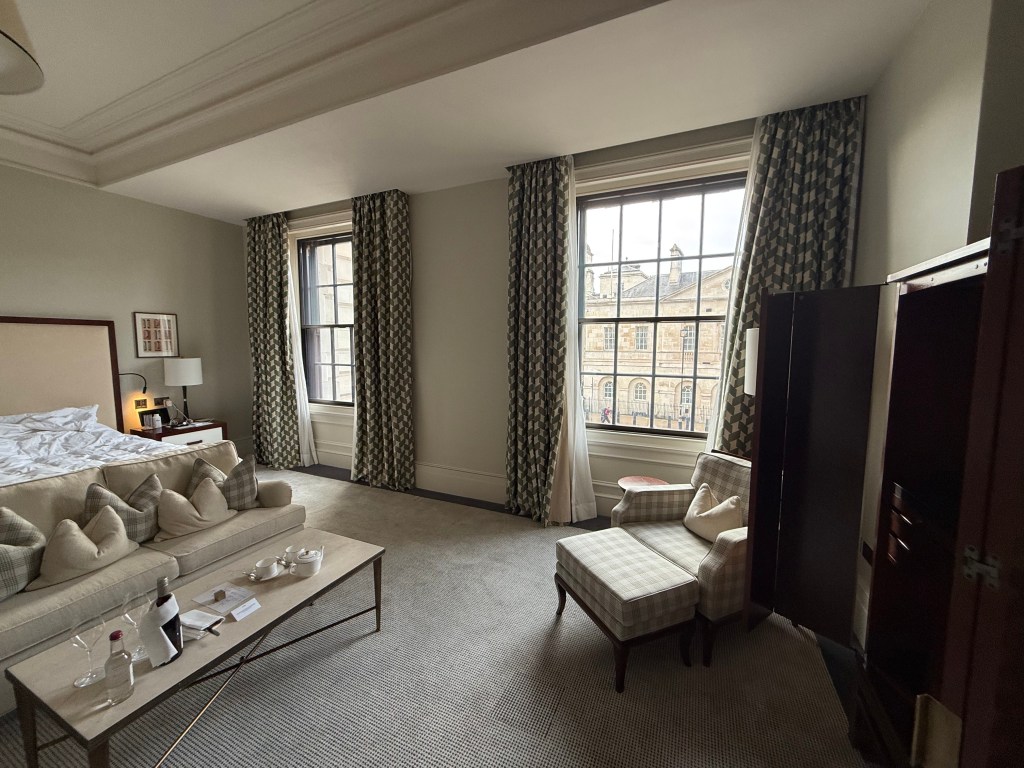
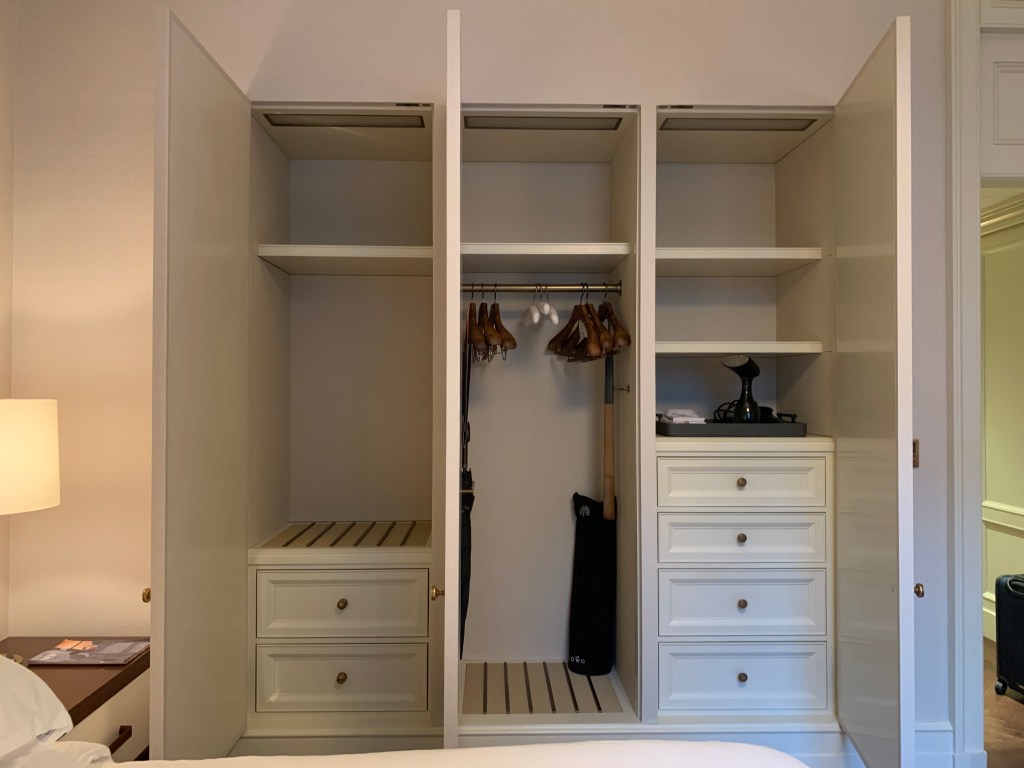
Our room looked directly onto Whitehall with two big windows, a king-size bed and a roomy seating area with a couch and coffee table. The entrance foyer with what looked like original parquet floors was a highlight; it served as a kind of dressing area (and perfect place to do yoga) and adjoined an entire wall of closets (stocked with a yoga mat, a steamer, slippers, luxurious wooden and padded hangers and a – very useful – shoeshine cloth to wipe off the London rain).

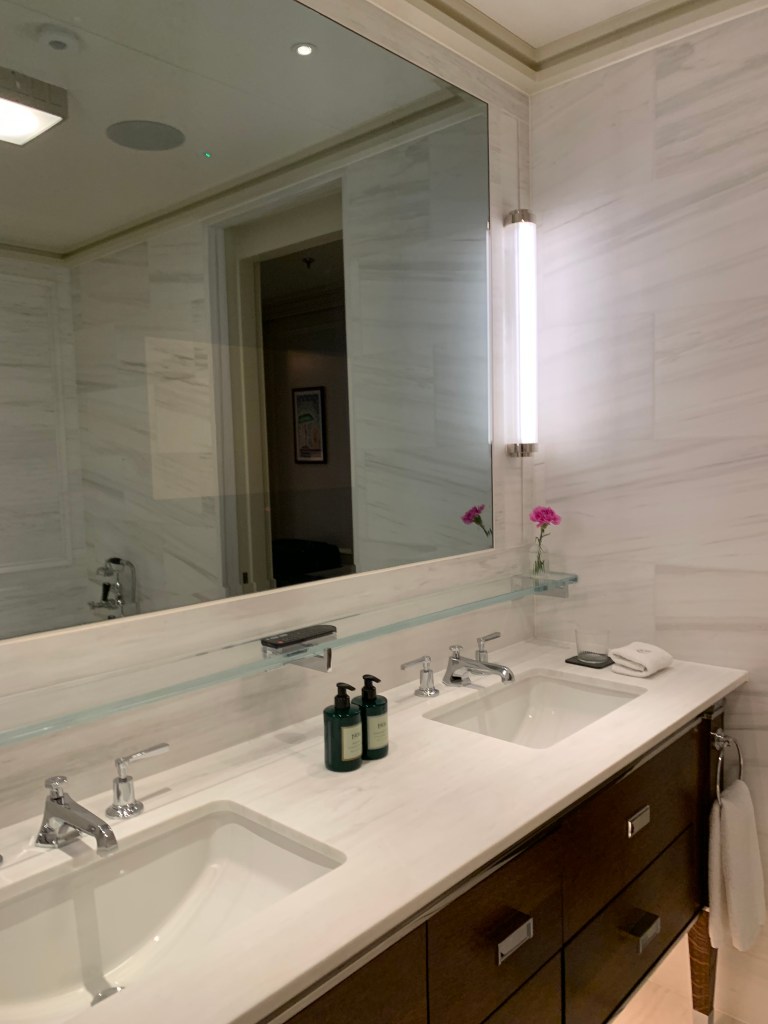
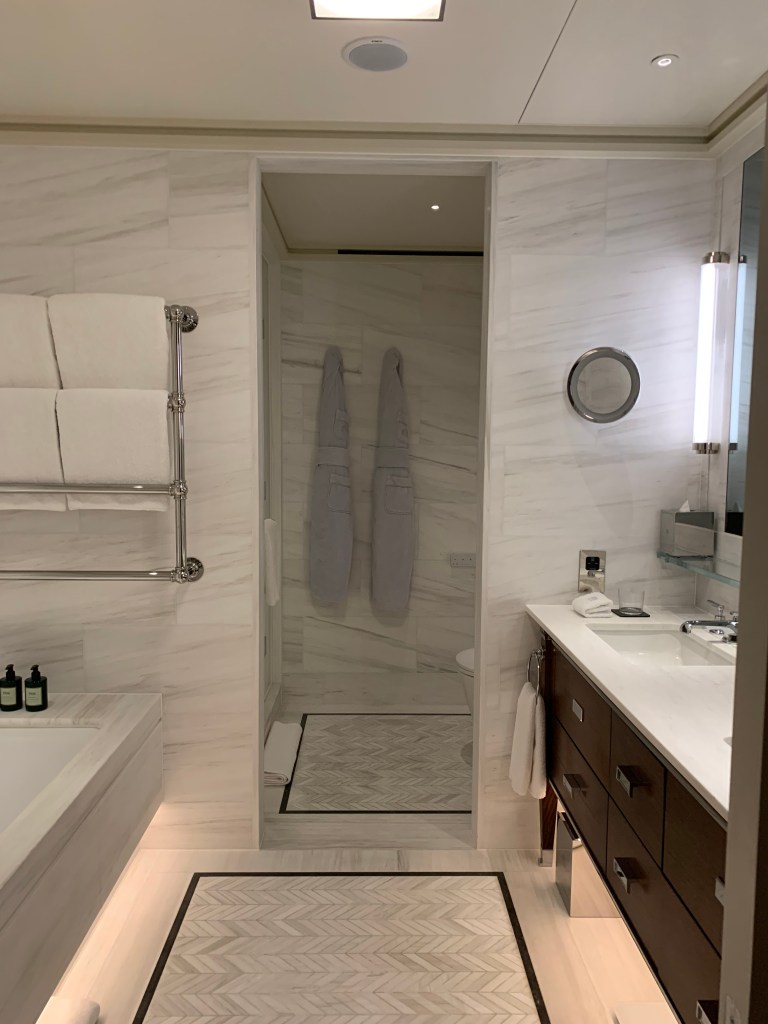
The marble bathroom was stunning with a separate deep tub, a big shower, dual sinks with a TV in the mirror, and a Toto washlet toilet. The bathtub was not only deep but long, and the edges were perfect for resting a glass of champagne, a candle or a book. The Toto toilet was always “on guard” with its lid programmed to open automatically each time we approached, followed by the swish of a bowl-freshening cycle of water. That got a little comical, particularly if we were on our way to the shower or just popping into the bathroom to get our robes from the hook, but other toilet functions, including the heated seat set to turn on in the early morning, were quite lovely.

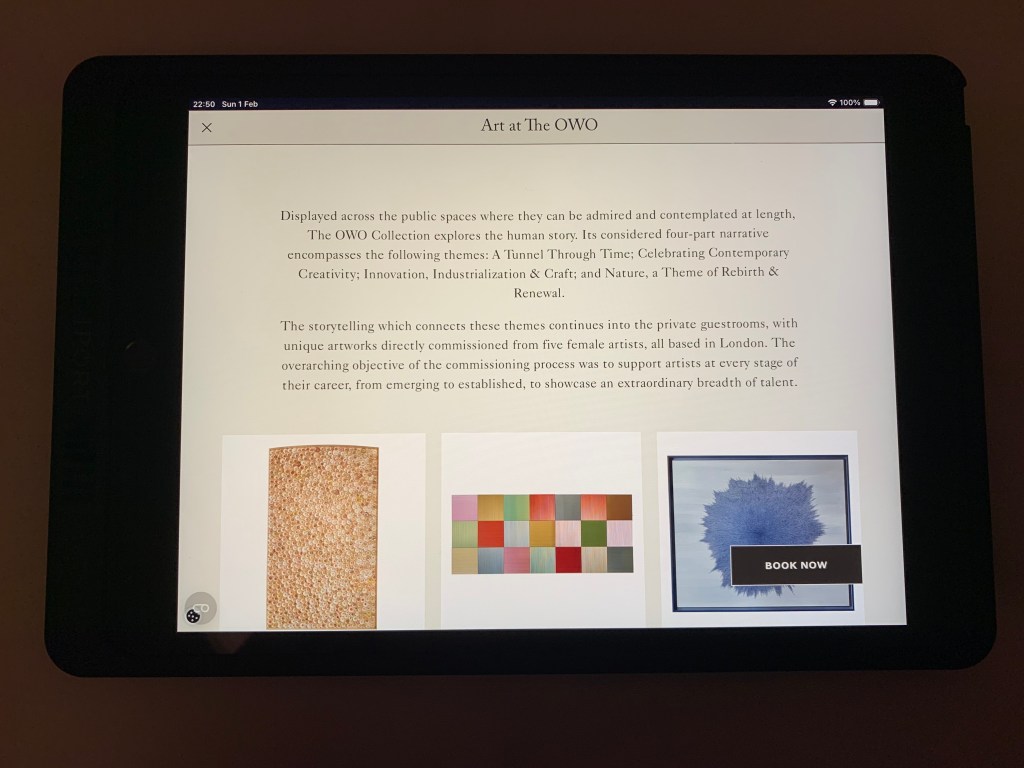
We’ve previously stayed in rooms that have smart technology, but they’re often not that intuitive and not worth spending the time trying to decipher. In this room, however, the iPad controls were easy to understand and allowed us to do anything we wanted – from turning on and off the TV and controlling the drapes, to calling for housekeeping or ordering room service. We could even access an exhibition catalog of the art that fills the hotel. One caveat: We managed to accidentally turn on the “do not disturb light” via the iPad; you two did the same thing. This must have sent a mixed signal to housekeeping that we wanted our room serviced but also didn’t want to be disturbed.

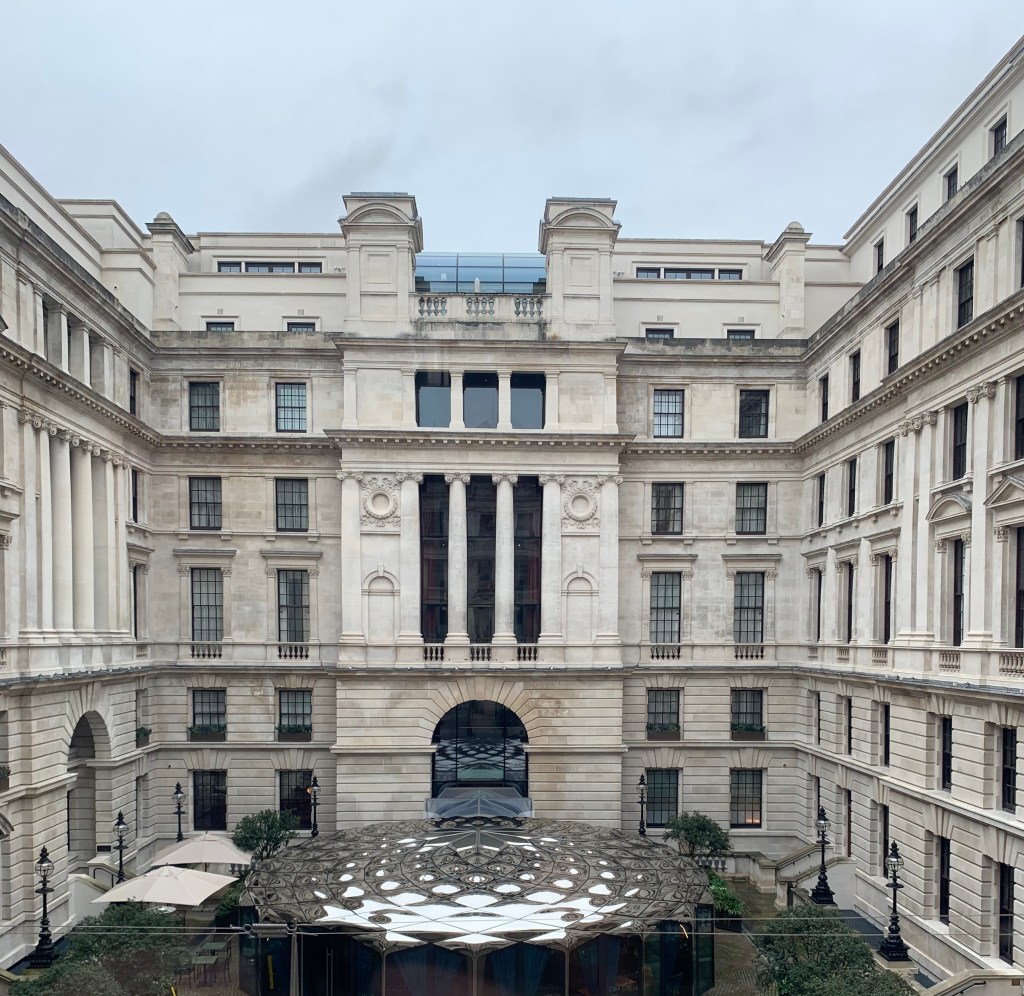
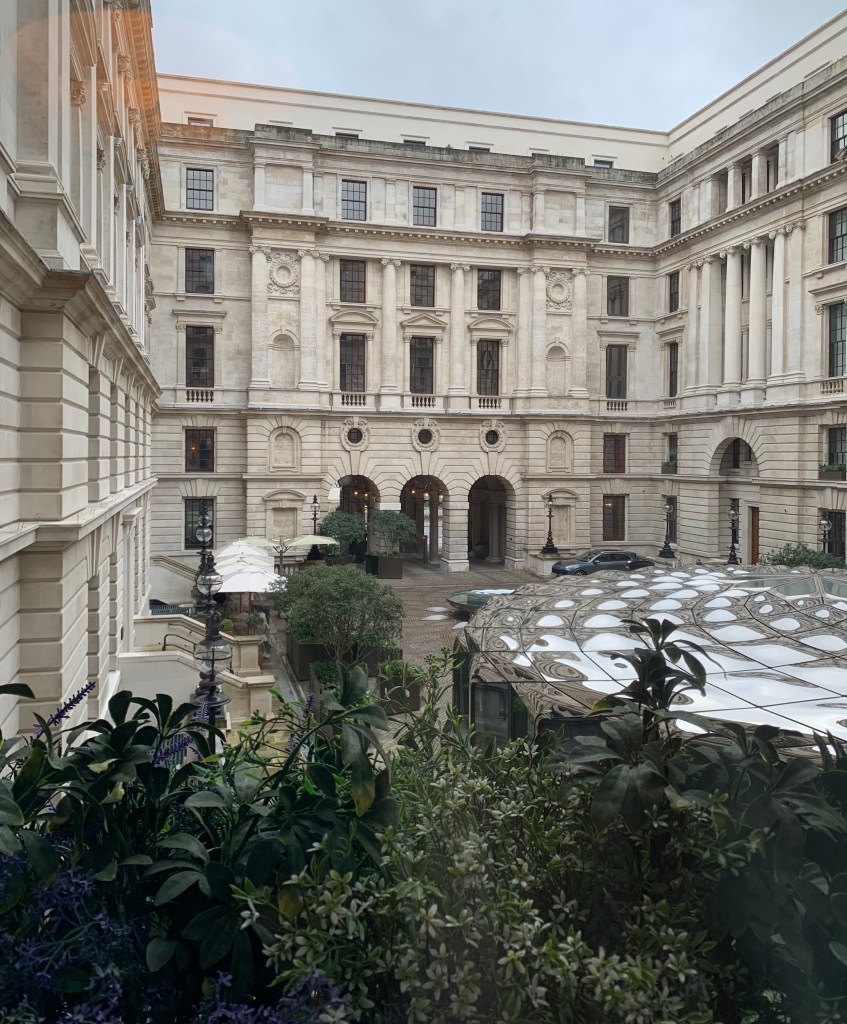
When you arrived the day after we did, it was fun to see your room as well (this second room is the one in many of the pictures). It was a little more petite and looked out to the courtyard, but it had all of the same features.

As we spent more time at Raffles – and as we learned to navigate both the building and the hotel’s culture, our first impressions changed. The hotel was classy but not snobby, and we never felt uncomfortable or out of place. Almost everyone we encountered was warm and friendly, and we had fun chatting with the porters as we came and went.

The Guerlain Royal Spa and Guerlain L’Atelier were our first stops. One of us had a haircut and his first-ever manicure, accompanied by a whiskey pour, while the other had a ‘slimming massage,’ which consisted of being kneaded and buttered with lovely Guerlain honey in one of the many treatment rooms – all labelled with the code names of famous English female spies.  Following our treatments, we visited the pool area – a gorgeous set of pools, a steam room, a sauna, and showers, all five stories underground.

Later in the night, we visited the Spy Bar – located in the tunnels under the hotel in Room 007. To get to the spy bar, which was behind a door only marked with the room number, we had to be escorted down by a hotel butler. Once inside we found half of a James Bond car hanging above the bar and a scene full of young, beautiful, rich, and boisterous patrons.

We also visited the Guards Bar to sample the London version of the famous Singapore Sling, which Raffles invented at its Singapore property in 1915. The London Sling was perfectly fine, but it doesn’t stand up to the original.

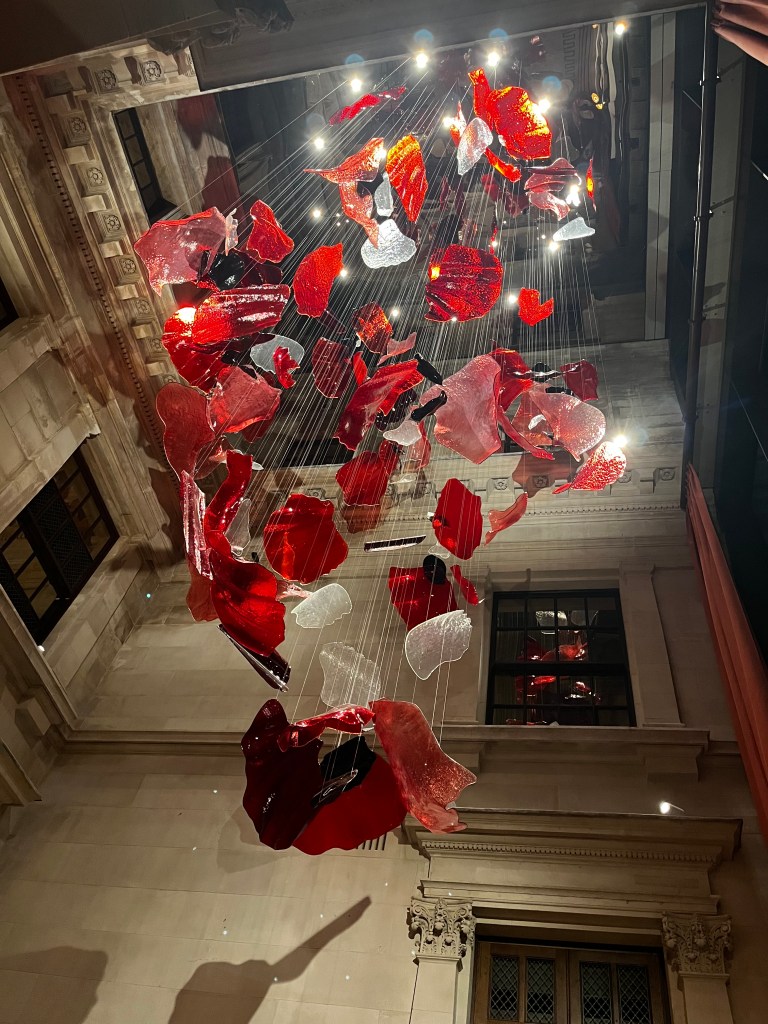
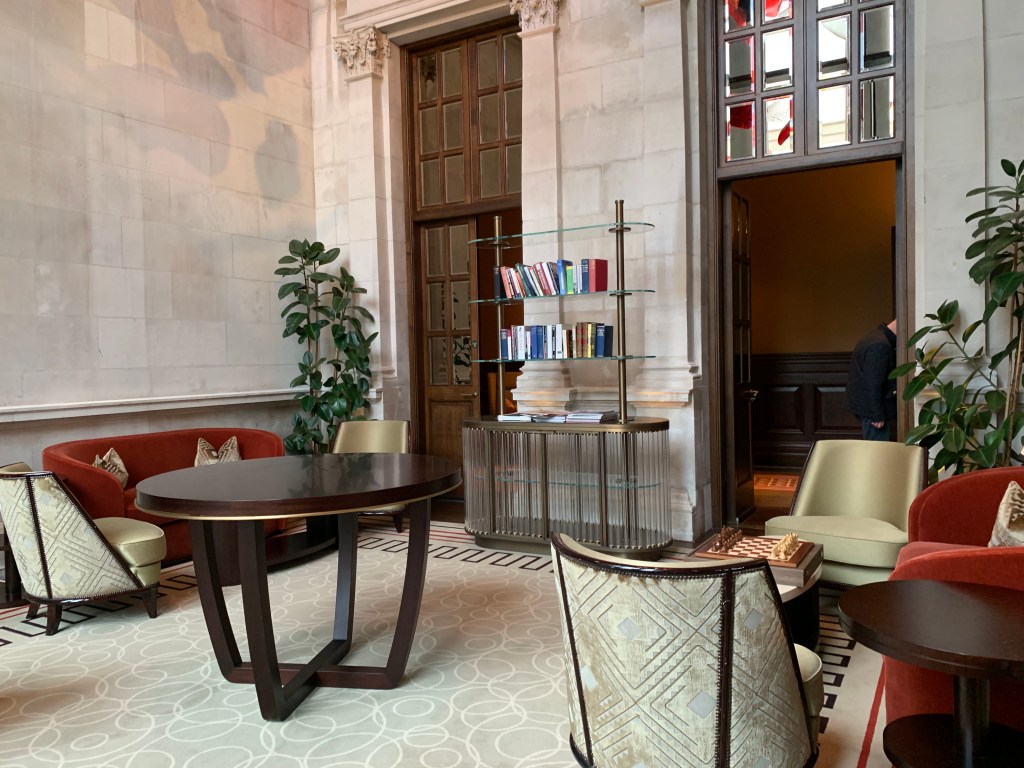
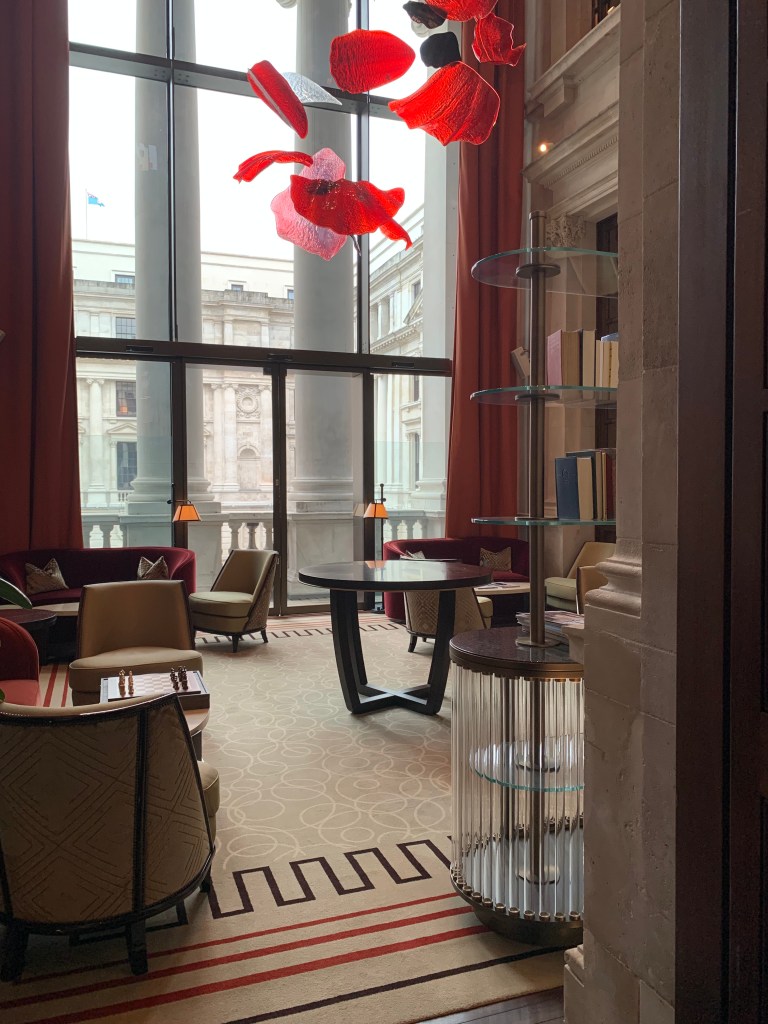
During our final evening, we joined the two of you in the Poppy Room, the guest lounge. The room, once part of the exterior facade of the building, is five stories high and filled with an amazing glass mobile of abstract poppy flowers, a tribute to war heroes from WWI.

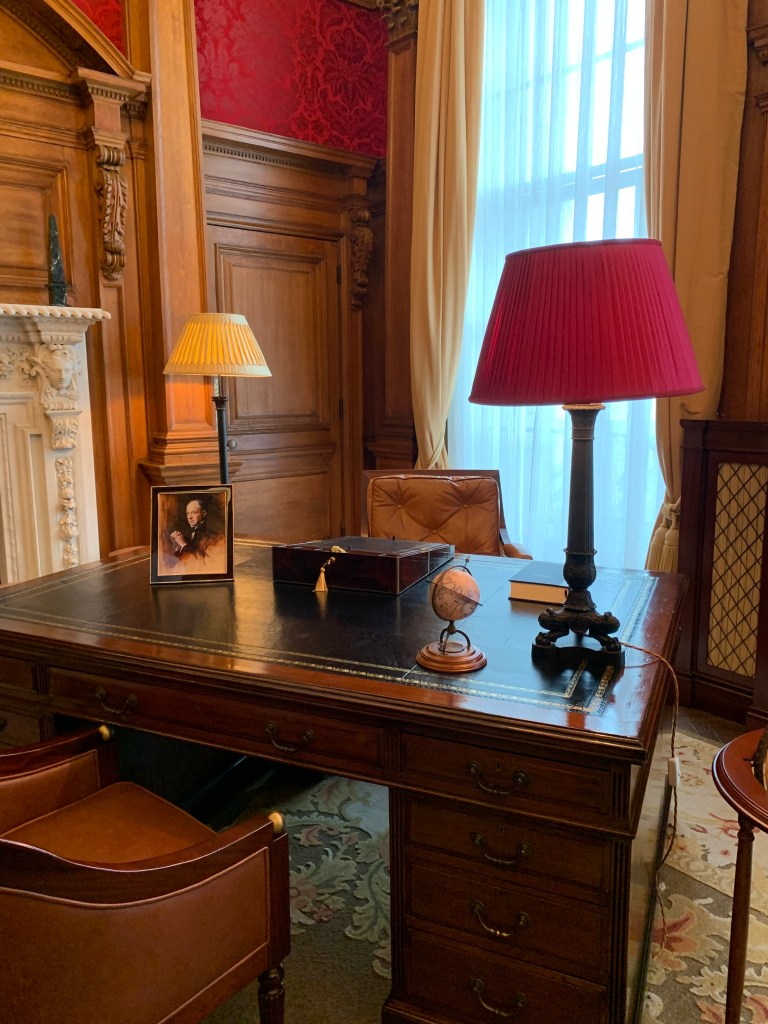
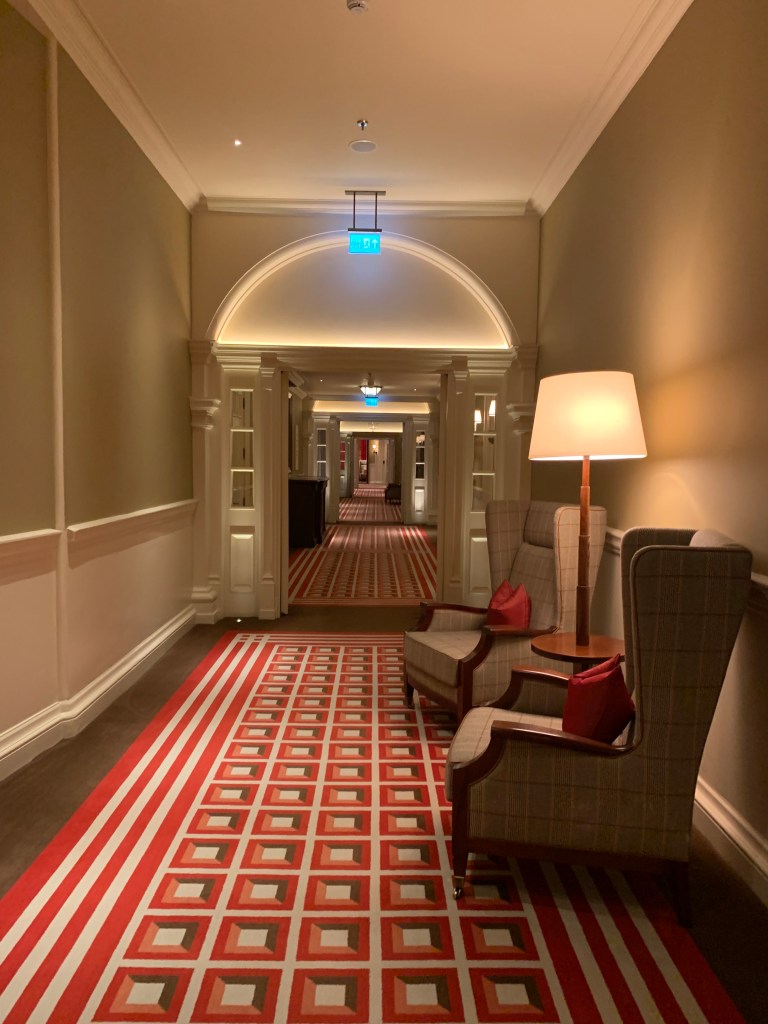
The person who led the tour was incredibly knowledgeable about the history of the building, thanks, he said, to all he learned from the hotel’s in-house historian. The day we toured, two of the hotel’s historic suites happened to be unoccupied, so we got to visit both the Churchill Suite and the Haldane Suite (only £30,000/night) where we were able to sit at Churchill’s desk. We also learned why the hallways in the building are so wide; even though the building was one of the first to have internal telephone lines, young boys would cycle through the building delivering messages. And who wouldn’t love the story of the mosaic floor and the gift each War Office staff member received upon retirement: a set of cufflinks made from a piece of the floor.


Raffles acquired the building from the British government in 2016 and invested £1.5 billion and eight years into the restoration and conversion to a hotel.  The property truly feels like a monument to the empire and to all of the important work that happened in the building over 110 years. 

Absolutely! And what would be even better is returning as a resident of one of the building’s 85 private homes. We probably need two – one for us, and one for you.

  • Raffles London at the OWO
  • 3-night stay: January 30 – February 1, 2026 (first couple) and January 31 – February 2 (second couple)
  • Junior Suite #124 and Deluxe Room #108

~the things the four of us did together on our two overlapping days in London~

Excursions:

Eating and Drinking:

Back to HOTELLING home

Marylebone, London, UK ~ The Langham

For a stretch of about 15 years, we visited London regularly, and we loved trying hotels in neighborhoods across the city. But our last visit was in 2018, and we had a lot of catching up to do. We know Kensington and Chelsea well and were tempted to return to a new hotel on familiar grounds (The Chelsea Townhouse was top of the list). We also, however, love Marylebone, which is near The Regent’s Park and close to so many of the things we love in the city.
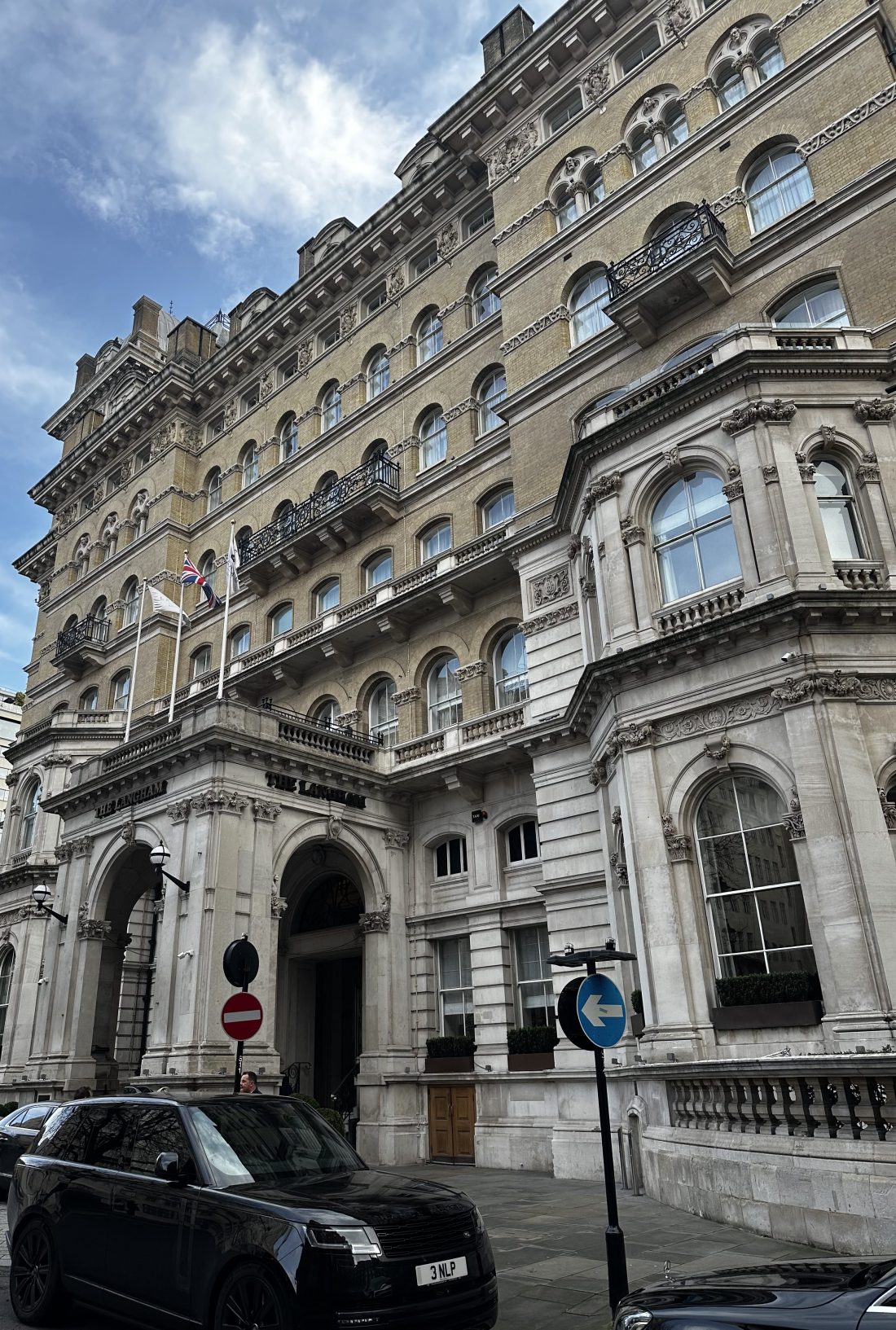
In the very southeast corner of Marylebone, right across the street from the BBC’s Broadcasting House, sits one of London’s first luxury hotels: The Langham. After our terrific experience at The Langham Chicago, we decided to test the Langham brand, booking eight nights at the property where it all began: The Langham London.


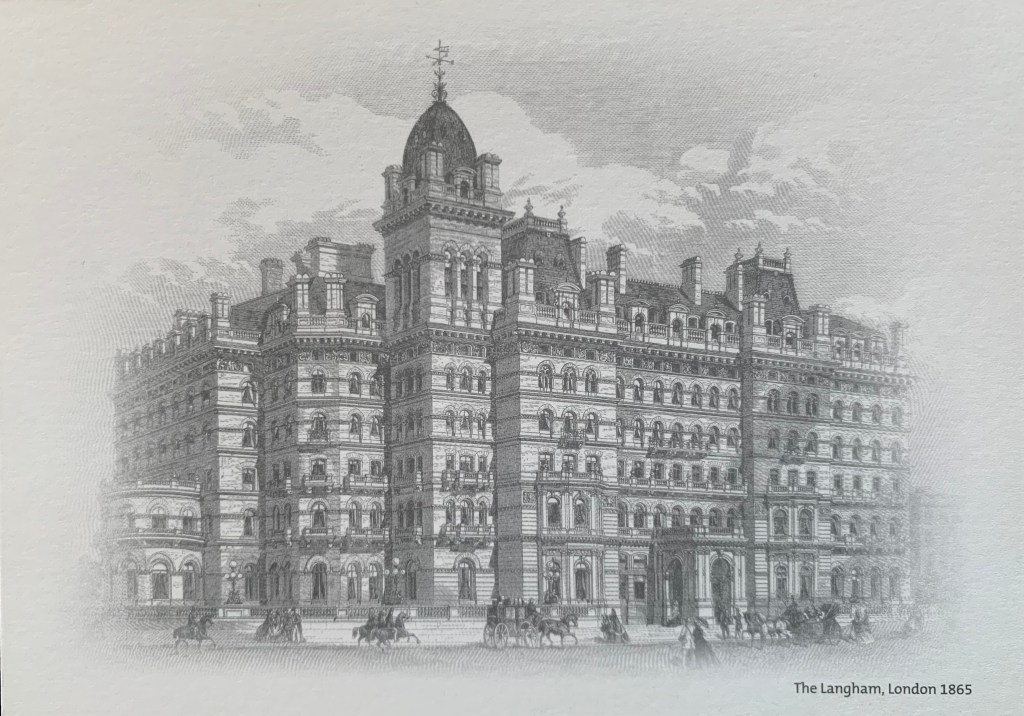
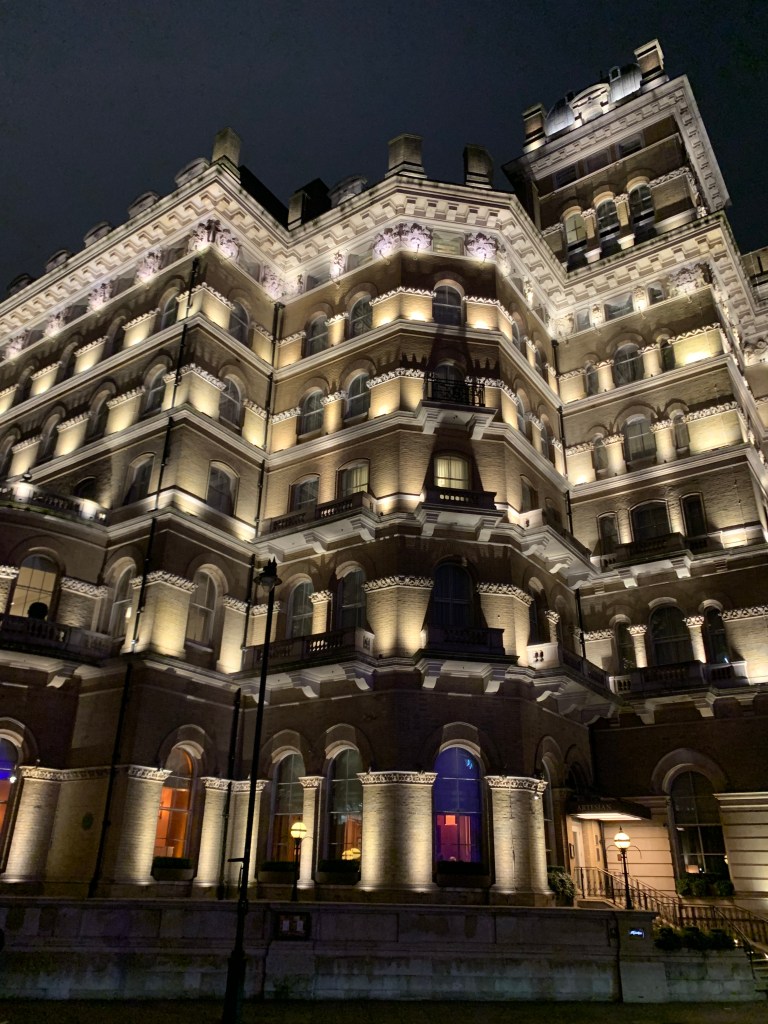
We arrived at Heathrow just after 7 in the morning, and our taxi was pulling up to The Langham by 8:15. The building is described by British Listed Buildings as “heavy Italianate style with some late Medieval details, French pavilion roofs and an east wing with a corner tower.” Put simply, it’s a building to behold – certainly at 8 in the morning, but, as we would later learn, even more beautiful at night.

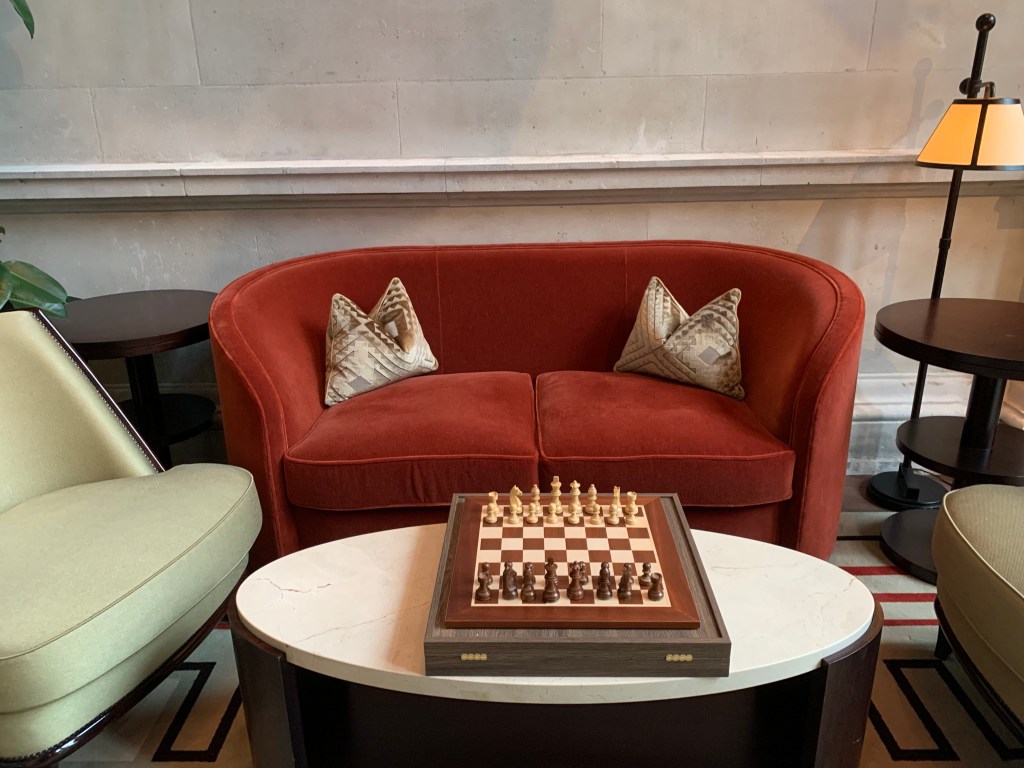
The hotel’s interior is no less dramatic. The central lobby with shining marble floors and pillars supporting a tall ceiling is surrounded by a more intimate seating area with a fireplace; a room off to the side with a fabulous chandelier that houses the registration desk; and the Palm Court restaurant, which is reportedly where the tradition of British afternoon tea began. Because we arrived so early, our room wasn’t ready, but the staff member at reception got us checked in and then escorted us up to The Langham Club where we were invited to have a cappuccino and linger until our room was ready. We knew if we sat too long, jet lag would be the demise of our day, so after getting properly caffeinated, we headed out for a walk. On our way back out of the hotel – and feeling slightly less foggy – we took note of other beautiful common spaces, including the landings on each floor, each of which had artwork worth spending a little time with.


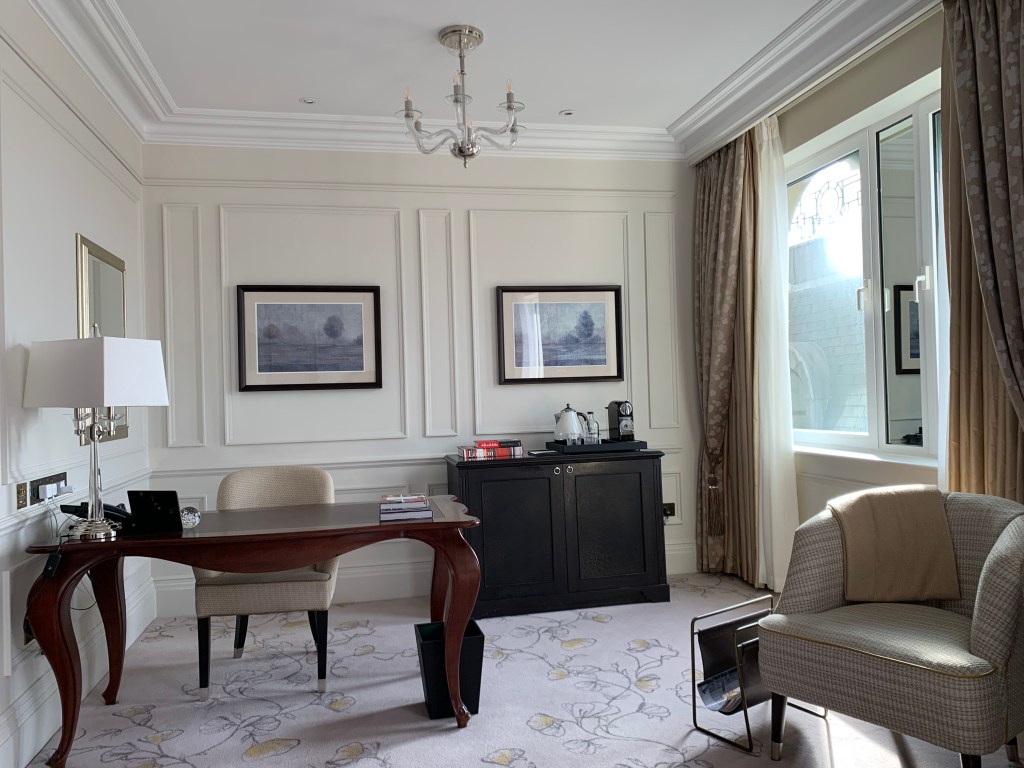
Within 45 minutes, we received word that our room was ready, so we returned to the club to pick up our key. We entered our room on the 4th floor to find sun streaming in through two large windows. A parquet-floored entry foyer with two closets to the left and the bathroom to the right led into a large room with a king-sized bed, a seating area, a coffee bar and an ample work space with a desk that faced into the room. While our tastes tend toward the modern, we had to admit that the traditional room was lovely. Books about London, a live orchid, paintings that looked to be more than simple prints, and a framed picture of the hotel’s chefs in 1907 along with a glass paperweight on the desk gave the room a distinct personality. As we were settling in, a bowl of fruit and box of chocolates arrived (the fruit would be resupplied throughout our stay).

The elegant bathroom included a deep tub, a separate water closet and a shower with some of the most amazing water pressure we’ve experienced in a hotel. Langham’s signature color is pink, and the color appears throughout the hotel, but the effect is not overly feminine. The delicate pink is balanced by dark woods and marbles, both of which featured in the bathroom. We loved the hotel’s bath products with their ginger flower signature scent, and the bamboo shoot on the vanity brought life to the space.

We used and appreciated all of the room’s amenities. From the multiple choices of china for our coffee to the fluffy Frette robes with slippers properly sized for each of us (the first time the small-footed of us had slippers that fit), we felt pampered. We loved that we could open the windows to sleep with fresh air coming in, and the storage allowed us to tuck all of our personal belongings out of sight.


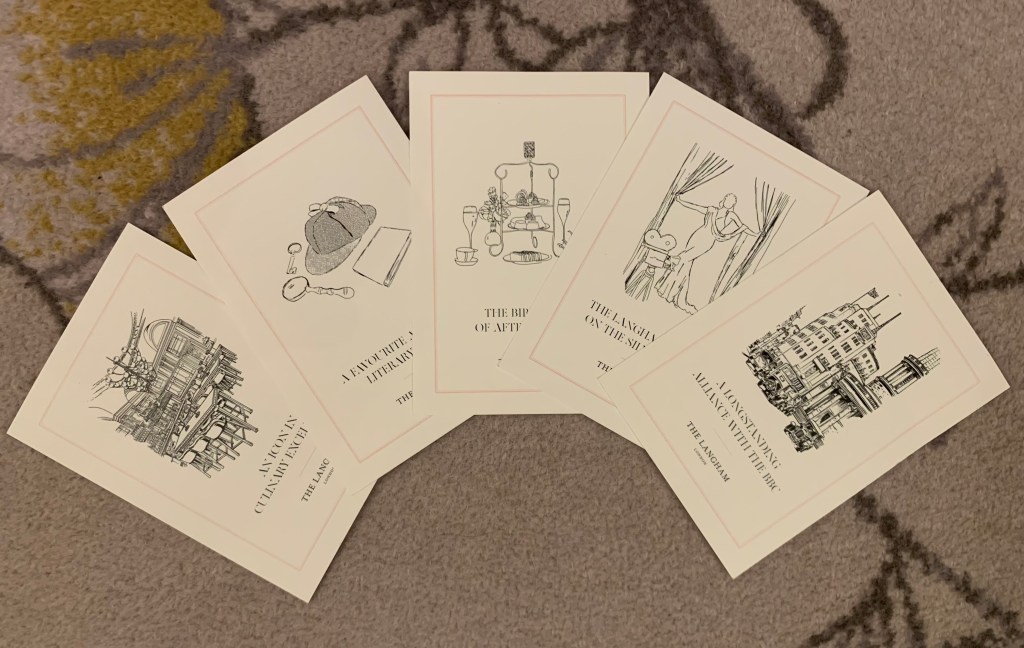
A hotel itself is just part of the experience, and we have come to appreciate top-notch service when we encounter it. The Langham’s service felt flawless to us, and everyone we encountered was a pro. Our room was serviced multiple times during the day, but we were never interrupted. We had breakfast each morning in the hotel, and by the time we returned, the housekeepers had come and gone. Turn-down service was done when we left for dinner, whatever time that was. One of our favorite nightly rituals became anticipating the linen postcard with a story about The Langham that was left on our pillow each evening. We learned, among other things, about The Langham’s longstanding alliance with the BBC, about Langham appearances on the silver screen, and about the literary icons who frequented The Langham.

During our stay, the concierge team secured last-minute reservations at Trishna, a lauded (and quite small) neighborhood restaurant; porters held umbrellas over our heads as we got into taxis, and staff in the club learned our coffee preferences after the first day.


One of the best things about London is its eating and drinking establishments; it really is an embarrassment of riches. And some of those riches are right in The Langham. The room we chose included access to The Langham Club. When we booked the room, we thought the club might be a convenient place to get a cup of coffee before heading out on the day’s adventures. We’ll admit that we didn’t have high expectations. That perception was misplaced. The club – open throughout the day with a changing menu of food and drinks – became our living room. The promise of a coffee gets us out of bed each morning, and the coffee was delicious. Of course, the pastries, salmon and caviar, and eggs cooked to order didn’t hurt. In the club, we could also connect with a staff member who offered concierge-level services, and when we popped in during the evening, champagne flowed liberally.

During our stay, we also patronized the hotel’s pub – The Wigmore – twice; we had a drink in the Palm Court one evening and breakfast one morning; and we also visited the hotel’s bar, Artesian, and had a lovely conversation with our Polish server who talked to us about drinking Zubrowka vodka as a young person. (We’ll admit that we’ve had our fair share of this particular vodka, which we discovered at our neighborhood Russian restaurant). Each of our experiences at the hotel was well worth using as one of our limited London eating and drinking opportunities.


The Langham London

If you’re a regular reader of our blog, you’ll know that we tend to choose smaller, independent properties when we travel, and we certainly aren’t loyalists to any brand. But we both must admit that our two experiences at The Langham have made us think about where we might visit next because it has a Langham hotel. Can two wonderful experiences become three?

The Langham Chicago

We don’t imagine we’ll ever become exclusive to a particular hotel brand, but it’s fun to see how a brand can be expressed in different places. The Chicago and London Langham hotels are two very different properties, but they share things that we appreciate and that we would seek out. Stay tuned for where we next discover a Langham hotel.


  • The Langham London
  • 8-night stay: February 21 – March 1, 2025
  • Executive Club Room, #405

Back to HOTELLING home